
Found this YouTube clip on the Museum Website. It is well worth a look it has some great old footage of Male Lyrebird displays.
Category: Flora and Fauna
Remote Camera Site Over One Month
The video shows a compilation of all the photos taken at one site, by one of our infrared cameras over the period of one month. It shows the typical comings and goings of the local fauna, It was taken a year ago. If you look at the top of the screen you can see the date and time that each animal visited. We haven’t been using bait to lure animals to the camera, we did try that initially but it didn’t seem to make much difference to the numbers or variety of the species photographed. Camera placement can make quite a big difference to the animals filmed. If the camera is too high off the ground it seems to pick up less of the smaller animals such as Antechinus, Rats and Bandicoots (this camera was probably not low enough to the ground to pick them up at this site)
2012 Sycamore Maple Planting Project Site Update

Recently trekked in to monitor progress I had been putting it off until the heat wave had passed. It was four and half months since I had last seen the site so I was anxious to see how things were progressing. First impressions where that there has been a lot of regrowth of under-storey the Snowy daisy-bush (Olearia lirata) had really taken off, and it was even harder to move around the site and to spot the Mountain Ash we had planted. With careful searching the good news was that the planted trees were still there and looking healthy and mostly untouched by Wallabies although I was expecting a bit more growth over summer.

The other concern I had was how much regeneration there had been of the Sycamore Maple trees that had dominated this site until they were cut down cleared several years ago. When I had visited in October there were hundreds of new seedlings that had popped up since our planting day in August. I was happy to see that in the more open areas there were few if any Maples (I think the hot summer may have killed them off) it was noticeable however that some of the large stumps had varying amounts of re-shooting from the base that needs to be dealt with.
Read More “2012 Sycamore Maple Planting Project Site Update”
Do you want fries with that?
Hopefully they won’t be a huge threat to the ecology of Tarra-Bulga National Park but it was interesting to spot this crop of potatoes that seem to have become naturalised in a small patch in the park on the roadside along the Bulga Park Rd.


Remote Camera Monitoring – Update Summer 2013
This post is a summary of the Remote Camera Monitoring results over December and January 2012/13
Camera 1 – Still out of action after it was attacked by an aggressive lyrebird.

Camera 2 – Located in mature Wet Forest in the Tarra Valley was quite a prolific site, with the camera picking up lots of small birds e.g. White-browed Scrub Wrens and Bassian and Grey-Shrike Thrushes, as well as mammals such as Antechinus and Long-nosed Bandicoots, unfortunately there were plenty of Foxes and a Feral Cat present. Also plenty of Wombats, Wallabies and some Brushtails.










Superb Lyrebird – Compost Machine
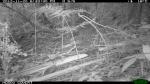
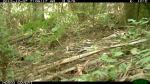
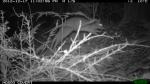
This video made up from a series of still photos from one of our remote cameras along with some sound recorded by our songmeter shows a Male Superb Lyrebird systematically scratching around for food underneath the leaf litter. This scratching results in the leaf litter being turned over and is thought to improve the rate of nutrient cycling in the forest, helping to create compost that will feed the vegetation.
Blechnum Species in Tarra Bulga
There are seven different species of the fern genus Blechnum (Water Ferns) in Tarra Bulga National Park and with a bit of background knowledge it is relatively easy to tell them apart. This post will focus on the identification of Blechnum nudum (Fishbone Water-fern) and Blechnum cartiliagineum (Gristle Fern), which unlike the other 5 species both have leaflets (pinna) being directly attached to the regular fronds by a broad base. The easiest way to tell them apart is by their fertile fronds.
Blechnum nudum (Fishbone Water-fern) is usually found in clumps in wet forest and gullies, it is reasonably common around Tarra Bulga.

Blechnum nudum – Fishbone Water-fern, showing the underside of the leaflets (pinnae) which are a paler green and are attached to the frond by a broad base. The shaft of the frond (rachis) is often a shiny black colour.

Blechnum nudum – Fishbone water-fern, showing fertile fronds which are different to the barren ones (which don’t carry spores)

Blechnum nudum – Fishbone water-fern, Showing the finer fertile fronds at the front and regular (Barren fronds) behind.

Blechnum nudum – Fishbone water-fern

Blechnum nudum – Fishbone water-fern
Blechnum cartiliagineum (Gristle Fern) is less common in Tarra Bulga and is more commonly found in gullies or sheltered spots at lower elevations downstream from the park.

Blechnum cartilagineum – Gristle-fern

Blechnum cartilagineum – Gristle-fern, The paired pinnae (leaflets) towards the base are separate and point downwards.

Blechnum cartilagineum – Gristle-fern, also has leaflets attached to the rachis by their broad base.

Blechnum cartilagineum – Gristle-fern, Underside of a fertile frond showing bands of sori either side of the mid-vein.

Blechnum cartilagineum – Gristle-fern, showing the lower stem (Stipe) which is grooved and has black scales.
 Friends of Tarra-Bulga National Park