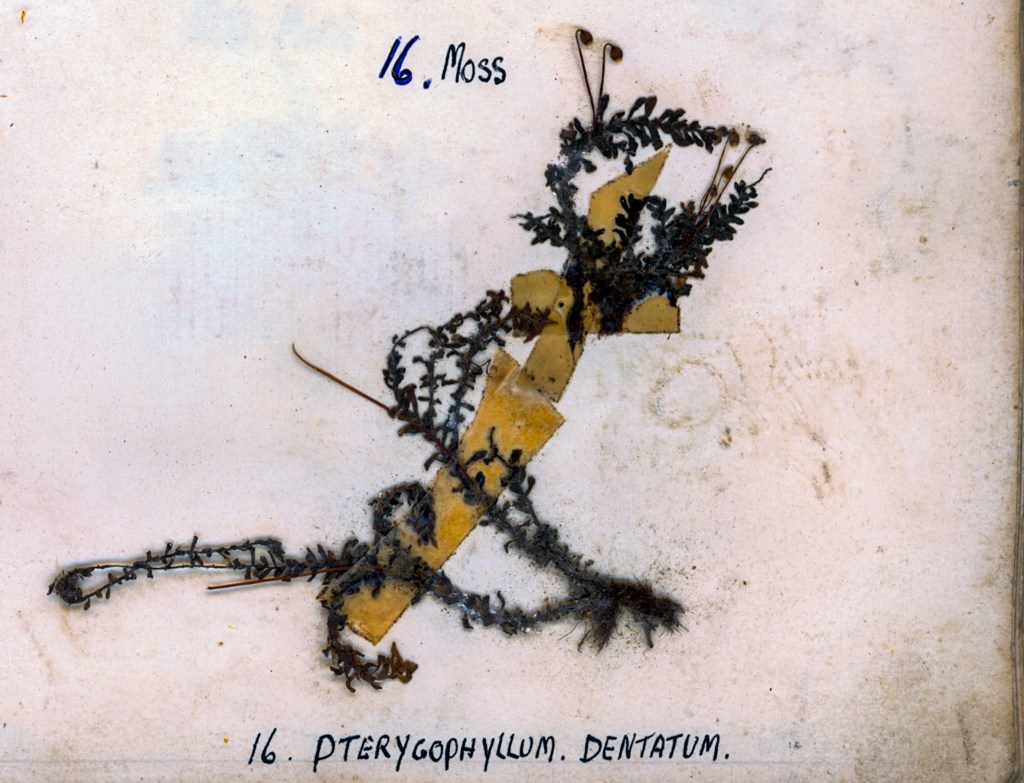
A specimen of moss, identified as Pterygophyllum dentatum, attached to a background with some yellow labels.
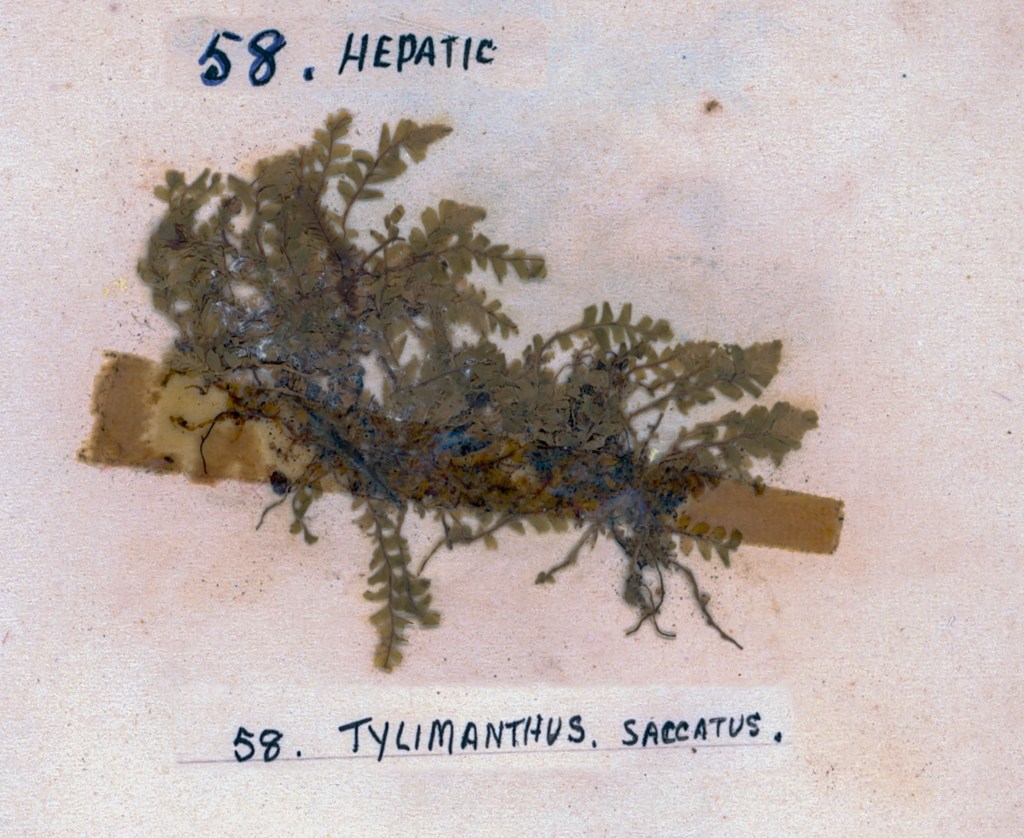
A pressed plant specimen labeled '58. HEPATIC' and '58. TYLIANTHUS SACCATUS', depicting a small leafy fern or liverwort on a paper background.
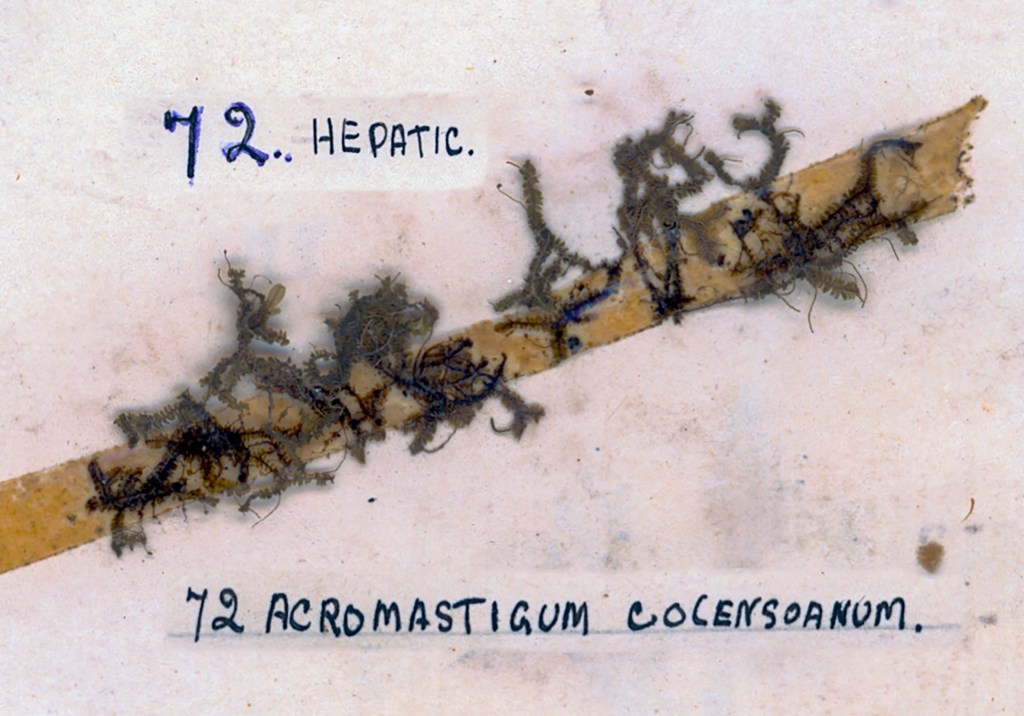
A botanical illustration featuring a specimen labeled '72. Hepatic' with a detailed drawing of Acromastigum colensoanum on a brownish background.
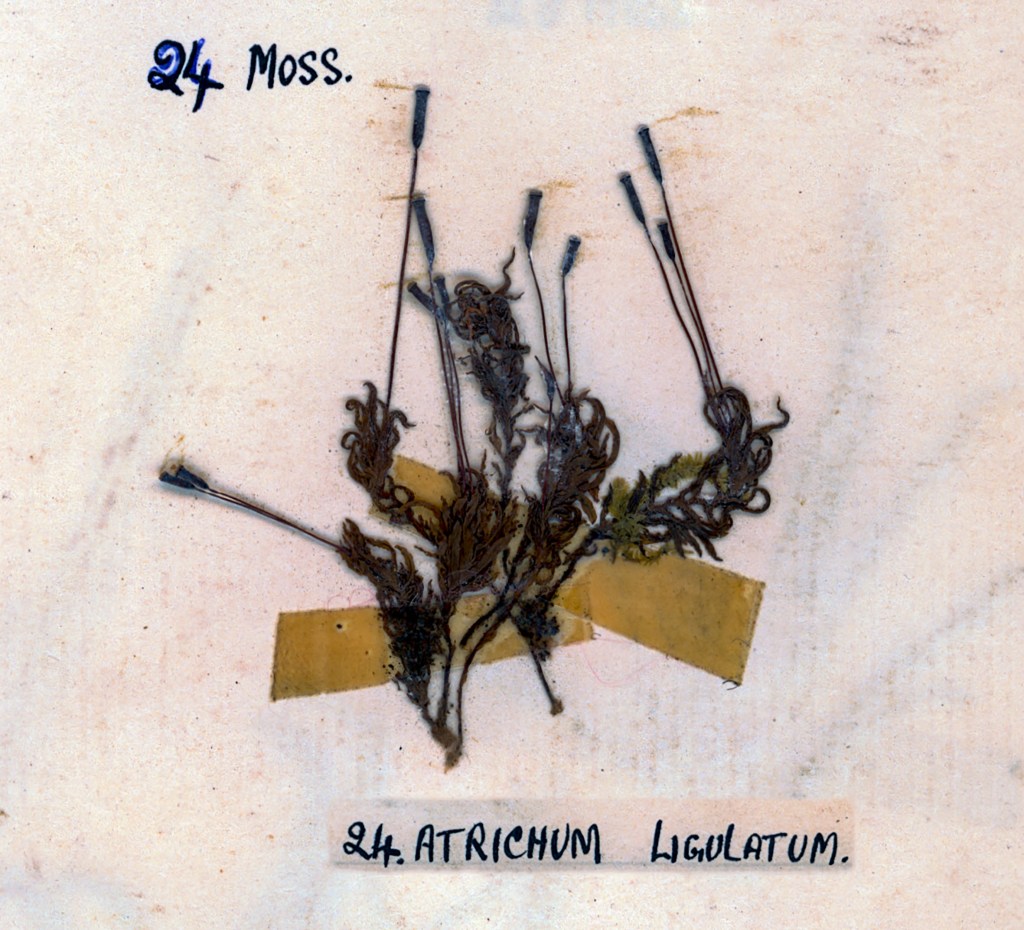
A pressed specimen of moss labeled '24 Moss. 24 Atrichum ligulatum.' on a light background.
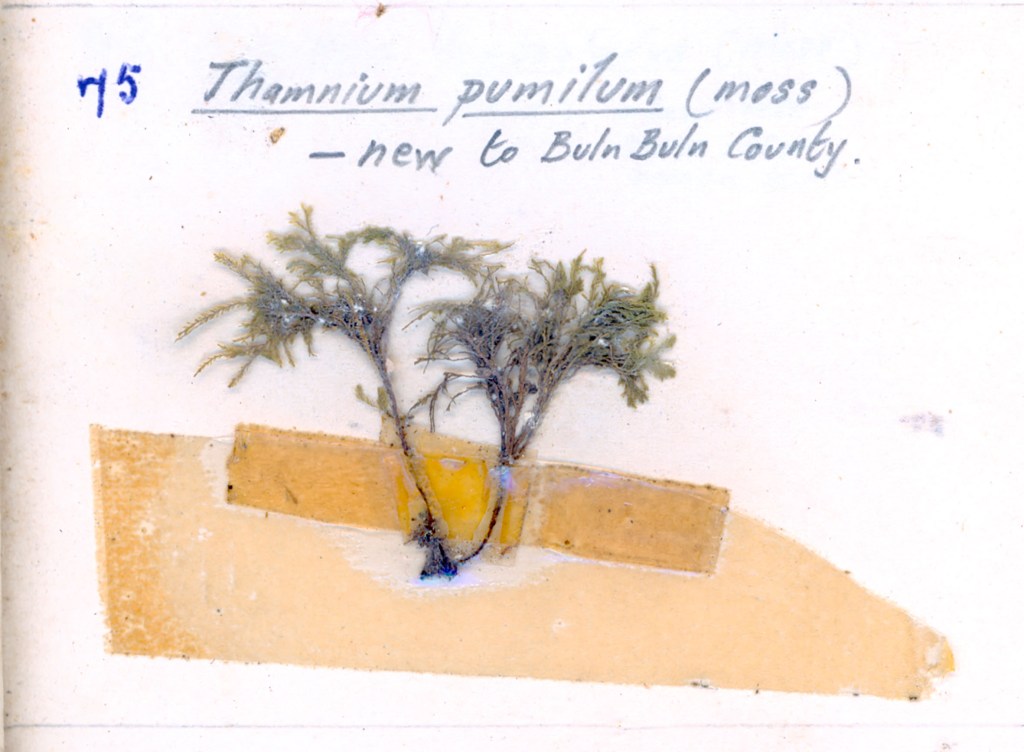
A dried specimen of Thamnidium punilium moss, mounted on a piece of paper with handwritten notes indicating it is new to Buln Buln County.
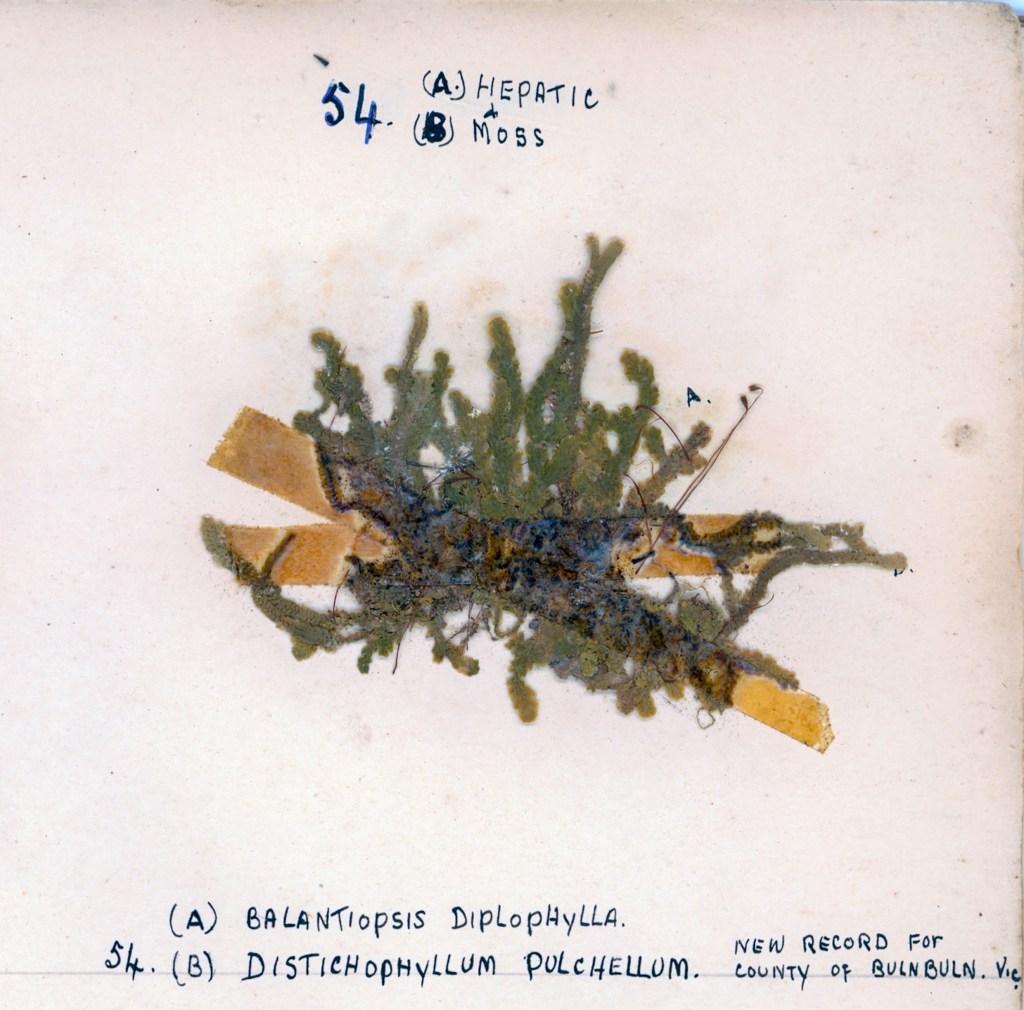
Close-up view of two types of bryophytes labeled as (A) Balantiopsis diplohylla and (B) Distichophyllum pulchellum, mounted on a white background with handwritten notes and labels.
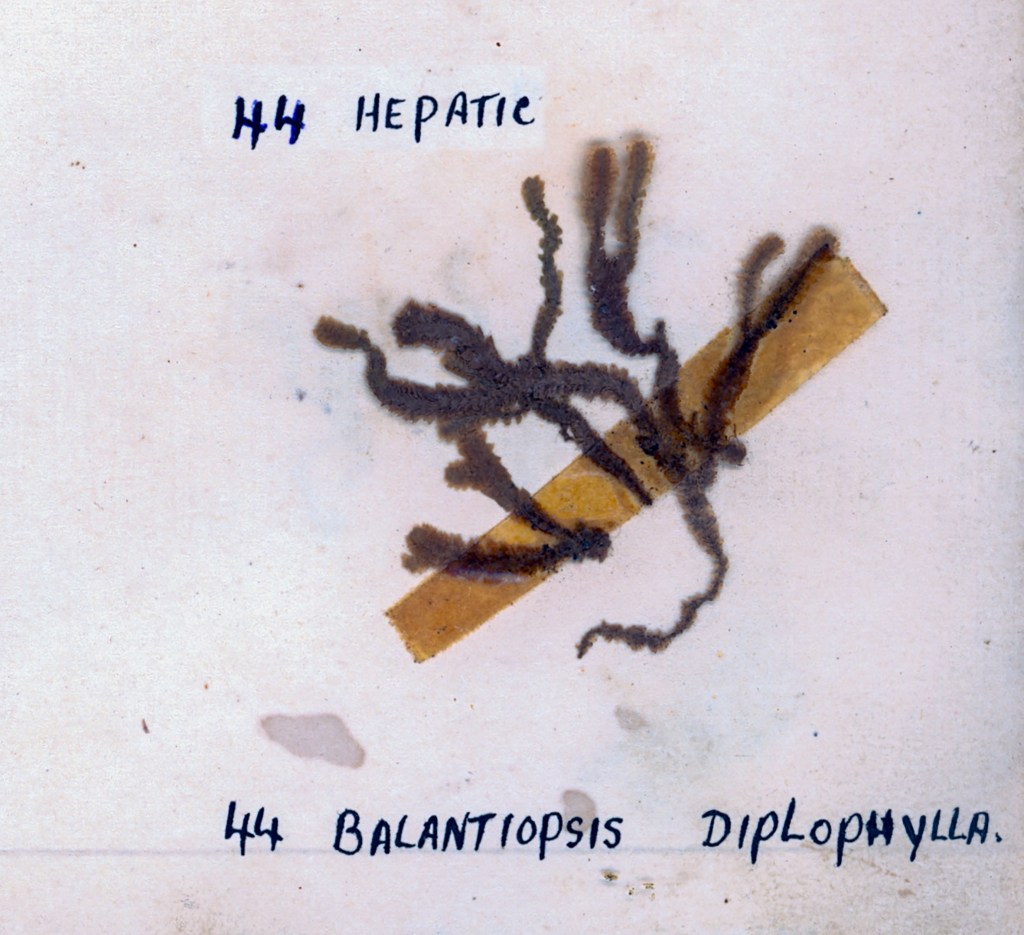
An image featuring a specimen labeled '44 Hepatic' and '44 Balantiopsis Diplophyllia,' showcasing a specimen mounted on a yellow strip against a white background.
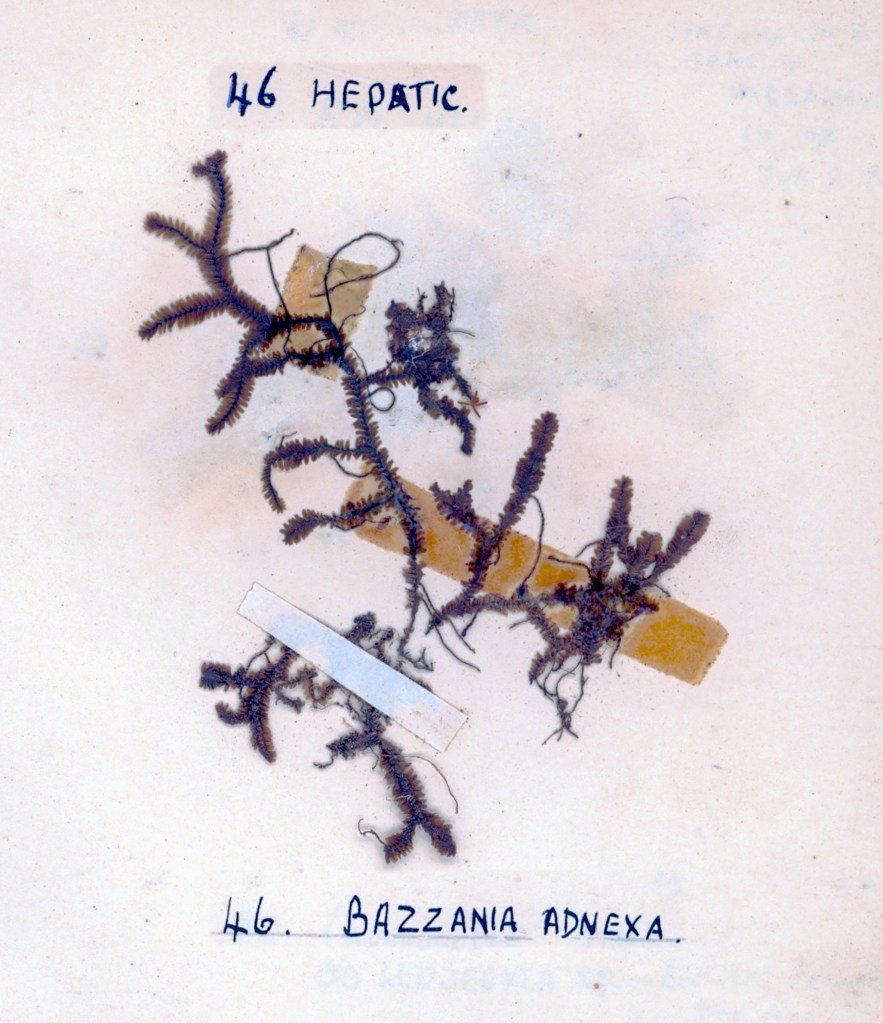
A botanical illustration featuring hepatic plants labeled '46 HEPATIC' and '46 Bazzania adnexa', with detailed depictions of the plants on a pale background.
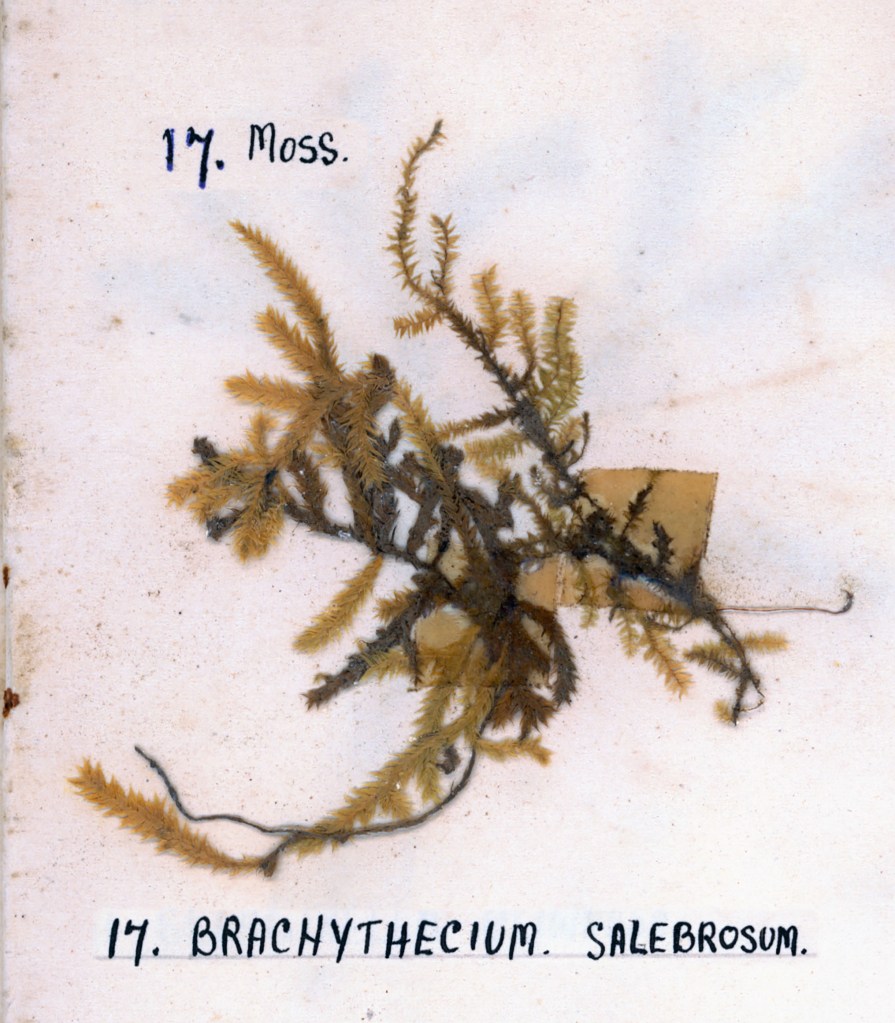
Dried specimen of Brachythecium salebrosum moss mounted on a beige background with handwritten labels.
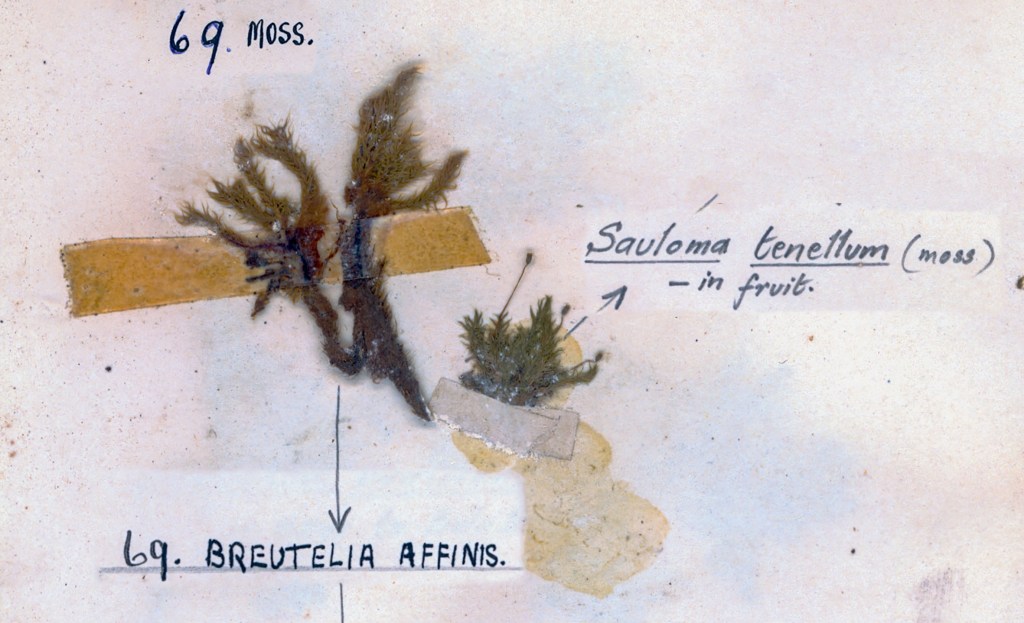
A preserved specimen of moss labeled 'Sauloma tenellum (moss) - in fruit' alongside another specimen labeled '69. Bruetelia affinis.' The specimens are attached to paper with tape.
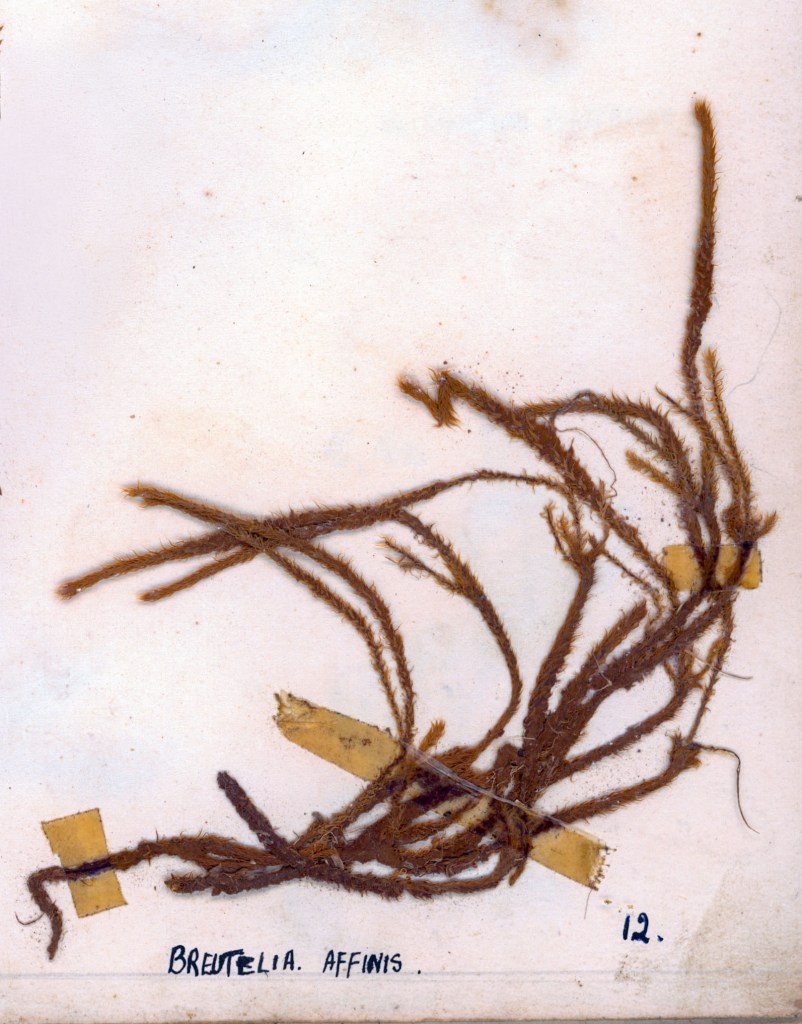
Dried specimen of Breutelia affinis, displaying multiple brown, hairy stems or fibers on a background with handwritten labels.
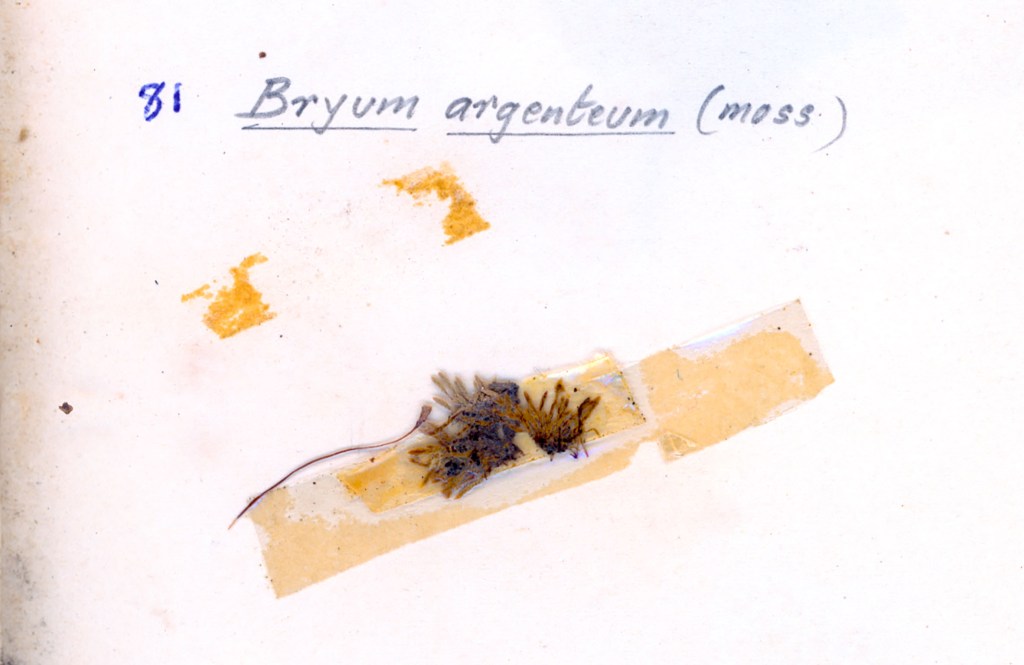
A section of Bryum argenteum moss, mounted on a page with adhesive tape, accompanied by a handwritten label.
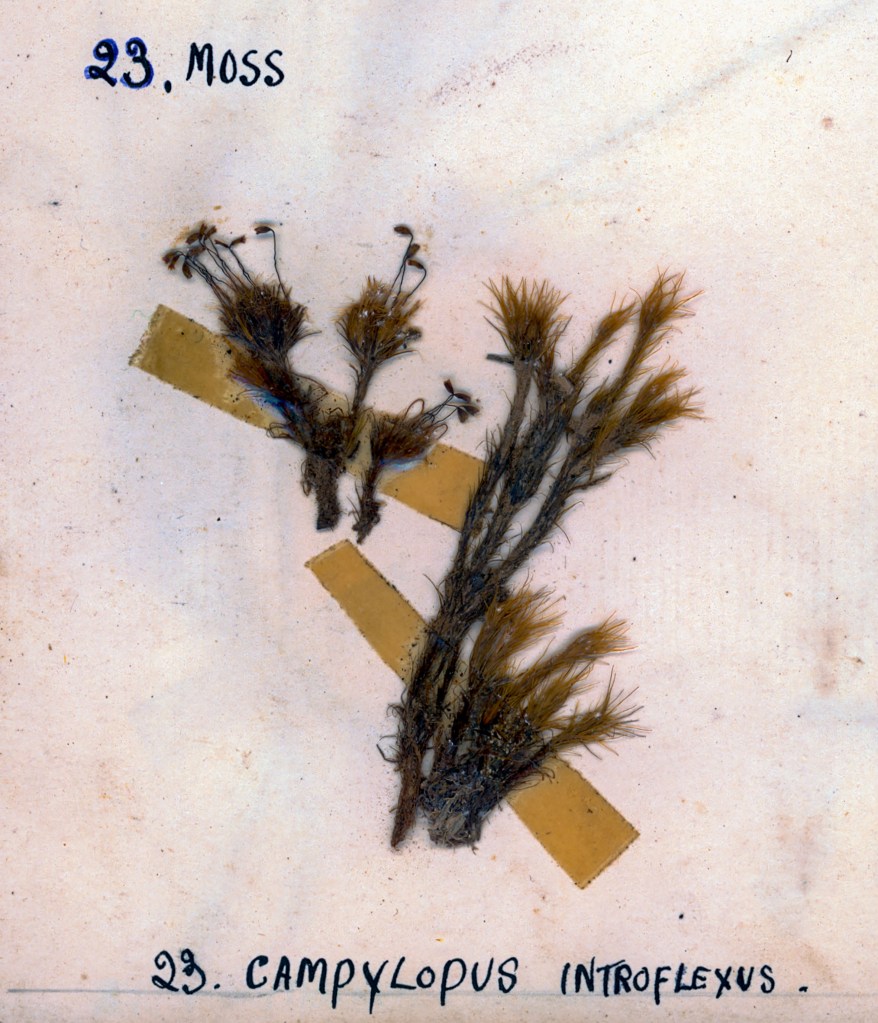
A specimen of moss labeled 'Campylopus introflexus' with brownish-green branches mounted on a light background, featuring two yellow paper strips.
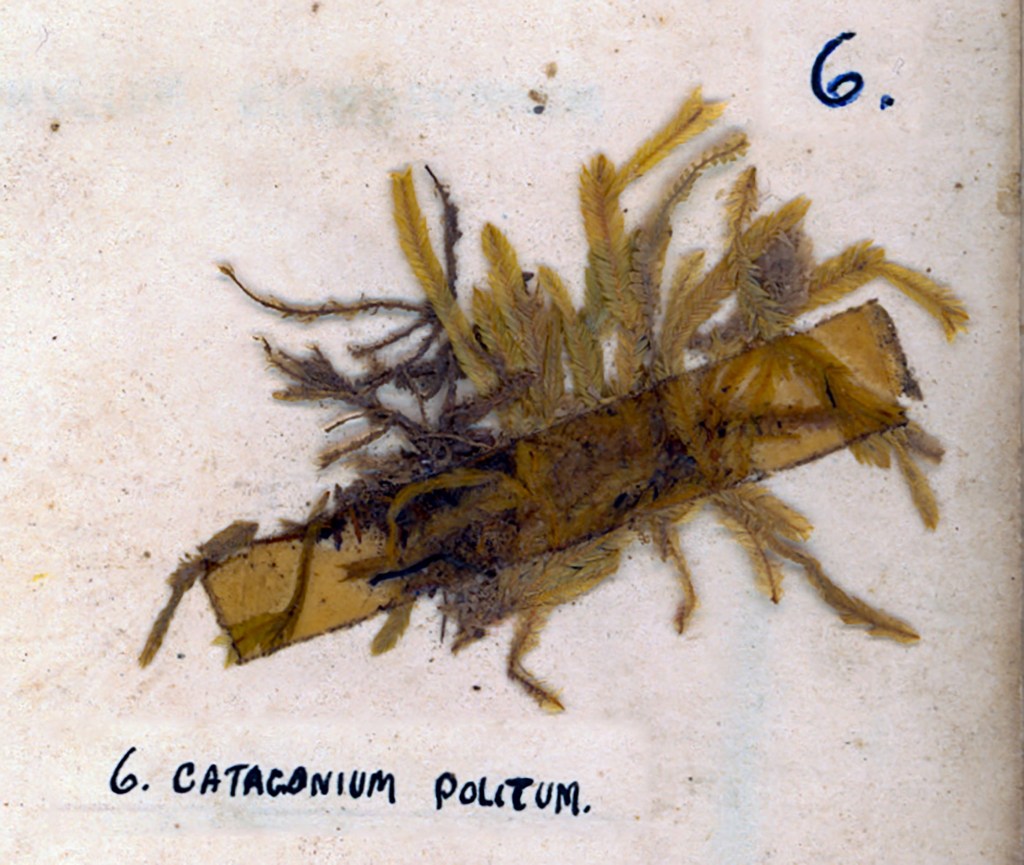
A preserved specimen of the plant Catagonium poltum, displayed on a light background with handwritten labels.
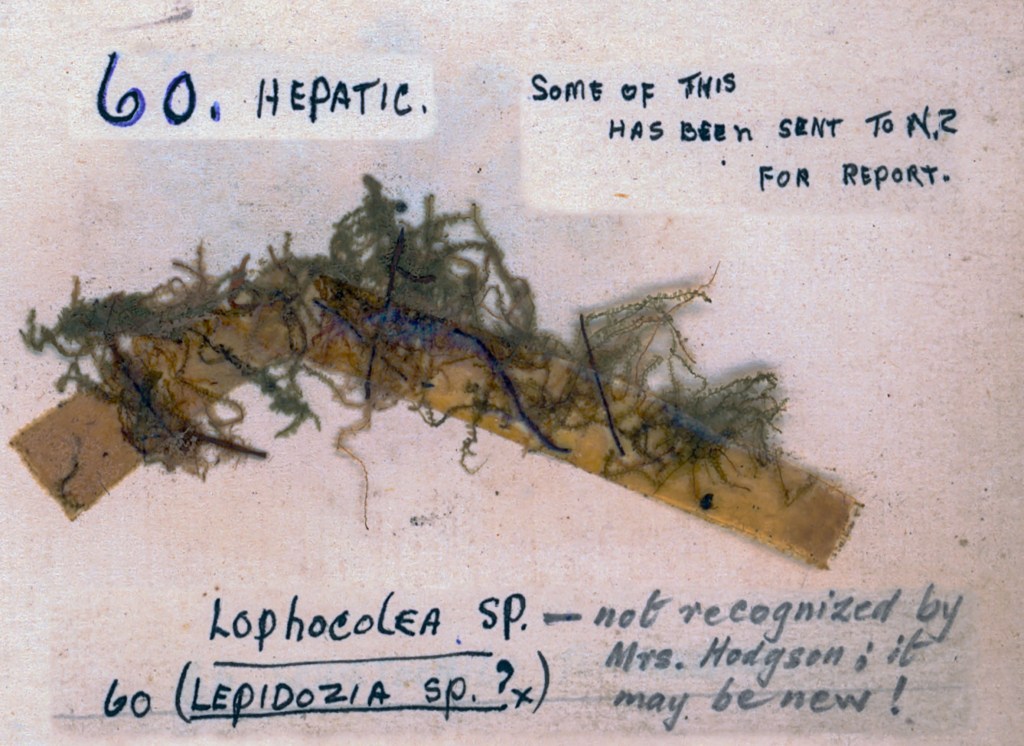
A scientific image displaying a sample labeled '60. Hepatic' with details about Lophocolea sp. and Lepidozia sp., along with handwritten notes regarding its examination and a report sent to New Zealand.
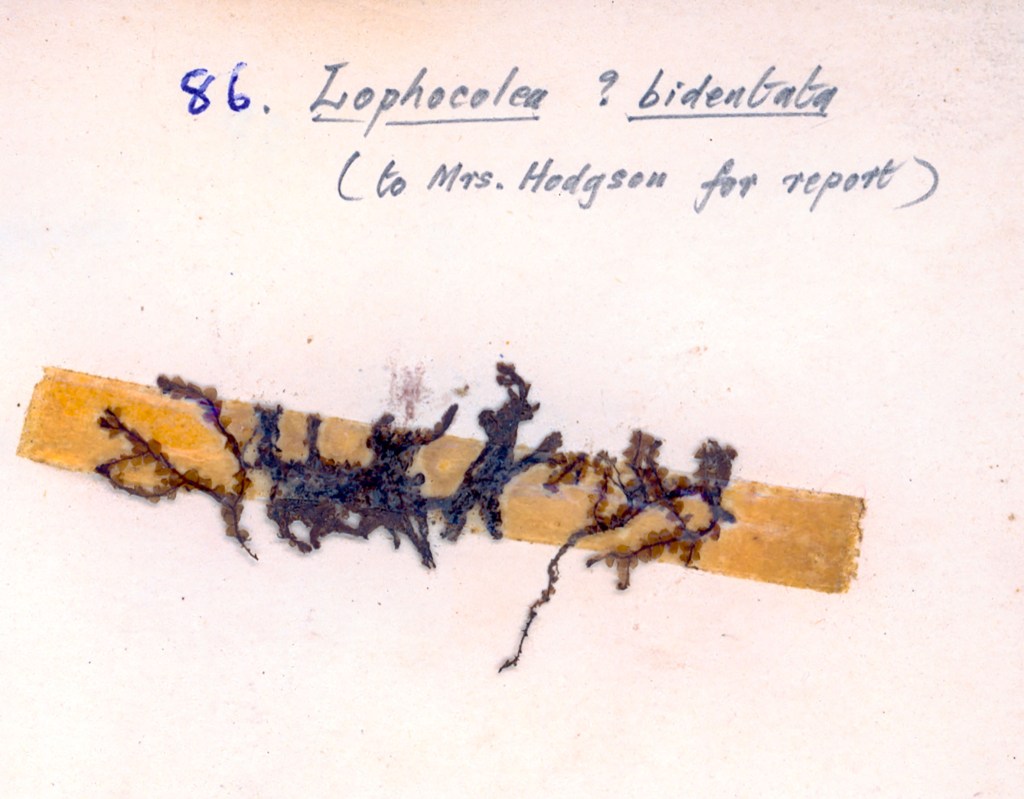
An illustration of the plant Lophocolea bidentata, showing its intricate structure on a yellow strip of paper, with handwritten notes above for reference.
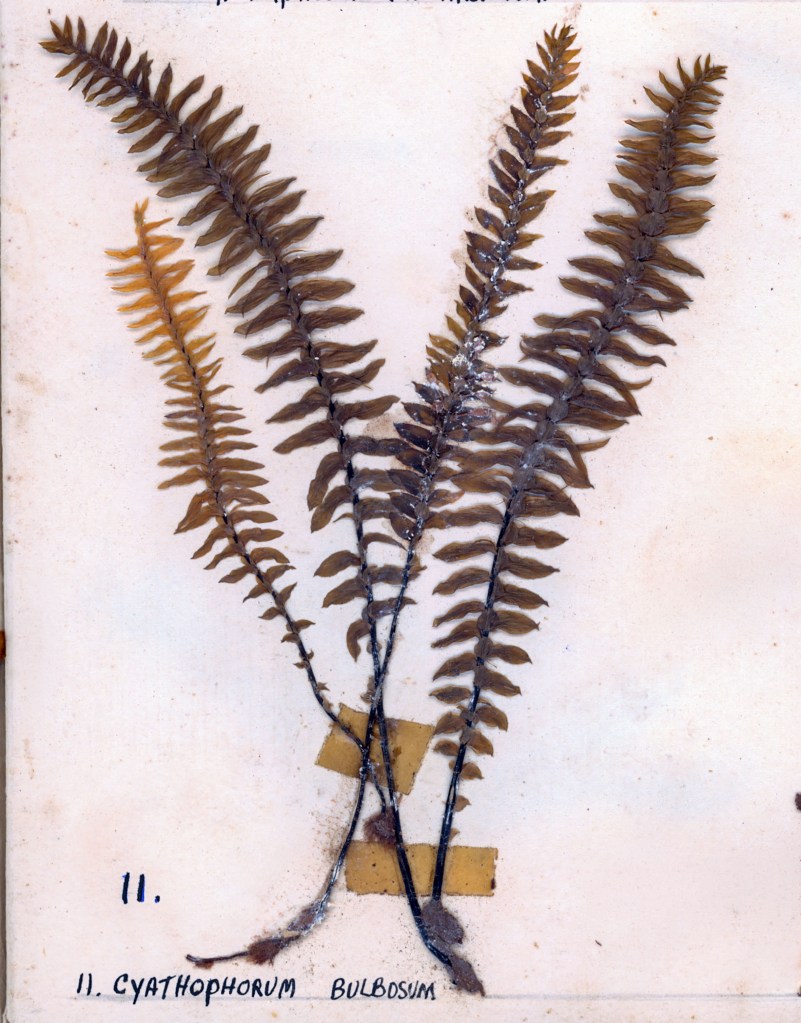
Preserved ferns labeled 'Cyathophorum bulbosum' on a cream-colored background.
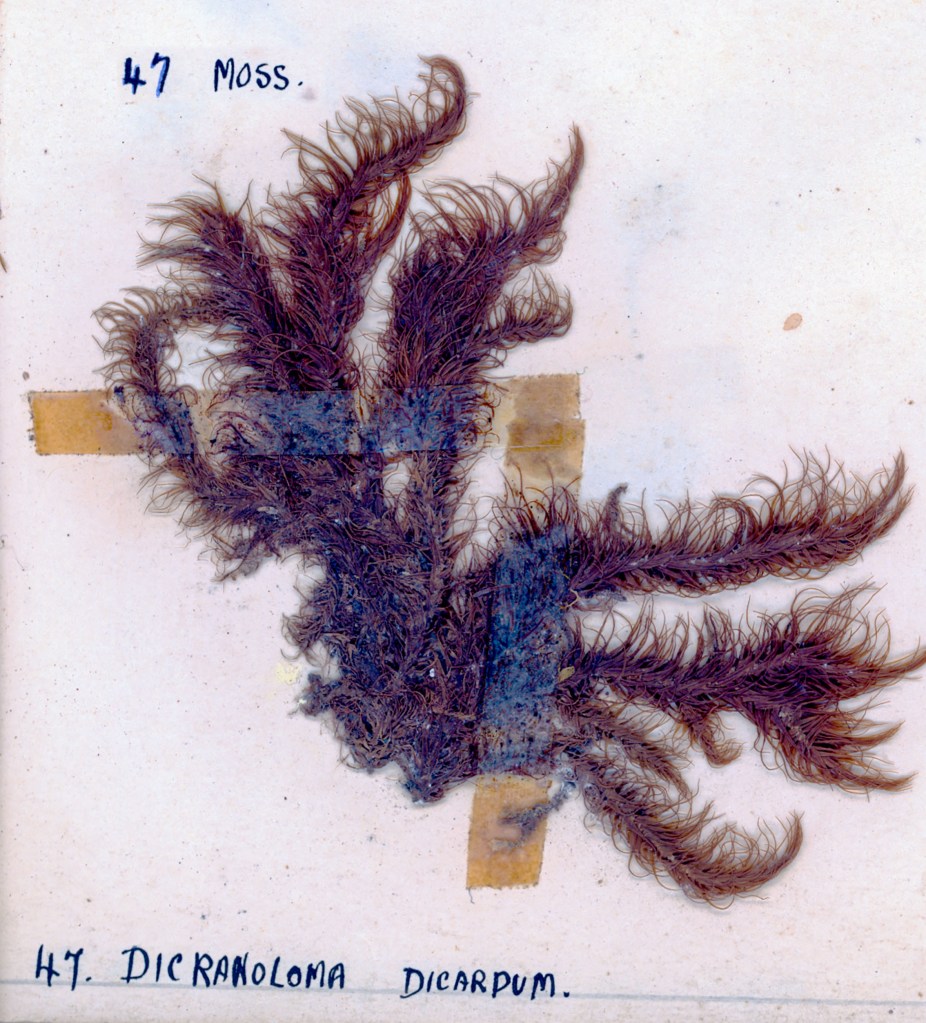
A dried specimen of moss labeled as Dicranoloma dicarpum, featuring intricate, feathery leaves, mounted on a pale background with tape.
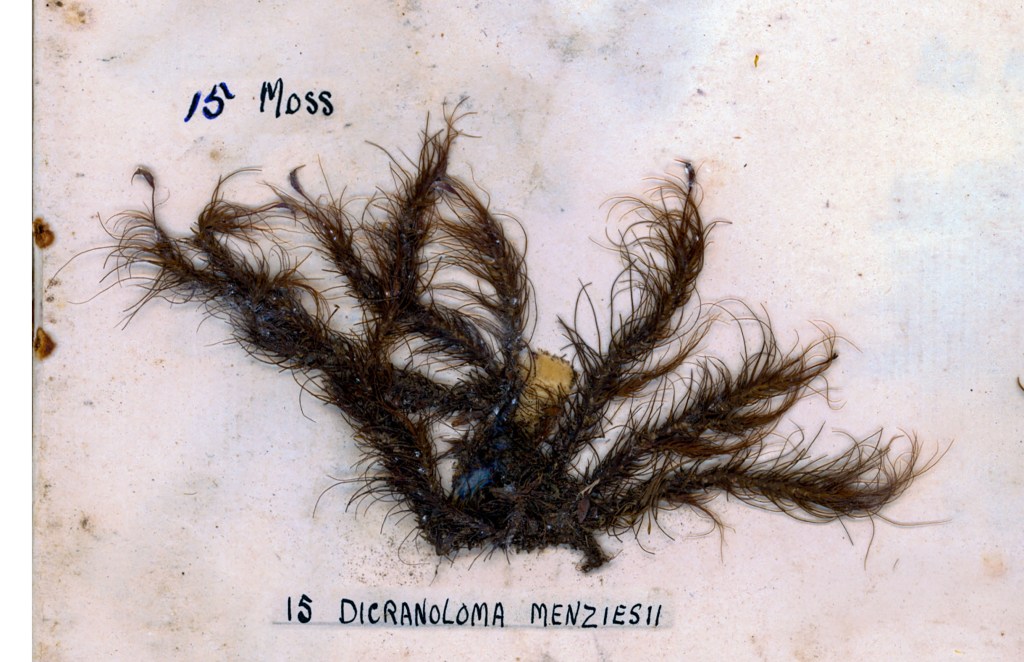
A close-up image of Dicranoloma menziesii moss, showcasing its intricate, feathery structure on a light background.
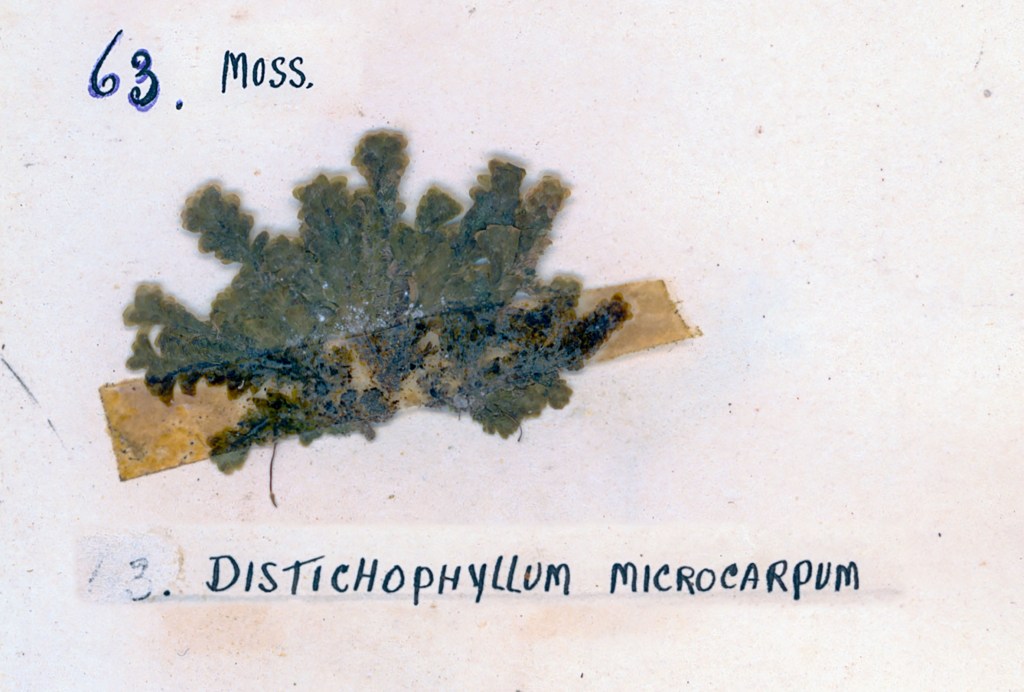
An image of a moss specimen labeled 'Distichophyllum microcarpum', mounted on a light background with a small piece of tape.
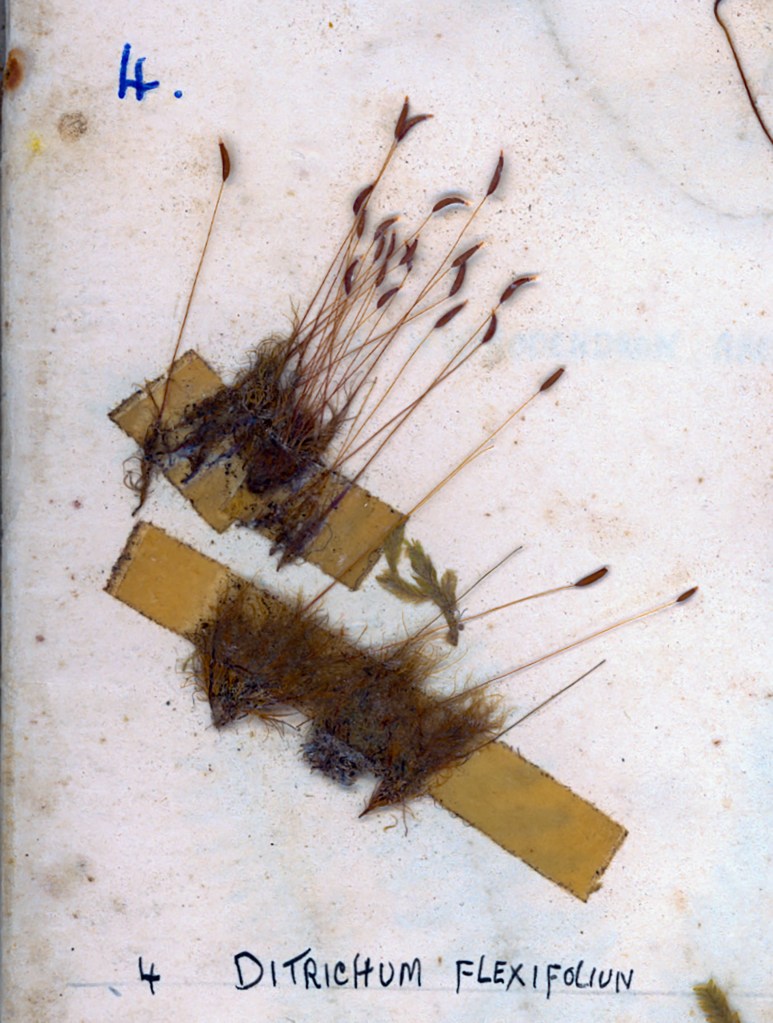
A preserved specimen of Ditricum flexifolium moss attached to a yellow label, showcasing thin brown stems and green foliage on a light background.
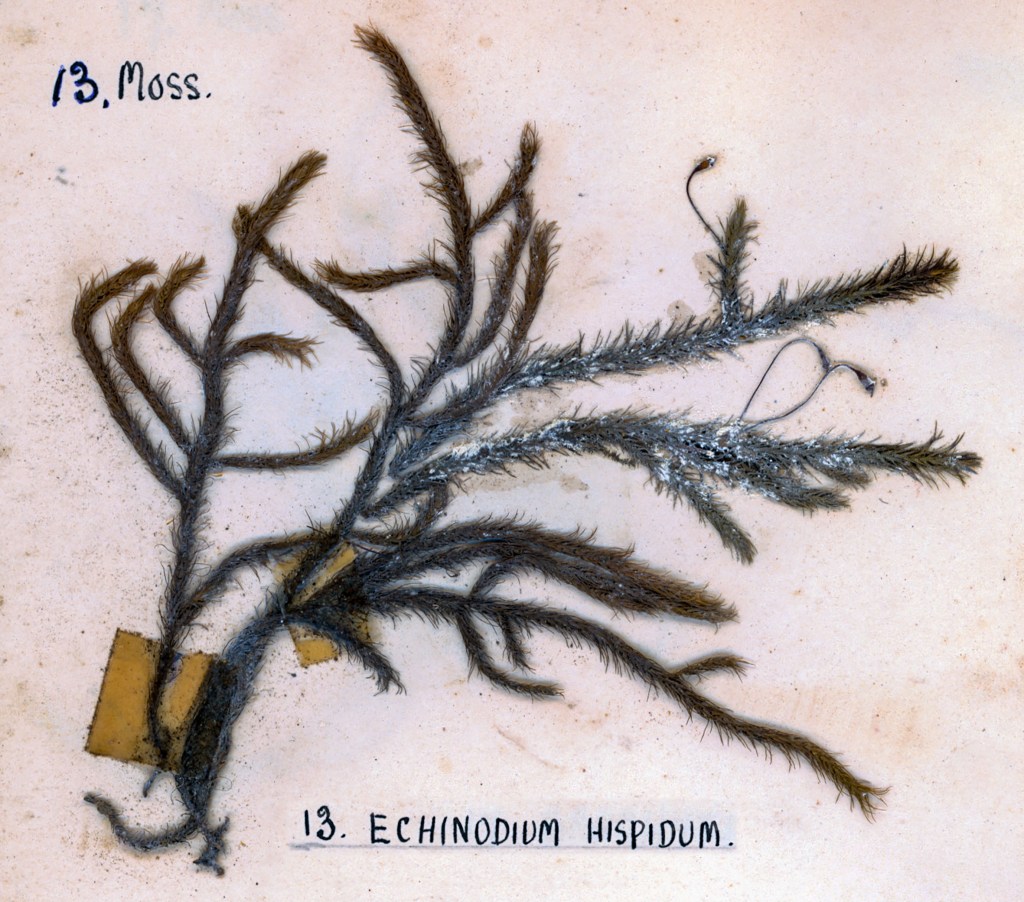
A pressed specimen of Echinodium hispidum moss, showcasing its branched structure on a light background, labeled with its name and number.
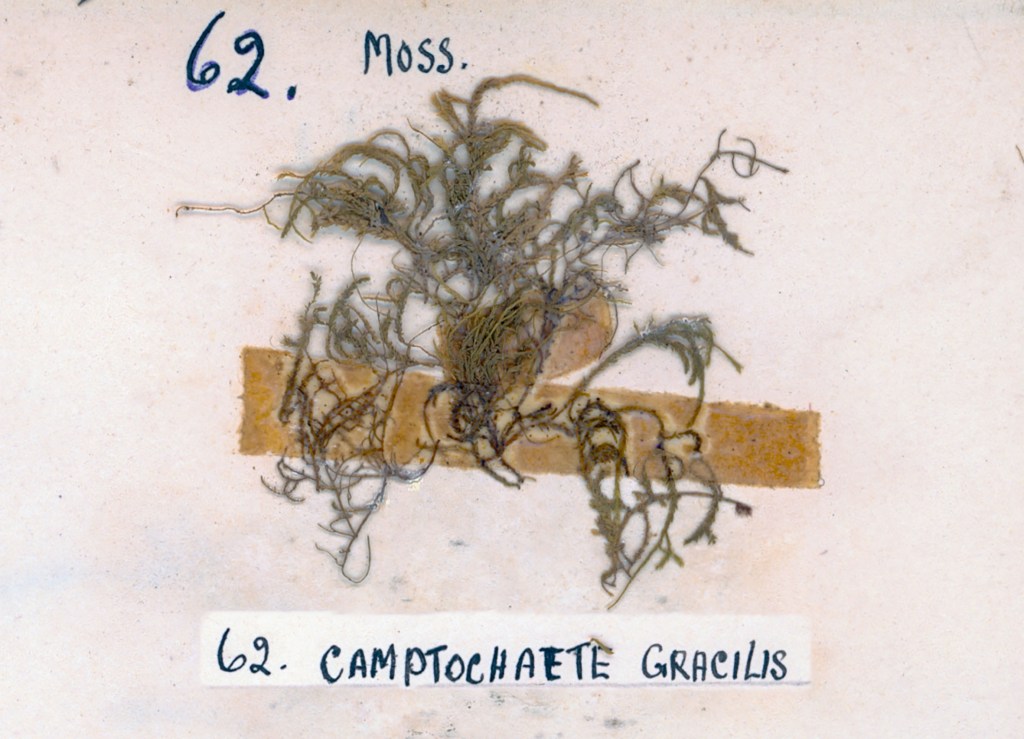
A specimen of moss labeled '62. Camptochaete Gracilis' displayed on a light background.
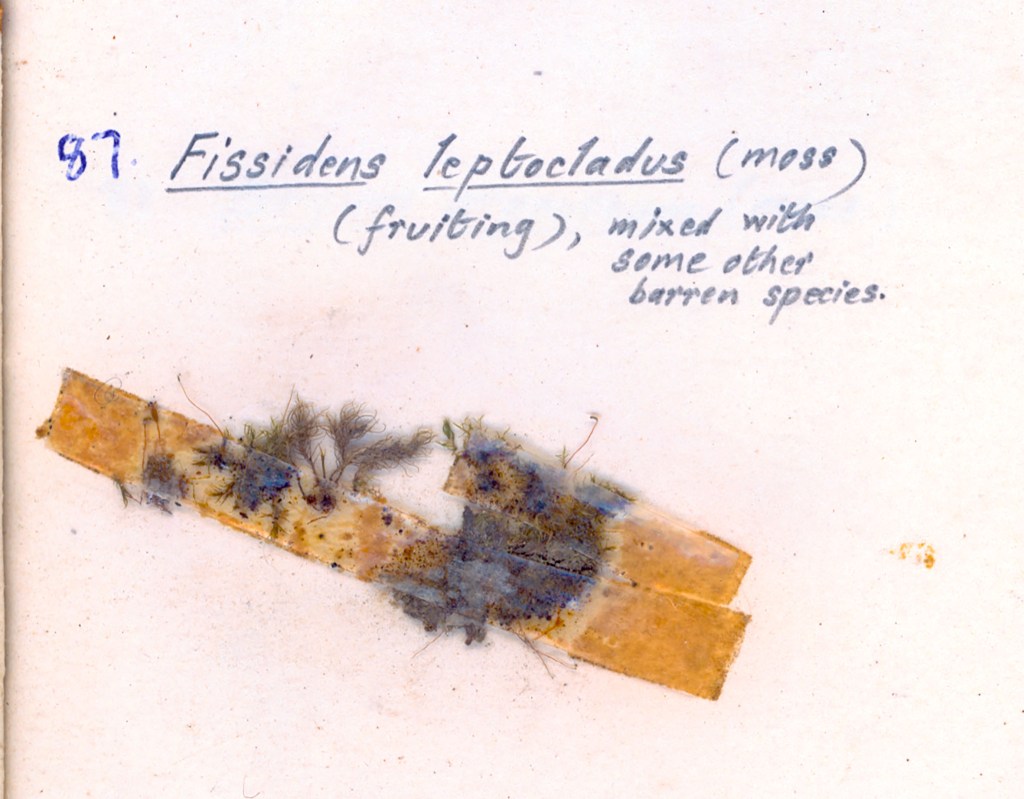
Specimen of Fissidens leptocladus moss (fruiting), labeled and mixed with other barren species.
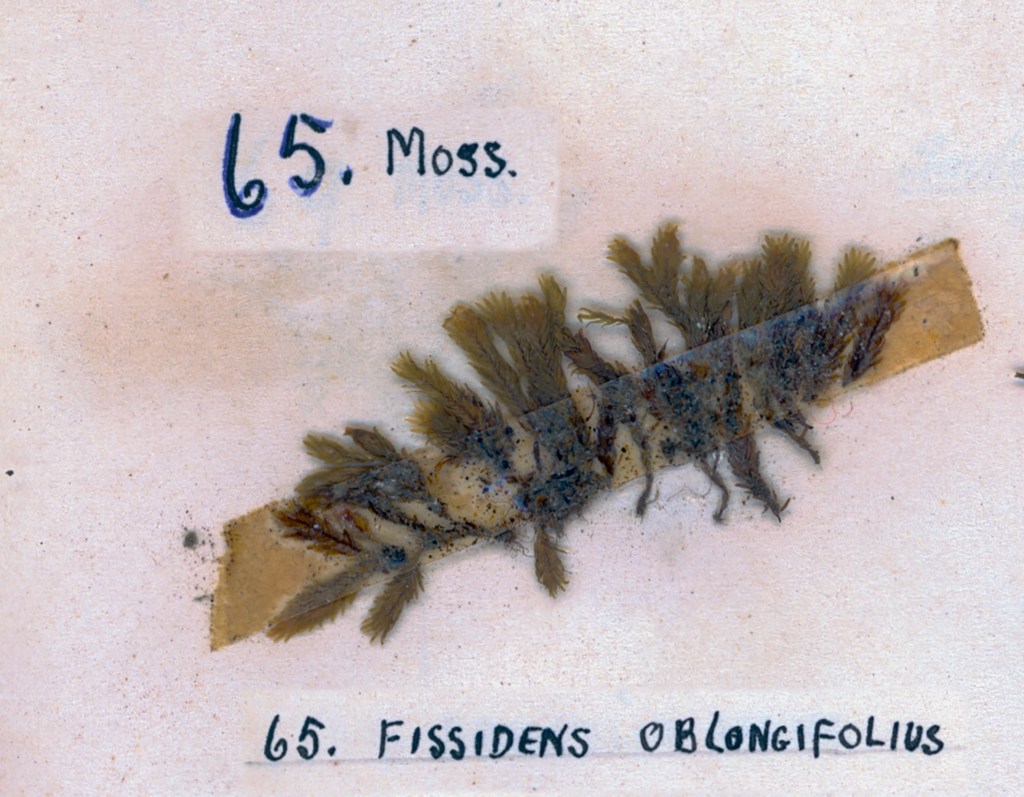
A dried specimen of moss labeled '65. Fissidens oblongifolius,' displayed on a neutral background.
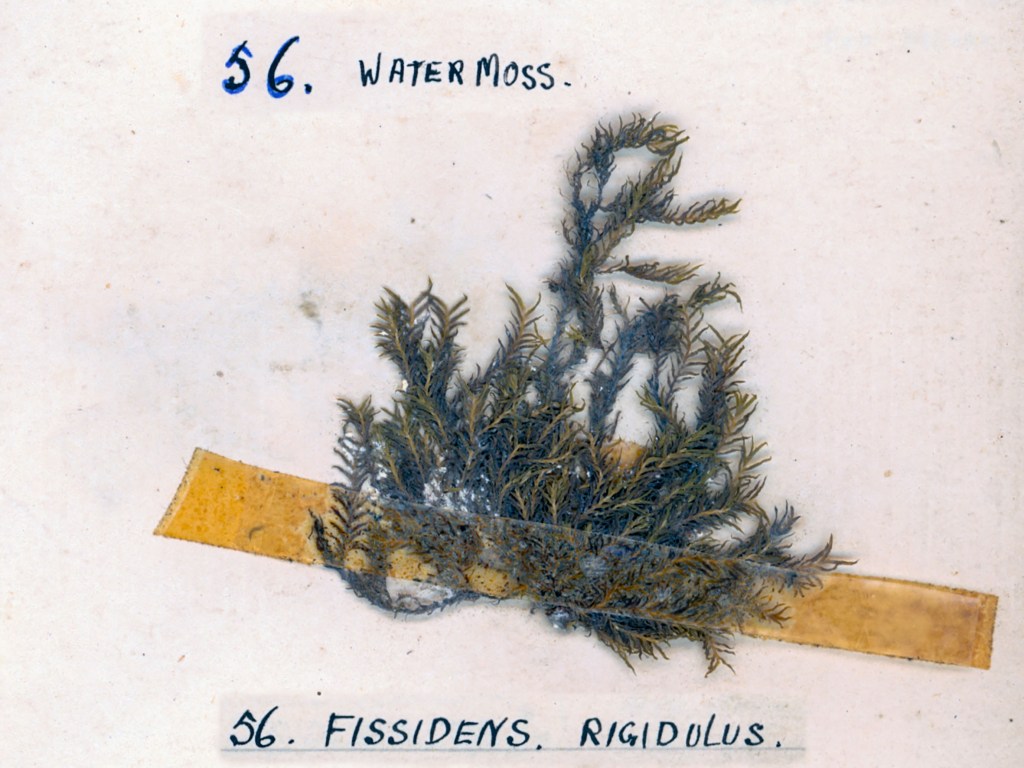
A specimen of water moss labeled as '56. Water Moss' and '56. Fissidens rigidulus' displayed on a light background.
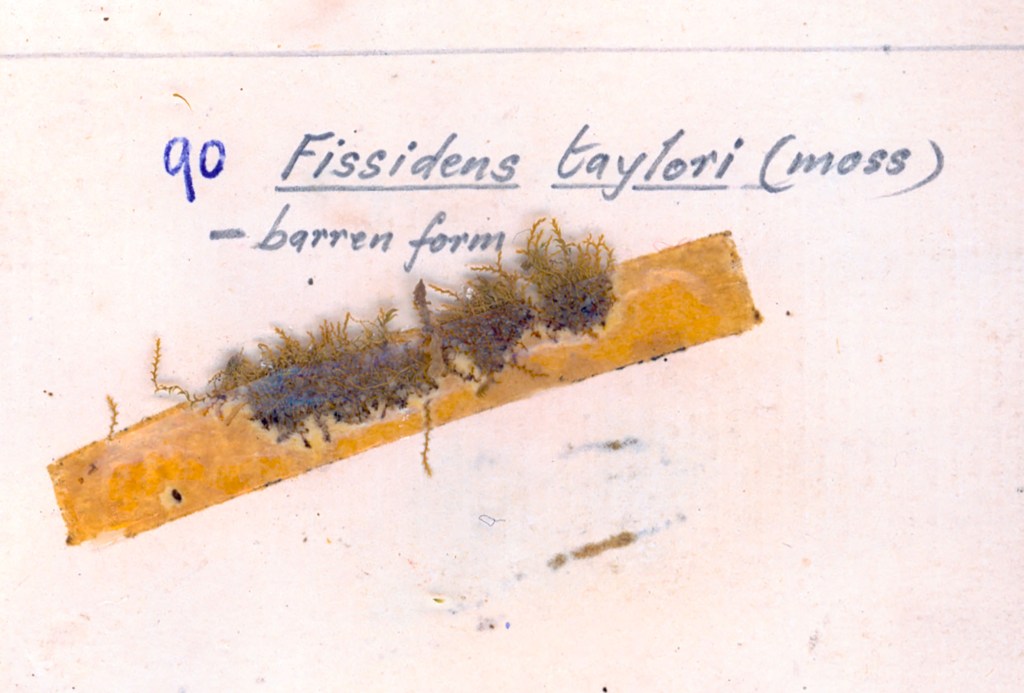
A specimen of Fissidens taylori moss in its barren form, mounted on a paper label with handwritten notes.
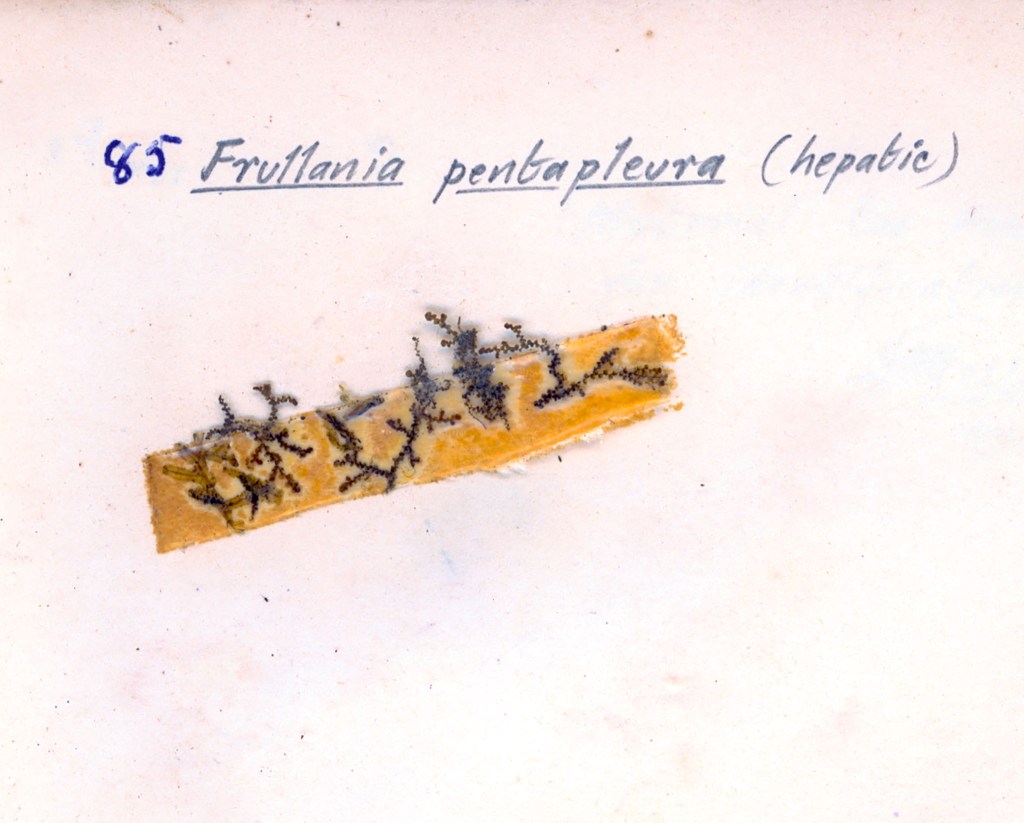
A scientific illustration of Frullania pentapleura, a type of hepatic (liverwort), displayed on a light background with detailed features labeled.
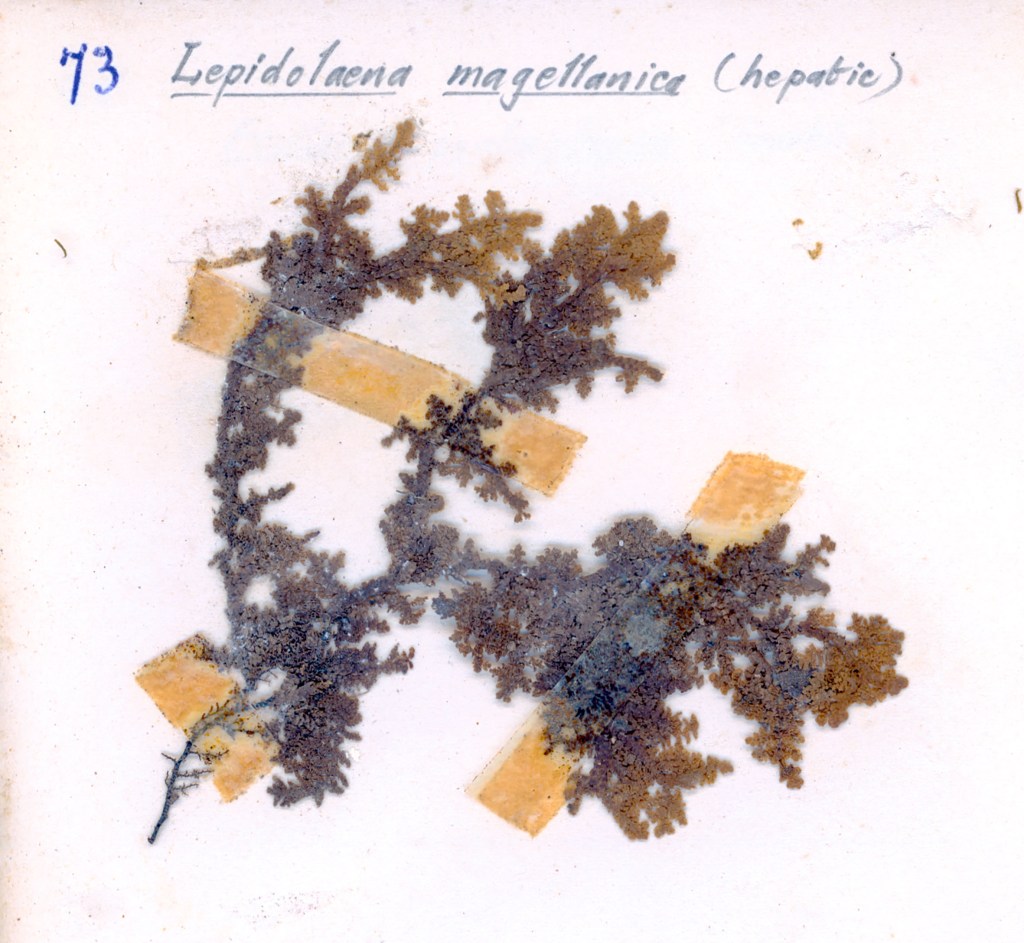
A pressed specimen of Lepidolaena magellanica (hepatic) mounted on a light background with two pieces of tape holding it in place.
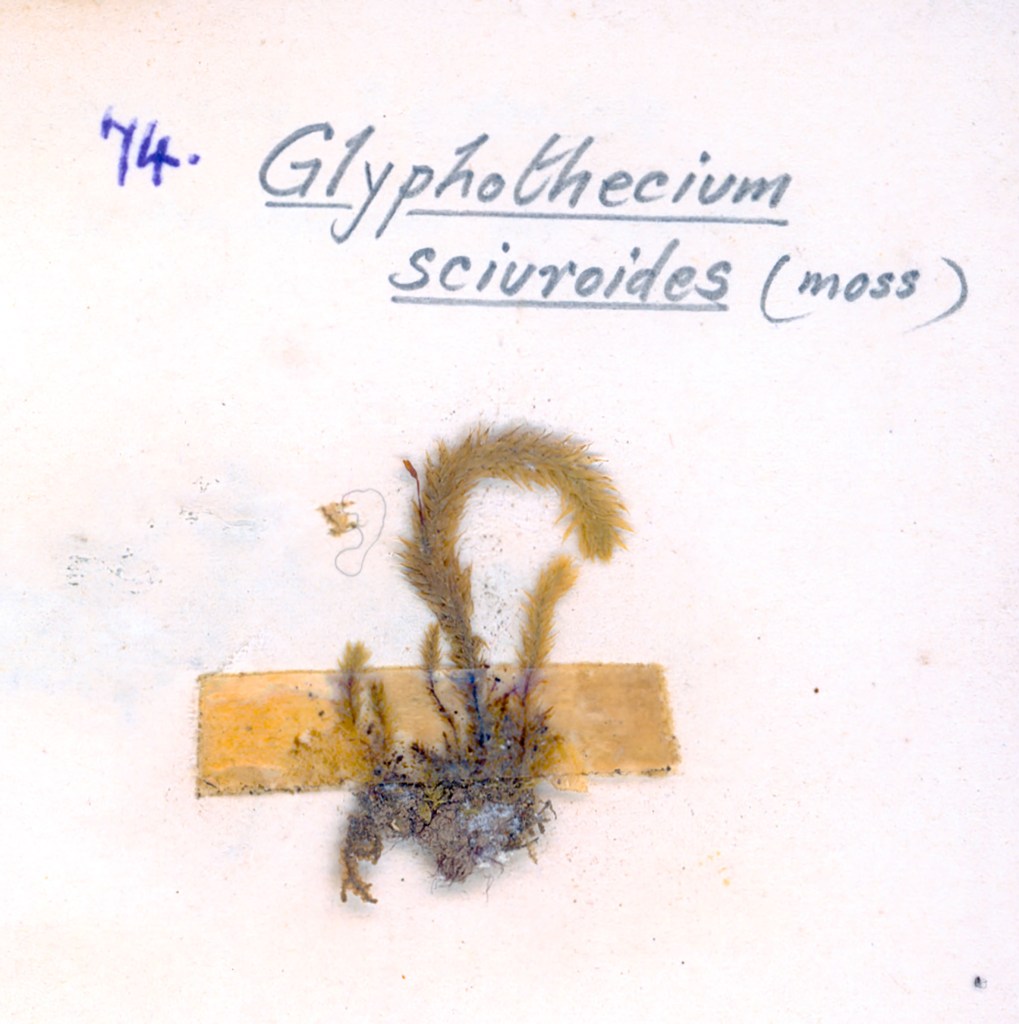
Botanical specimen of Glyphothecium sciuroides moss mounted on paper with a handwritten label.
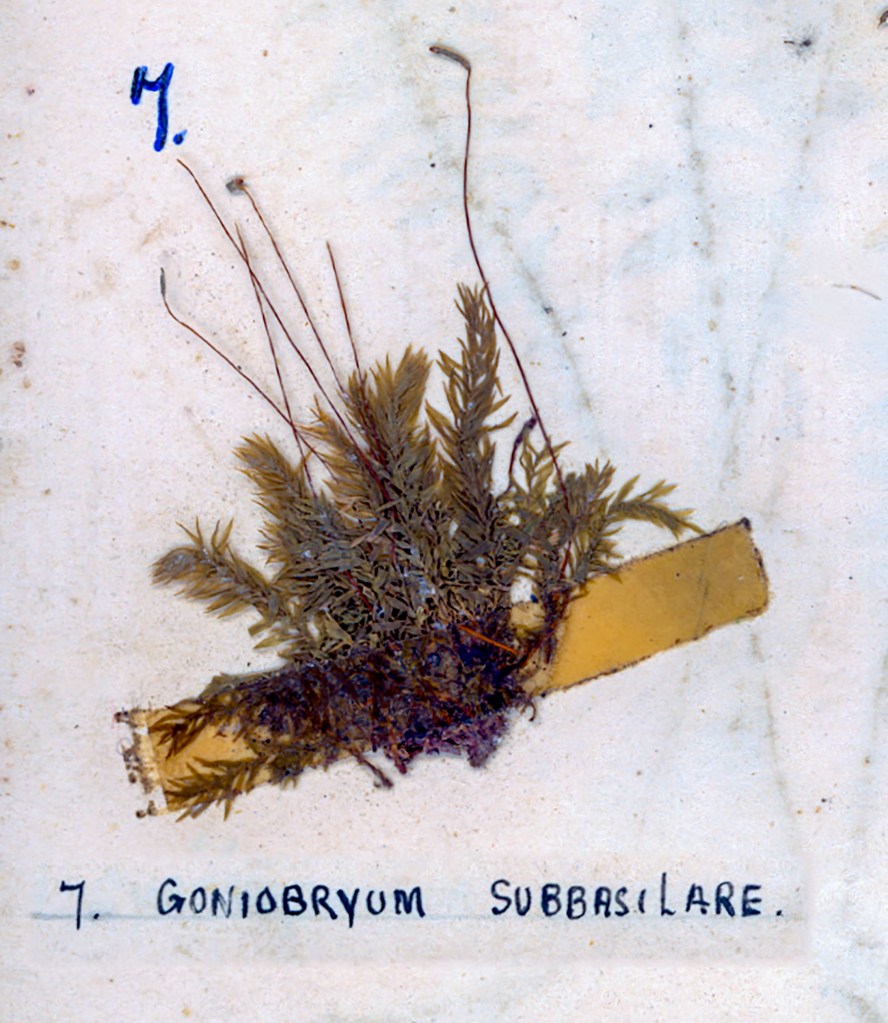
A specimen of Gonio bryum subbasilaris, displayed on a white background with a yellow label and handwritten text.
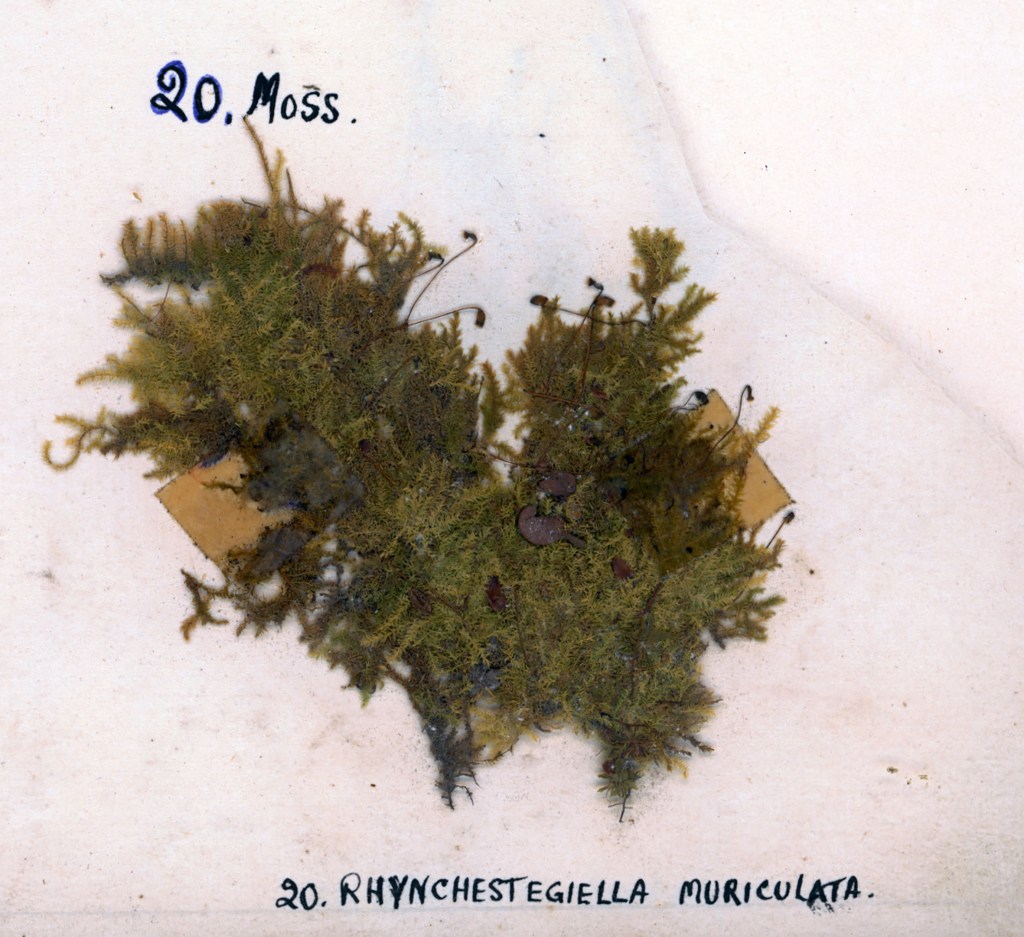
A close-up image of moss, specifically Rhynchostegium muriculatum, mounted on paper, with handwritten labels at the top and bottom indicating the specimen number and name.
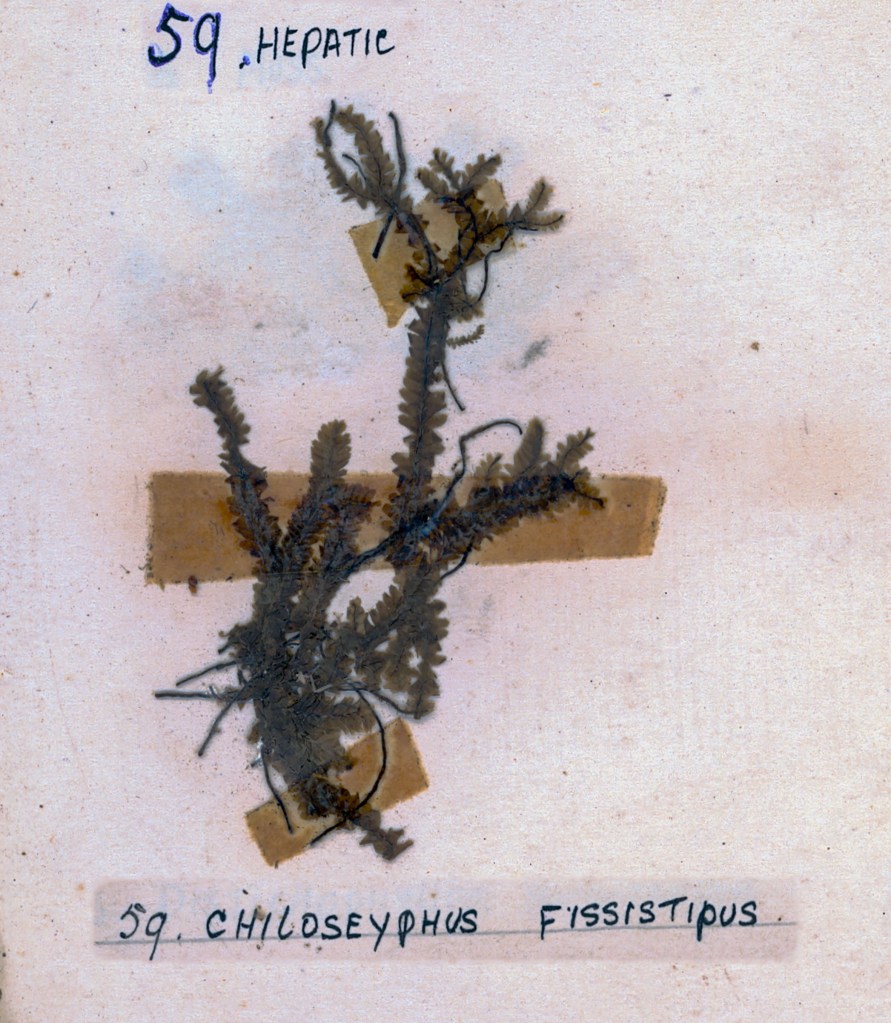
Pressed specimen of a hepatic plant, labeled with '59. Hepatic' and '59. Chiloscyphus Fissistipus'.
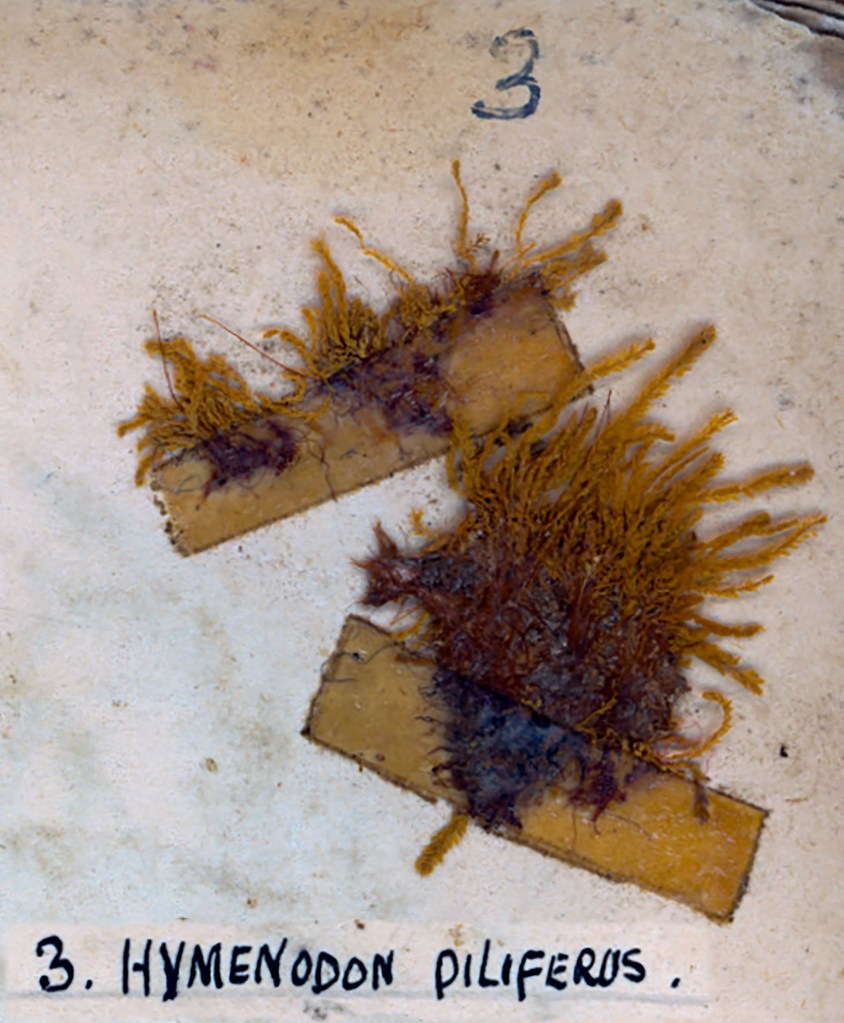
Illustration of two specimens of Hymenodon piliferus mounted on a pale background with handwritten label.
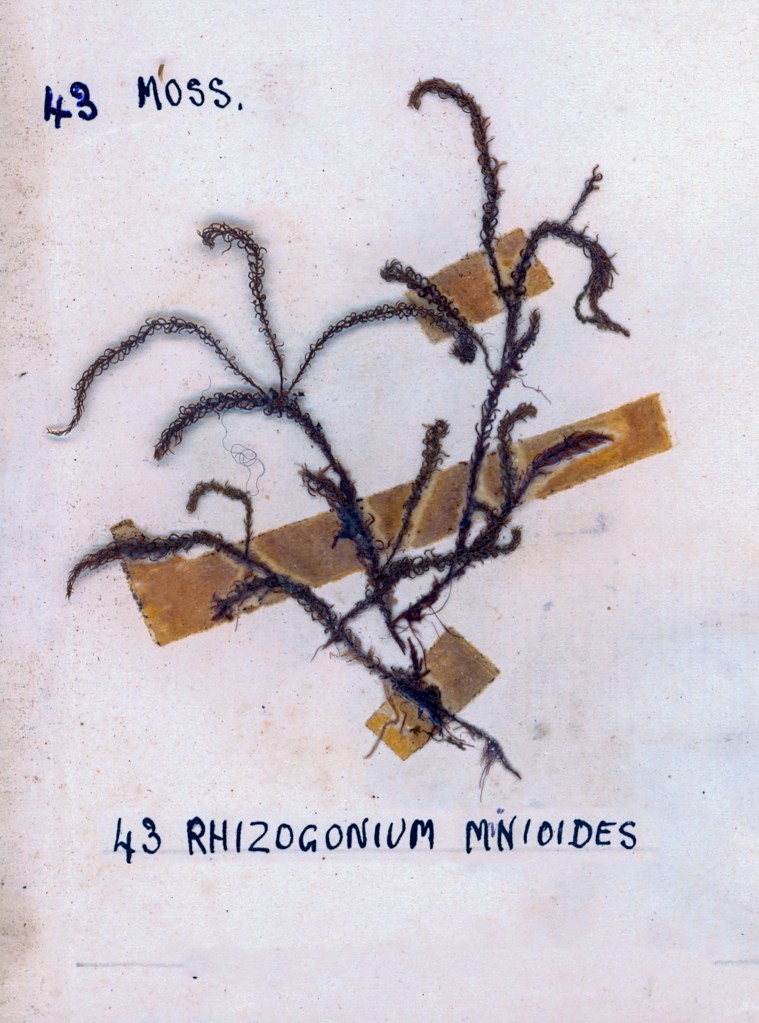
Dried moss specimen labeled '43 Rhizogonium miniodes' displayed on a pale background with tape.
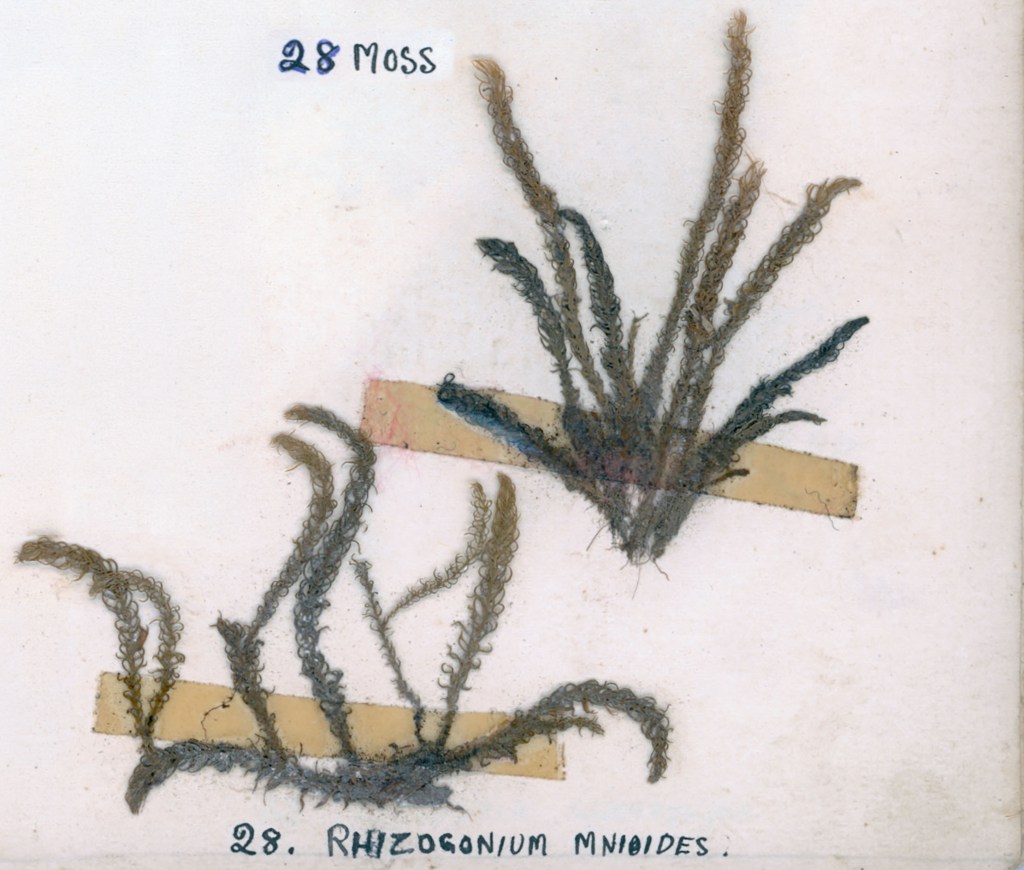
A botanical illustration showing two species of moss: the top labeled '28 Moss' and the bottom labeled '28. Rhizogonium minioides'. Both are displayed on paper with yellow labels.
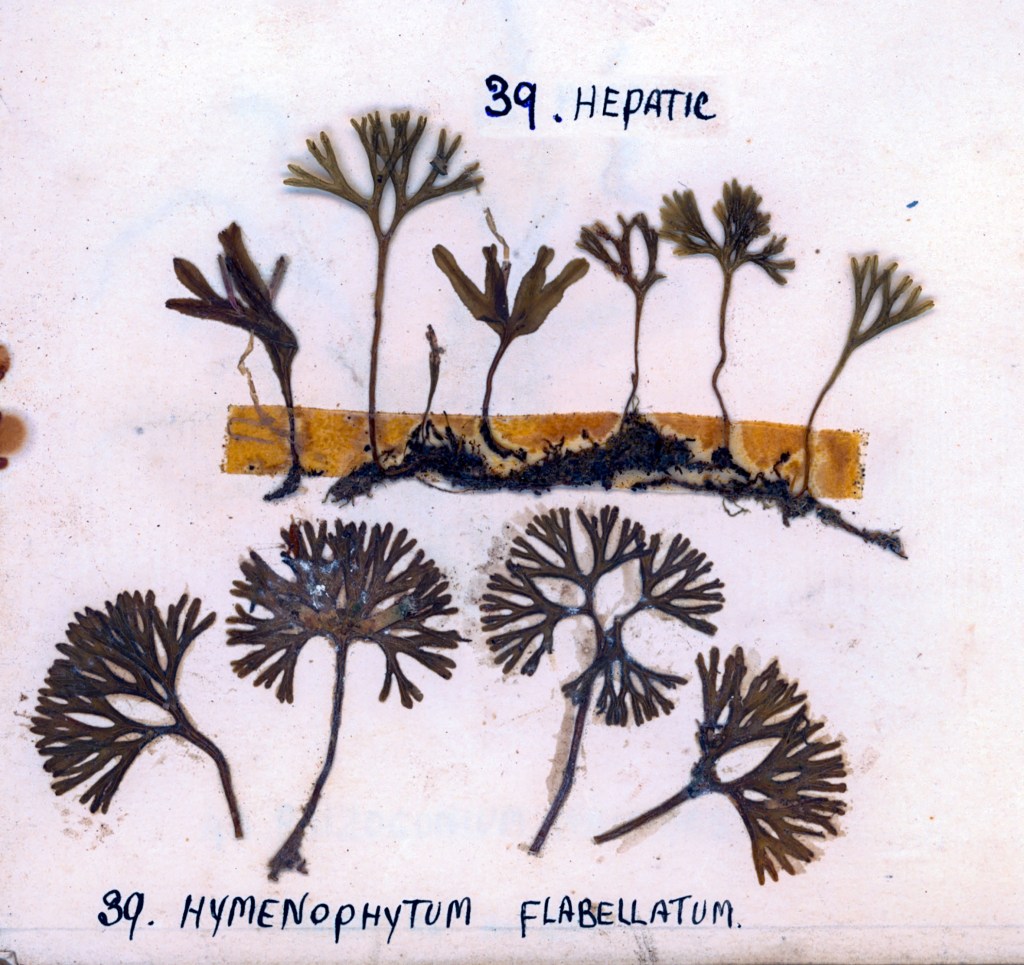
A collection of hepatic bryophytes displaying various forms, with labels for 'Hepatic' and 'Hymenophyllum flabellatum'.
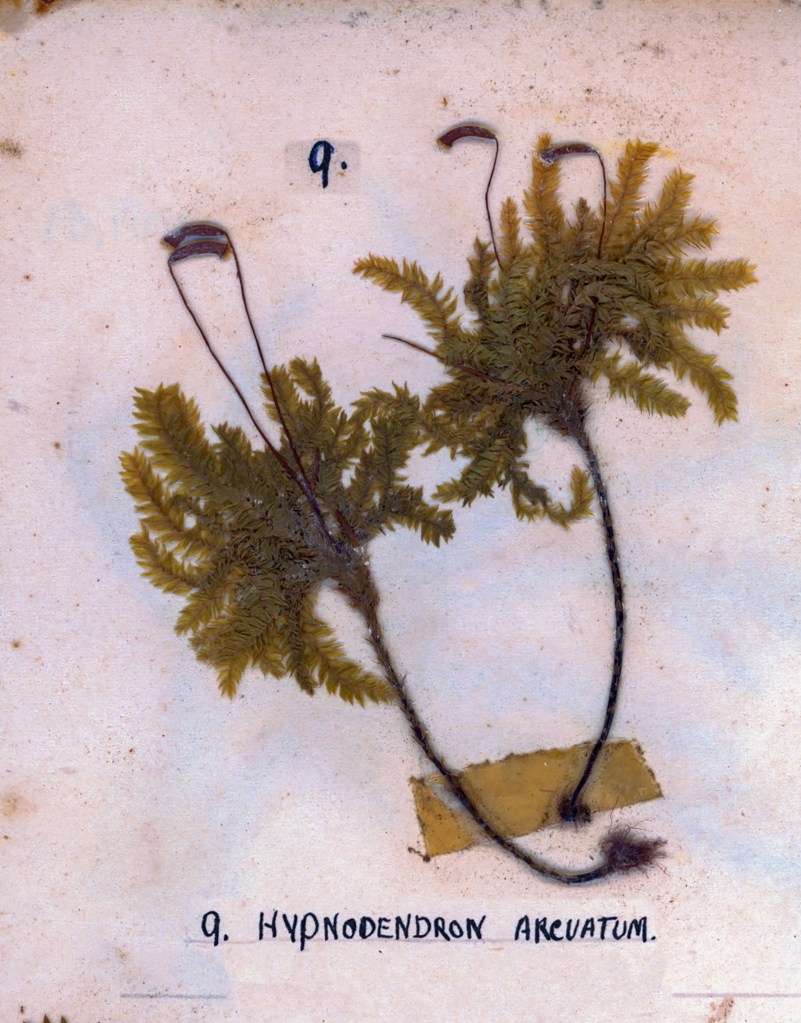
Dried specimen of Hypnodendron arcuatum, featuring green leafy fronds and elongated stems, mounted on a paper background with a label.
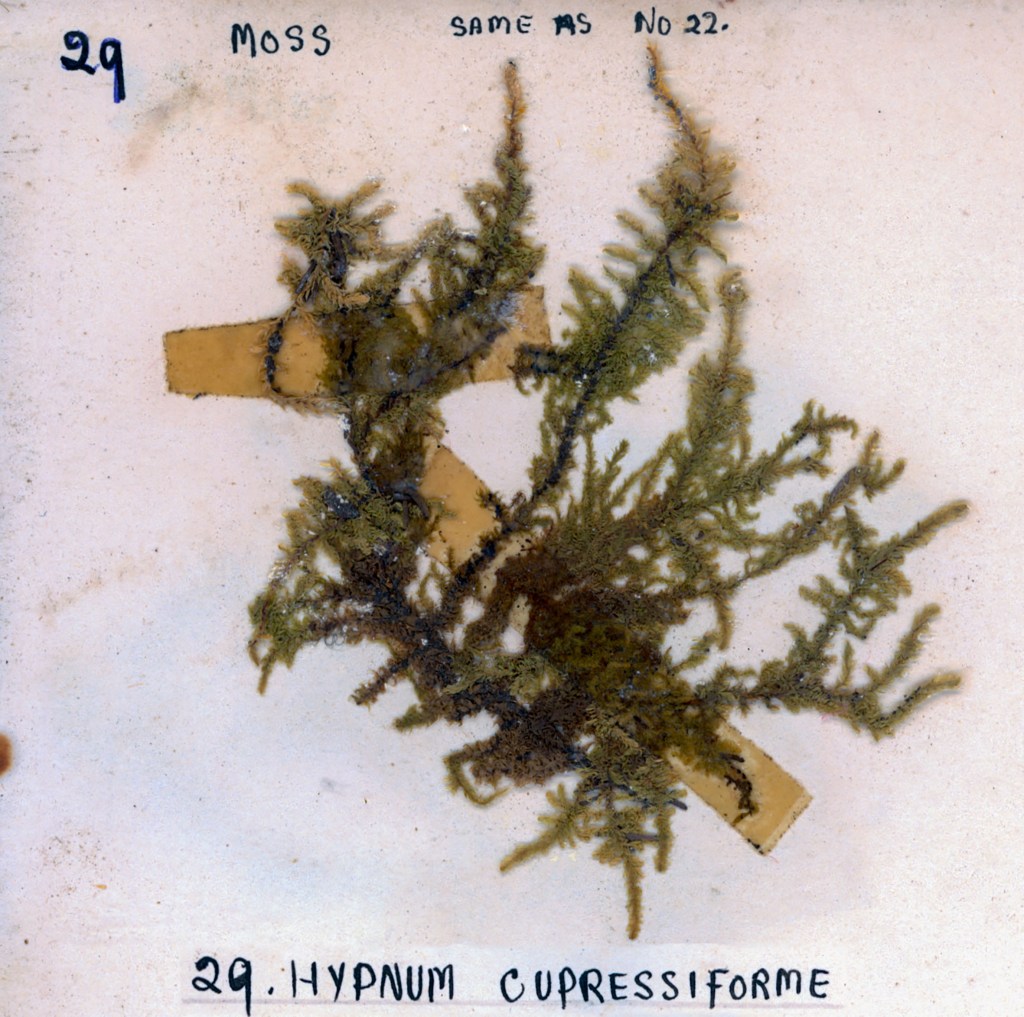
A pressed specimen of Hypnum cupressiforme moss mounted on a beige background, with labels indicating its identification number and name.
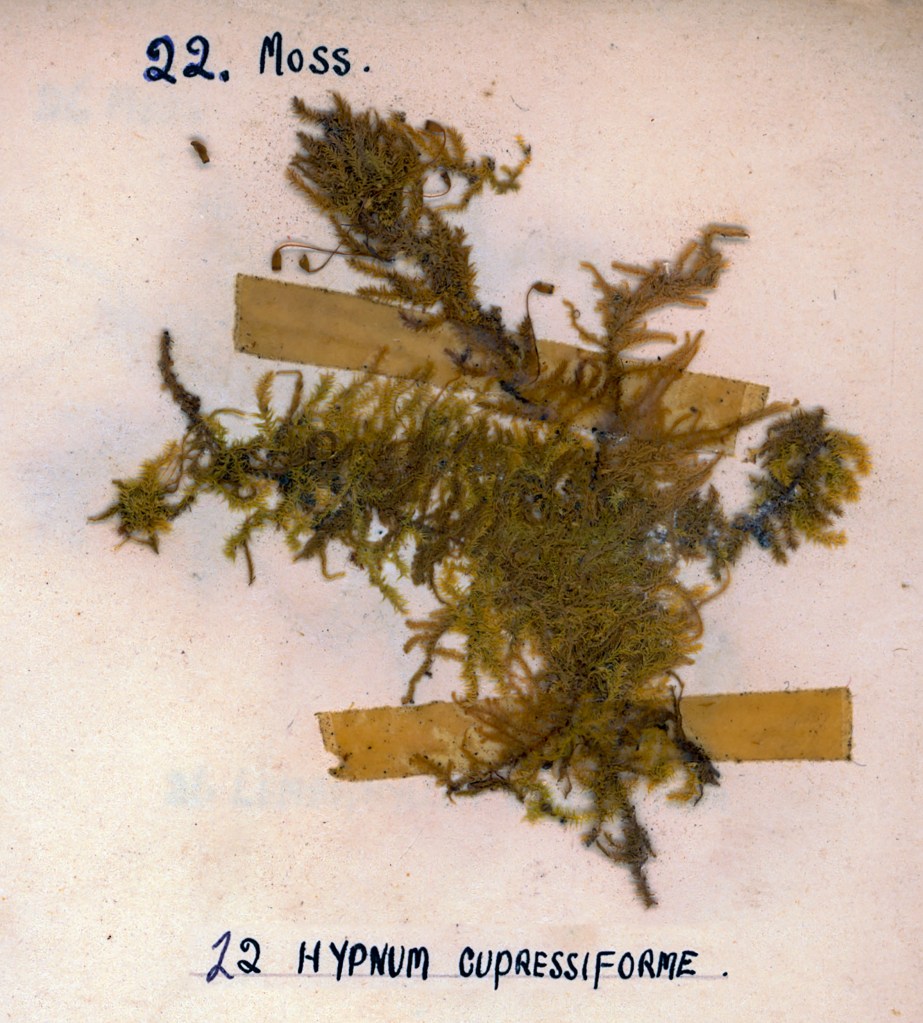
A specimen of moss labeled '22. Moss' and '12 Hypnum cupressiforme' on a light background.
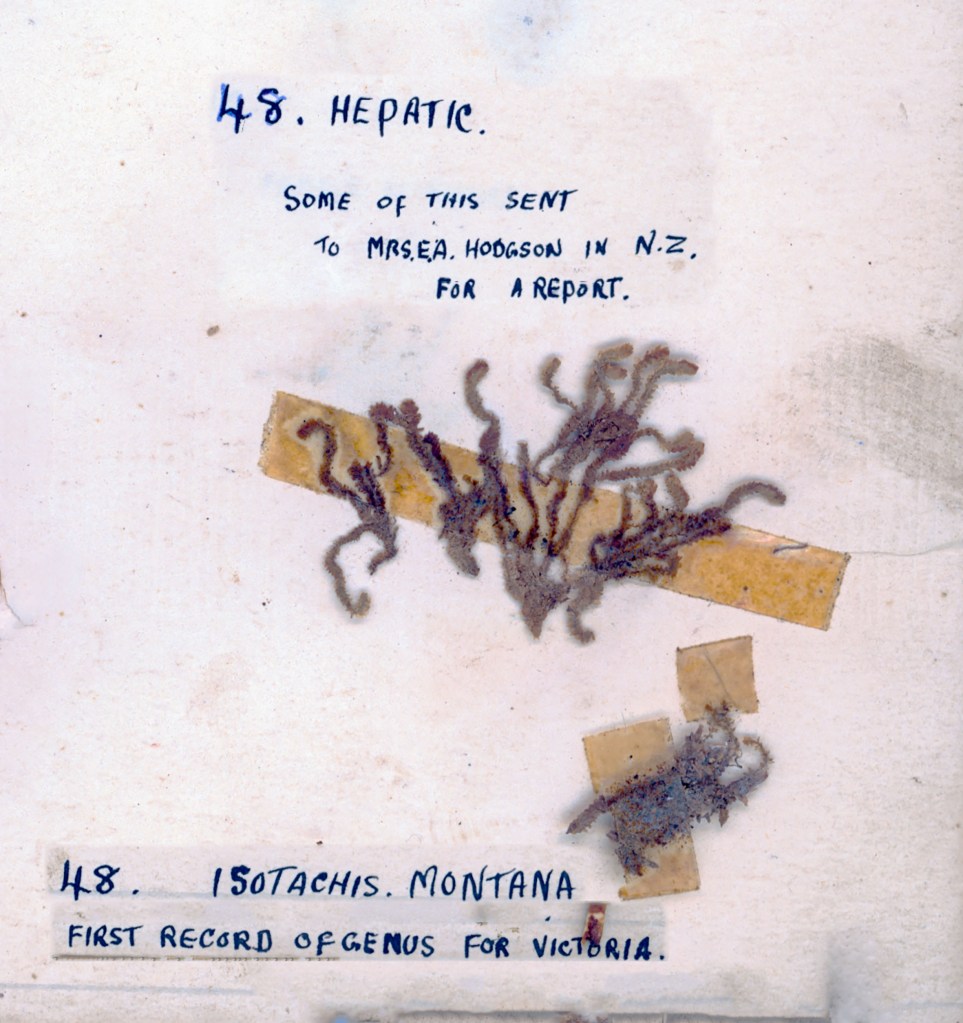
An illustration of a plant specimen labeled 'Hepatic' and 'Isotachis montana', with handwritten notes about its identification and report details.
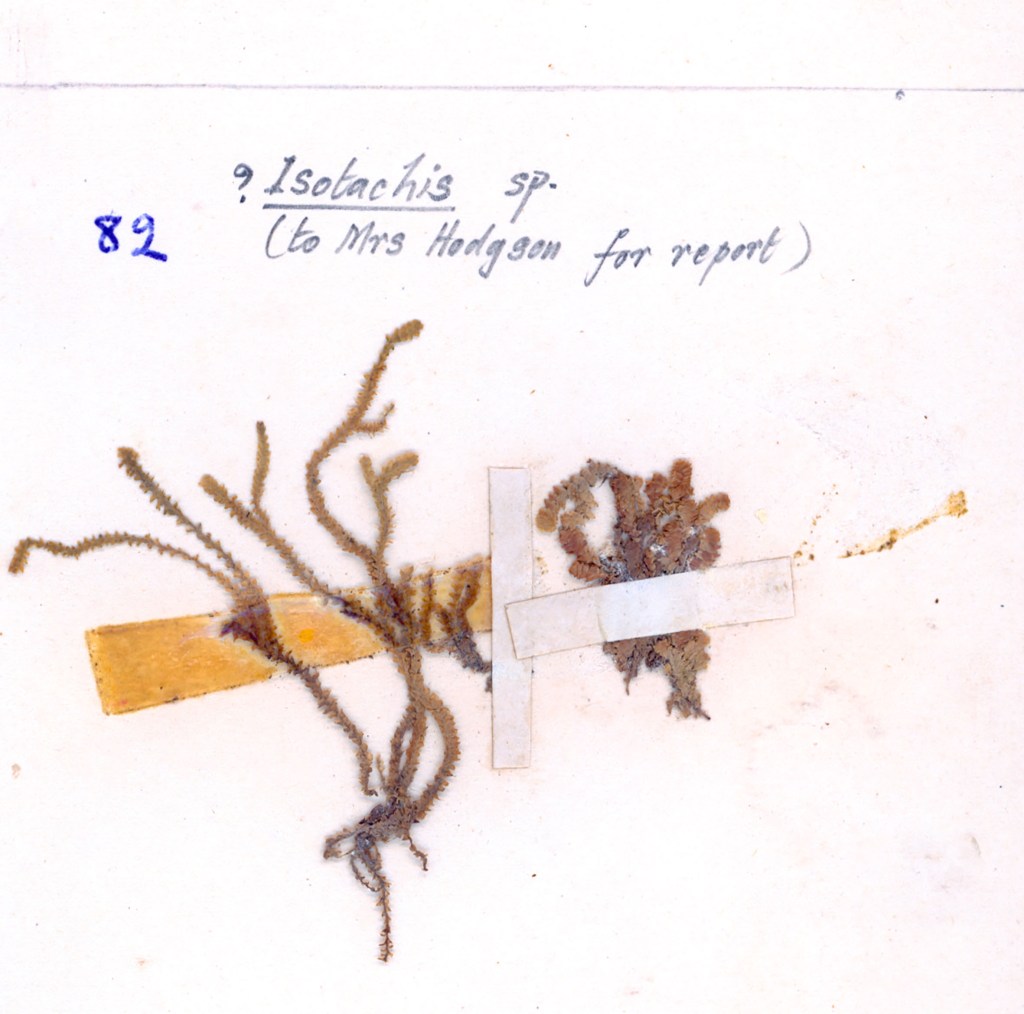
A botanical specimen of Isotachis sp. attached to a paper backing with labels for report purposes.
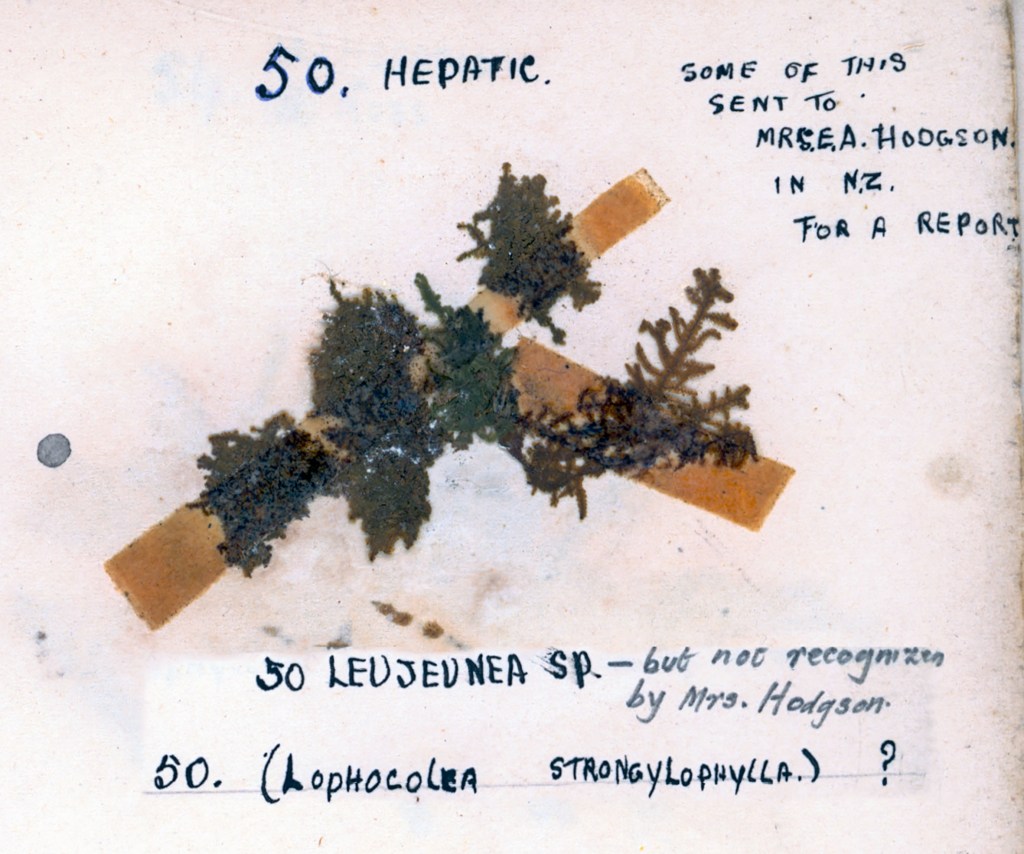
A botanical specimen of hepatic liverworts mounted on a page, labeled with '50, Hepatic' and '50 Lejeunea sp. - but not recognized by Mrs. Hodgson.'
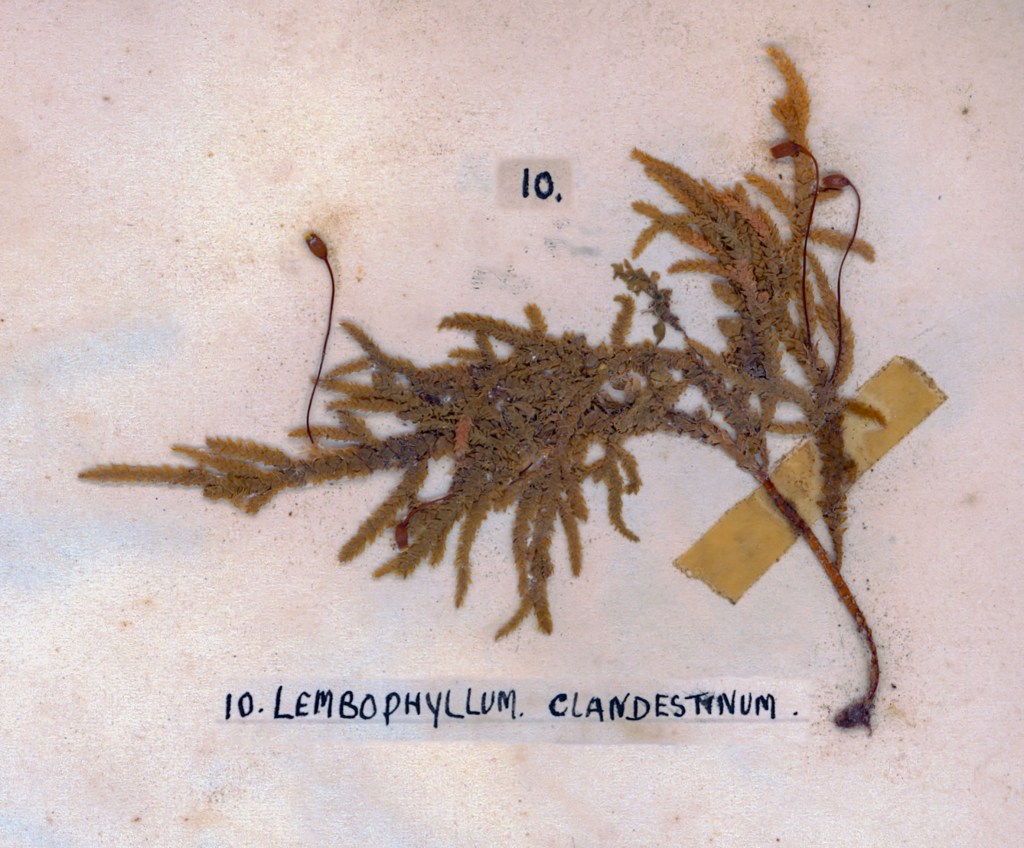
A pressed specimen of Lembophyllum clandestinum mounted on paper, labeled with the number 10.
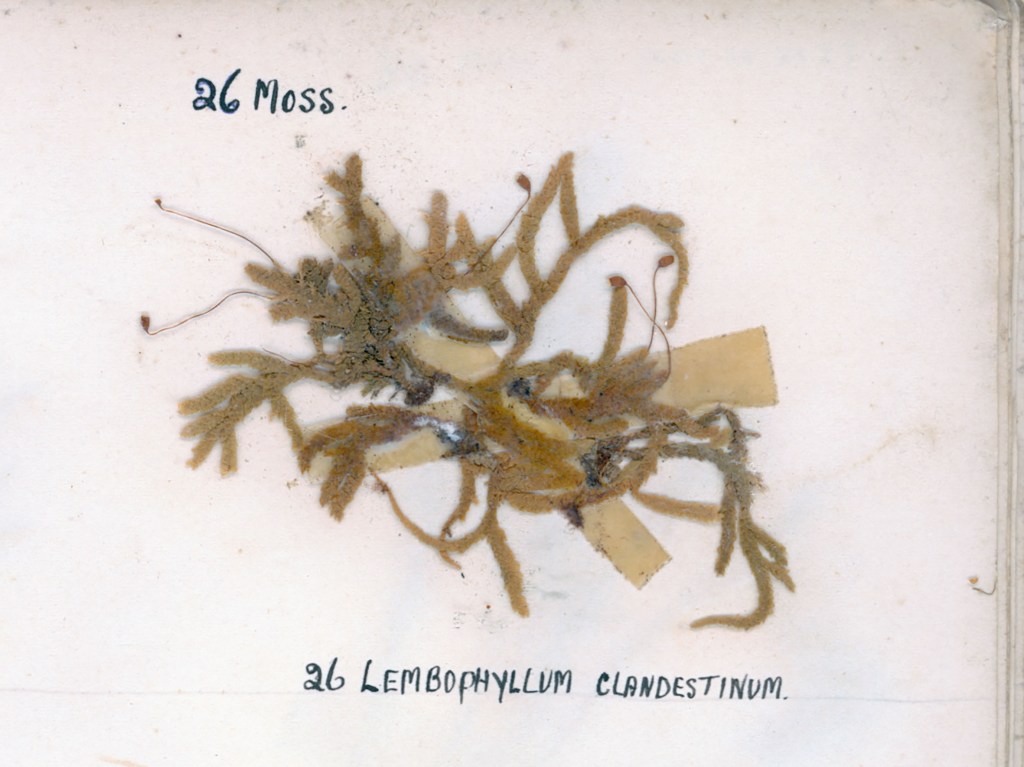
Specimen of moss labeled as '26 Lemnophylum clandestinum', featuring a brownish-green cluster of moss with delicate branches.
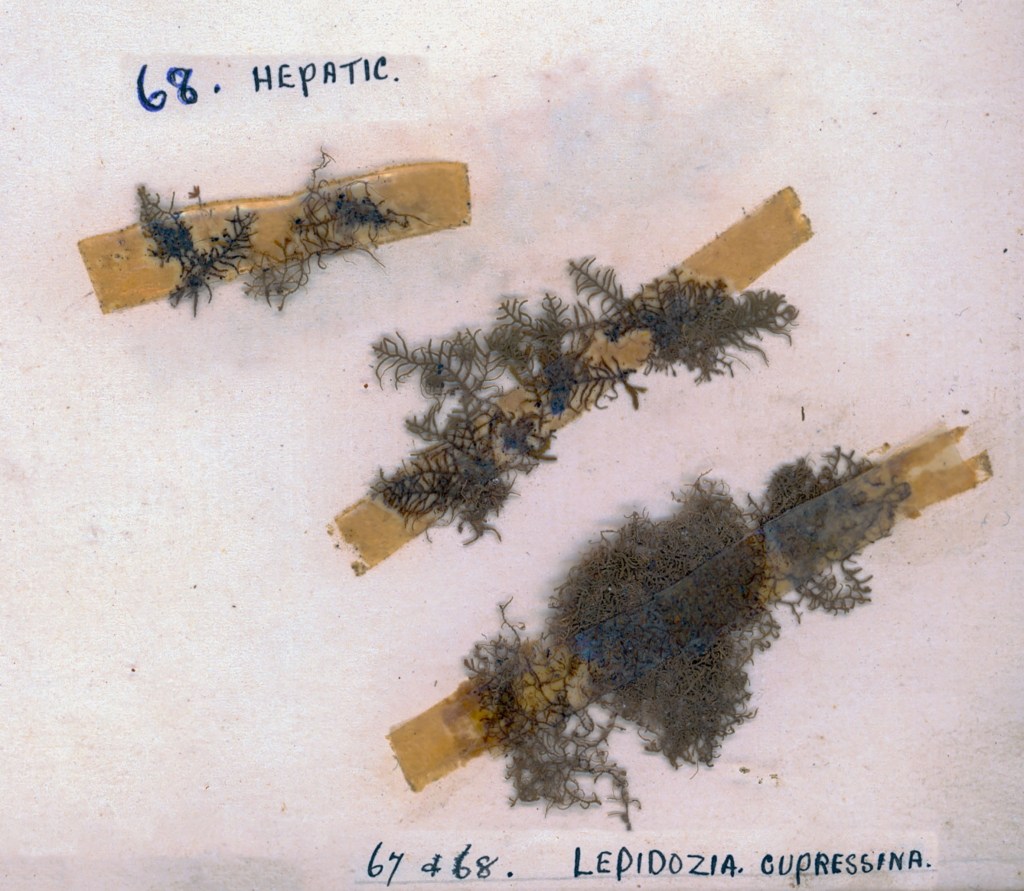
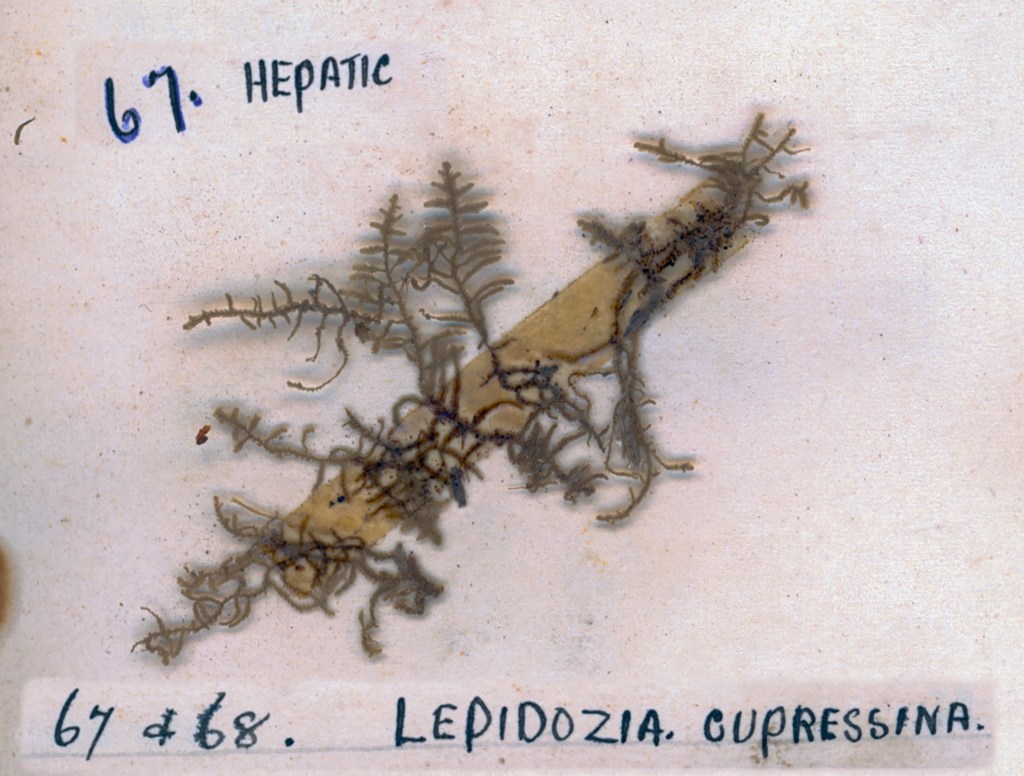
Three mounted samples of hepatic plants, labeled 67 and 68, with fine, intricate textures on a light background.
A specimen of Lepidozia cupressina, a type of hepatic liverwort, displayed on a light-colored background. The specimen features intricate branching structures.
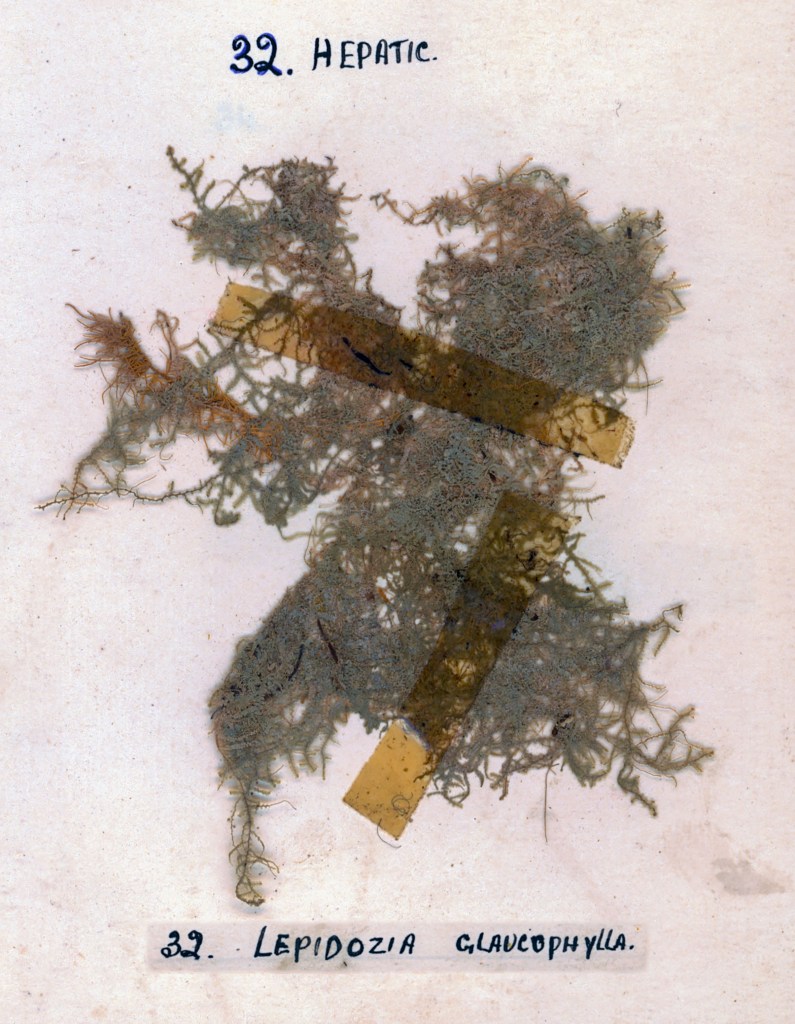
Botanical specimen of Hepatic plant, labeled with '32. HEPATIC.' and '32. Lepidozia glaucephylla.'
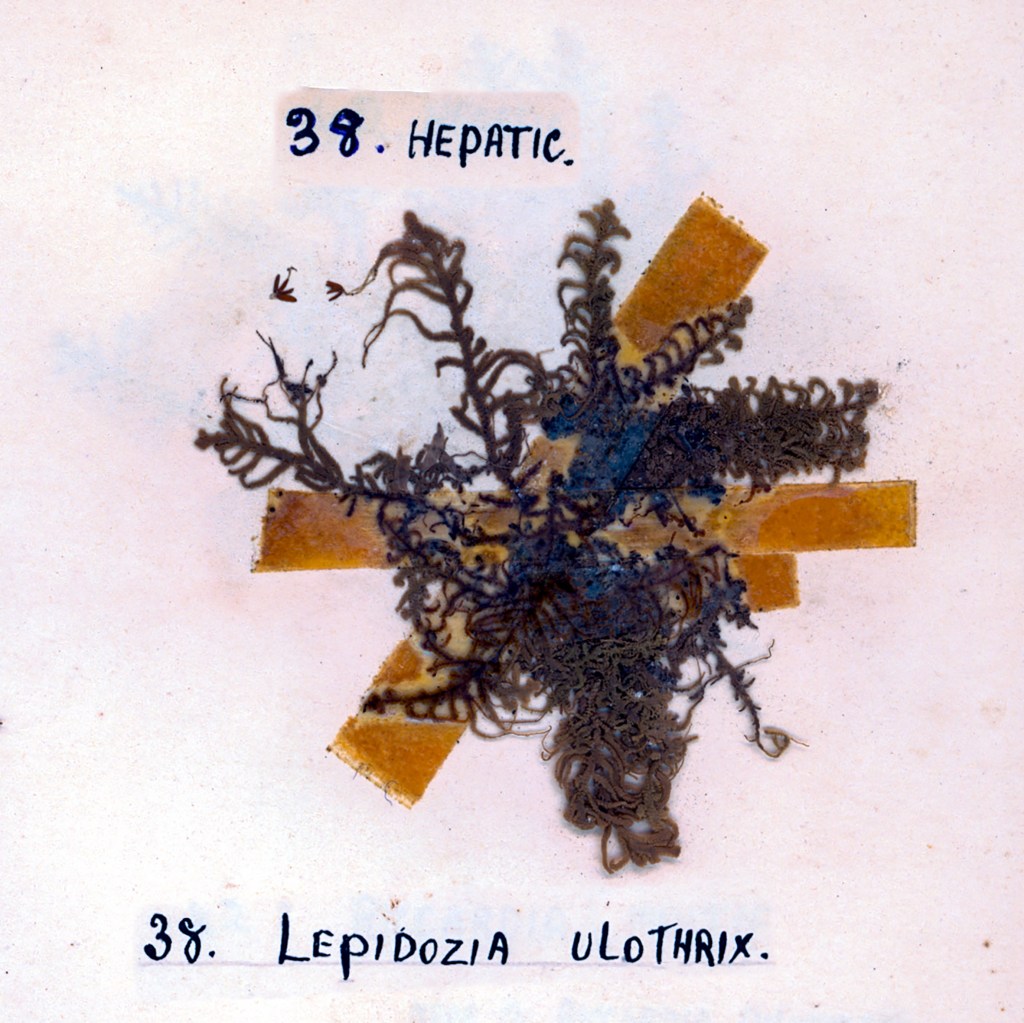
A specimen labeled '38. Hepatic' with the scientific name '38. Lepidozia ulothrix', featuring a dark, lacy plant specimen mounted on a light background with yellow tape.
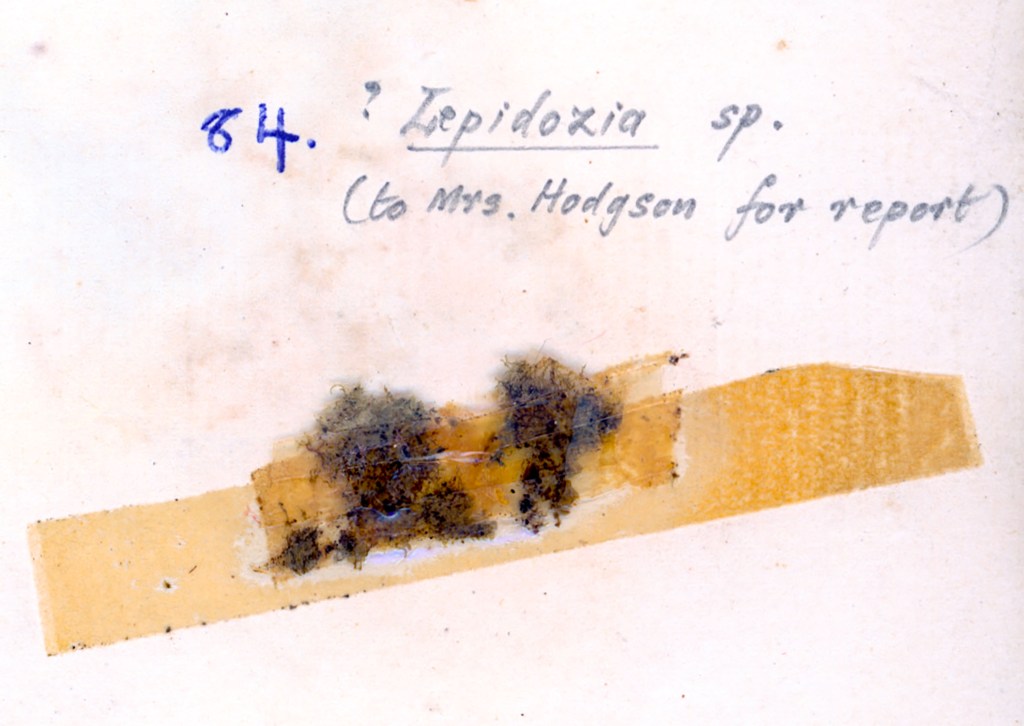
An old scientific label featuring the handwritten name '? Lepidozia sp.' and a note indicating it is for Mrs. Hodgson for report, with a small specimen attached to transparent tape.
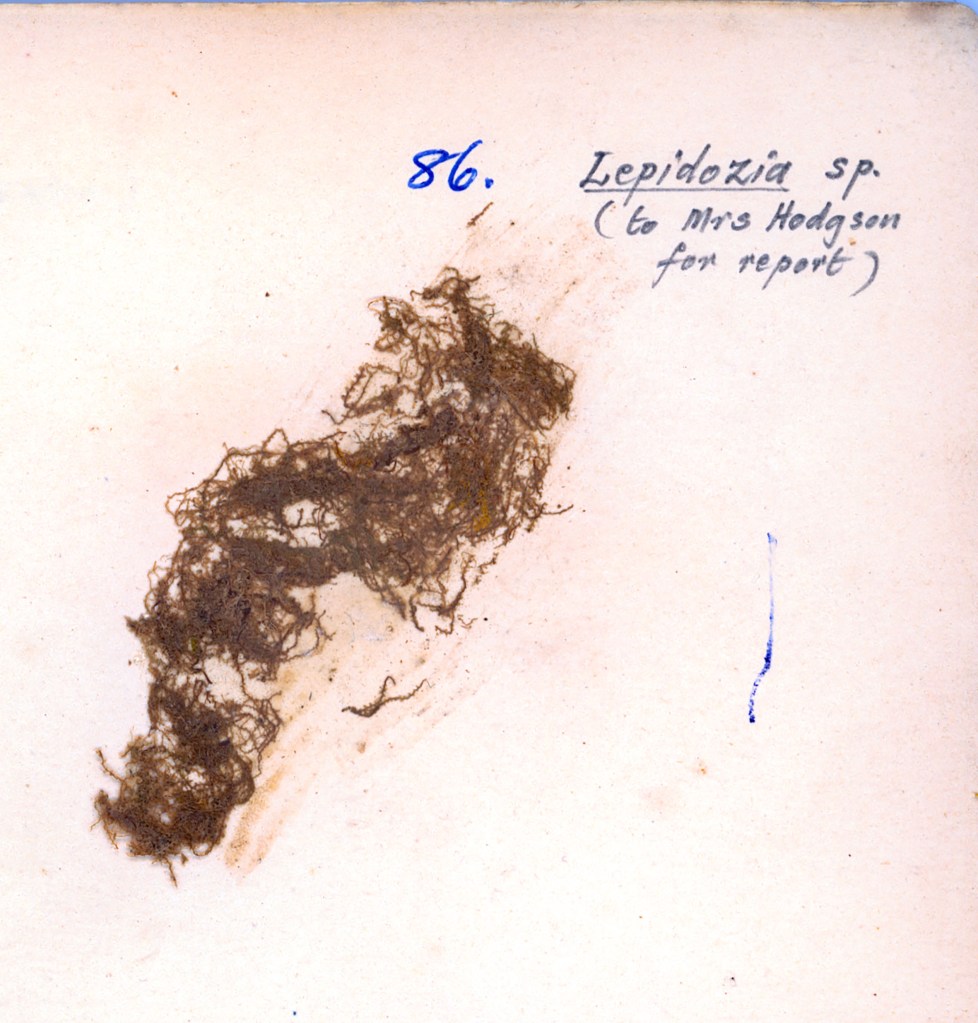
A dried sample of Lepidozia sp., showing thin, tangled strands on a light background, with handwritten labels indicating the specimen number and notes.
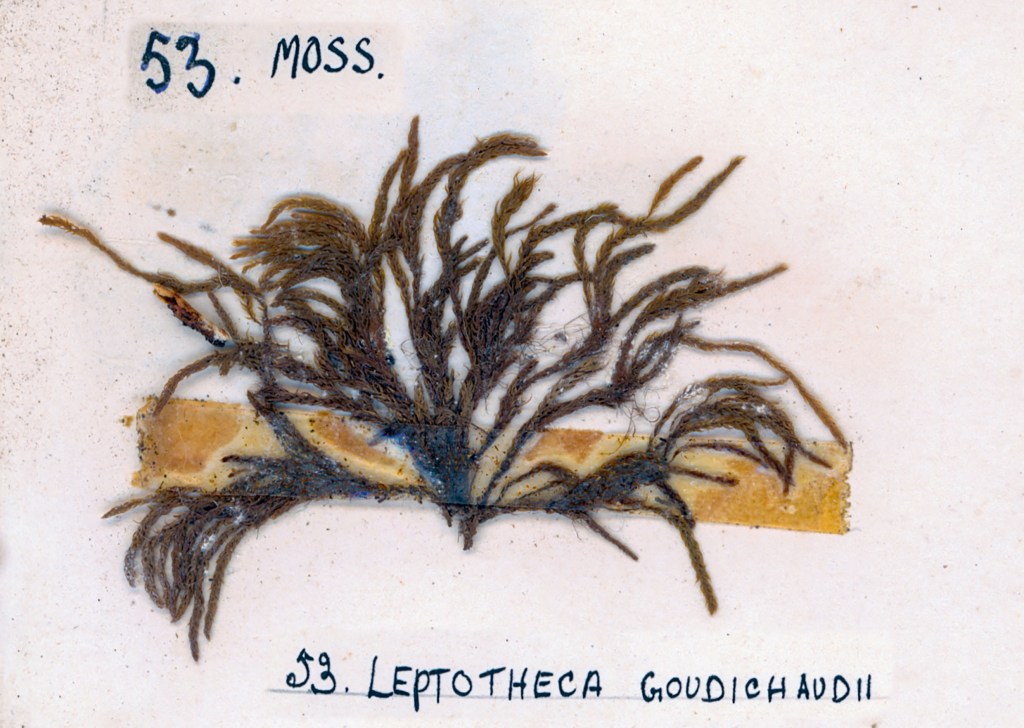
A preserved specimen of moss, labeled as Leptotheca goudichaudii, displayed on a white background with handwritten notes.
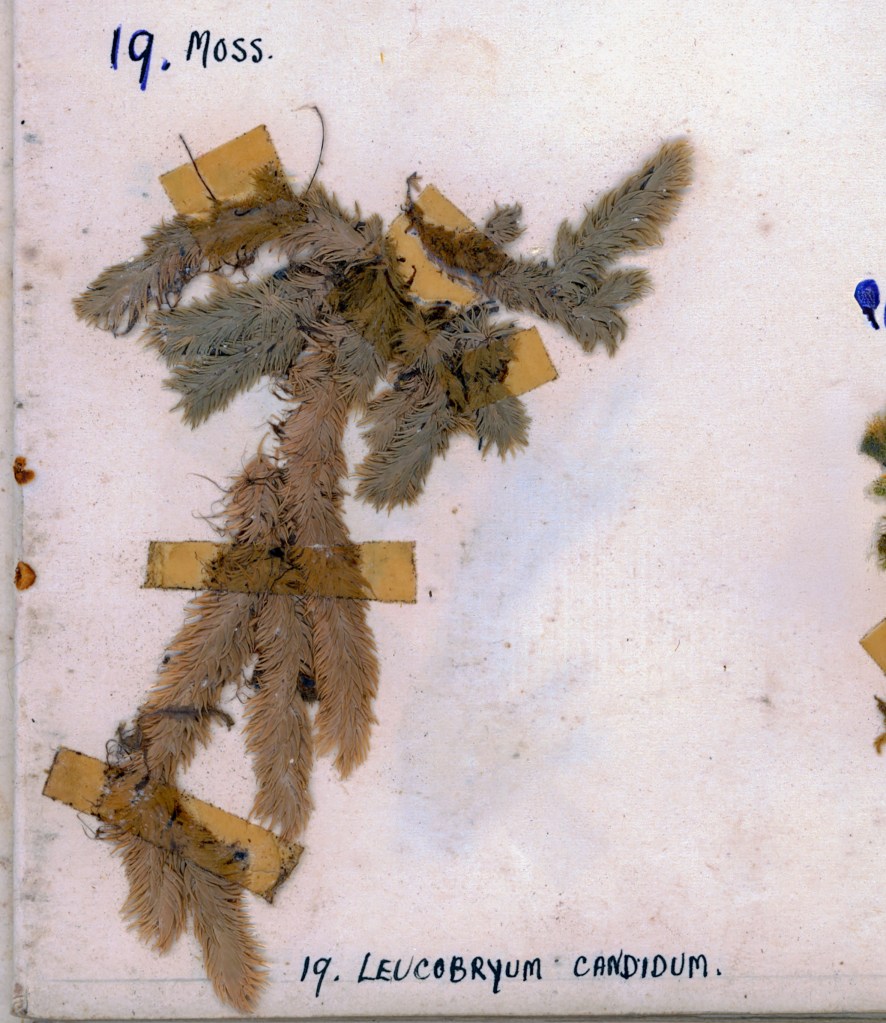
A preserved specimen of moss, identified as Leucobryum candidum, mounted on a white background with labels indicating its name and number.
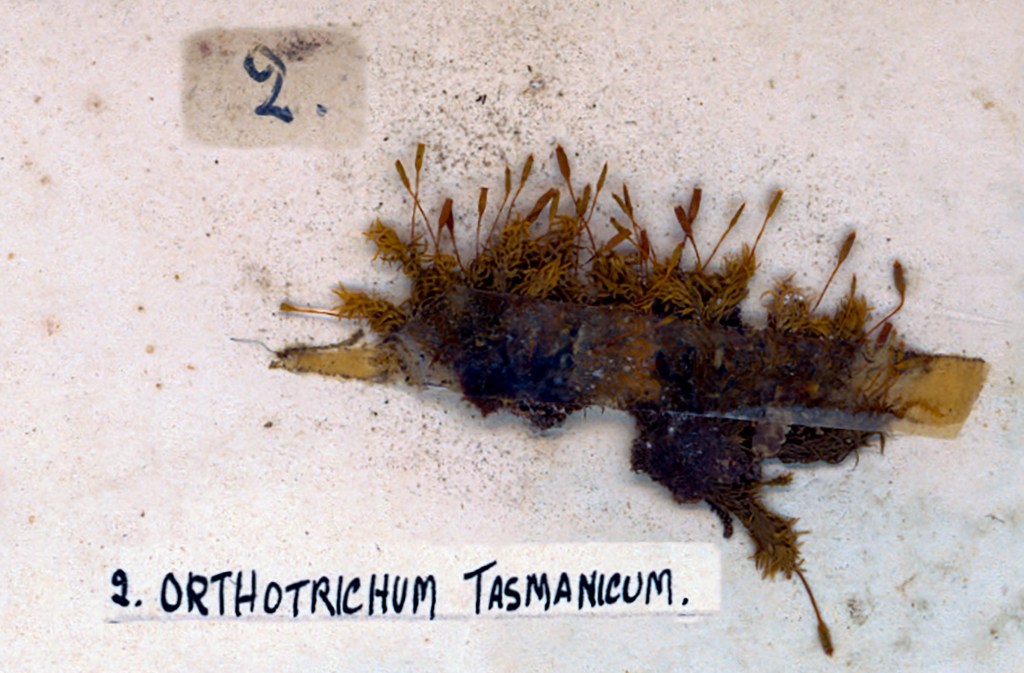
A close-up image of dried Orthotrichum tasmanicum moss sample adhered to a label with the number '2' above it.
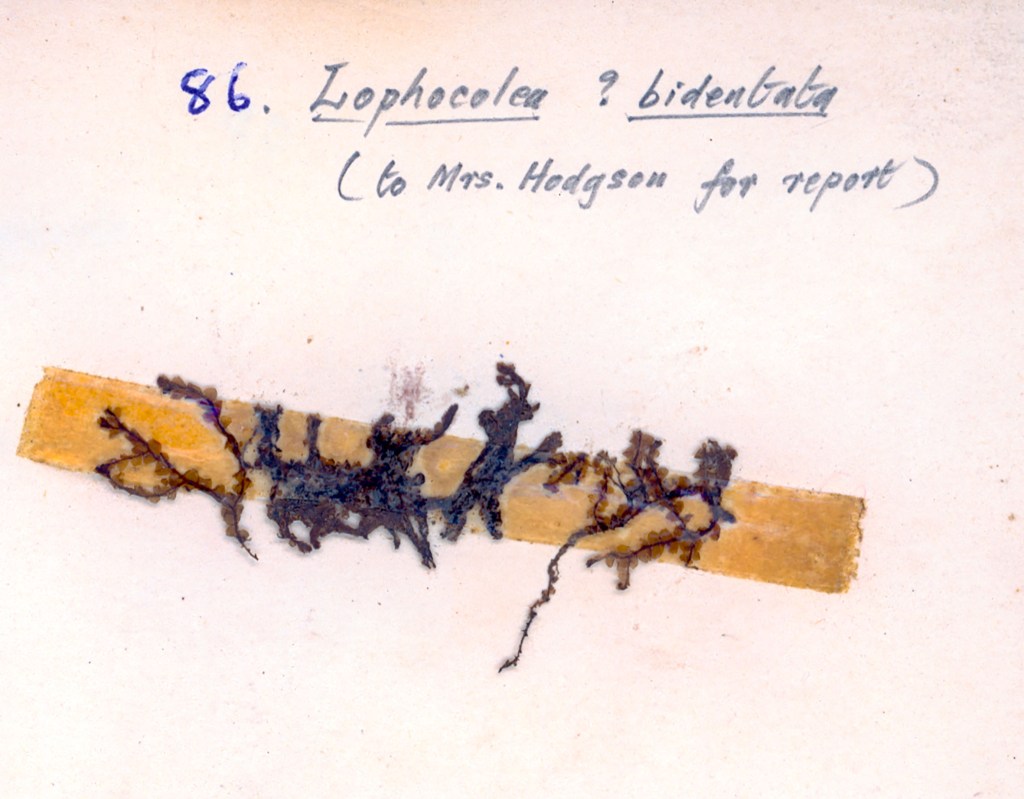
A botanical specimen labeled as 'Lophocolea ? bidentata' attached to a strip of paper, with handwritten notes indicating it is for Mrs. Hodgson's report.
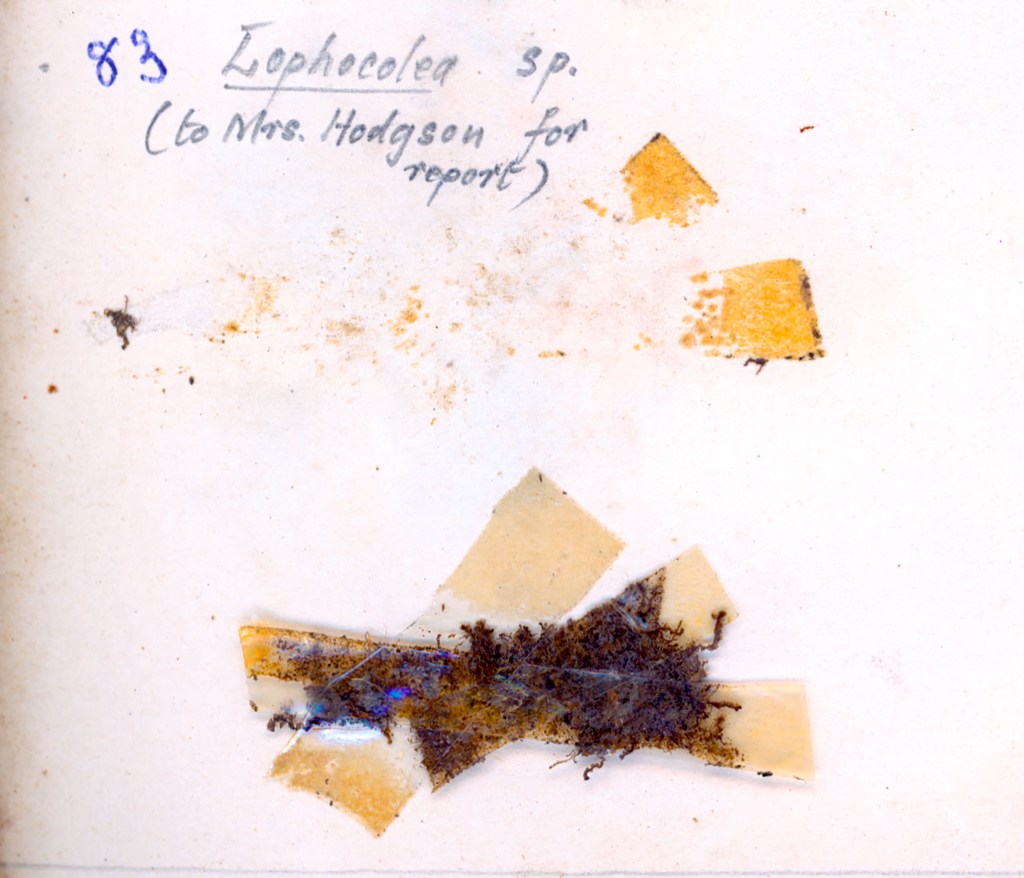
Preserved specimen of Lophocolea sp. with accompanying labels on a light background.
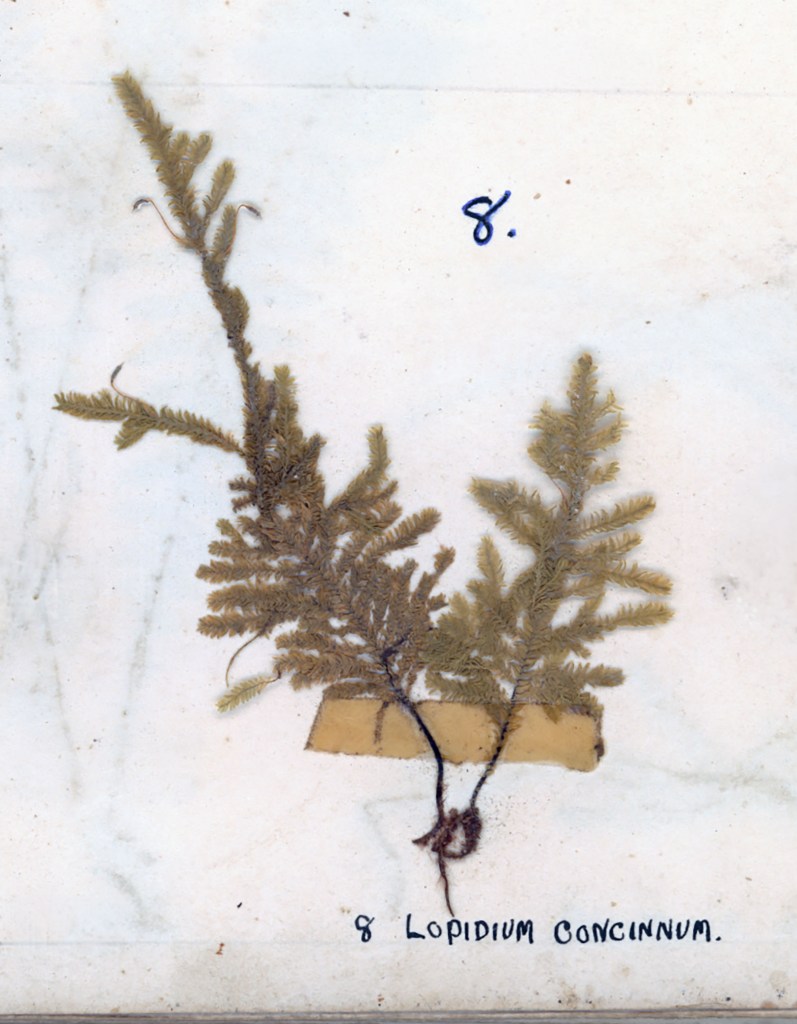
Dried sample of Lopidium concinnum with delicate, feathery leaves mounted on white paper.
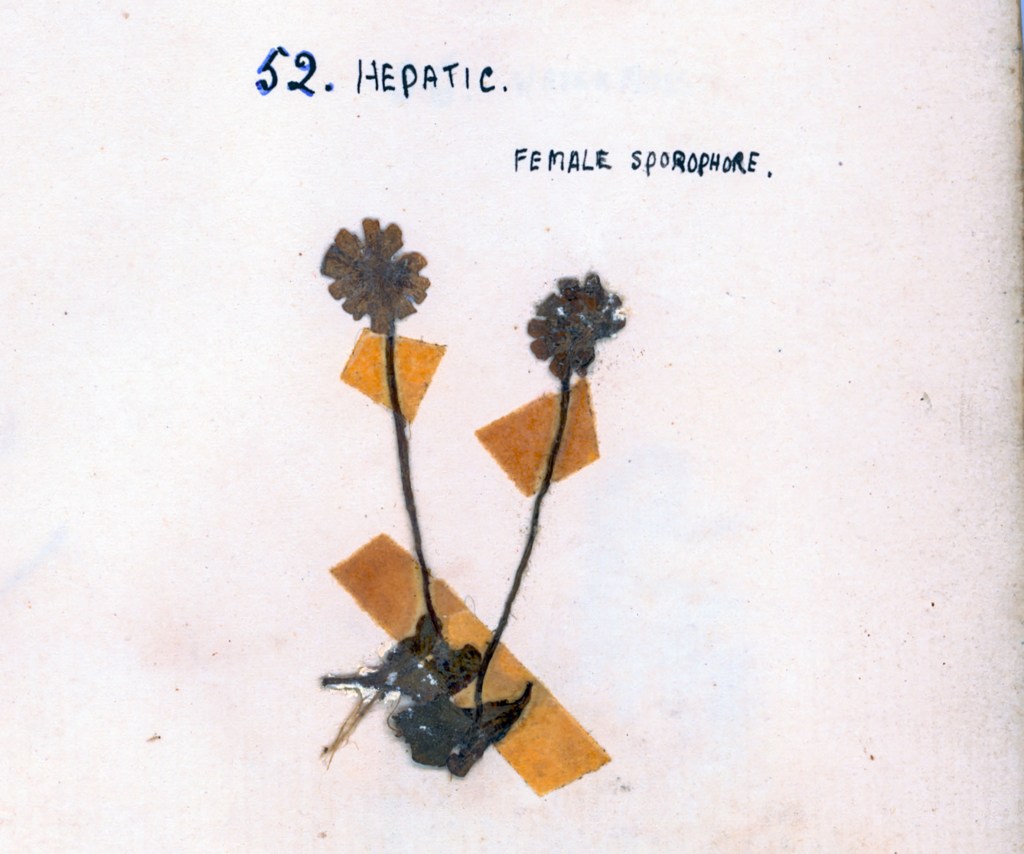
Illustration of two female sporophytes labeled '52. Hepatic.' with brown flowers on stems and orange triangular pieces of paper.
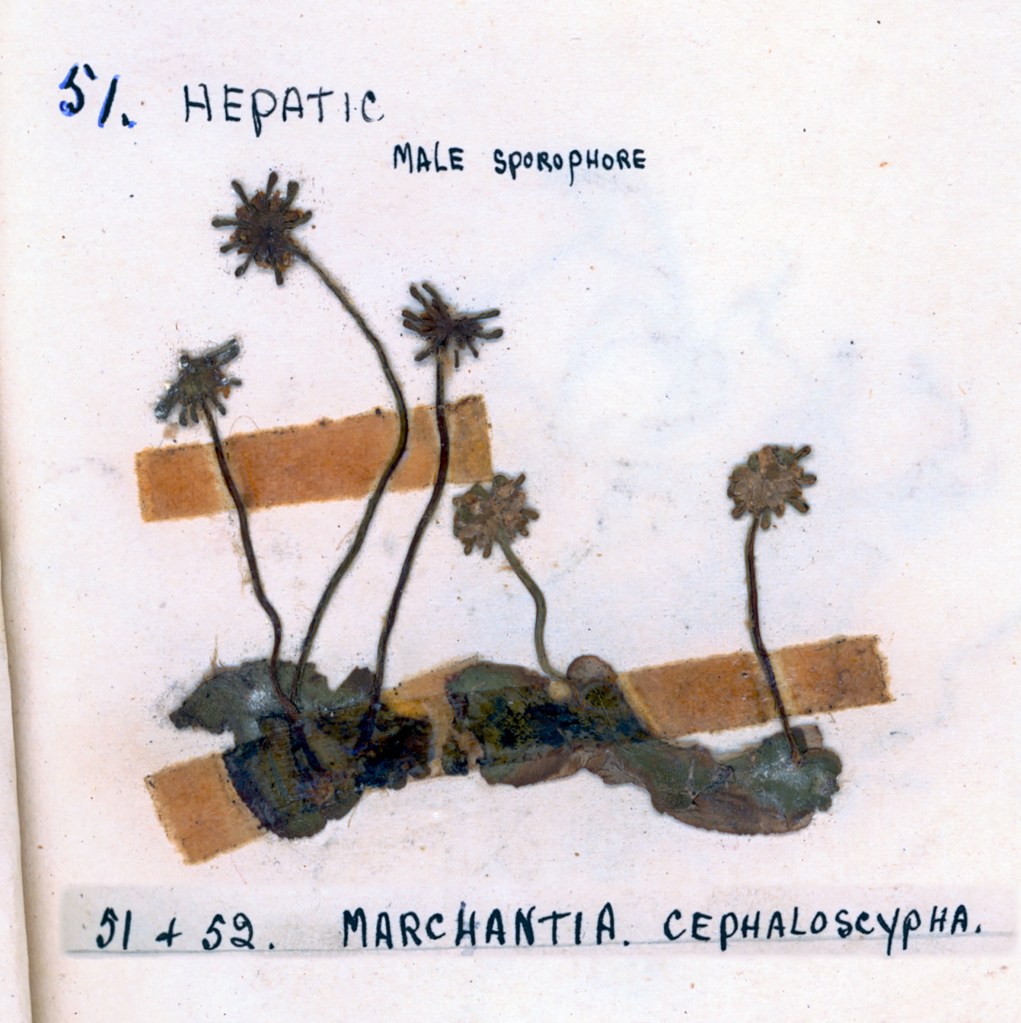
Illustration of Marchantia cephalocypha, a type of liverwort, showing male sporophytes with green leaves and brown stems on a white background.
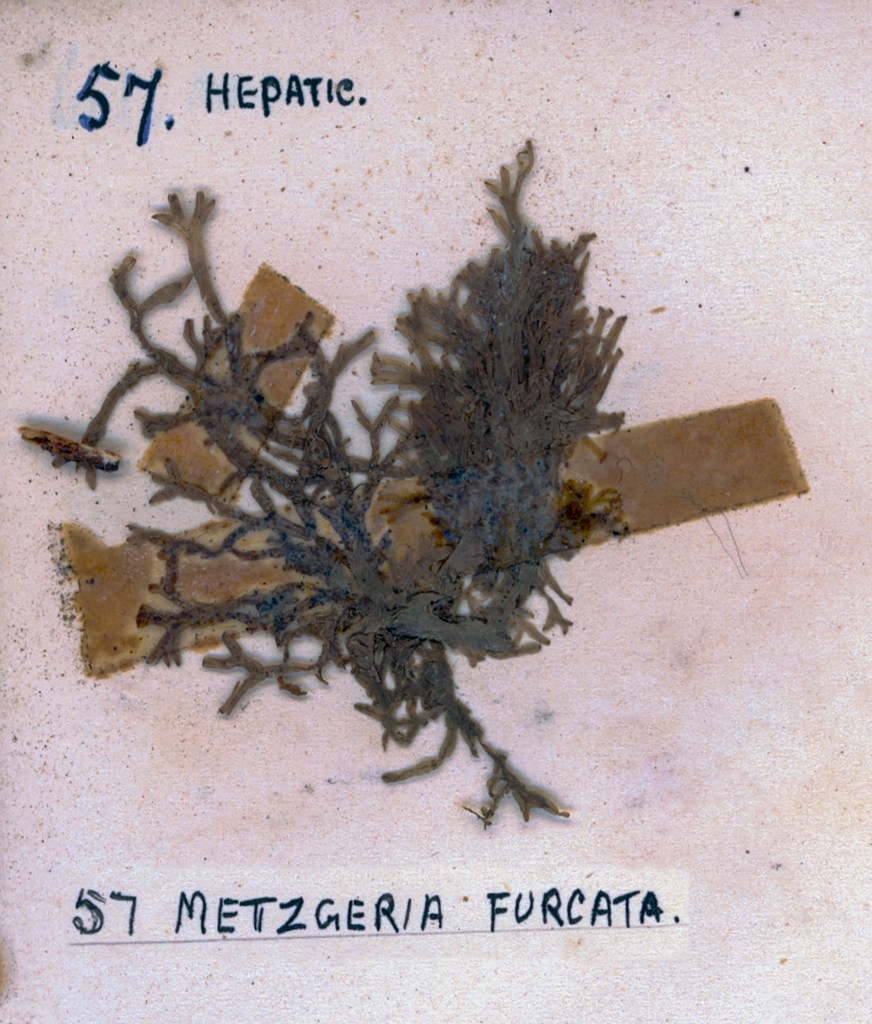
Preserved specimen of Metzgeria furcata, a type of hepatic liverwort, displayed on a creamy background with handwritten labels.
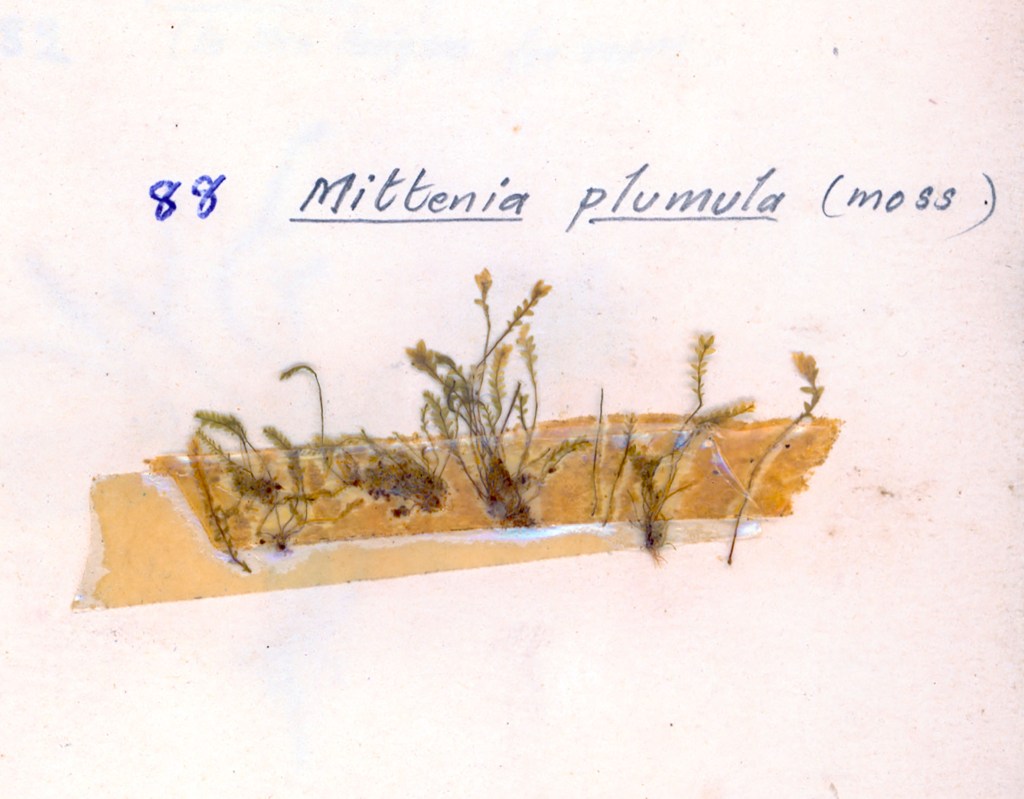
Specimen of Mittenia plumula moss displayed on paper with handwritten labeling.
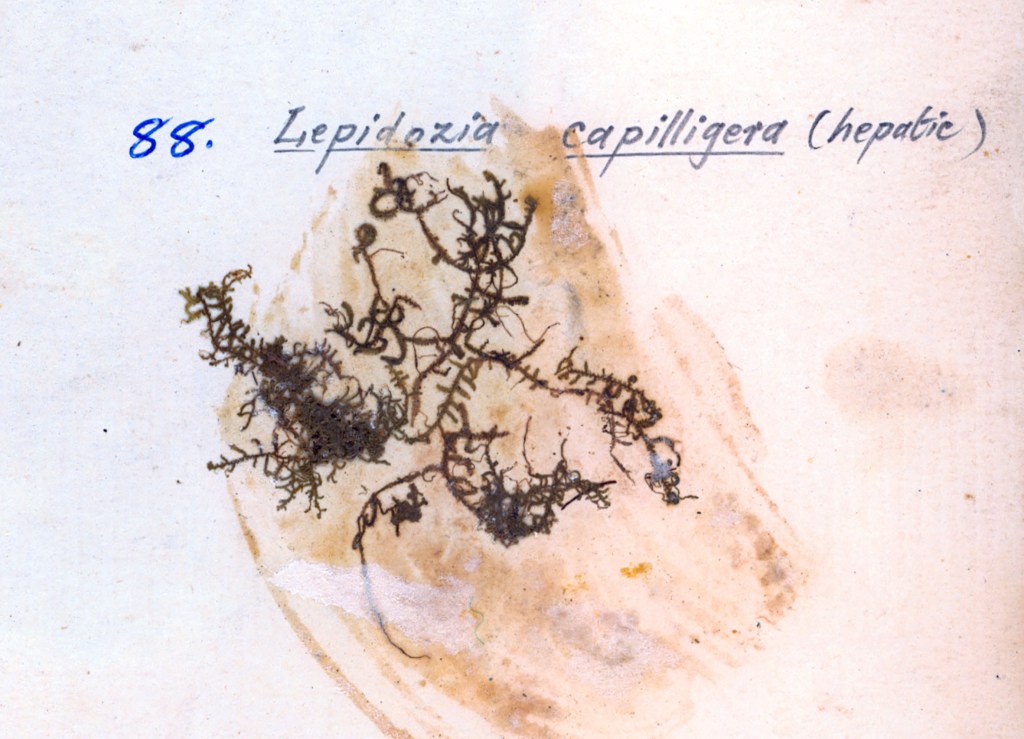
Botanical illustration of Lepidozia capilligeria, a type of hepatic moss, featuring intricate, branching structures on a pale background with handwritten labels.
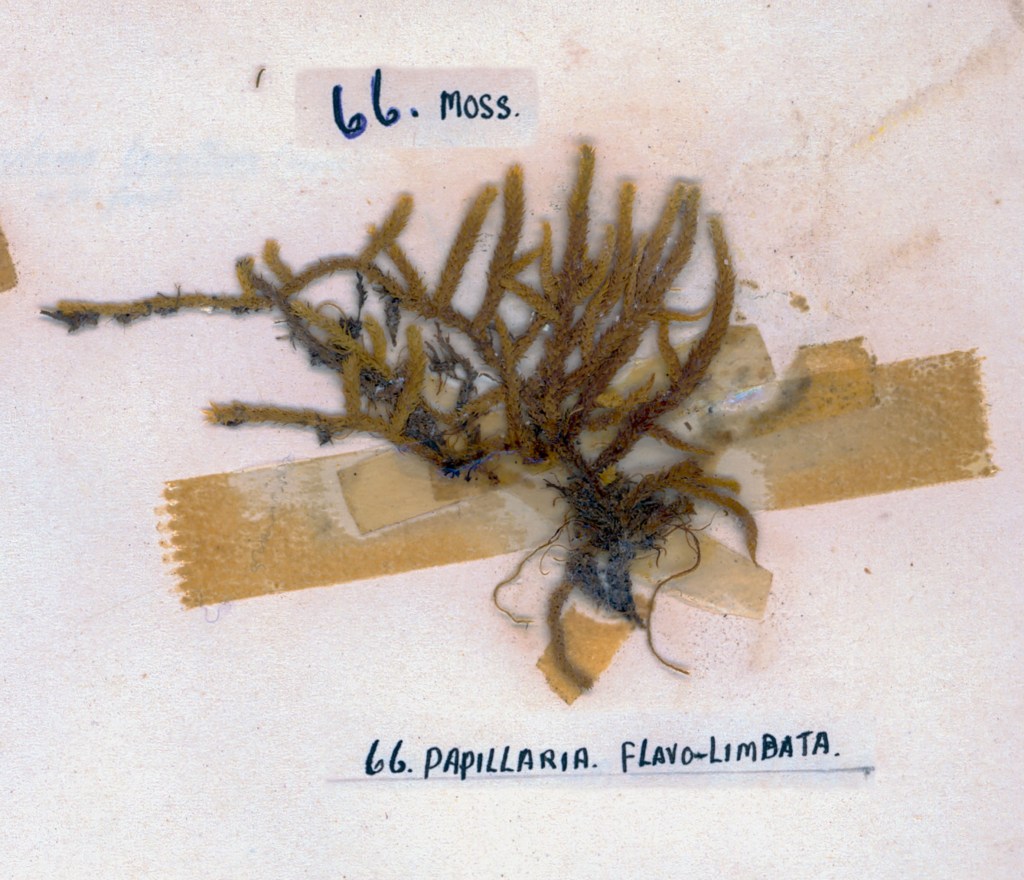
A pressed specimen of moss labeled '66. Papillaria Flavo-Limbata' on a light-colored background with tape.
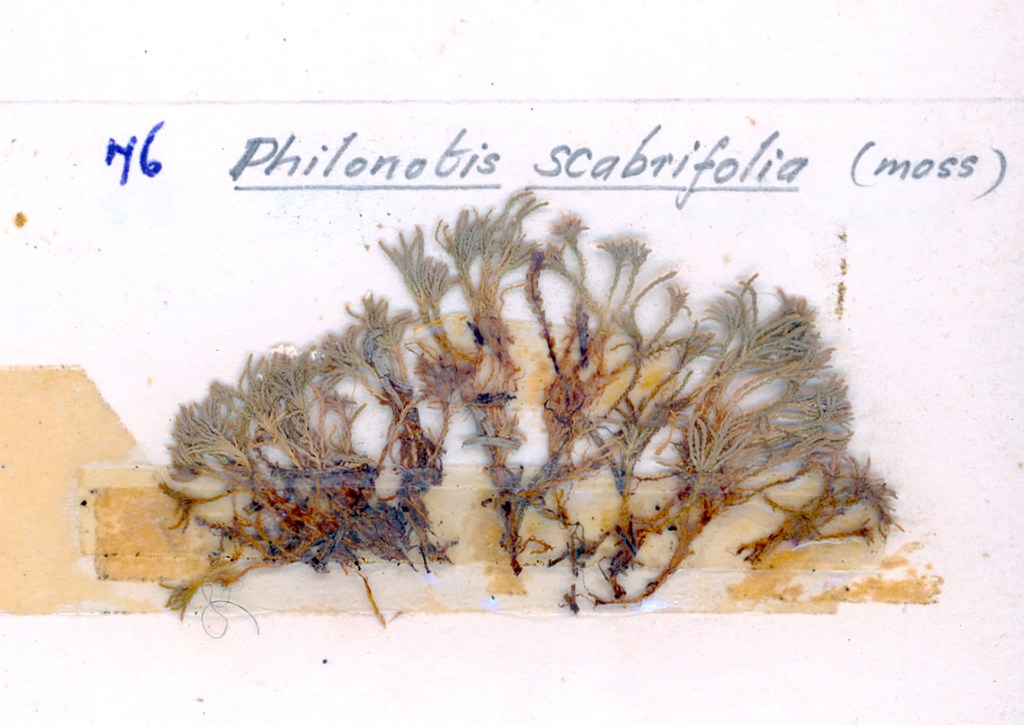
Dried Philonotis scabrifolia moss specimen mounted on paper, labeled with its scientific name.
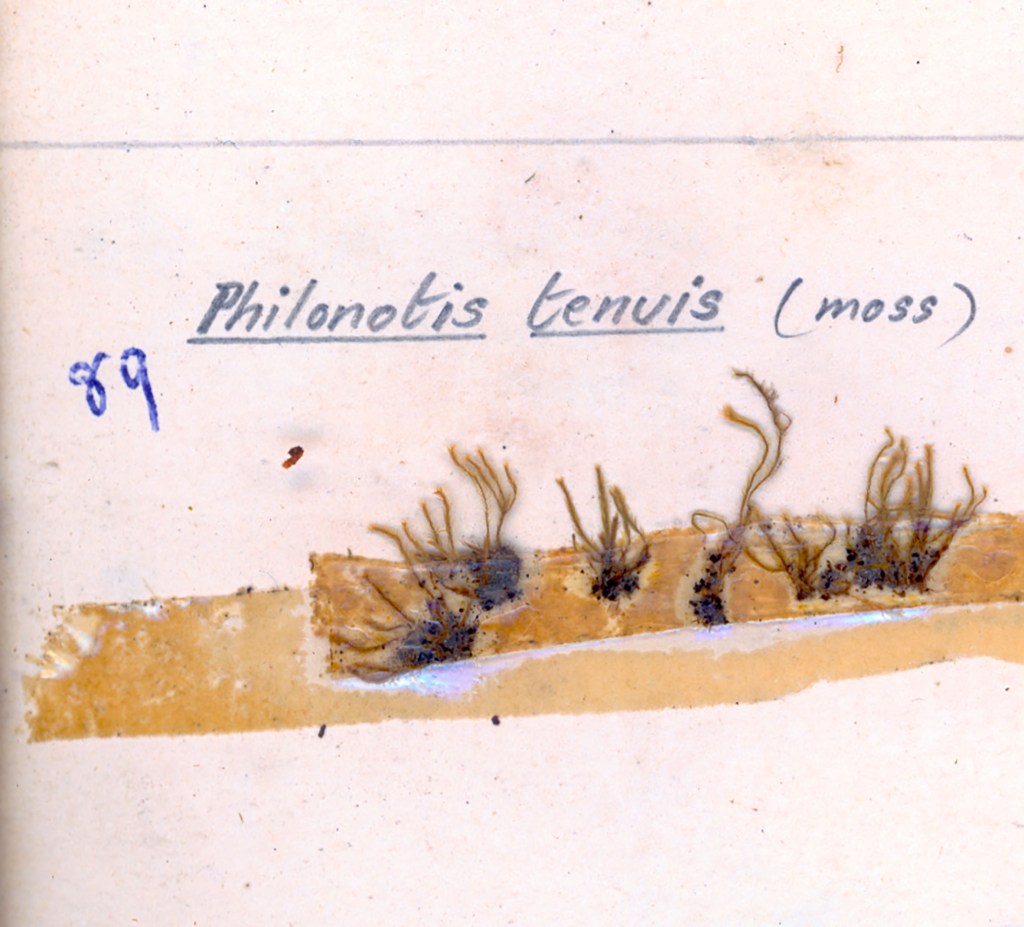
A scientific illustration of Philonotis tenuis moss, showing a sample mounted on paper with handwritten labeling.
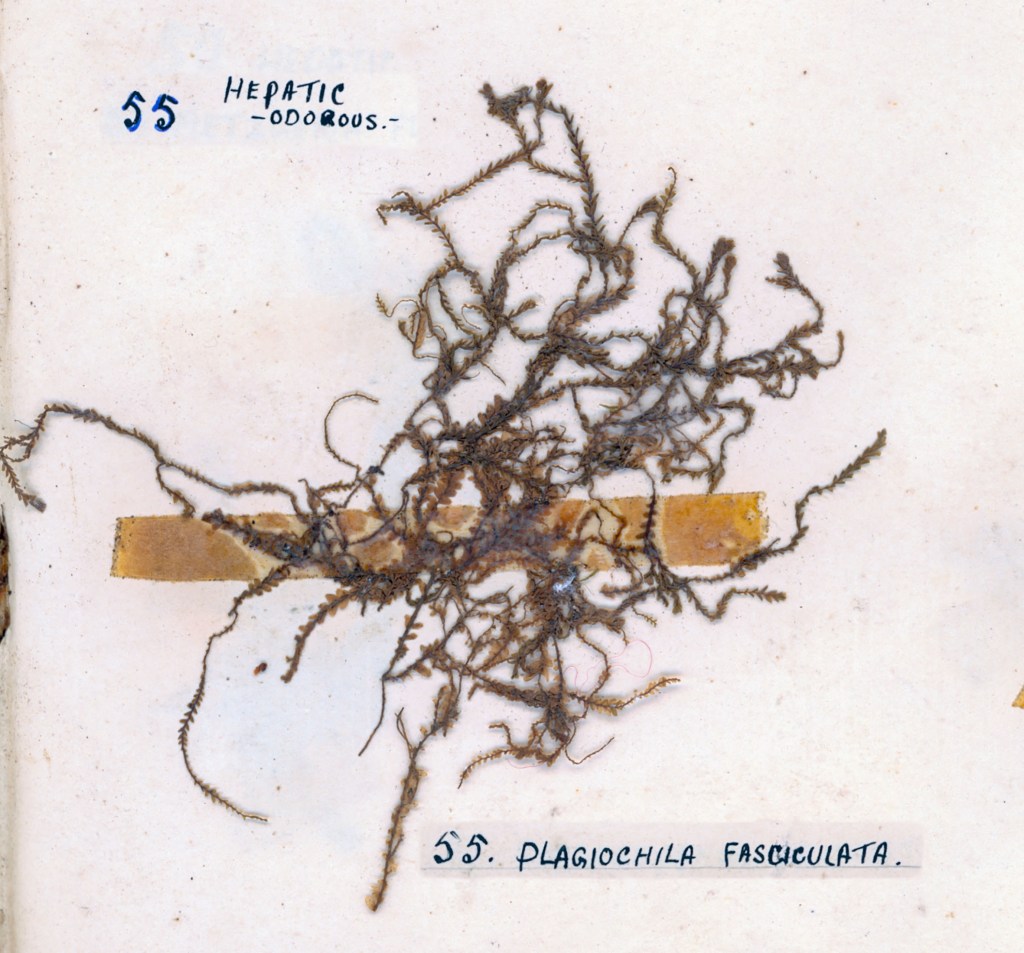
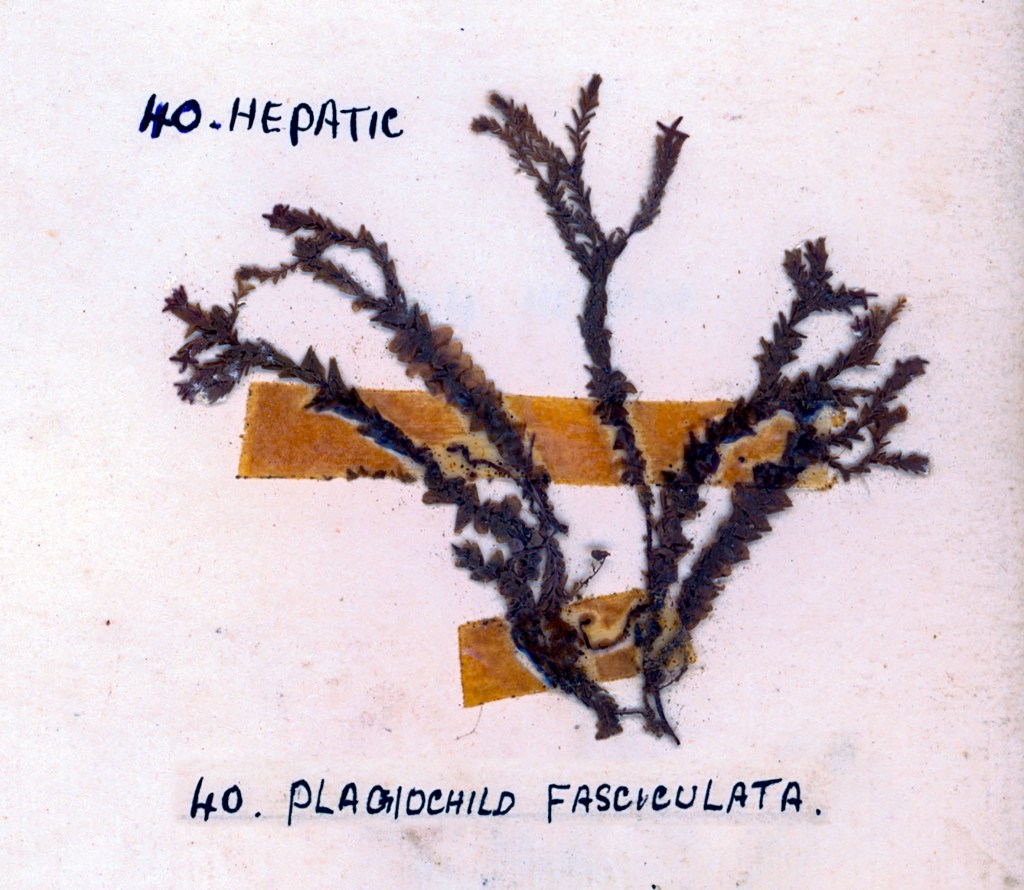
A dried specimen of Plagiochila fasciculata, an odorous hepatic plant, mounted on a page with handwritten labels.
A preserved specimen of the hepatic plant Plagiochila fasciculata, mounted on paper with handwritten labels.
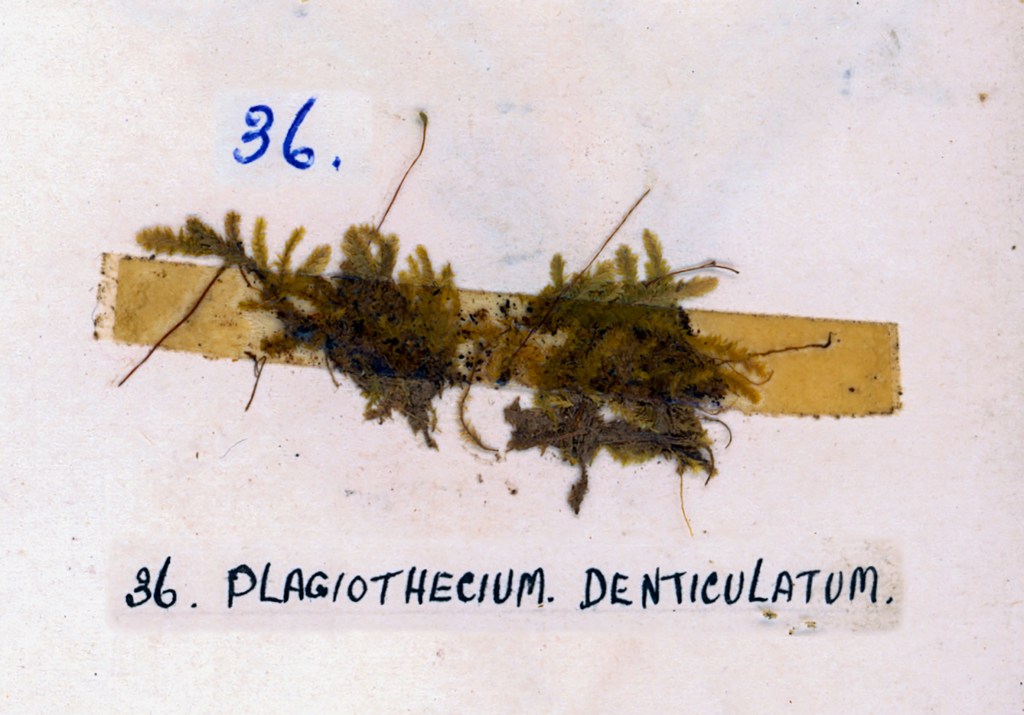
A preserved specimen of Plagiothecium denticulatum moss mounted on a label, with the number 36 written in blue ink.
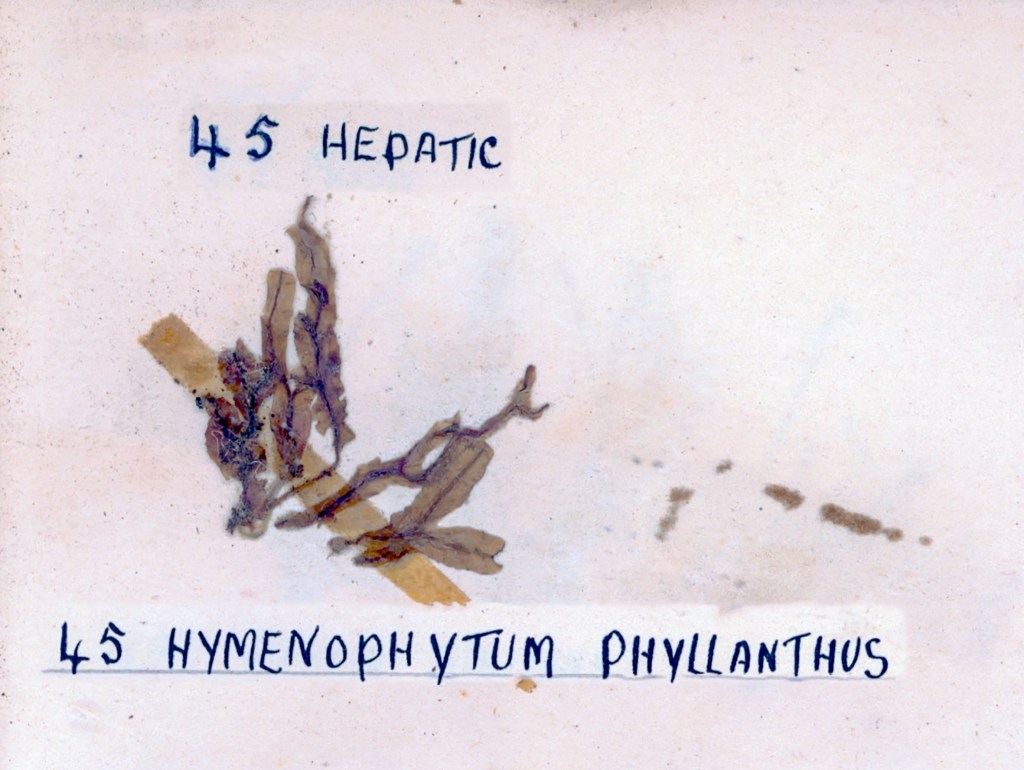
Microscopic image of the hepatic plant species Hymenophyllum phyllanthus, labeled with identification numbers.
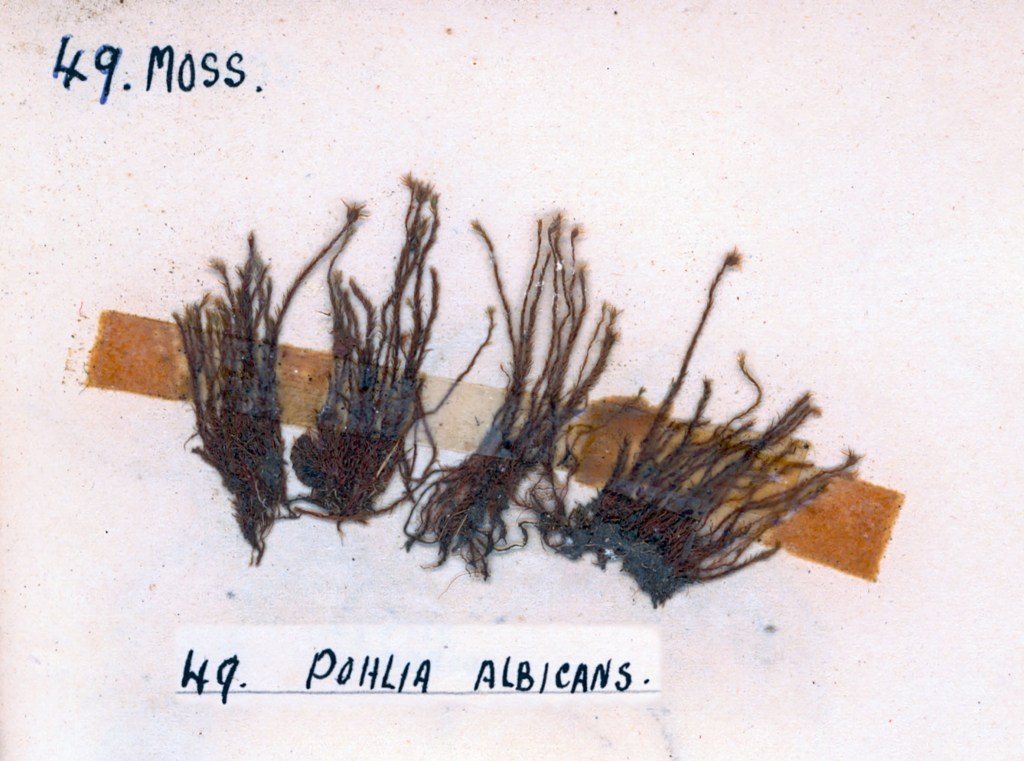
A botanical specimen of moss labeled 'Pohlia albicans' with several strands attached to a backing paper, featuring handwritten notes above and below.
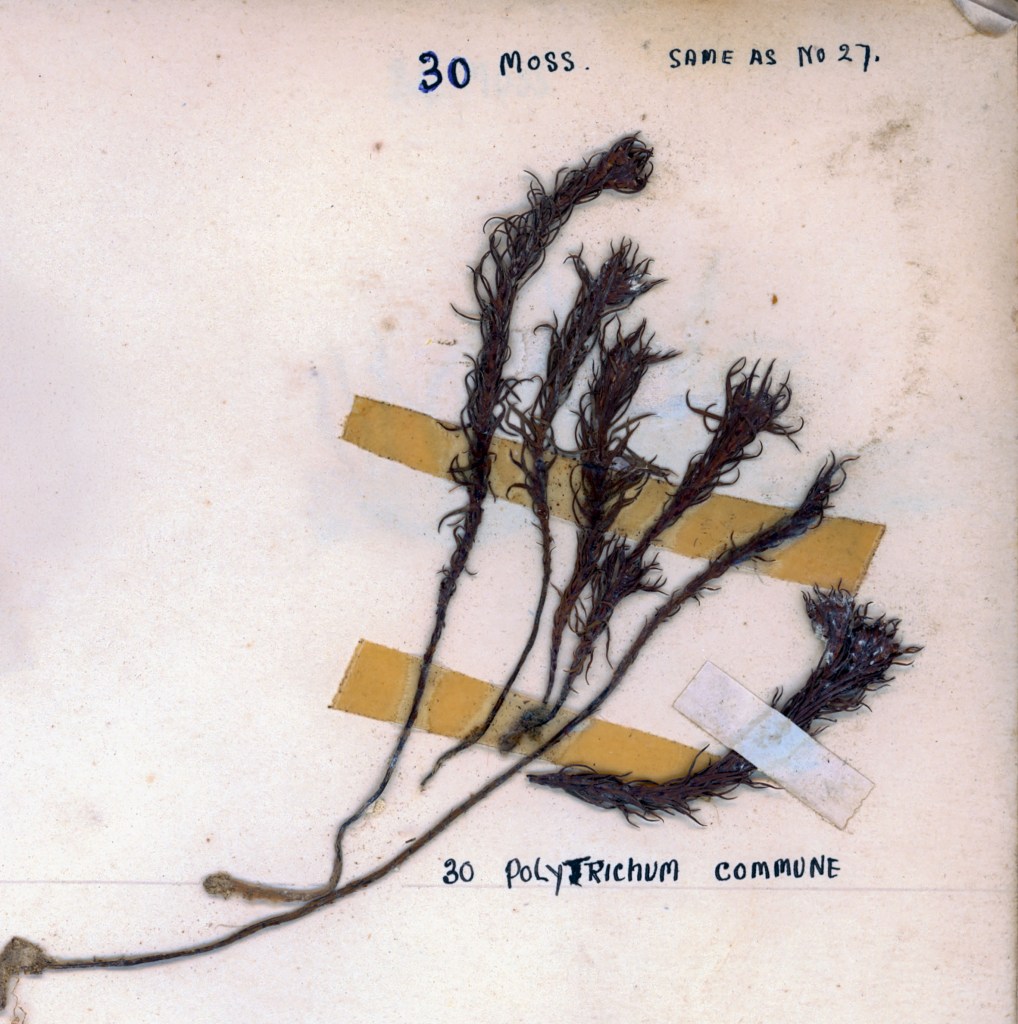
Pressed specimen of Polytrichum commune moss, attached to a page with labels and tape.
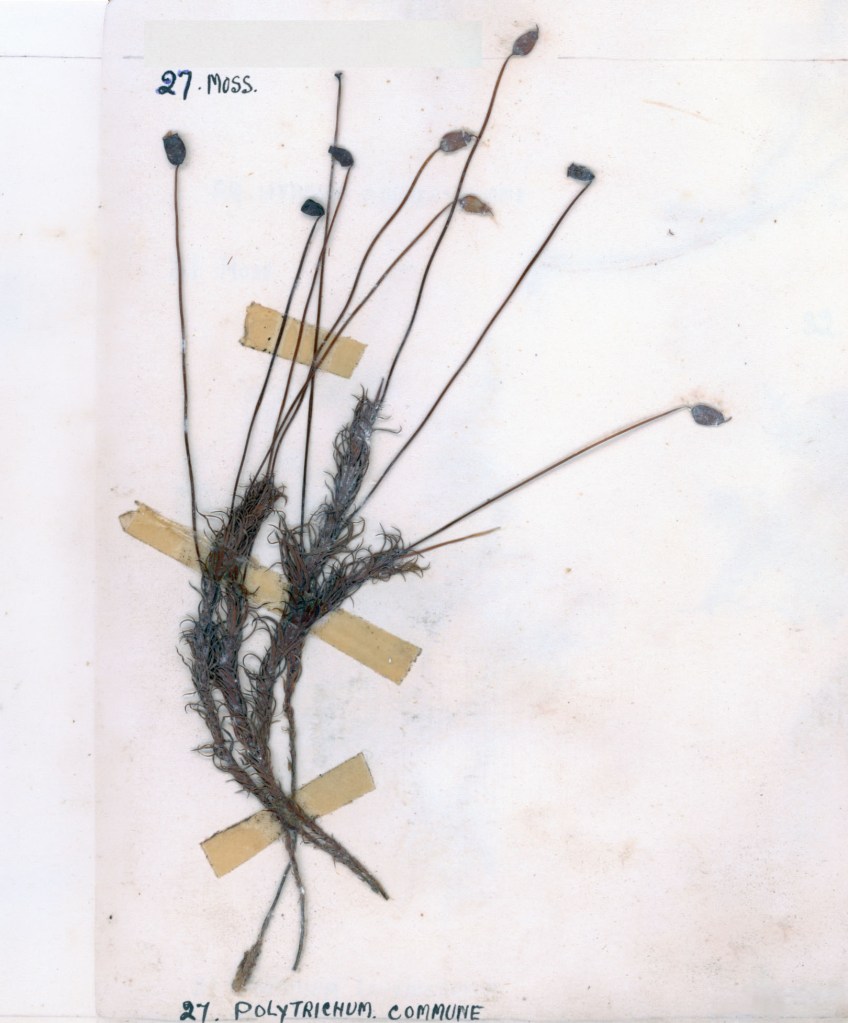
Dried specimen of Polytrichum commune moss, with multiple stalks and capsules, adhered to a white background with tape.
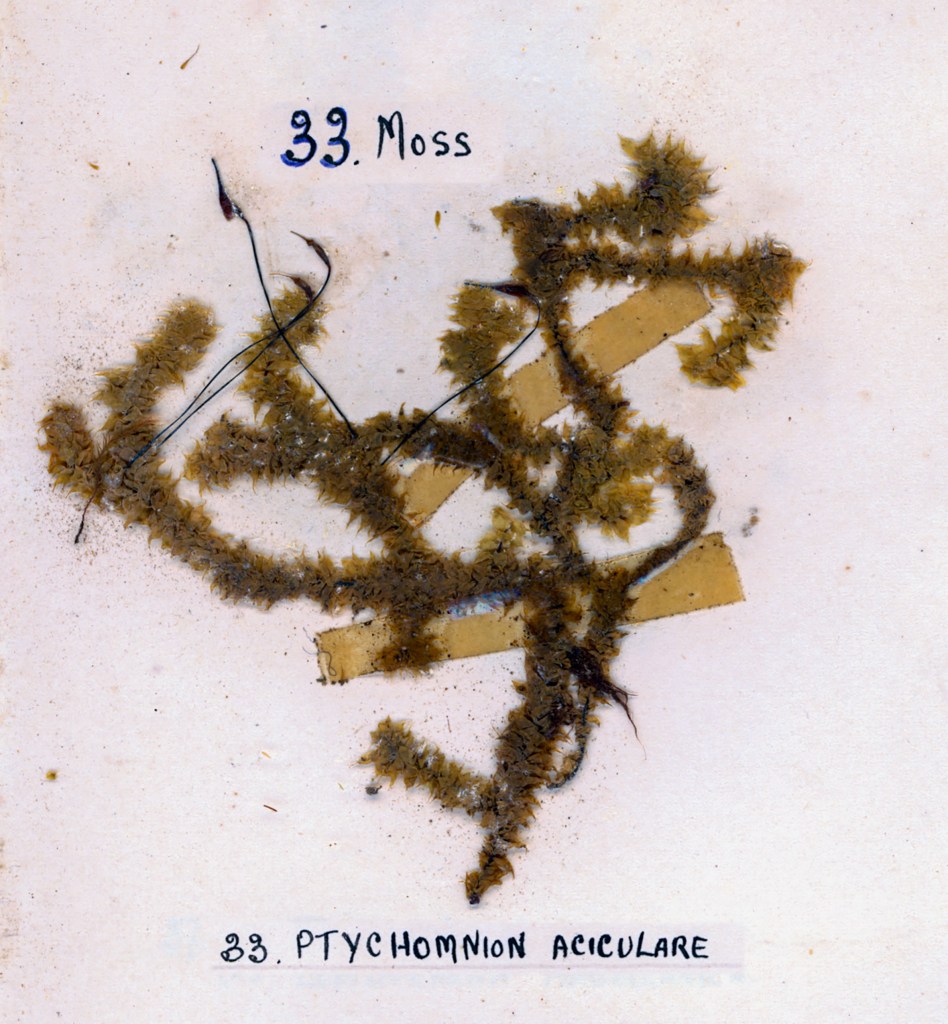
A specimen of moss labeled '33. Moss' and '33. Ptychomnium aciculare', featuring thin, tangled greenish-brown fibers on a beige background.
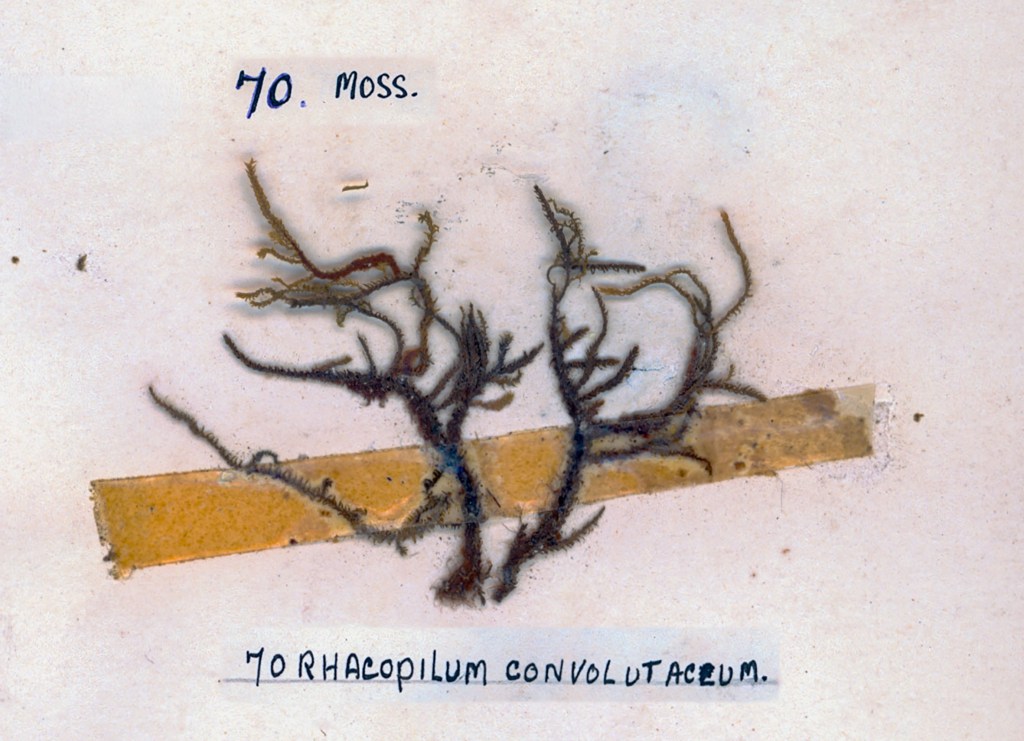
Dried moss specimen labeled '70. Moss.' with the scientific name 'MORHACOPILUM CONVOLUTACEUM.' placed on a light background.
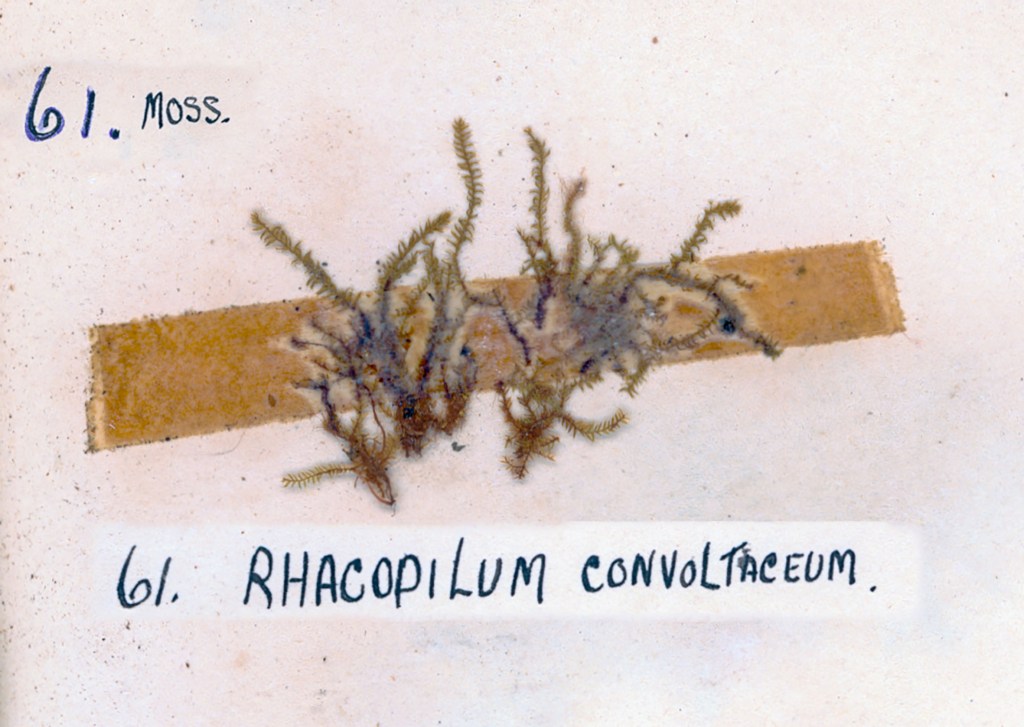
A specimen of moss labeled '61. Rhacopilum convolutaceum' displayed on a beige background with handwritten notes.
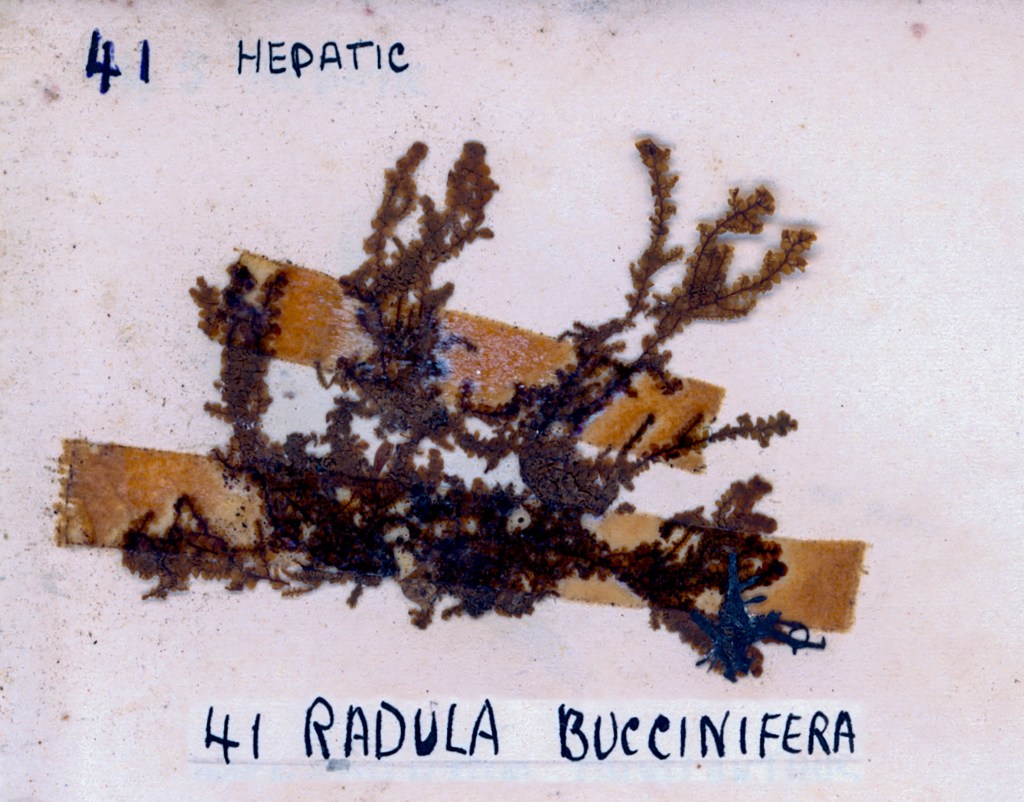
A specimen labeled '41 Hepatic' and '41 Radula Buccinifera' showing a detailed arrangement of a plant-like organism on a white background.
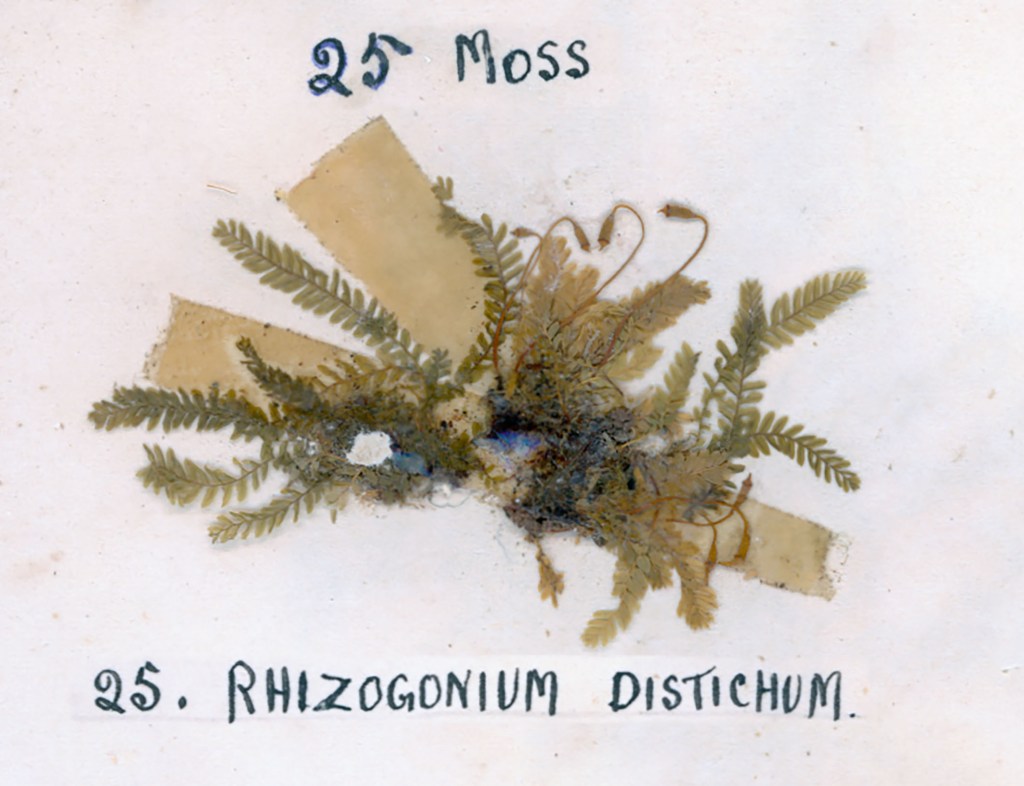
A pressed specimen of moss labeled '25 Moss' and '25. Rhizogonium distichum' on a white background.
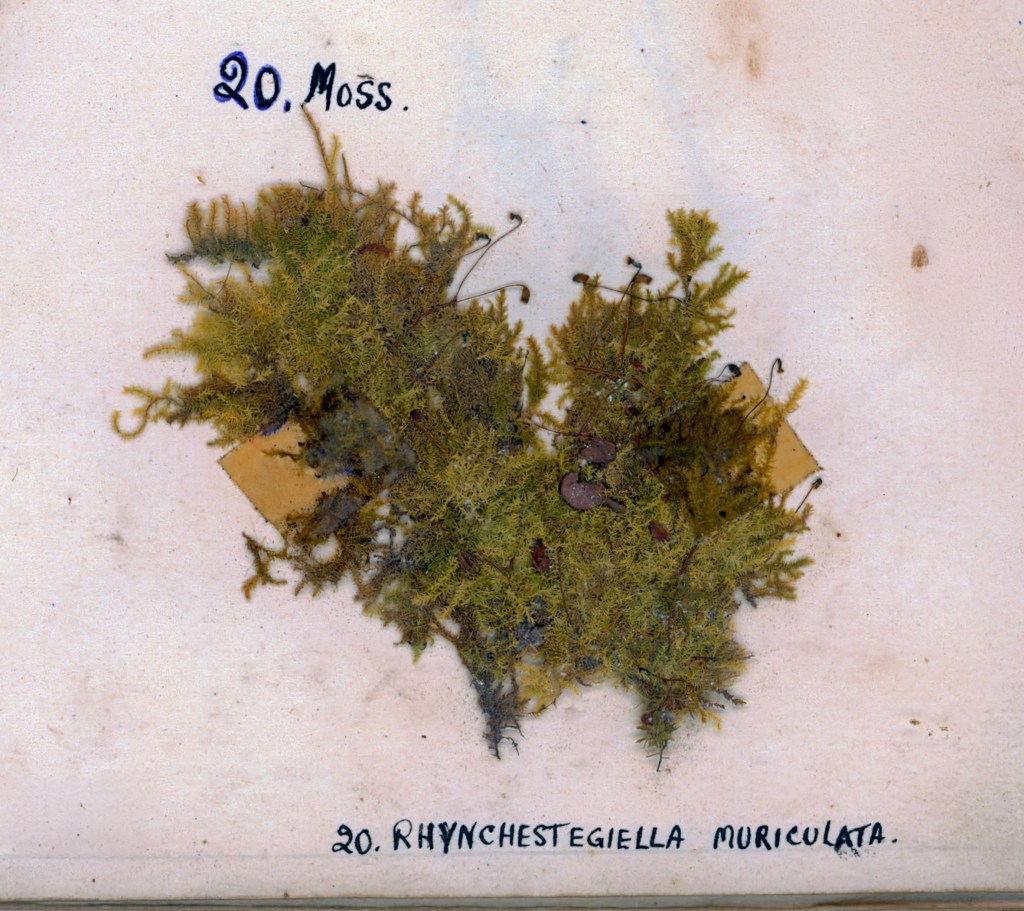
Close-up view of a specimen of Rhynchostegium muriculatum moss displayed on a page, with labels indicating '20. Moss' and '20. Rhynchostegium muriculatum.'
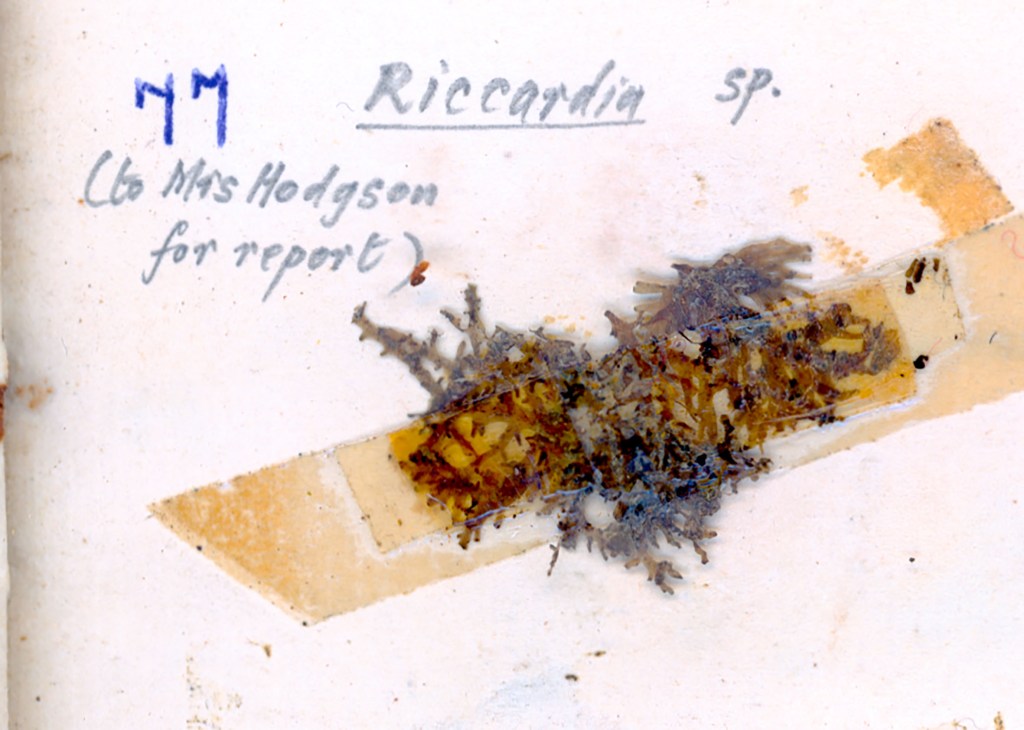
An image of a scientific specimen labeled 'Riccardia sp.' on a piece of tape, with handwritten notes and a note addressed to Mrs. Hodgson for reporting purposes.
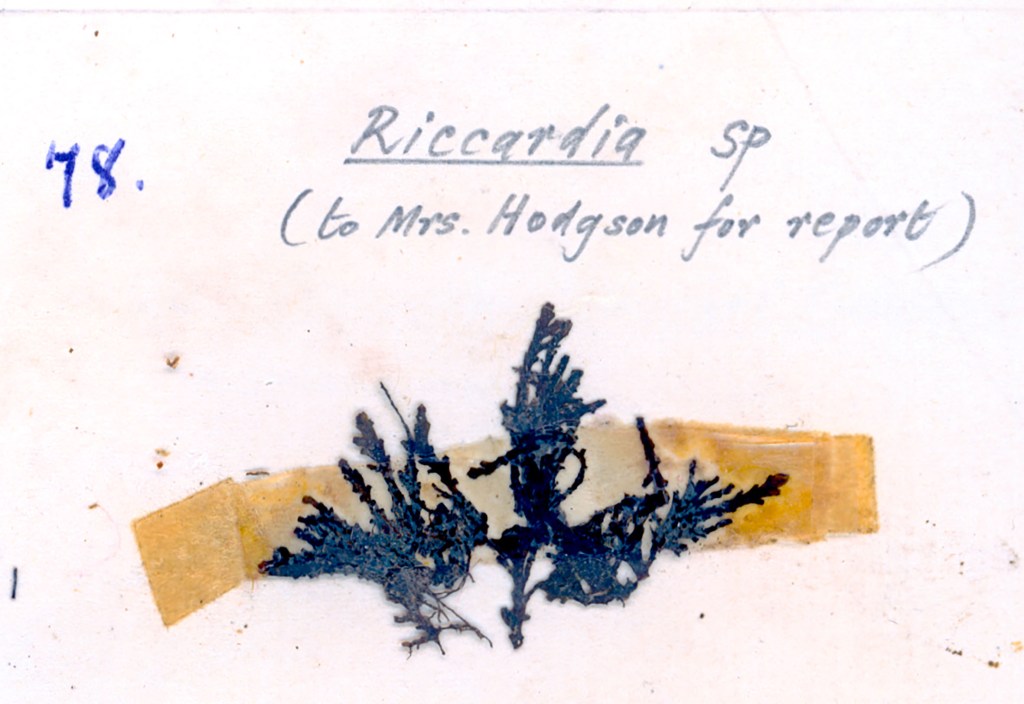
Botanical specimen of Riccardia sp. mounted on paper with handwritten notes for Mrs. Hodgson.
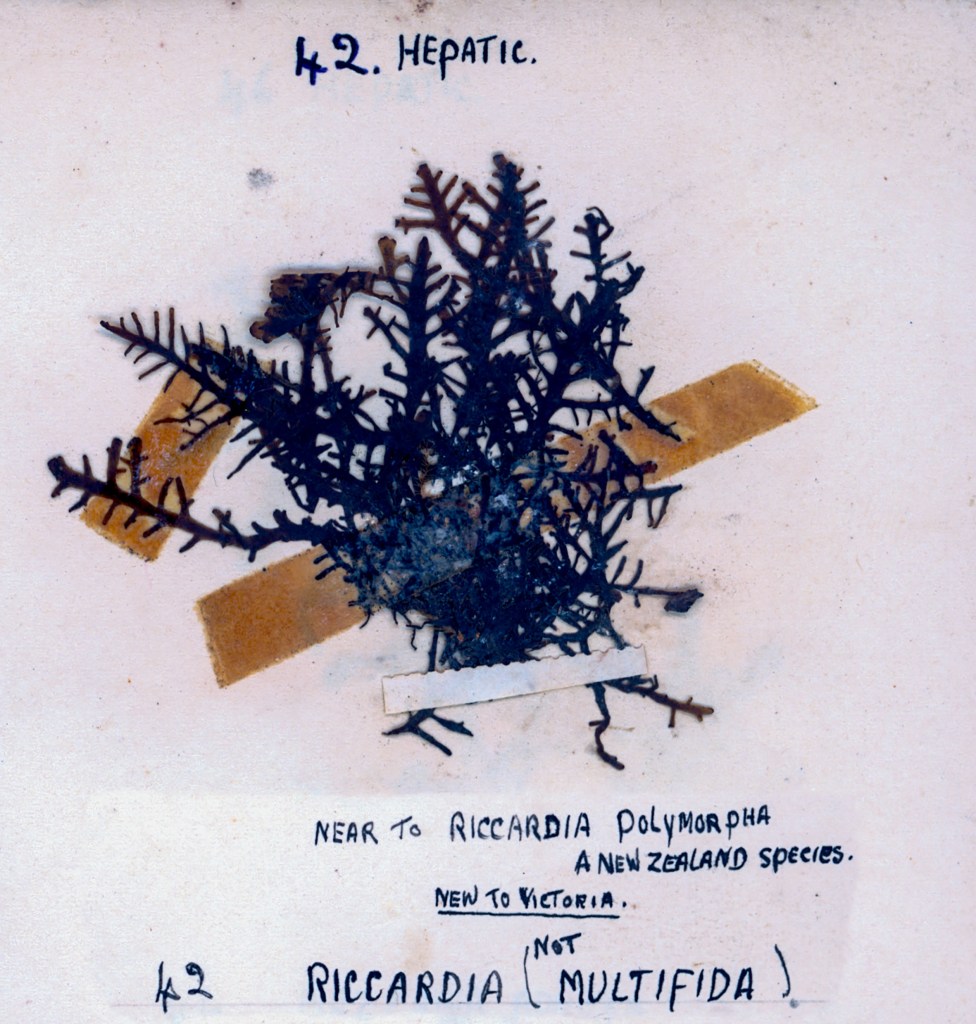
A botanical specimen labeled as '42. Hepatic' showing a dark, leafy structure resembling liverworts, mounted on a paper background with notes regarding its species and geographical origin.
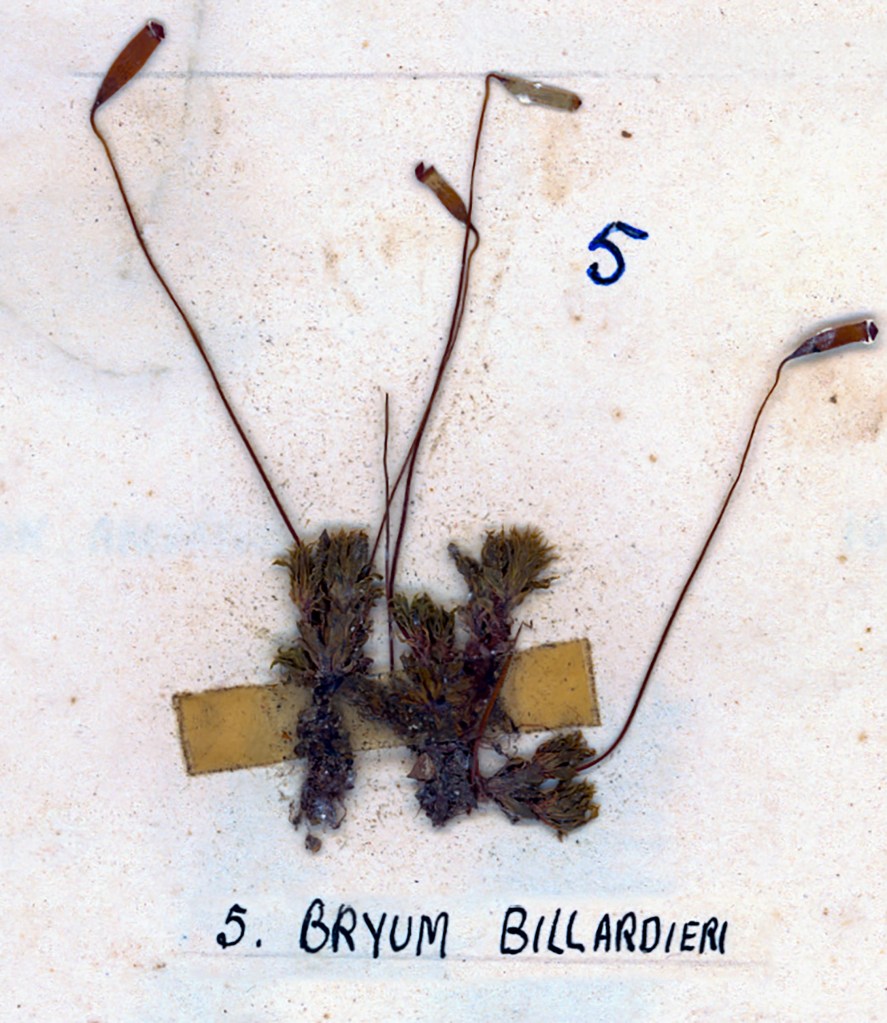
A botanical specimen of Bryum billardieri, showcasing several green shoots with elongated stems and pointed tips, mounted on a labeled background.
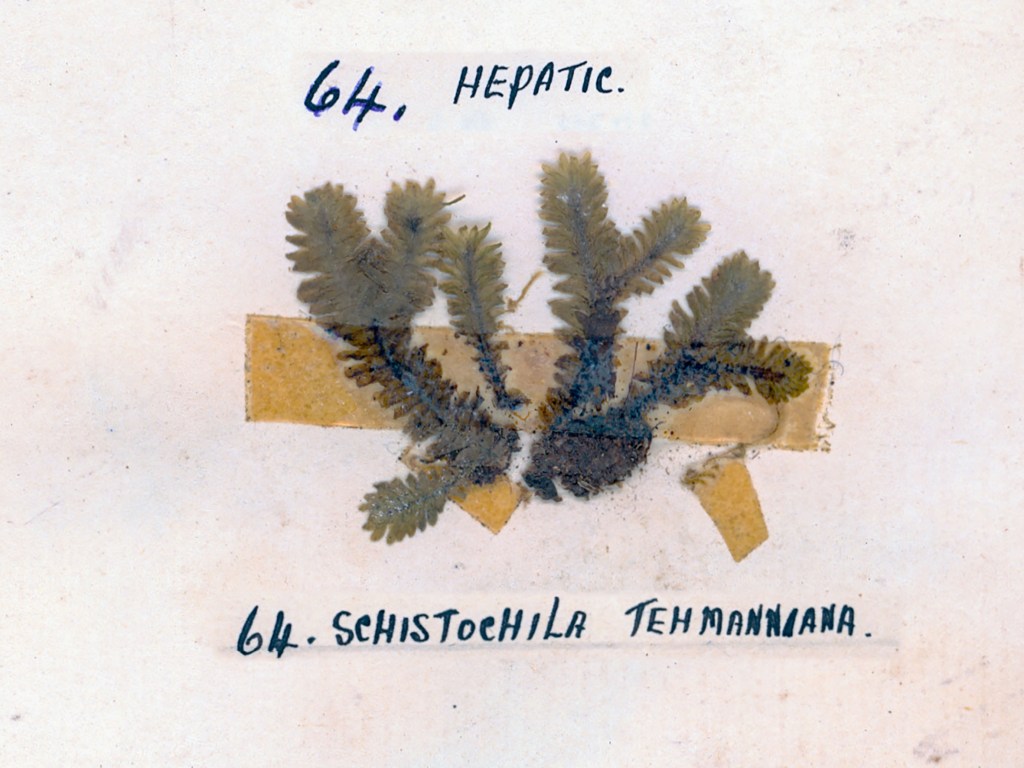
A botanical illustration featuring a specimen of Schistochila tehamaniana, labeled with the number 64 and the word 'Hepatic'. The specimen is mounted on a background with a light color and includes a piece of tape.
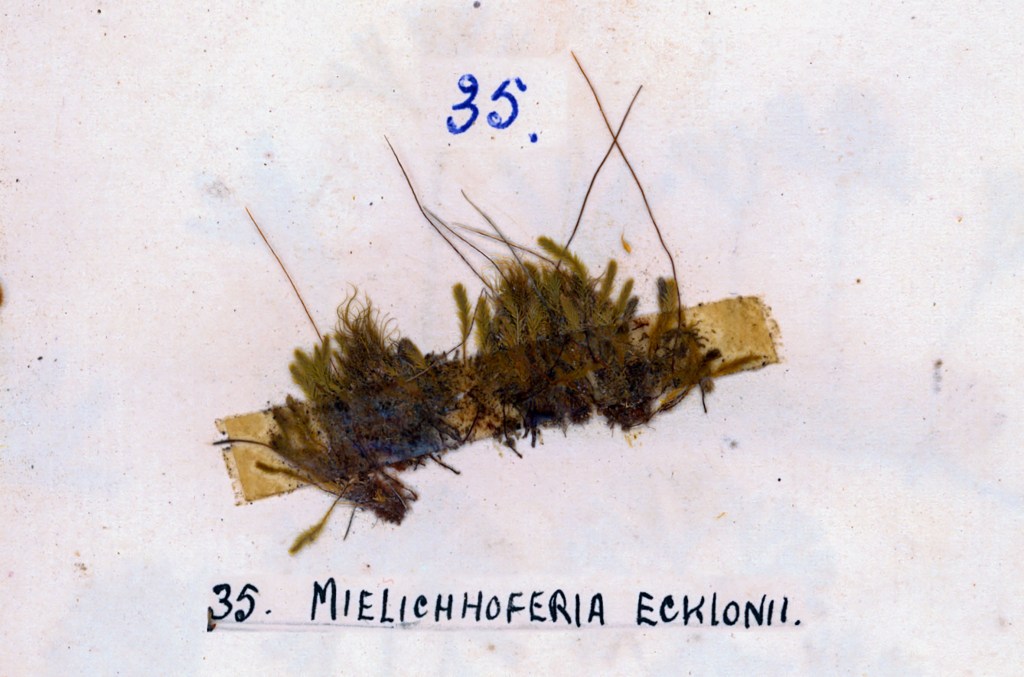
A botanical illustration showing a specimen of Mielichhoferia ecklonii, labeled as number 35, with details of its green foliage and structure.
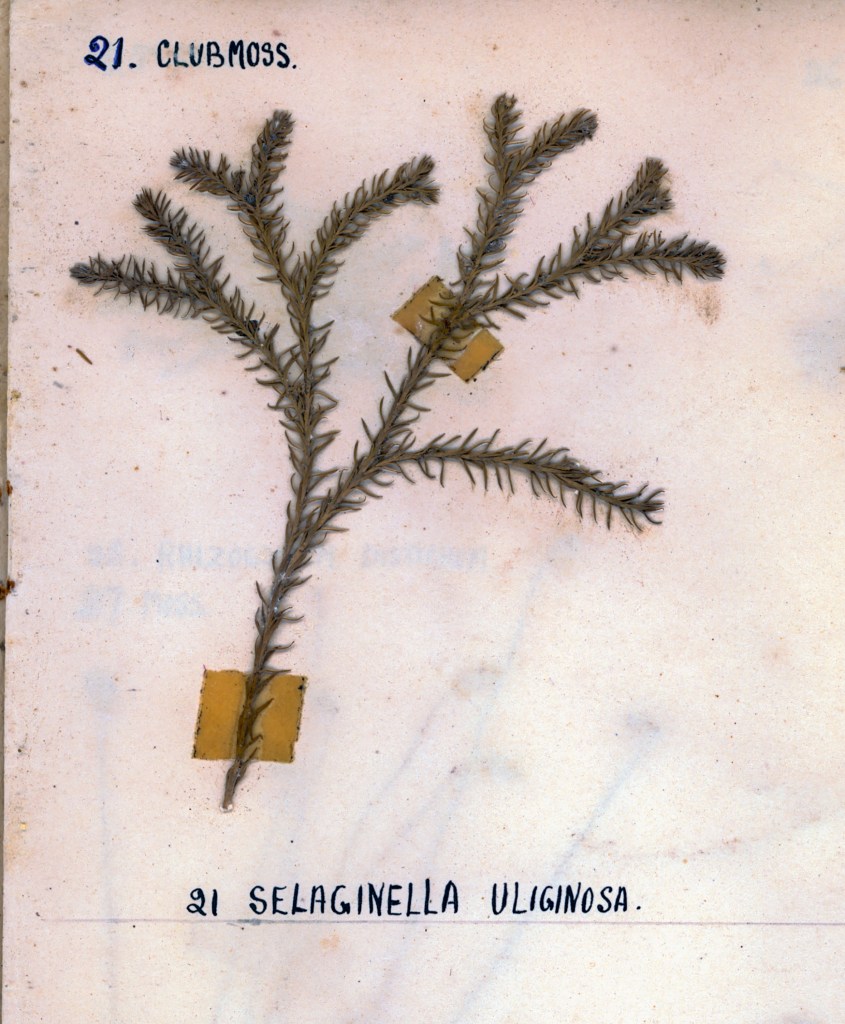
A preserved clubmoss specimen, labeled '21. Clubmoss' and '21 Selaginella uliginosa', with a yellow square tag on a light background.
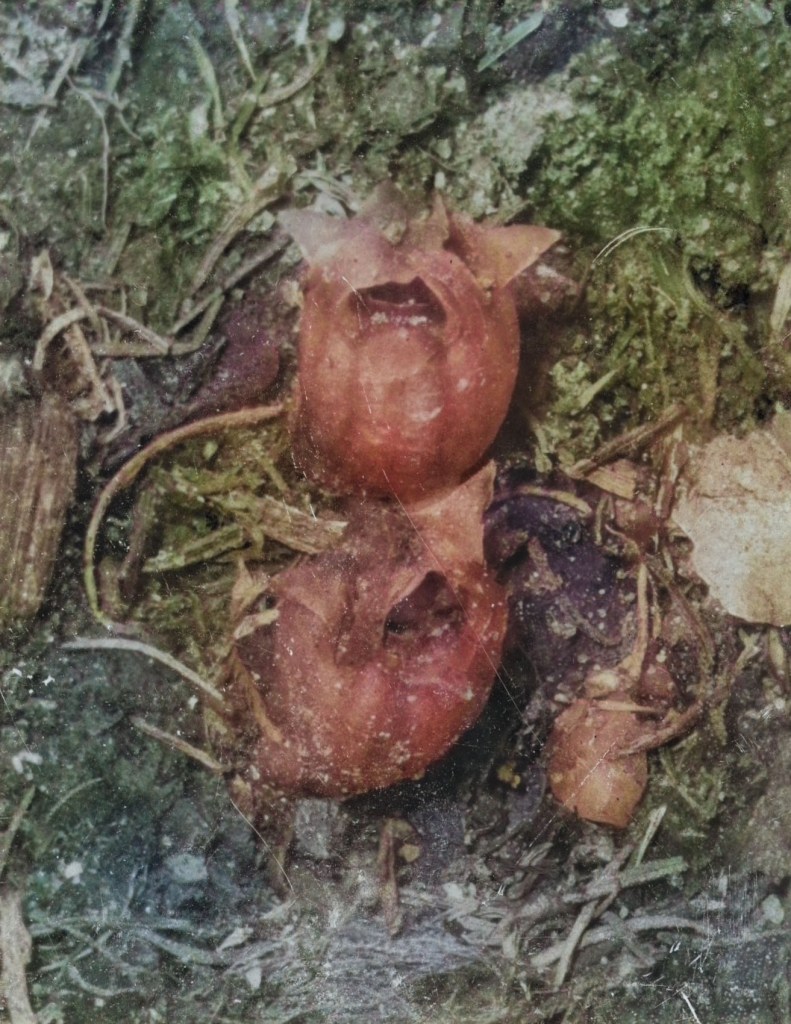
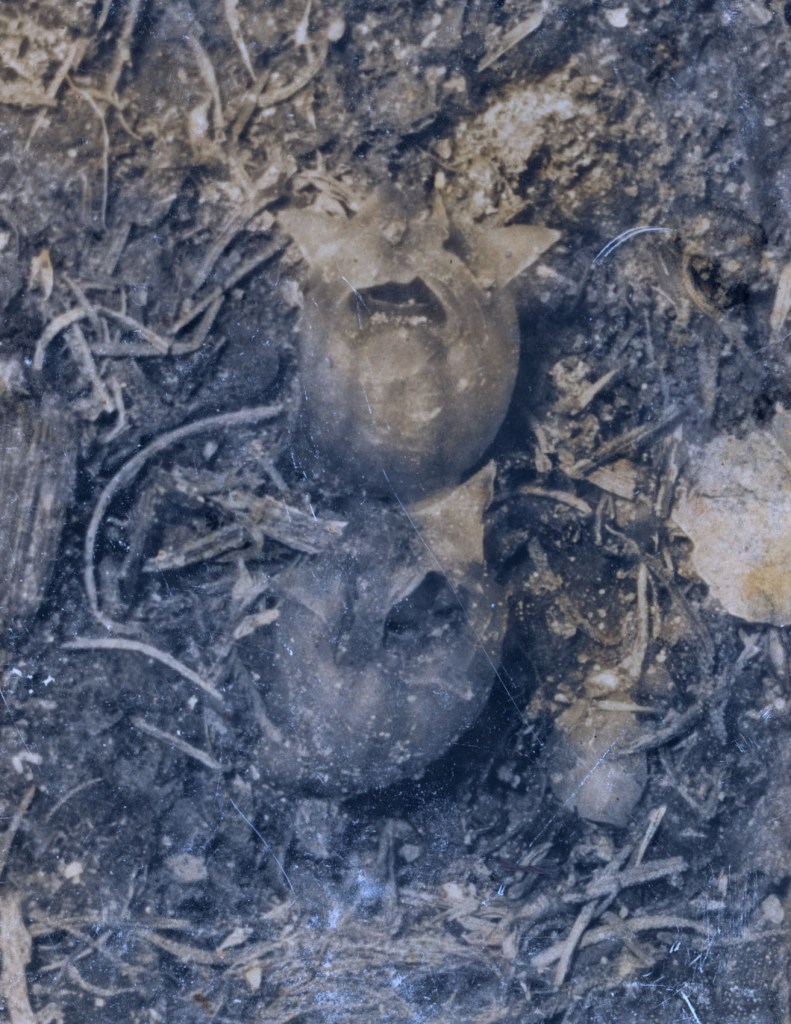
Close-up of brown, bulbous structures resembling flowers or fungi on a mossy ground, surrounded by dried leaves and grass.
An old, sepia-toned photograph depicting two objects that resemble plant bulbs, partially buried in soil with some roots and debris around them.
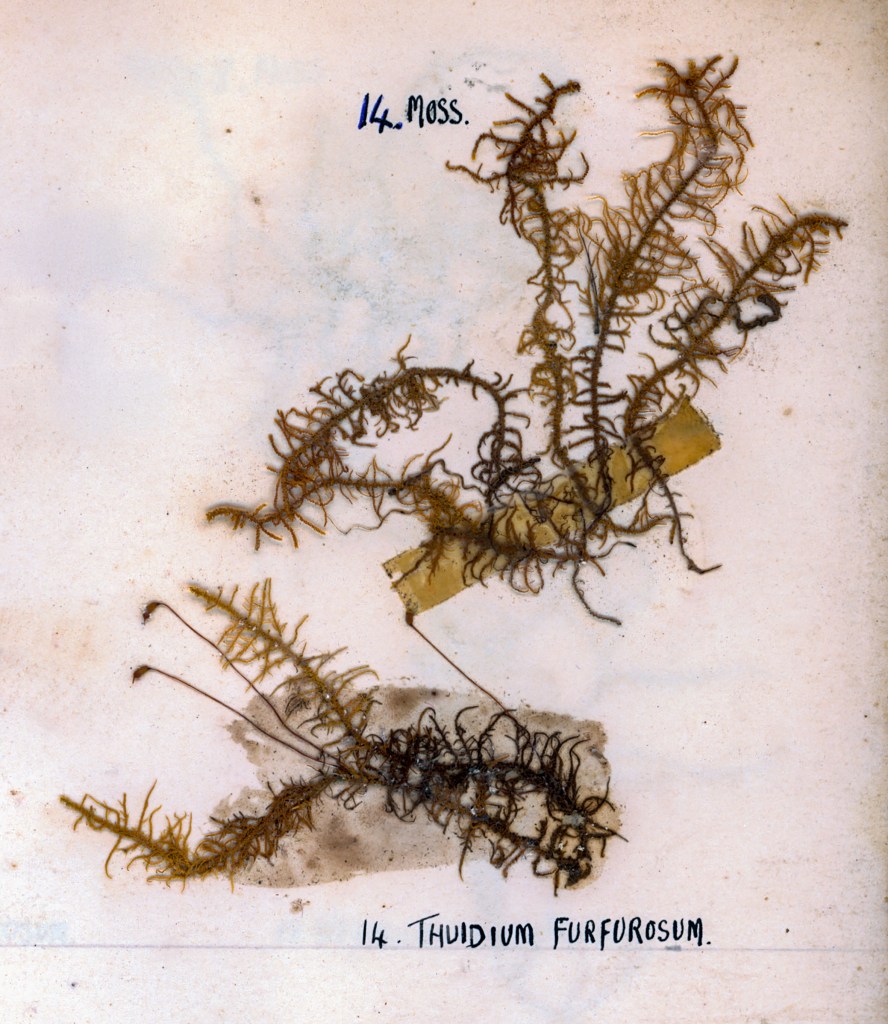
Two samples of moss, labeled '14. Moss' and '14. Thuidium furfurosum,' mounted on a page with yellow tape and a slightly stained background.
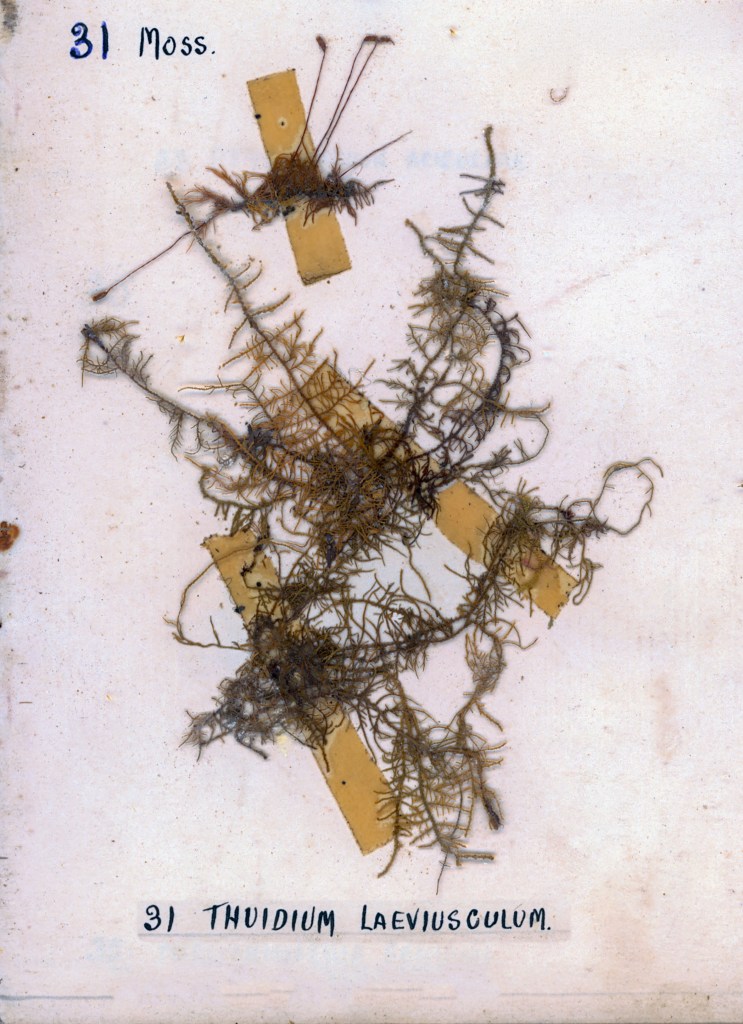
Dried specimen of Thuidium laeviusculum moss mounted on paper with identification label.
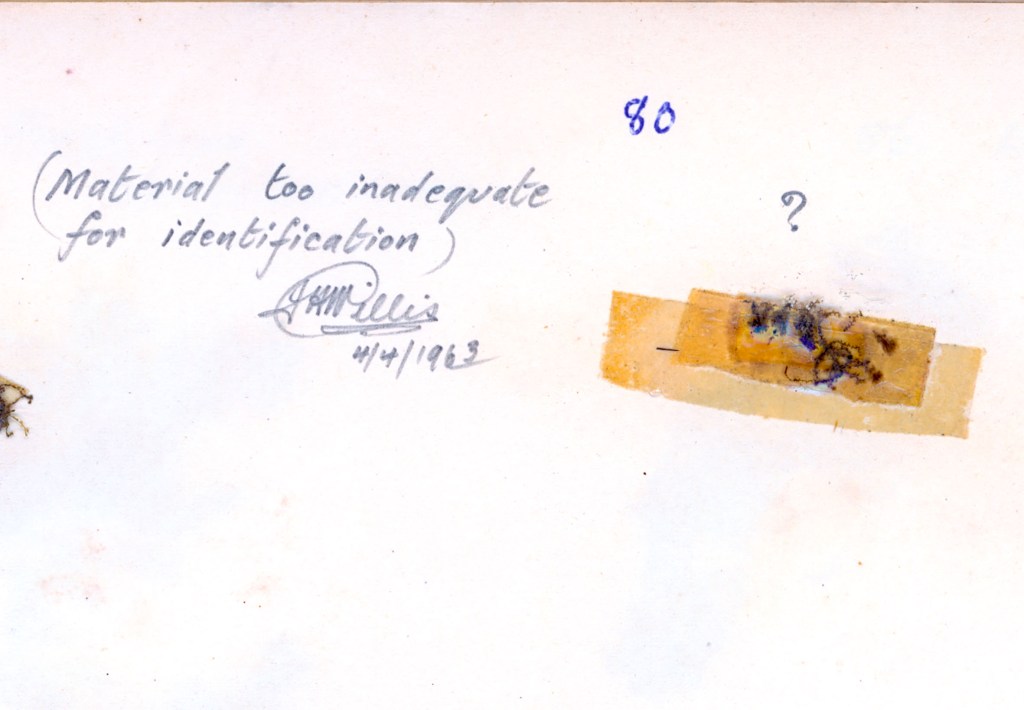
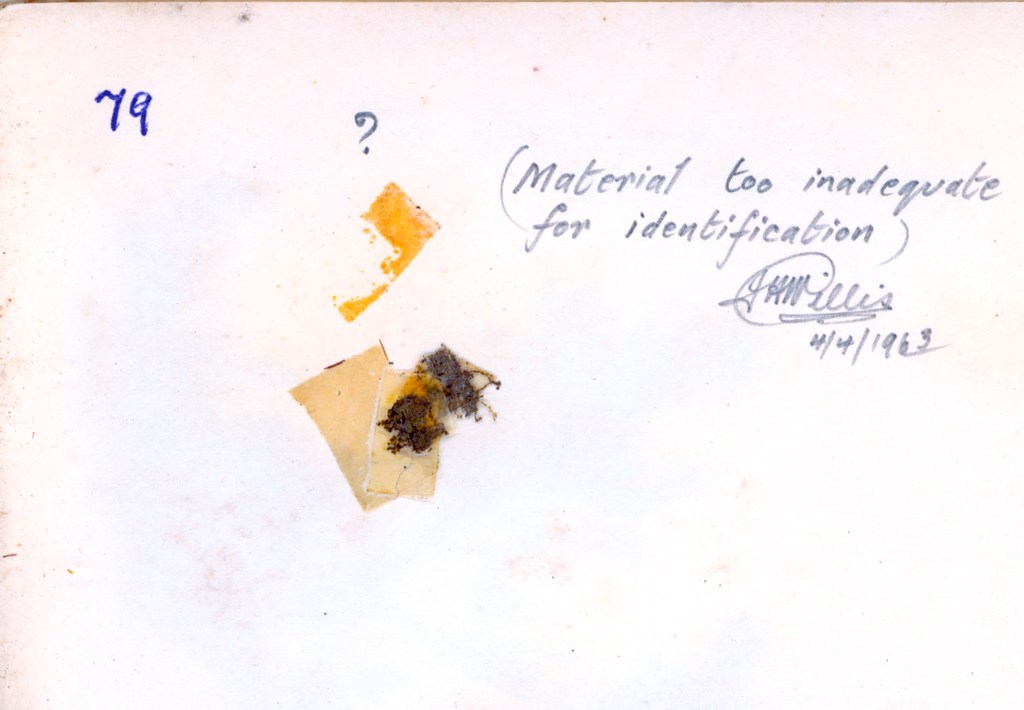
A handwritten note stating '(Material too inadequate for identification)' accompanied by a small specimen taped to a background with the date '4/4/1963' and an author's signature.
A handwritten note dated 4/4/1963 indicating 'Material too inadequate for identification' alongside small samples of material on a page.
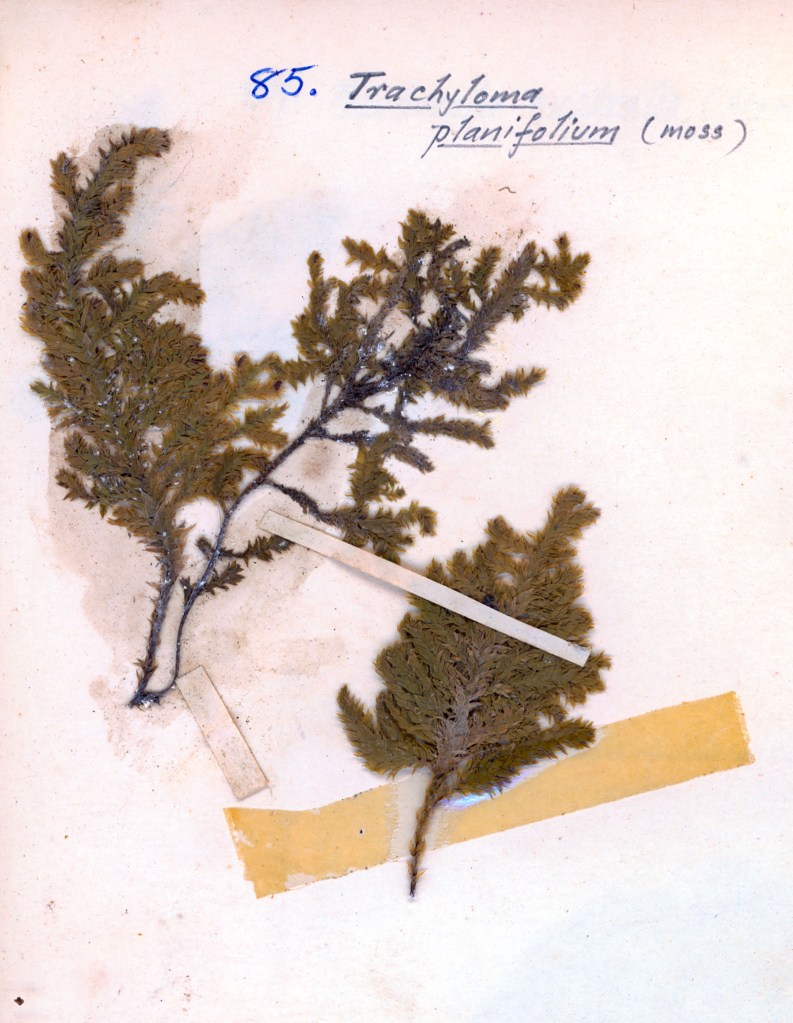
Preserved specimen of Trachythecium planifolium moss, mounted on a page with a label indicating the species name.
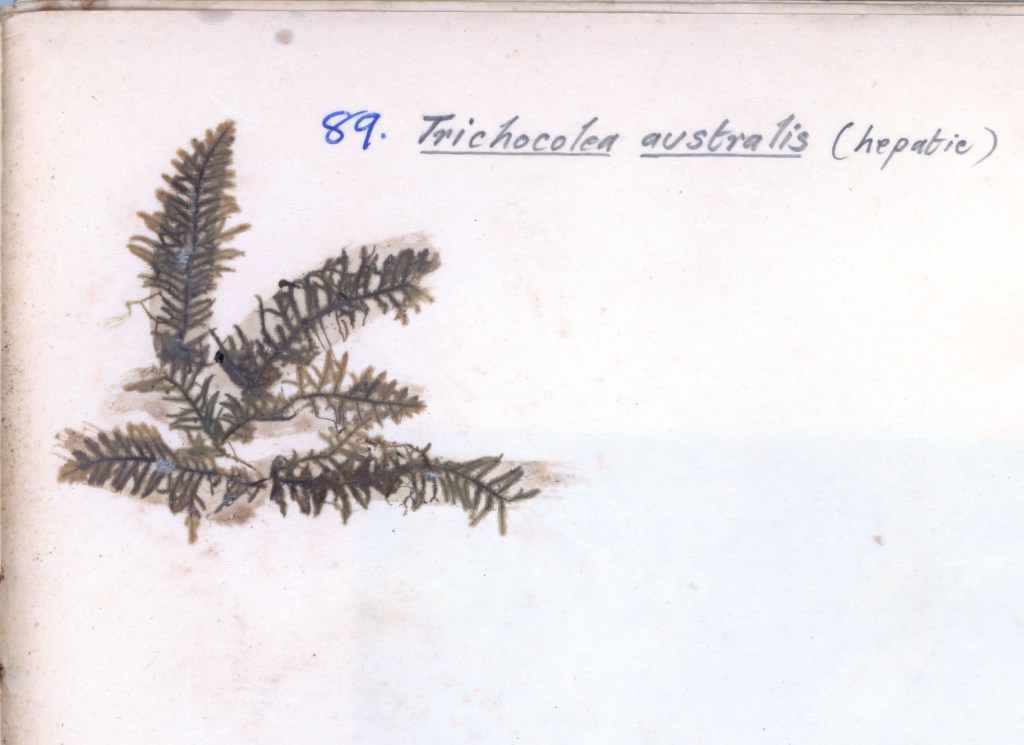
Botanical illustration of Trichocolea australis, a type of hepatic, featuring detailed, delicate green fronds on a light background.
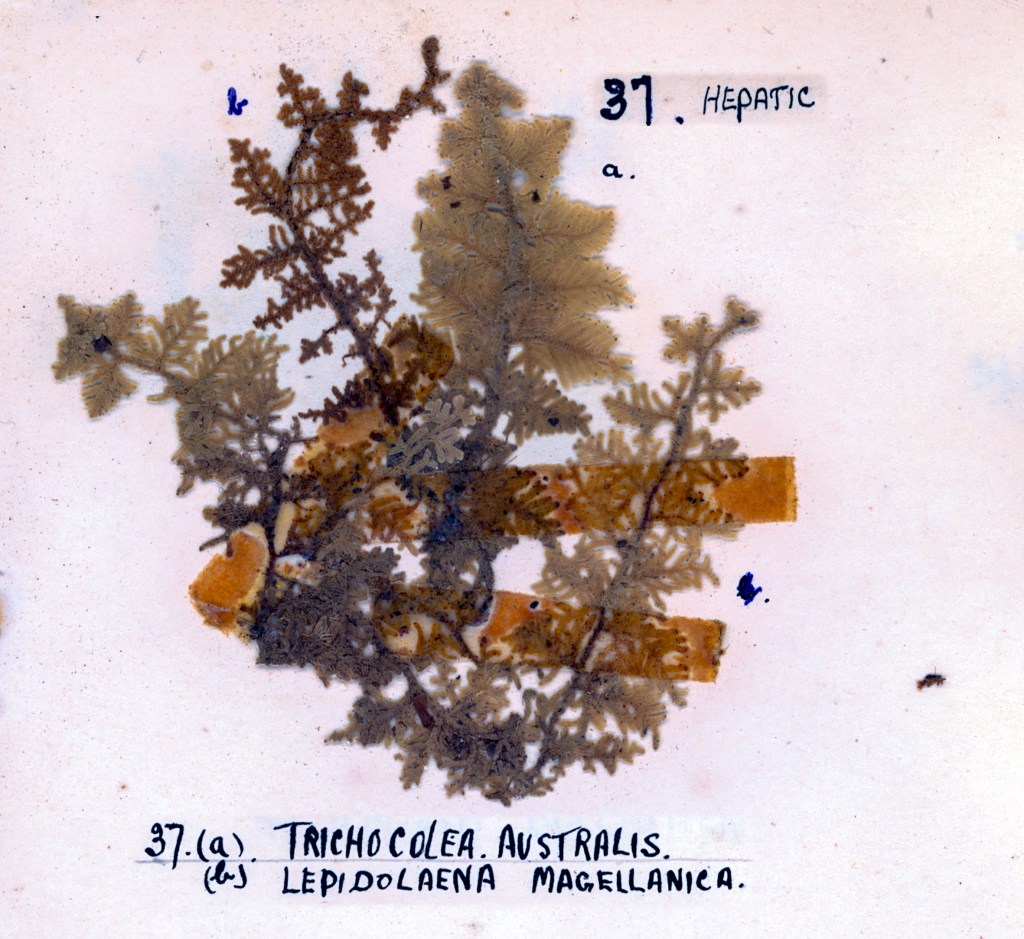
Dried specimens of Trichocolea australis and Lepidolaena magellanica, mounted on a pale background with handwritten labels.
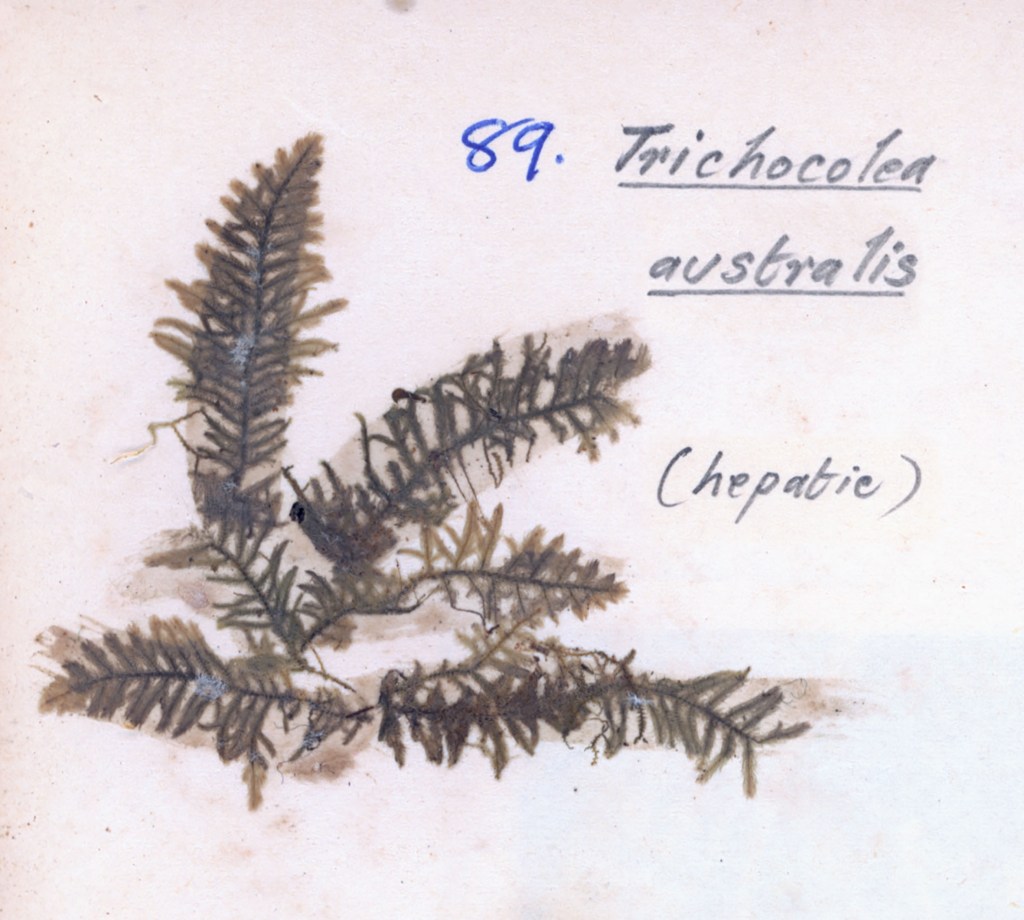
A botanical illustration of Trichocolea australis, a type of hepatic plant, with labeled identification.
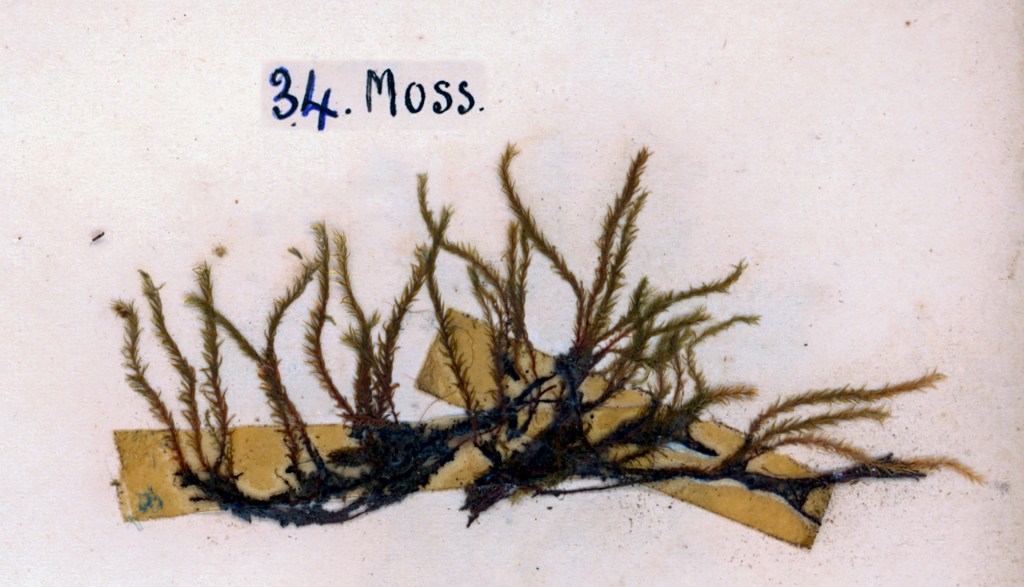
Dried moss specimen with a label marked '34. Moss.'
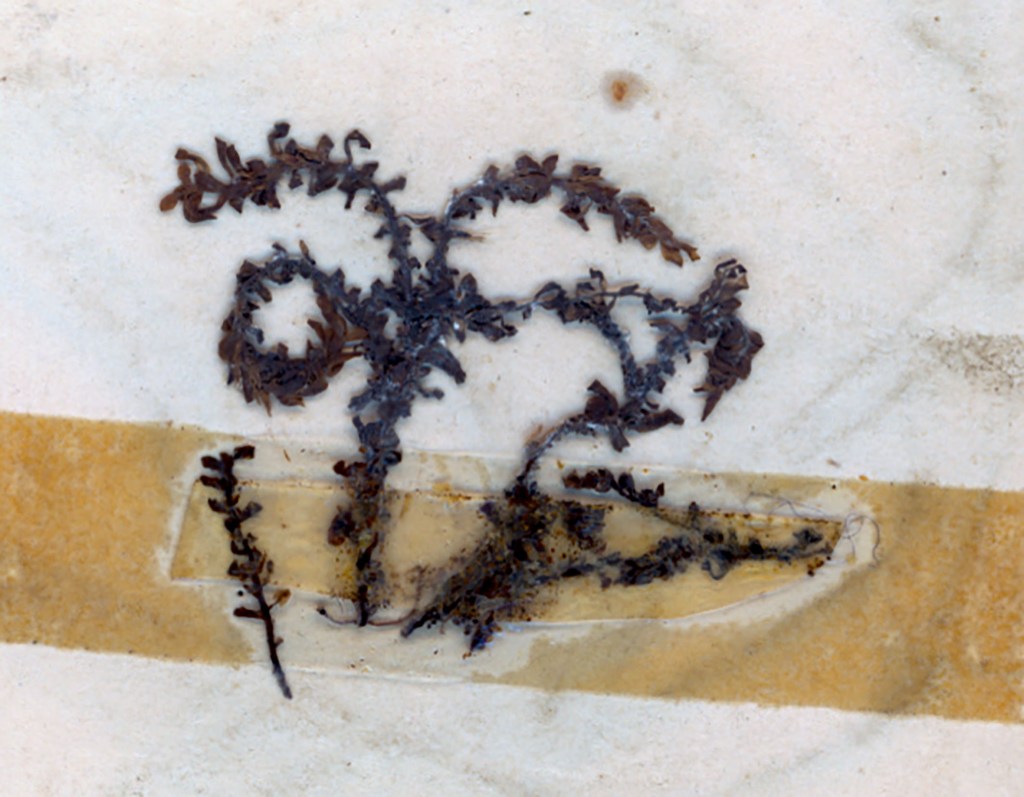
A close-up image of a fossilized plant with dark leaf-like structures, set against a light background with a yellowish band.
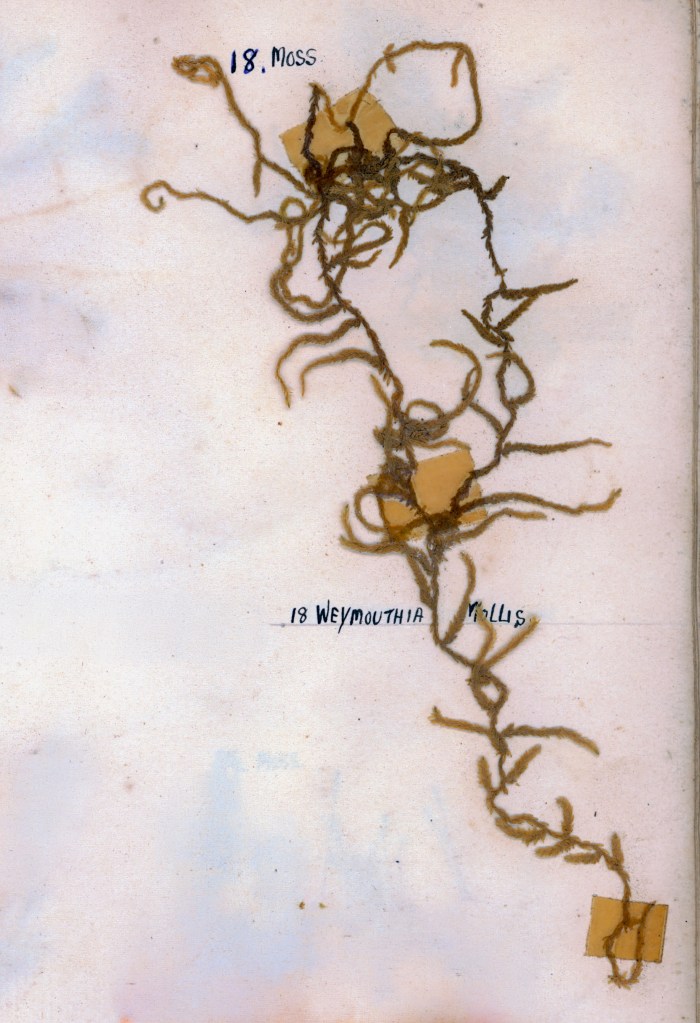
An illustration of a moss specimen labeled '18. Moss' and '18 Weymouthia vallis', featuring dark, wavy strands against a light background.
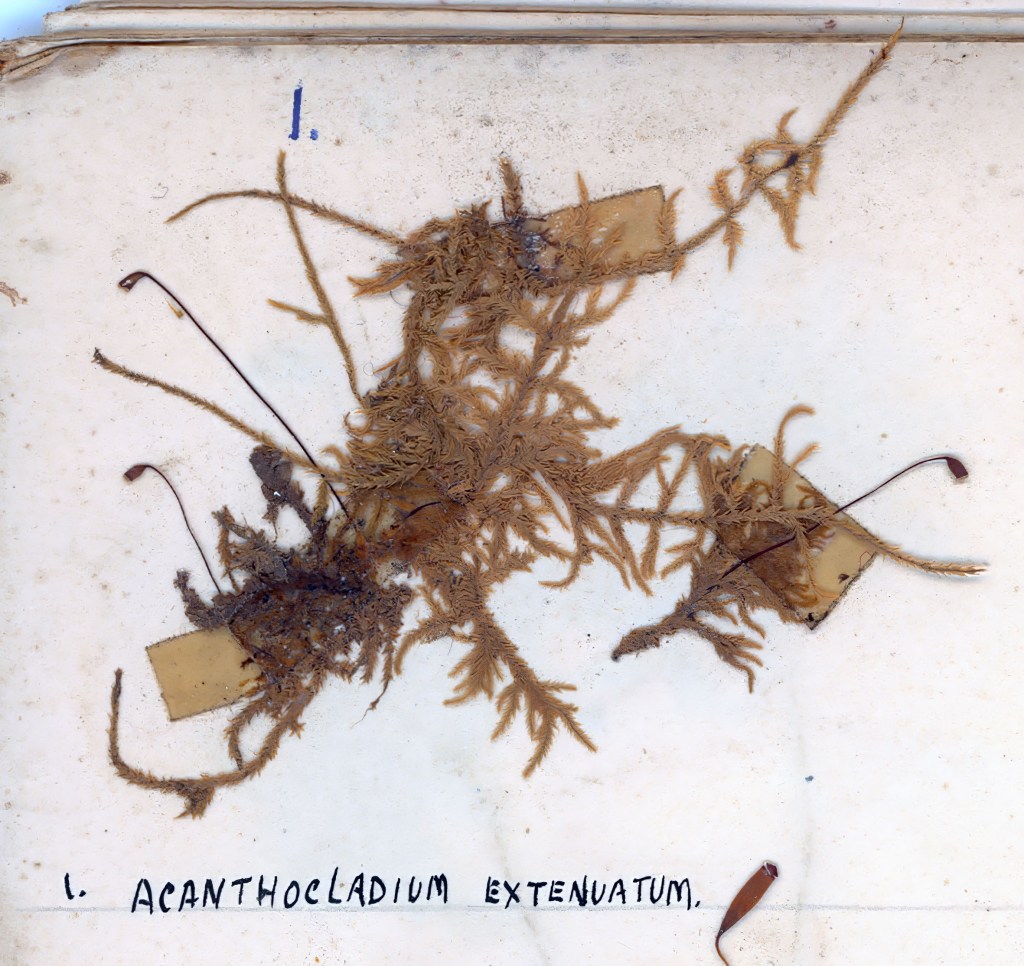
A preserved specimen of the seaweed Acanthocladium extenuatum mounted on a page, with labels underneath.
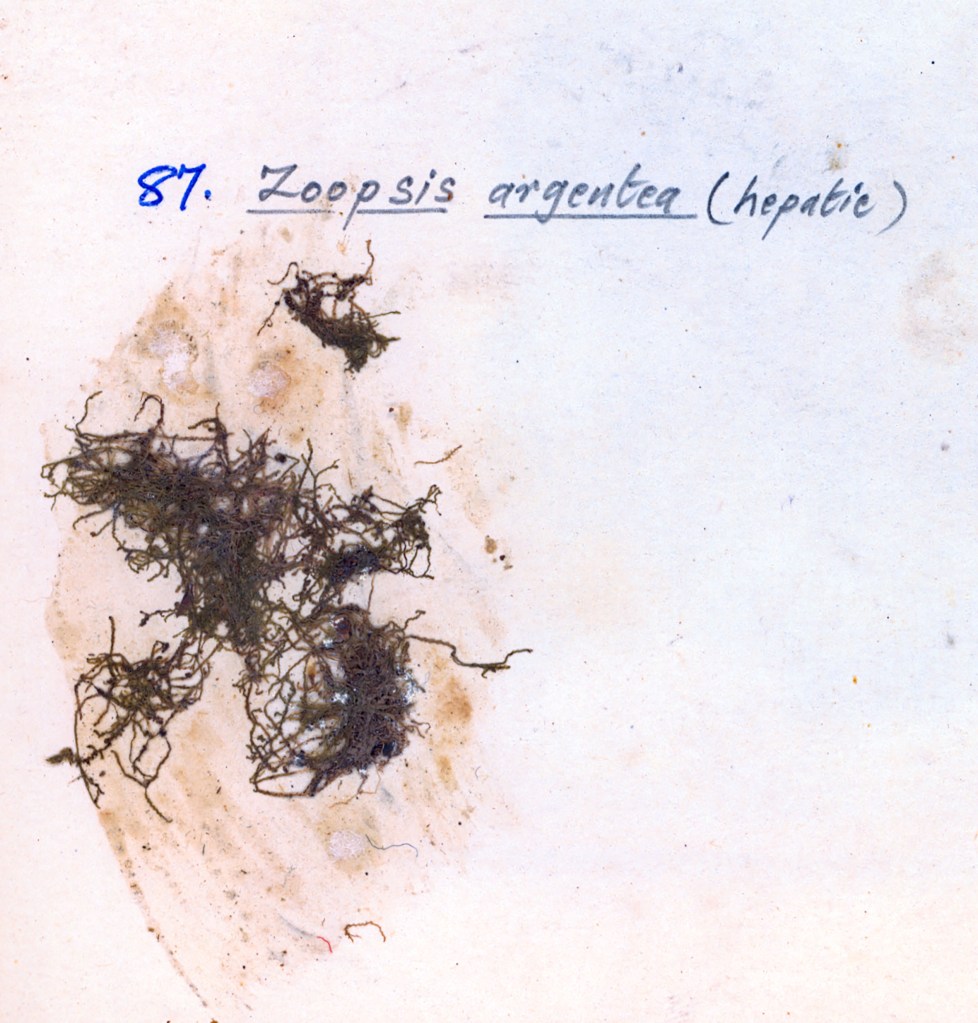
Close-up image of dried Zoopsis argentea (hepatica) specimens on a page with handwritten text.
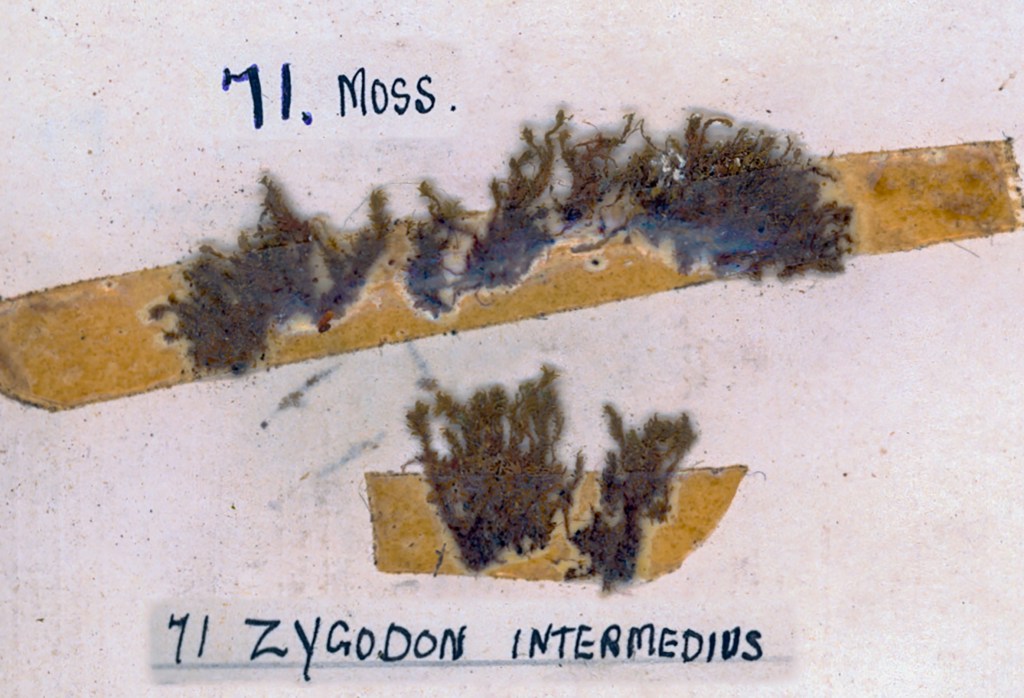
A botanical specimen illustration showing moss labeled '71. Moss' and '71 Zygodon intermedius' on a white background.

Kara Healey’s Bryophyte Collection

2023 Invertebrate Survey (Bugblitz) Report

On Saturday 18th of February, Friends of Tarra-Bulga National Park held our annual invertebrate Survey (Bugblitz). Conditions were good with temperatures in the low to mid twenties. About a dozen eager participants were ready to go bug hunting. This included a few members of the Entomological Society of Victoria. They were waiting when I arrived at the Visitor Centre just after 2 pm. I was a few minutes late. The Visitor Centre was a great place to start. While they were waiting, some observant people noticed an abundance of insects. These insects were roosting on the walls and windows. It was unusual to see a hundred or more fresh-looking Geometrid moths. These moths turned out to be a species called Chrysolarentia lucidulata (Lucid moth). Most of them were perched on verandah beams.

Once we had admired the visitor centre bugs we set off as a group along Lyrebird Ridge Track. We had a beating sheet with us to catch insects we tried to dislodge by lightly beating likely looking bushes. The sheet was unnecessary to start with. Several sharp-eyed children in our group were very skilled at spotting enough tiny creatures. They kept everyone interested. Their finds included some young Katydids and a variety of caterpillars. We continued our survey towards the suspension bridge. The group eventually thinned out. This was understandable as the younger ones began to tire.
The beating sheet was then put into more use and continued to produce new and interesting observations. By the time we had completed a relatively short loop back to the visitors centre it was around 5.15 pm (so we covered about 2 km of ground in 3 hrs). A few of us stayed around and had some dinner but apart from myself, all the afternoon crew then departed. Before Dusk Ken and Matt from Friends of Morwell National Park (as well as the Entomological Society of Victoria) arrived. I set up a light sheet in the Visitors Centre car park. Ken and Matt set up one at the top of the Bulga Picnic area road. This road is currently closed. The wind had been a little breezy during the day. Thankfully, it became lighter in the evening. This meant less flapping for the light sheets. Out of the two light sheets for some reason the one at the Visitor Centre area attracted more activity. I saw a little more sheet action. Meanwhile, a Boobook owl came to perch nearby Ken and Matt. It observed their activities. Ken and Matt kept their light going until just before 11 pm and I continued recording until just after midnight.

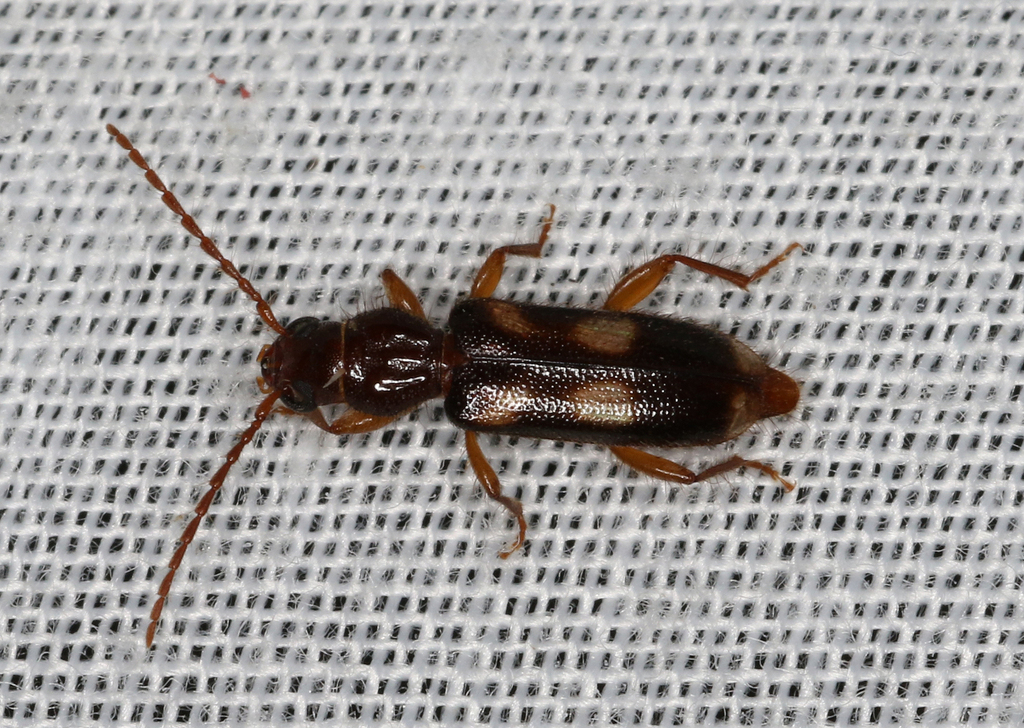
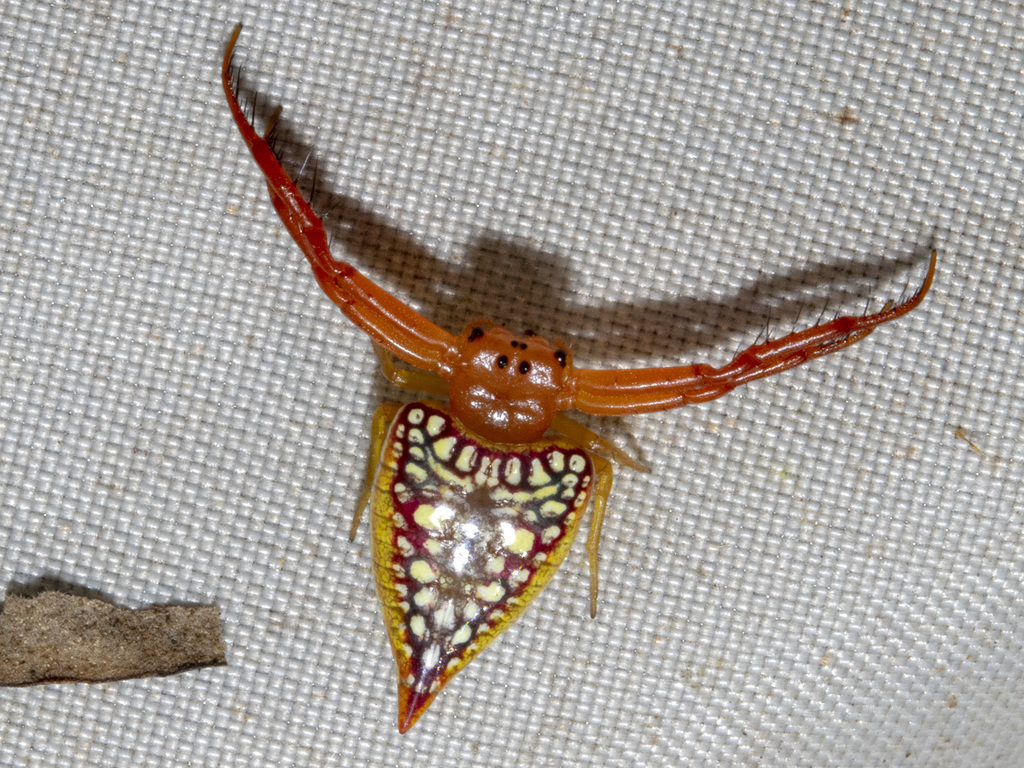
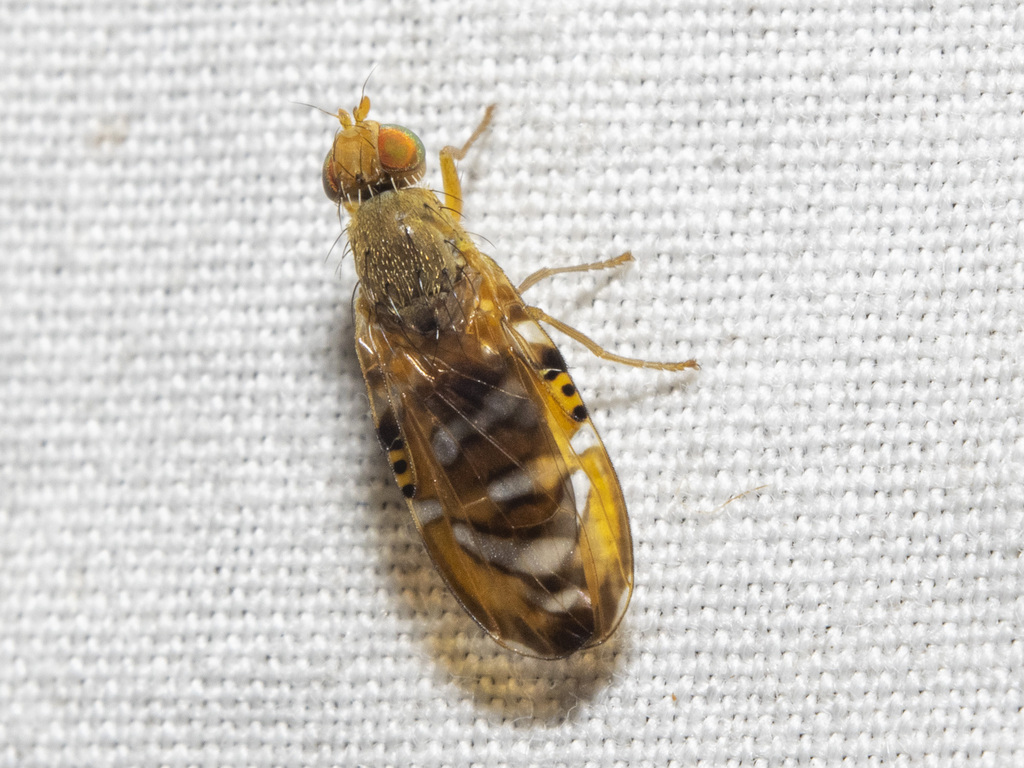
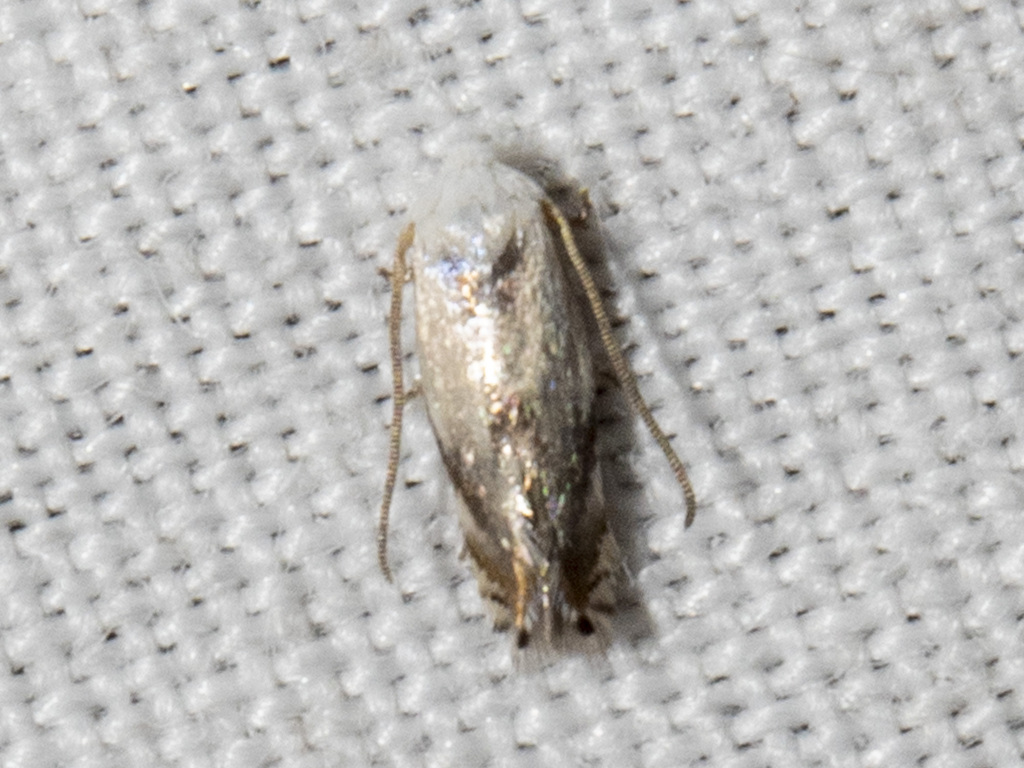
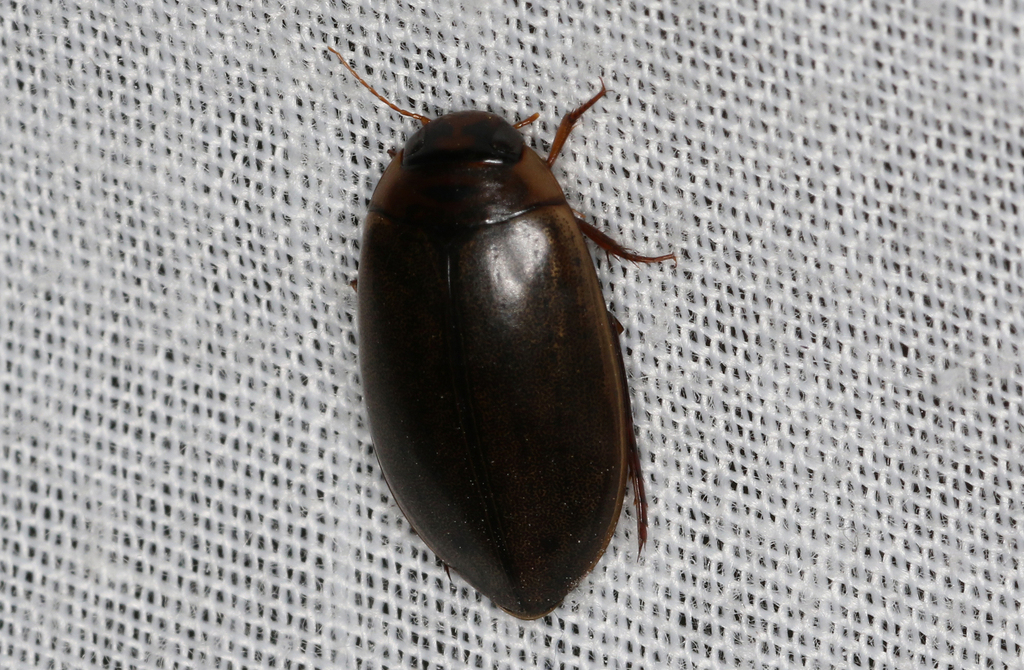
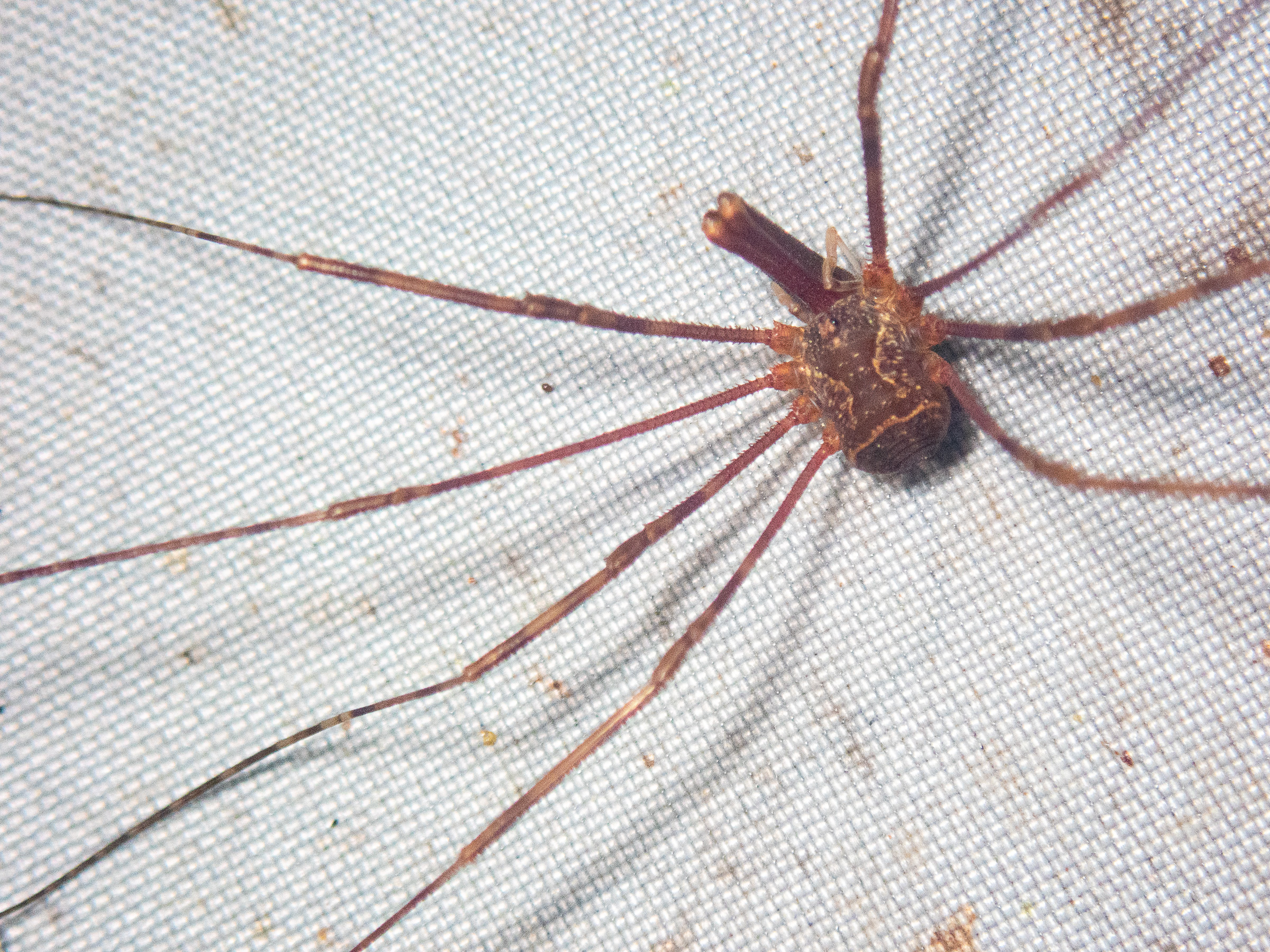
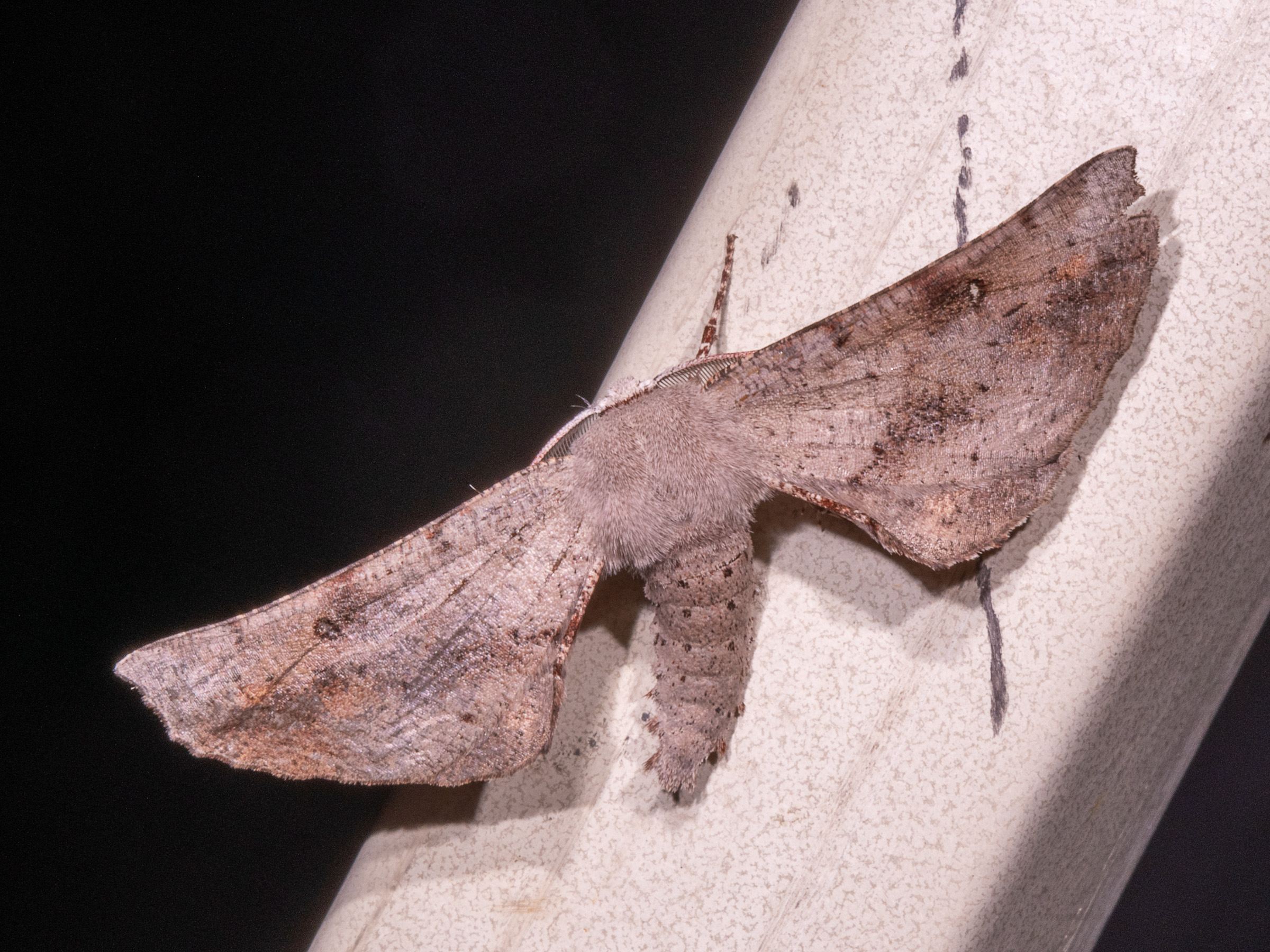
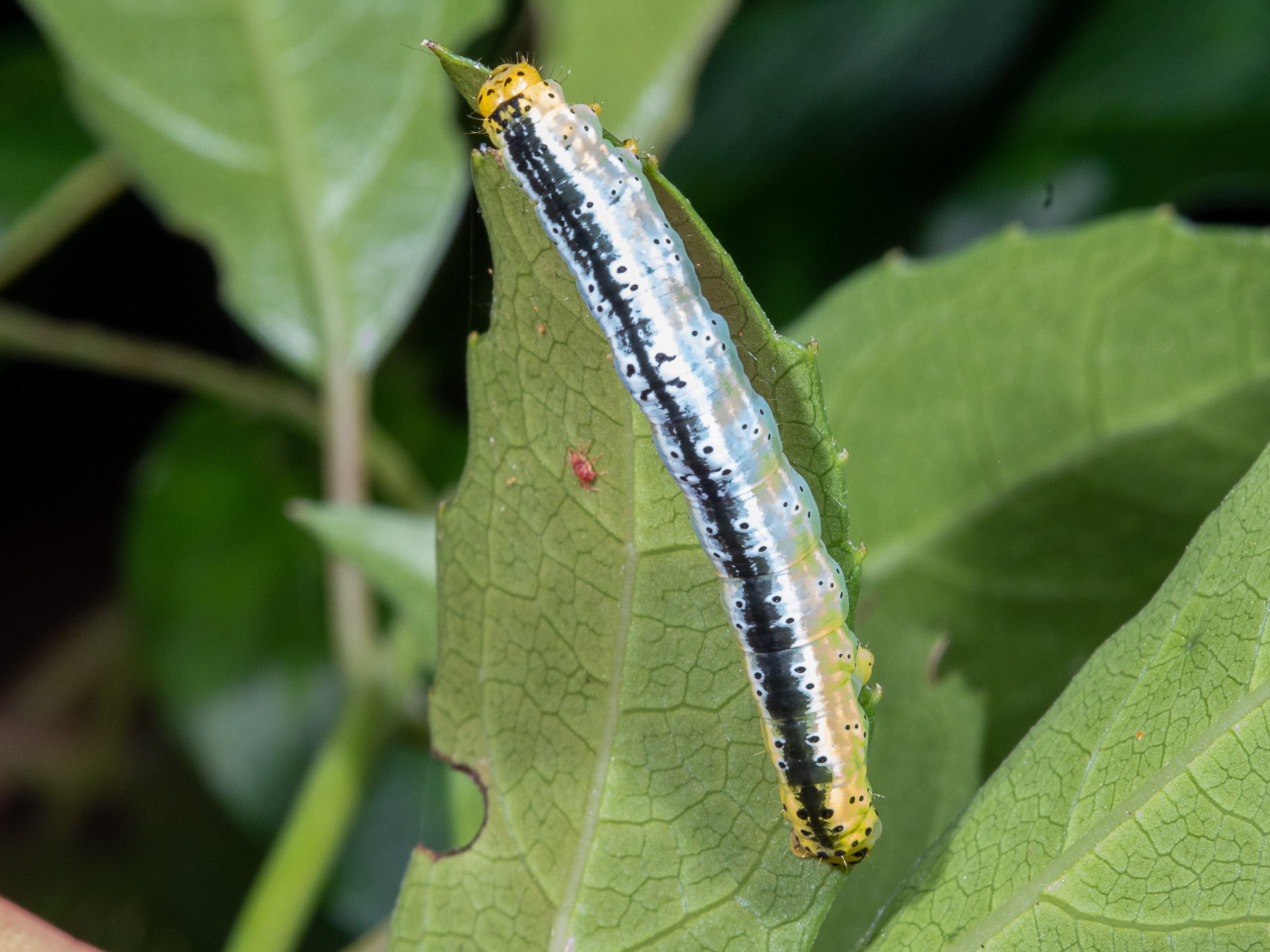
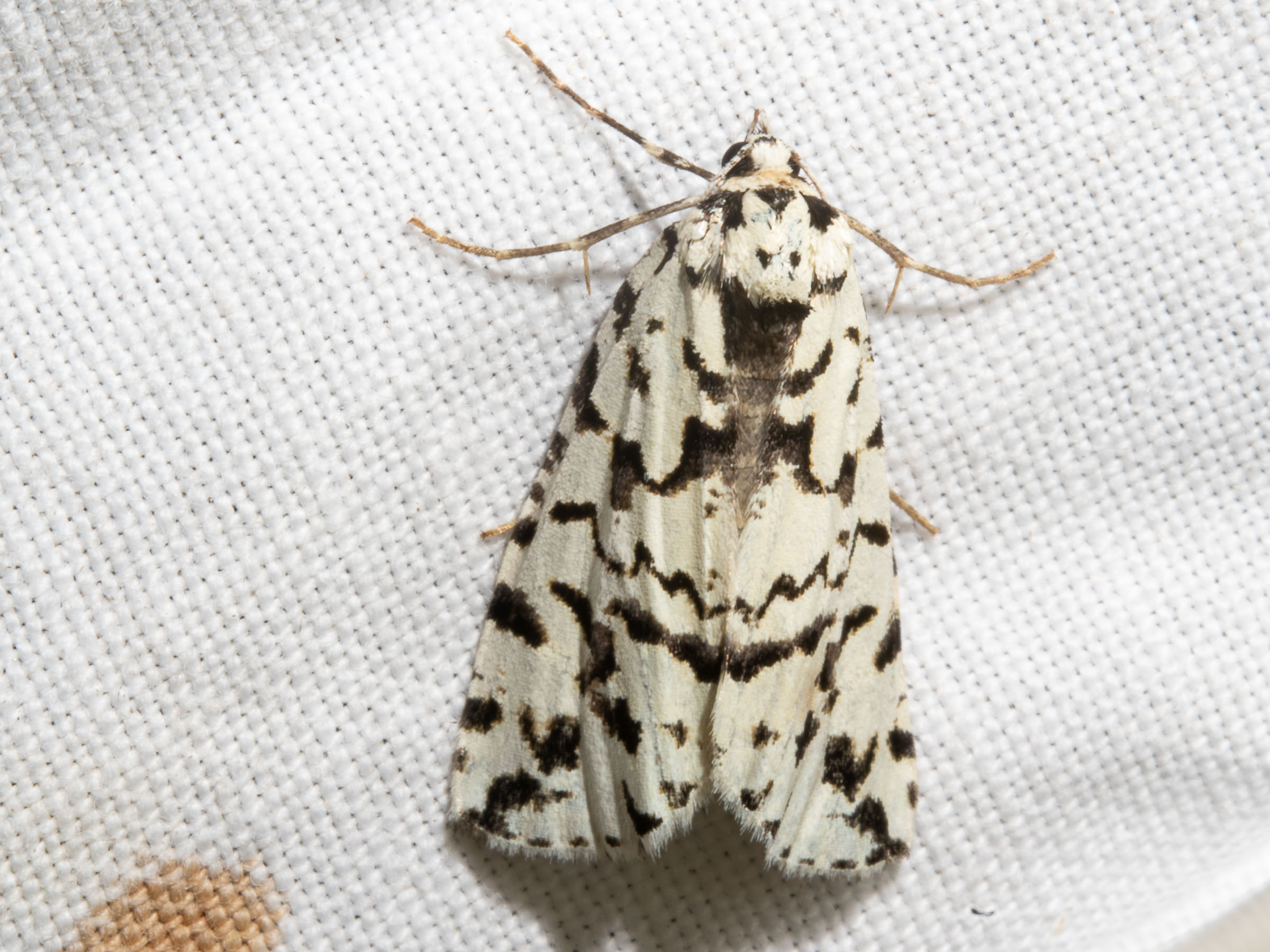
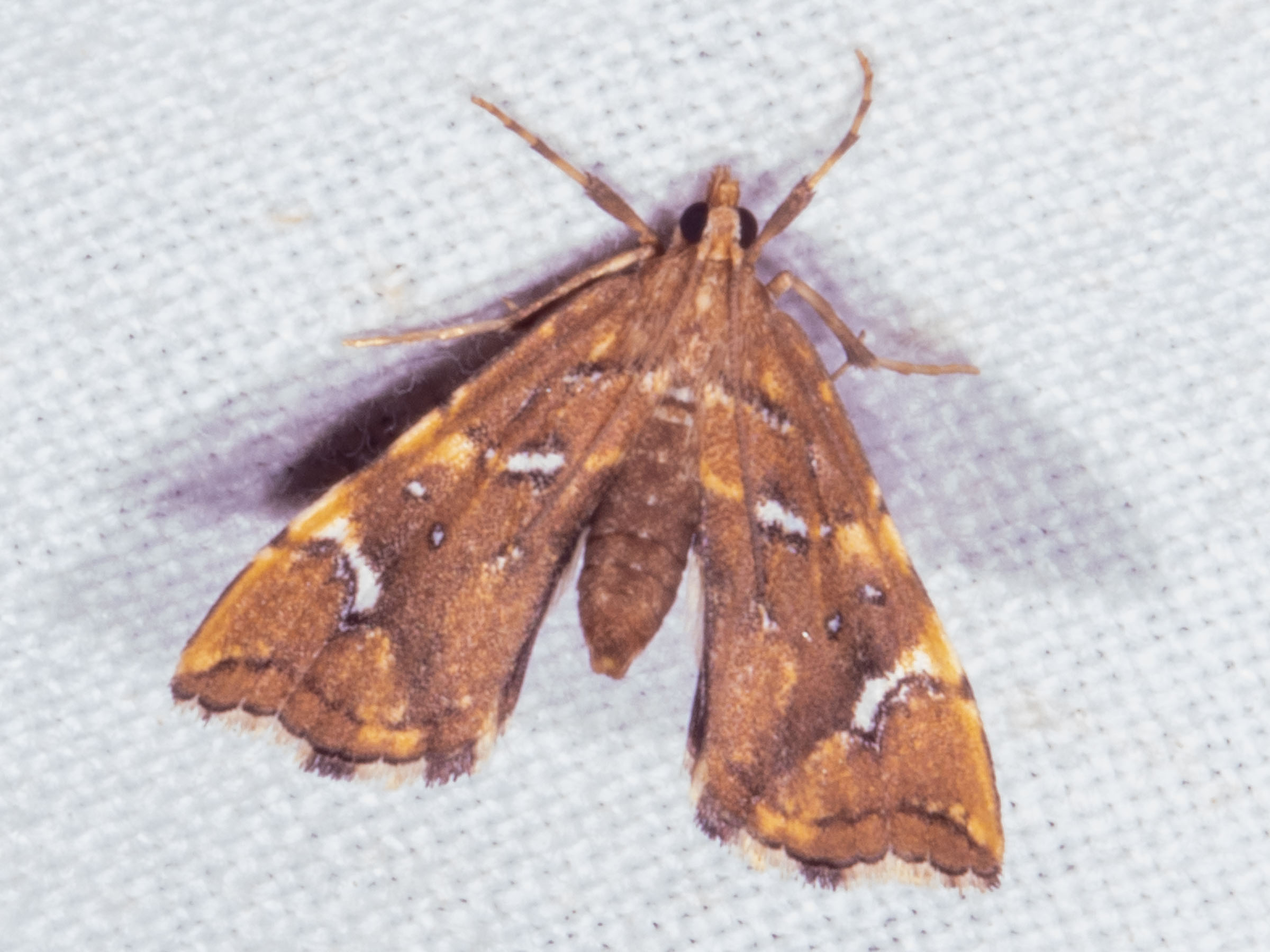
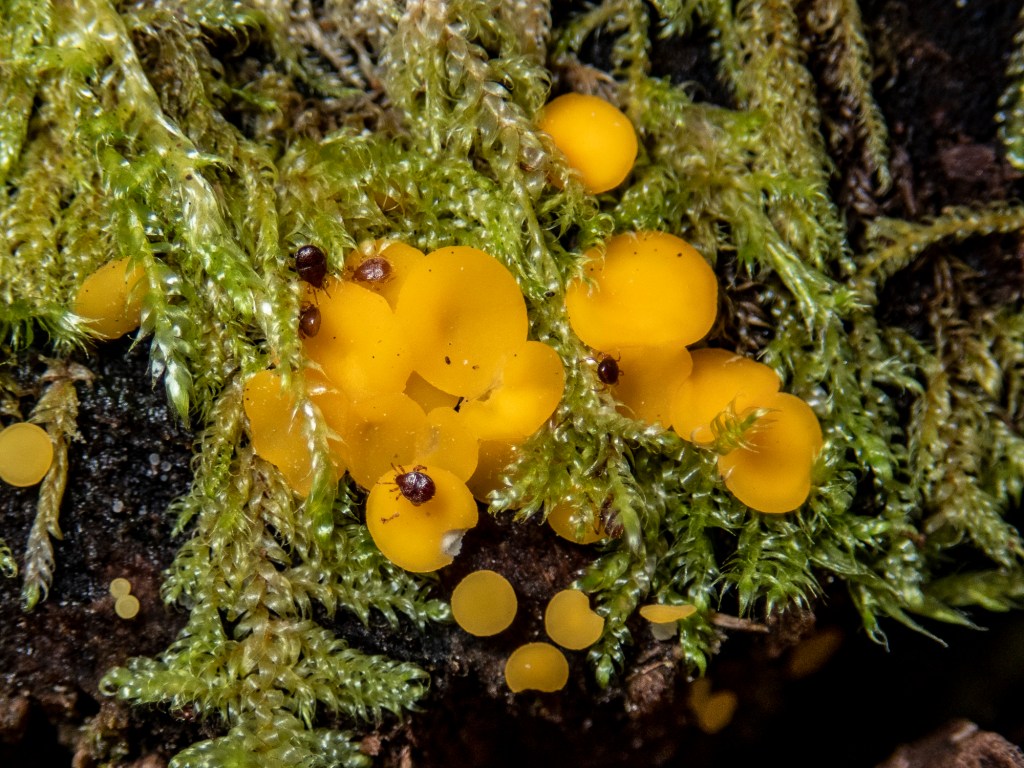
It took a couple of weeks for all of the observations to get added to iNaturalist. Overall, we recorded at least 180 species of Arthropods. On the same activity last year, we recorded 158 species (we had our light sheet in the Tarra Valley). As a result of our efforts, we increased the number of Arthropod species recorded in the Park on iNaturalist. The number rose from 745 to 776. We added 21 new species to the list. The ensuing slideshow has some of the species recorded in Tarra-Bulga National Park for the first time on iNaturalist. To see all of the observations on iNaturalist from the day click here.

Mid Winter Walk Report

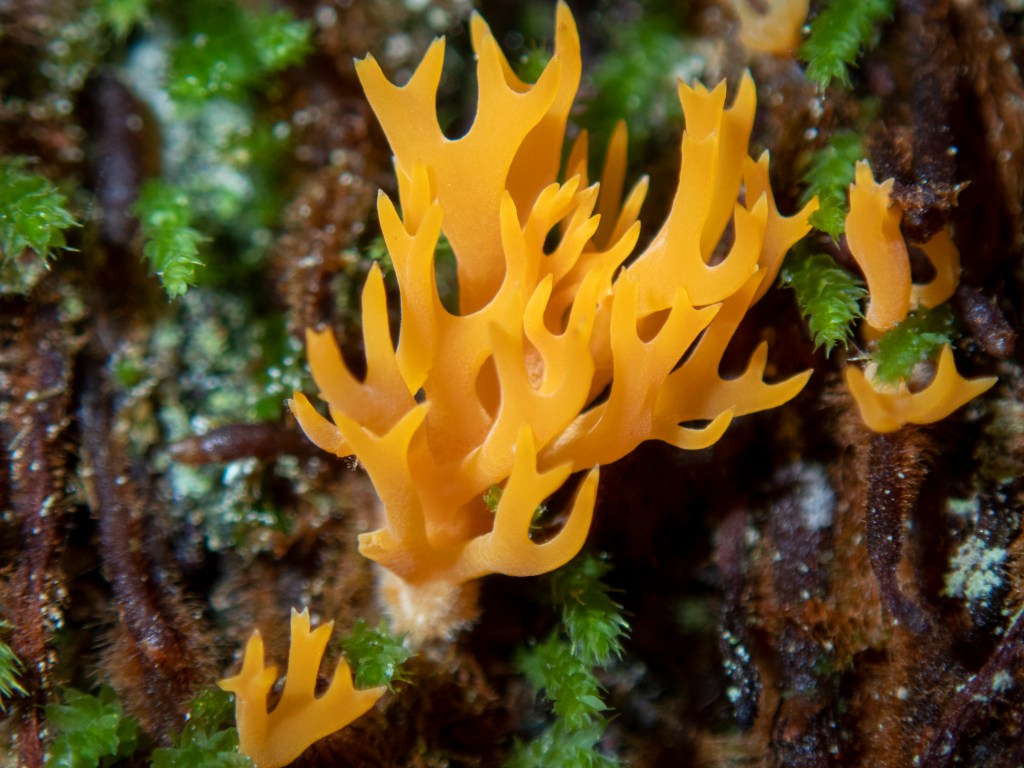
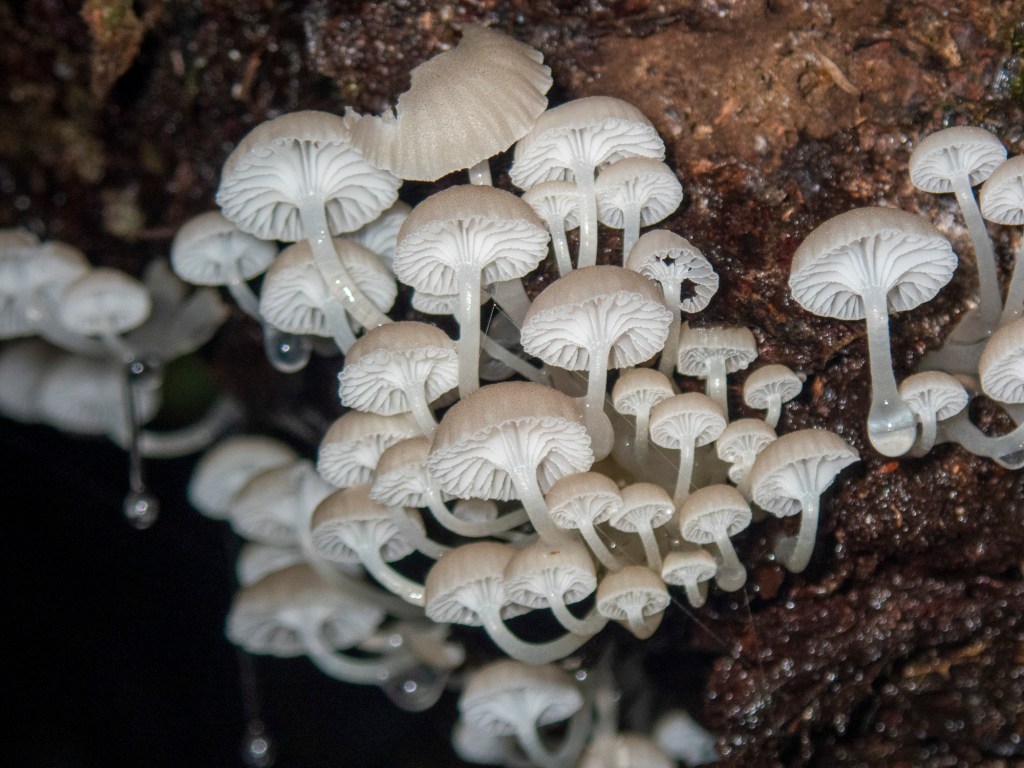
On Sunday July 10th we held our first Mid Winter Walk with the aim of learning more about some of the ferns, mosses, liverworts and lichens that are often overlooked features of the biodiversity in Tarra-Bulga National Park. If you want to see the full complement of photos from the day check out the Tarra-Bulga National Park project on iNaturalist. You may be even be able to help with identifying some. https://www.inaturalist.org/observations?q=Mid%20Winter%20Walk%202022&search_on=tags Otherwise you can check out the photos here to get an idea of what we saw. Although we were not specifically looking at fungi we did also come across a lot of photogenic fungi so some photos of them have also been included.

Note that it can be difficult to identify Mosses and Liverworts (both different groups of plats) in the field, some species need microscopic examination to see their features. Ferns are a bit easier as they are larger and although they dominate the landscape there are only around 40 species in the park. Lichens are not actually plants but are are organisms composed of fungal and photosynthetic partners.

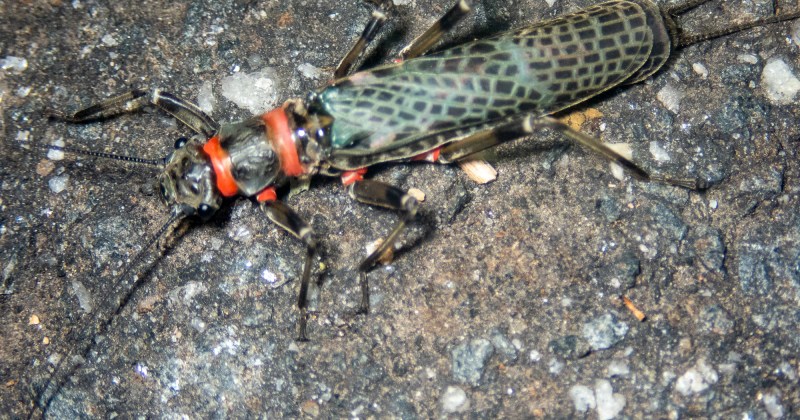
Eusthenia venosa (Stonefly)

2022 Bioblitz Report

Volunteers spent the day and night On Saturday February 5th using a range of techniques to see what living things could be found. From the day a whopping 428 observations were added to the Tarra-Bulga National Park project on the citizen science website www.iNaturalist.org. A number of plant and fungi species were recorded, but the vast majority of records were for an amazing array of insects and other invertebrates. Many finds that were uploaded to the website are still to be identified but so far, we can confirm that we have recorded at least 215 different species for the day, roughly 60 of them had never previously been recorded at Tarra-Bulga.  

The day’s focus was mainly on invertebrates, other planned activities for the year aim to add to the flora and fauna records for the park, these include a fungi foray in May, a mid-winter walk looking at ferns and mosses, and a plant identification day as well as bird survey in spring. As well as these activities, Friends of Tarra-Bulga hold regular working bees and are always on the lookout for people interested in joining our crew of volunteers that staff the park Visitor Centre.

.

The following Table shows the range of lifeforms we recorded on the day.

Table shows the range of lifeforms we recorded on the day.

Tarra-Bulga Bioblitz

It’s not too late to sign up for our Bio-blitz. This Saturday (February 5th) Where we will aim to record as many species of any lifeform (Insects, Birds, Plants, Fungi etc) we can find on the day. We will use the Citizen Science Website/App iNaturalist https://inaturalist.ala.org.au/ to log our findings. Conveniently the site already has a Tarra-Bulga National Park project set up that automatically records any sightings made within the Park. https://inaturalist.ala.org.au/…/tarra-bulga-national-park

As you can see it is well established already with 5.350 observations and 1,170 species recorded. We will aim to use a number of survey techniques to find as many species as possible. I think 200 species would be a good result for the day.

Anyway if you would like to join in we will kick off at 10am but you are welcome to come and go at any time. If the weather is suitable we will put up a light sheet in the evening which should attract a lot of night flying insect species. Registration is via ParkConnect https://www.parkconnect.vic.gov.au/Volunteer/public-planned-activity/?id=6768c4d9-446c-ec11-b820-0003ff6f999a

With iNaturalist you can download the App and upload sightings directly from a phone or you can upload any photos you take on a camera when you get back home and upload them via the website later on. If you don’t want to log your own sightings feel free to just come along and observe.

Do bring food for the day, as well as any cameras, binoculars etc that you would like to use. Contact 0488 035 314 for further information. 

See less

Fungi Foray Report

On Sunday May 9th we held a fungi foray starting at Bulga Park. The conditions were favourable and we had a great turn out with 30 people signed up and ready to go at 9.30am. After an introductory presentation we set off for a very slow loop down to the suspension bridge, returning via the Fern Gully and Link Tracks. Understandably some families with small children and others with Mother’s day lunch commitments dropped out along the way, but even on a short walk they would have experienced a wide variety of fungi displaying their spore bodies.

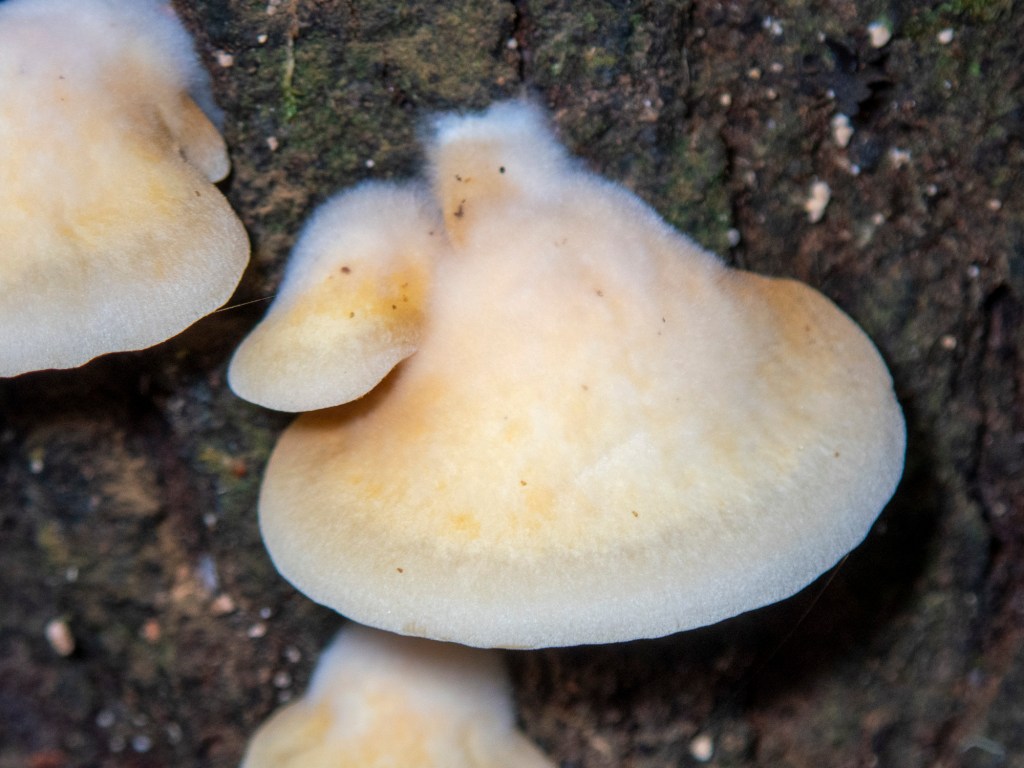
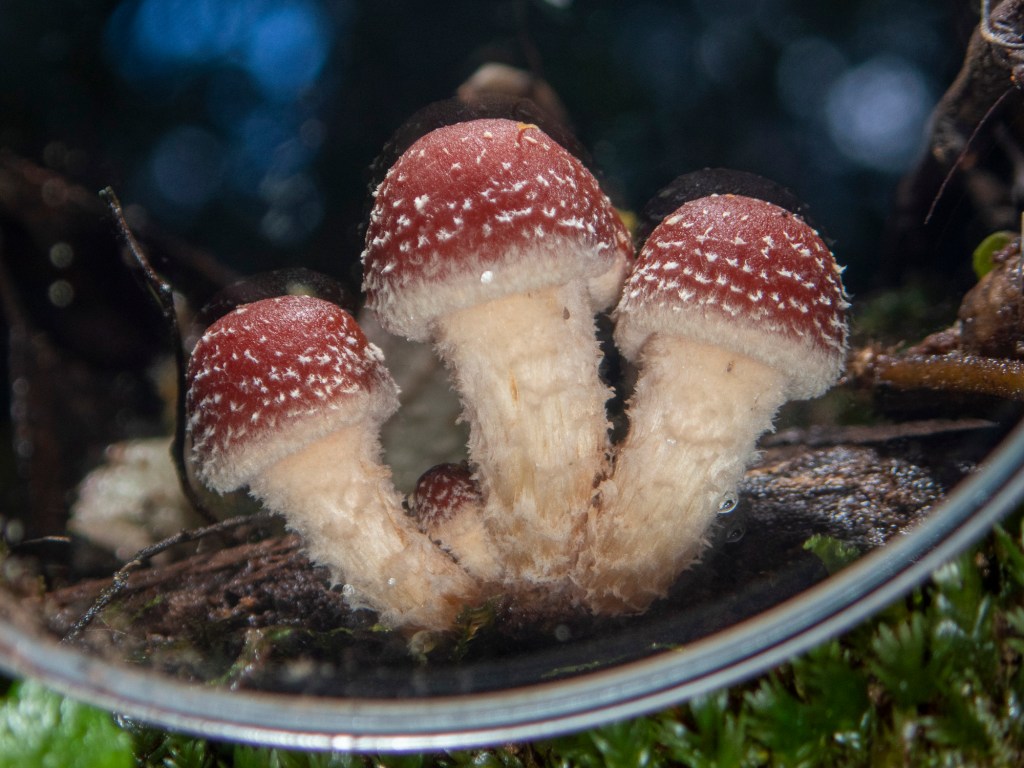
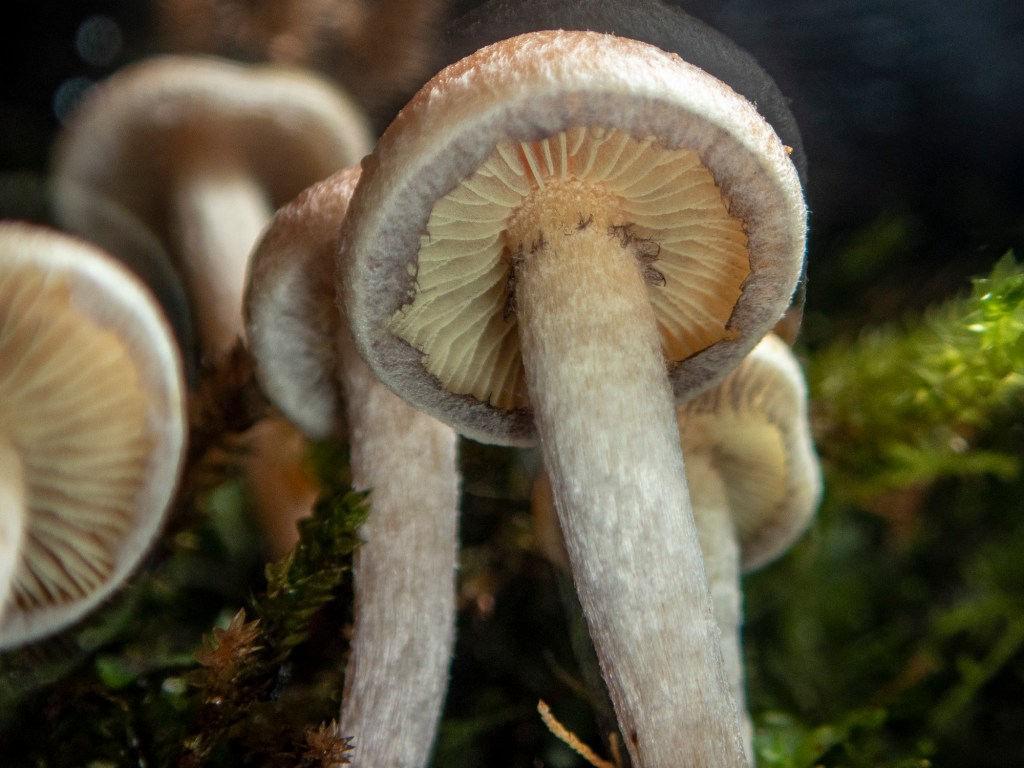
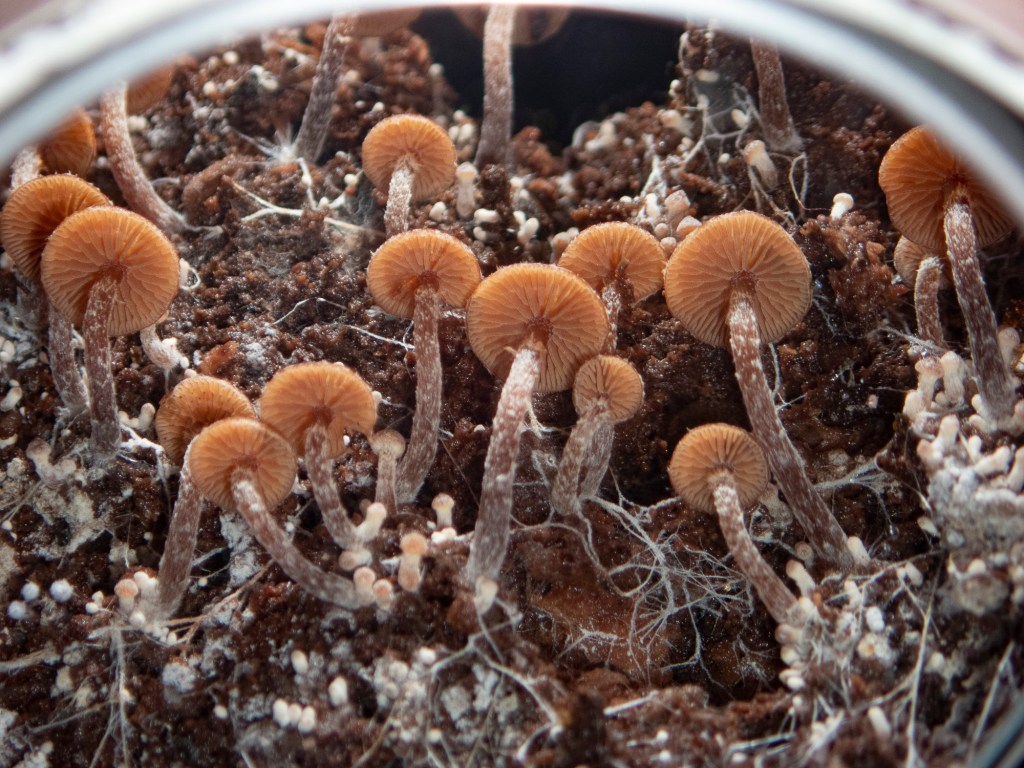
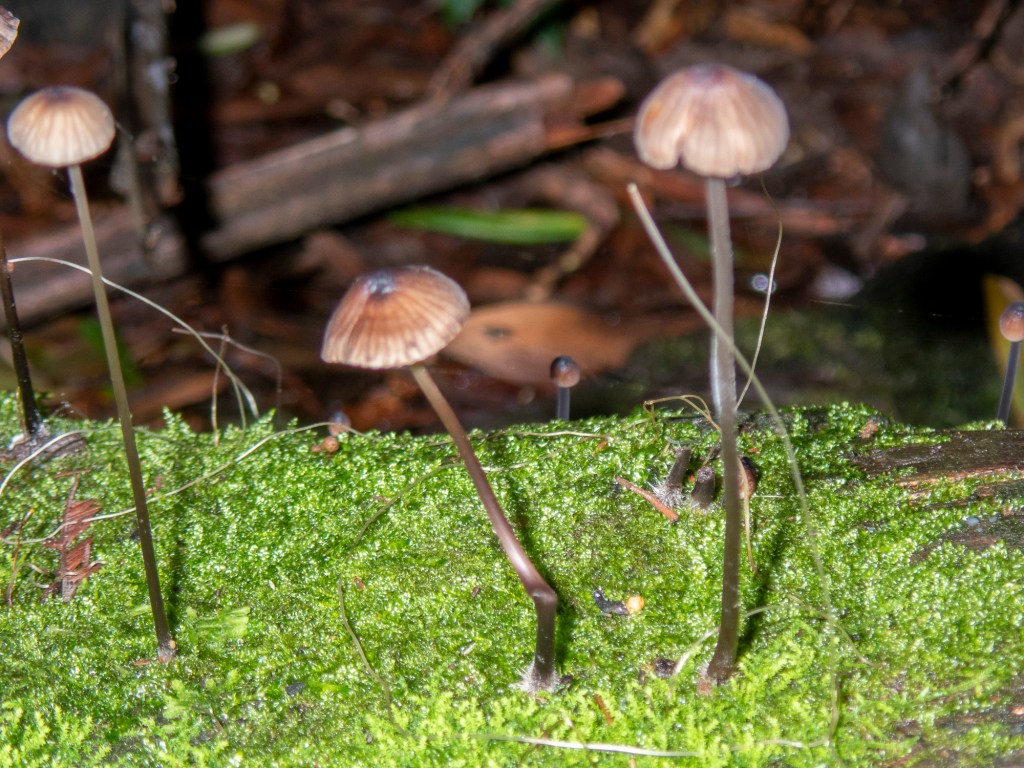
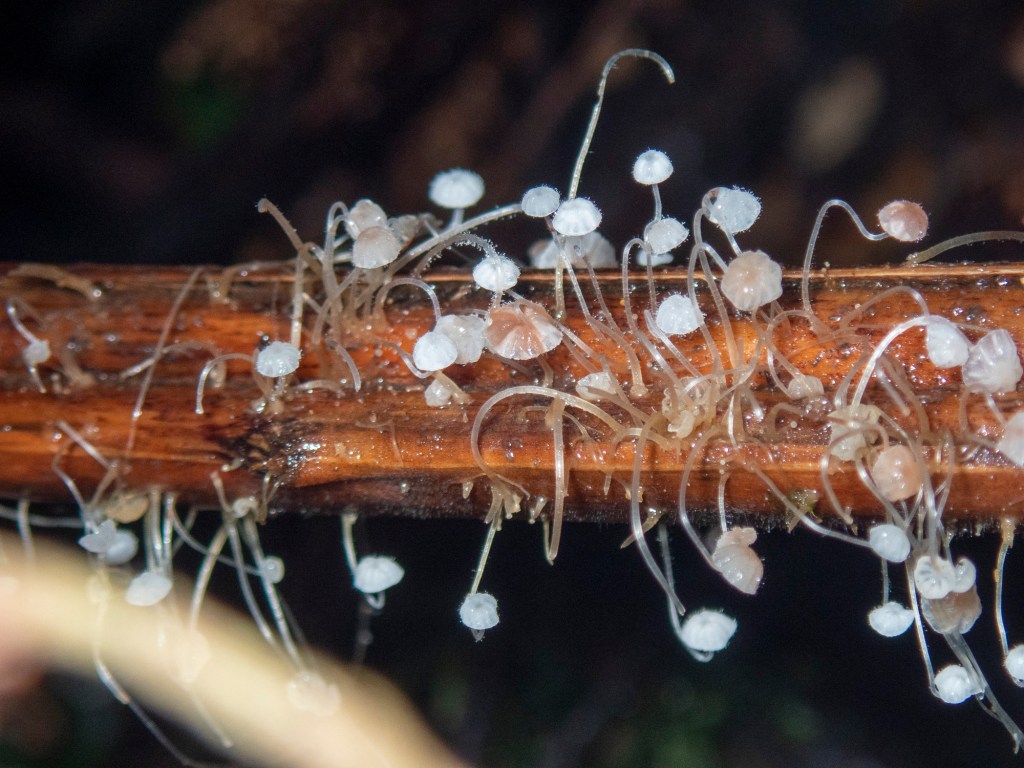
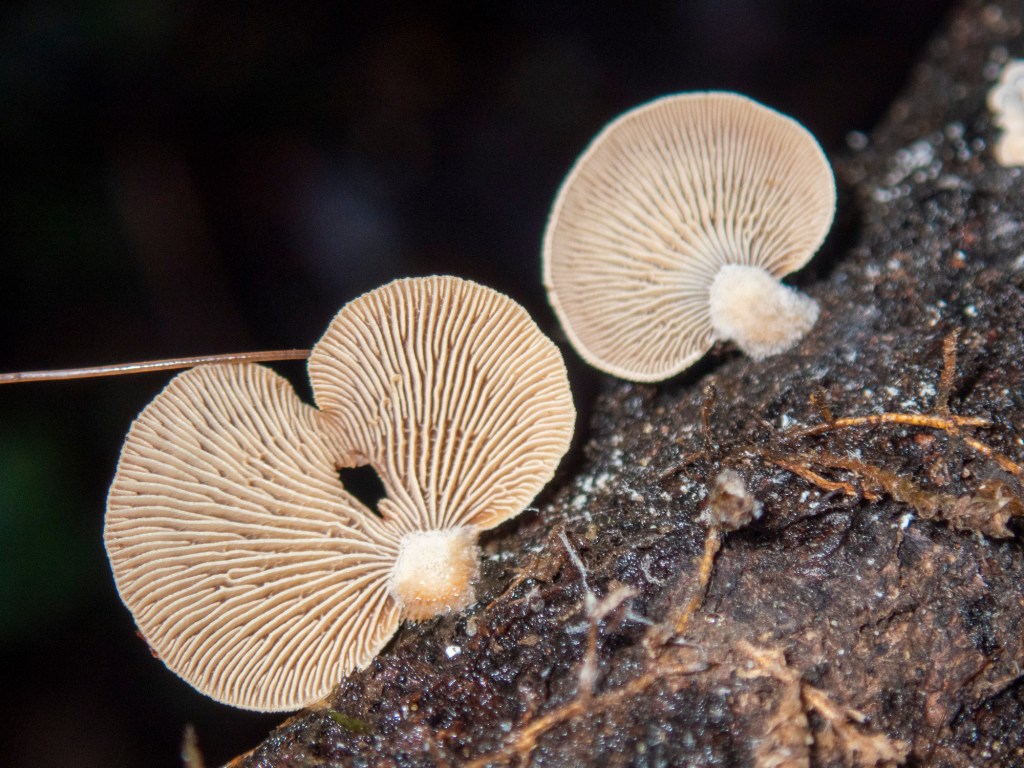
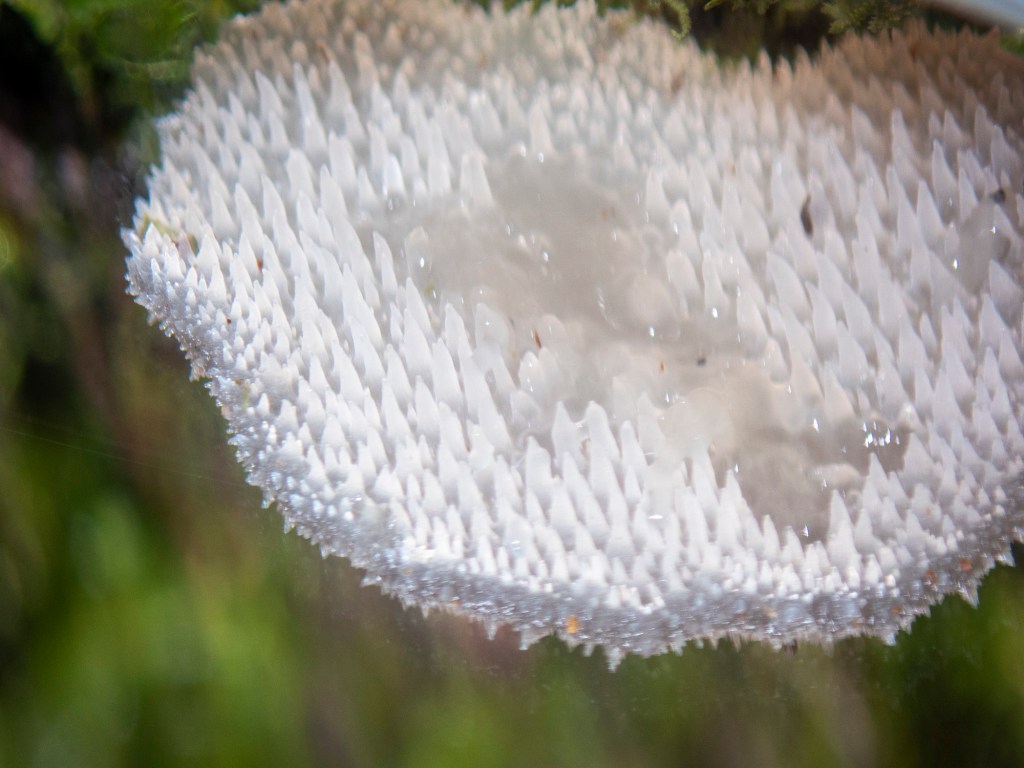
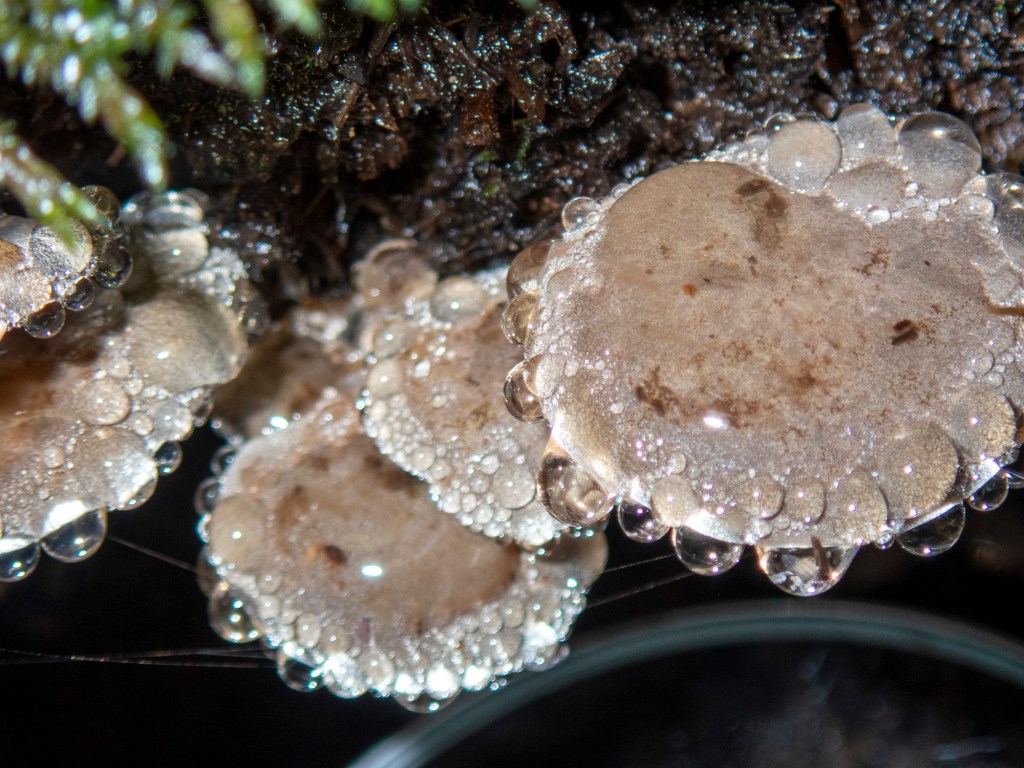
It has been a big job documenting the finds, between my daugher and I we have added over 170 sightings to iNaturalist for the day https://www.inaturalist.org/projects/tarra-bulga-national-park This includes sightings from the Tarra Valley (I couldn’t resist checking out what fungi could be seen there as I was going past on my way home). Overall the total species recorded to date is 68! I wonder if anyone that attended has got photos of species that we missed? Anyway enjoy the gallery below which contains some examples of the variety of fungi seen on the day.
Bioblitz – Sunday February 14th

For anyone that is interested, Friends of Tarra-Bulga National Park are going to hold a Bioblitz on Sunday February 14th. The day is intended to be a fun and casual way to start off our activities for the year. We will aim to use cameras to record anything of interest we find. The results can then potentially be added to Citizen Science apps such as the Tarra Bulga National Park project on iNaturalist https://www.inaturalist.org/projects/tarra-bulga-national-park . If the weather conditions are suitable, we will also run a light sheet to attract moths and other insects on the Sunday evening. 

Anyone is welcome to attend, no prior experience or knowledge is necessary. The official start time is 10am at the Visitors Centre but you could potentially join in at any time on the day. Just bring along any food or drinks you need for the day as well as any cameras, phones, binoculars etc you may have lying around. For more information or to register your interest in attending you can contact 0488 035 314 or email: friendsoftarrabulga@gmail.com You can also register via ParkConnect https://bit.ly/39VtMRV

Image showing a range of different species.