Decade-Long Project: Restoring Grand Ridge Post-Fire

Project Completion and Background

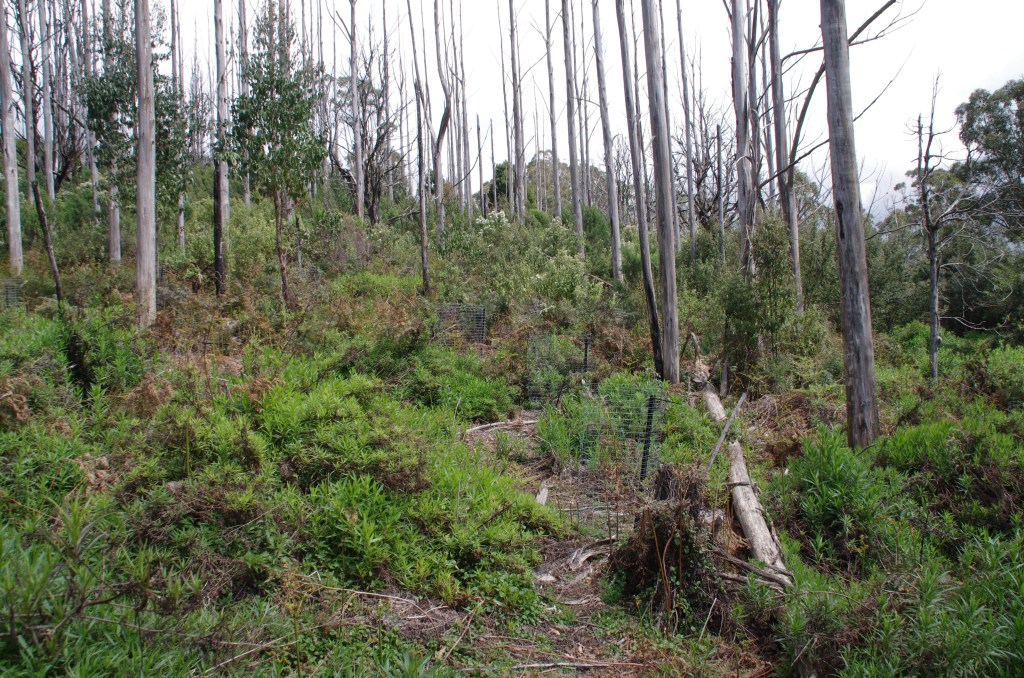
Recently, our group celebrated the completion of a major project that required over a decade of dedication. The project focused on a site on Grand Ridge Road. This site suffered the most severe impact within the park during the 2009 Black Saturday Churchill fire. As a north-facing slope, it absorbed the full force of the blaze. The fire was subdued by the moister vegetation higher up in the National Park. In other areas of the park, where Mountain Ash forests were burned, the fire’s intensity killed the trees. Yet, tens of thousands of seedlings quickly regenerated. They carpeted the ash bed. Unfortunately, this natural regeneration did not occur at our site. The Mountain Ash trees, planted in the early 1990’s, had grown tall. Still, they had not yet matured enough to flower and set seed. This left the area barren after the fire.

Early Recovery Efforts and Challenges

Once the immediate chaos of the fire subsided, the need for site recovery became clear. Fire recovery authorities responded by planting up to 10,000 seedlings across the site. Yet, this effort faced an unexpected challenge. A large population of hungry Swamp Wallabies consumed all the newly planted seedlings. In hindsight, the best approach would have been to aerially seed the site with overstorey species soon after the fire. This method would better mimic natural regeneration.

Launching Our Project

Four years after the fire, our group took on the challenge directly. We successfully applied for a “Communities for Nature” grant to purchase essential materials. Our previous experience taught us that the only way to protect seedlings until maturity was to use 1.2-meter-tall wire mesh tree guards, supported by star pickets. While effective, these guards were costly and labour-intensive to make, transport, install, and eventually remove.

With the grant, we acquired enough materials to construct 336 tree guards and purchase tube-stock. Additional funding allowed us to trial hand direct seeding at the site. The first plantings, carried out by contractors in 2013, were funded through a previous project. In 2014, after receiving our new grant, we began our on-ground efforts. That year, a crew from Conservation Volunteers Australia helped us construct the tree guards. In 2015, we organized our own working bees to build guards and complete the planting and installation.

Ongoing Maintenance and Outcomes

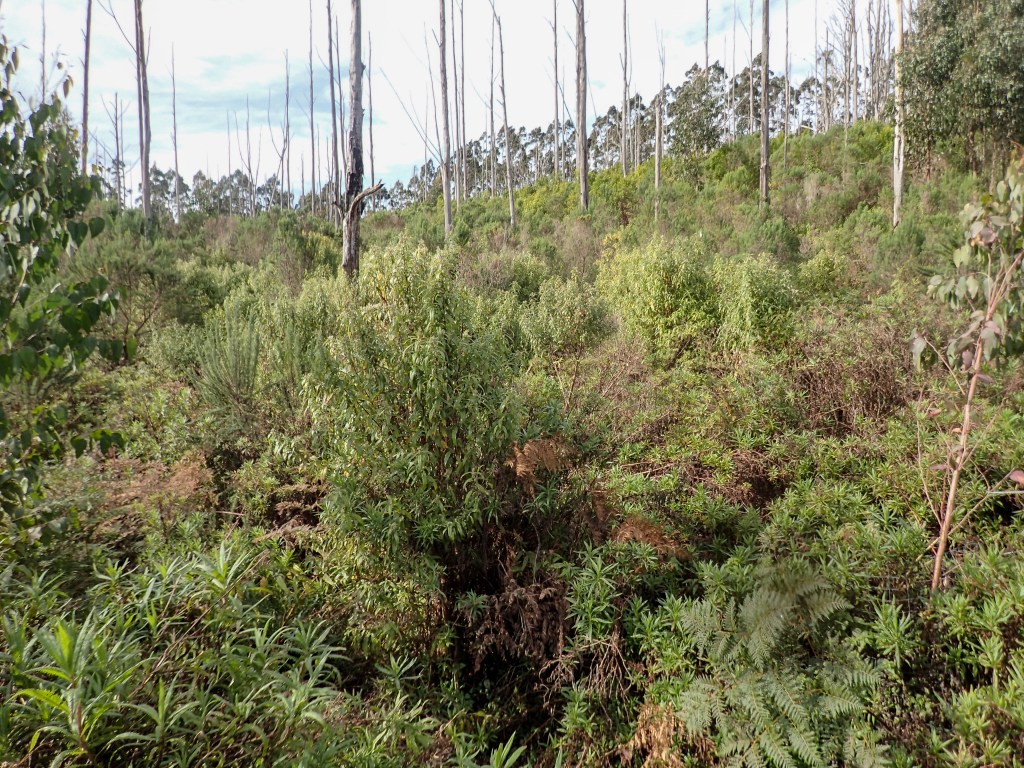
As time passed, undergrowth at the site increased. This made movement and planting more difficult. It also intensified competition for light and space. By the end of 2015, most planting was finished, and our focus shifted to site maintenance. From 2016 onward, we began removing guards from trees that had grown tall enough to survive unaided. In cases where seedlings died, we replanted as needed.

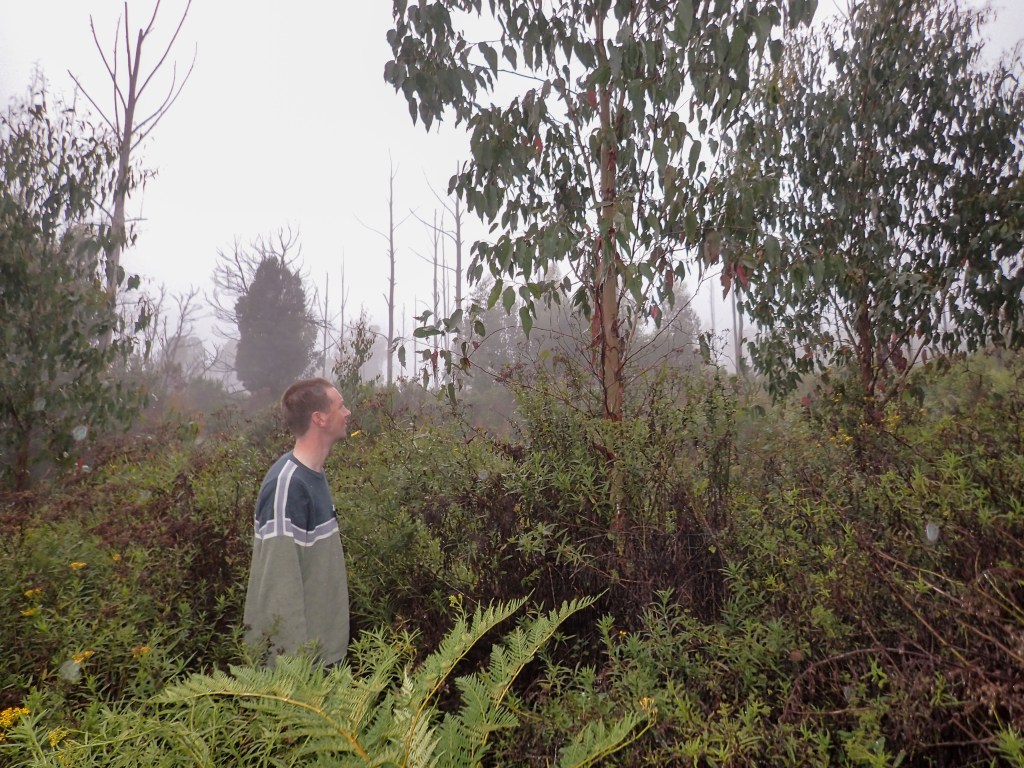
While most aspects of the project went according to plan, we did face setbacks. The site was initially littered with dead stags of immature Mountain Ash, which sometimes fell and damaged our tree guards. Additionally, the site was exposed, causing some newly planted trees to be blown over by strong winds. This happened despite the trees growing impressively tall. Fortunately, these losses were limited, and overall, our efforts have been a success

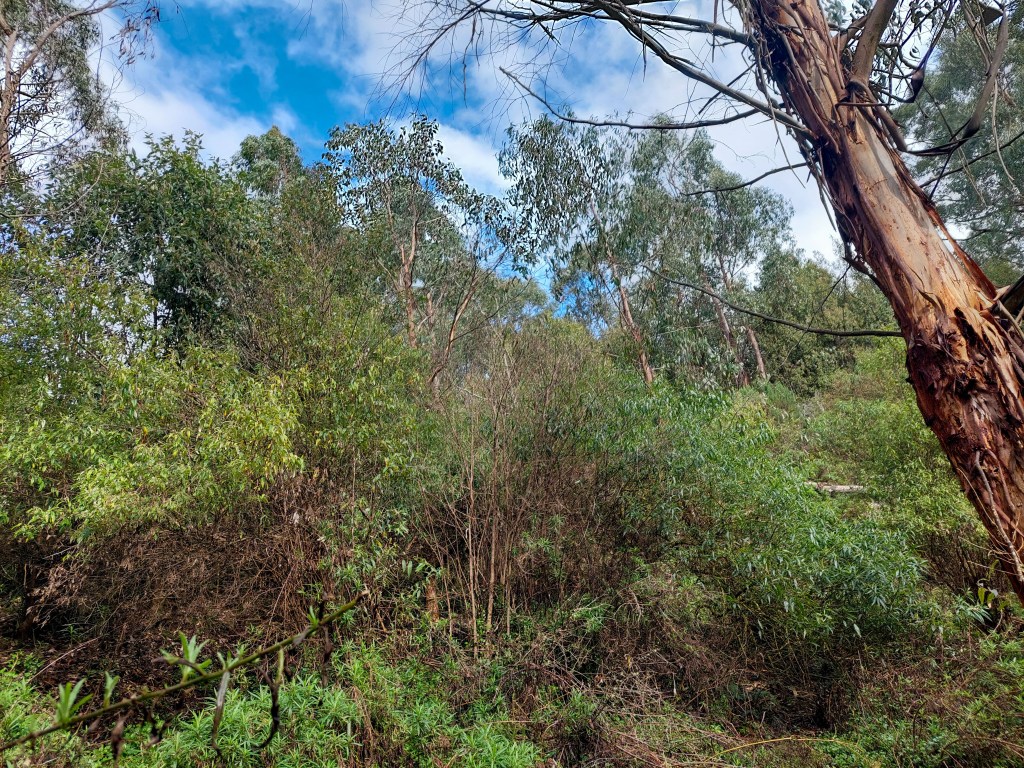
Fire Recovery Project Site 27th July 2024

25th Anniversary Celebration

To celebrate their 25th anniversary, the Friends of Tarra-Bulga National Park are planning to hold a special function at the Ship Inn in Yarram, on November the 23rd.  They are hoping that as well as current volunteers getting together, former volunteers will also come along. For details about the upcoming anniversary event or if you would like to join the group and become a volunteer please contact David Akers on 0488 035 314 or email friendsoftarrabulga@gmail.com

Invitation to our 25th Anniversary celebration
25th Anniversary Invite

2019 Lyrebird Survey Results

Conditions were fortunately very good after a wild week of strong winds, rain and even a dusting of snow on the Wednesday. As a result  of the snow many fern fronds have been crushed down and were providing an obstacle along the walking tracks. The temperature was relatively mild and although you could hear the wind in the tree-tops it was not that strong. First Light was predicted at 6:52 am and the official sunrise time was 7:21.

We had 38 volunteers which was more the enough to cover all 16 monitoring locations. After meeting at 6.15 am everyone was briefed and out into the field by 6:40. Kookaburras were the first birds to start calling and were very active and noisy for quite a while. It seemed like quite a long wait until we heard our first Lyrebird at 6:58 am. Most volunteers had vacated their sites by around 7:15 am and people started filing into the Guest House for breakfast by about 7:25.

The results were collated this year during Google Earth.  The bottom of Lyrebird Ridge seemed to be quite active as well as the points around the suspension bridge and the Bulga Carpark. other sites were much quieter with only one or two calls heard.

Using our call triangulation method there ended up being a couple of anomalies with the results that made the certainty of the existence of a couple of birds 100% certain. (e.g  2 monitoring sites heard it calling but a closer one did not). Overall though we came up with a total of 9 birds calling for 2019 (which is one more than last year).

Lyrebird Survey Results updated 2019
Lyrebird Location Map 2019
Map of Lyrebird Survey Results 2019

Lyrebird Survey 2018 Results

Another great turnout of 34 volunteers for this year’s survey, our annual Lyrebird Survey is by far our most popular activity and once again we were able to cover all 16 monitoring sites.

Weather conditions were quite good, at 5.30am heading up to Balook there was a substantial amount of moonlight with a clear sky and some cold air, At Balook however it was darker because of cloud cover blocking the moonlight and there was a slight breeze in the treetops.

Our full crew of volunteers arrived in good time and by 6.30am everyone had arrived and signed in and by 6.45am everyone had been briefed on their tasks and had headed out in the dark to their assigned monitoring stations.

Once in position there ended up being quite an unexpectedly long wait until Lyrebird calls were first heard, only a couple of locations recorded birds calling before 7am; which was when the majority of the sites started hearing birds, the latest any group had to wait to record any calls was 7.10am.  Last year (2017) every site had birds calling by 6.55am.

The official sunrise time for Saturday June 2nd at Balook was 7.22am and first light was scheduled to appear at 6.52am which was almost identical to last year.

From our results we detected 8 birds calling in our search area, this figure was slightly down on recent years. It is hard to read too much into one years results but potentially the dry summer and autumn we have experience may be having an impact. Most birds appeared to be calling from forest areas with established Eucalyptus over-storey or rainforest. It would be great if some action can be taken to re-establish the original canopy species into areas of the park that have been degraded.

As usual we only count birds that are detected by at least 2 monitoring stations and some stations heard birds calling that were not in our survey area so are not included in the final tally.

Thanks again to AGL who generously supported the breakfast provided for the early rising volunteers.

Lyrebird Survey Results Summary Table 2010-2018


Year


Number of Males Calling

Monitoring

Points

Covered

(out of 16)


Weather Conditions

2010 4 9
2011 9 13 Windy making it hard to hear calls, especially in the more exposed sites.
2012 9 12 Still and Calm
2013 3 10 Wet, may have discouraged birds from calling. Several males sighted feeding but not calling.
2014 14 15 Perfect calm morning
2015 6 12 Windy
2016 9 15 Ideal – slight wind, relatively warm
2017 11 16 Ideal – slight wind, relatively warm
2018 8 16 A little overcast with a slight breeze.

Lyrebird Count 2018 150 dpi

Get yourself into Tarra-Bulga this Weekend

Do you love getting outdoors?
o Keen on gardening.
o Reasonably fit and active.
o Available next Saturday (October 21st) and have your own transport to get to Tarra-Bulga and hate weeds.
o Then helping out with weed removal at our next Working Bee could be great for you.

Meeting Point: 9.30am at the Tarra Valley Car Park
All Tools Provided: (Finish at 12.30)
BYO. Gloves, Hat, Sturdy Shoes, Drink, Snacks

RSVP: To David on 0488 035 314 or email friendsoftarrabulga@gmail.com

or register via https://www.parkconnect.vic.gov.au/

Wednesday Working Bee

This may be of interest to anyone who enjoys lending a hand towards a good cause. We are holding a small working bee next Wednesday (September 16th) to hopefully finish off the work on our Grand Ridge Rd planting project for this year, start time will be 9.30 am. Any helpers would be greatly appreciated, phone: 0488 035 314 or email friendsoftarrabulga@gmail.com for further details.

Planting site on Grand Ridge Rd

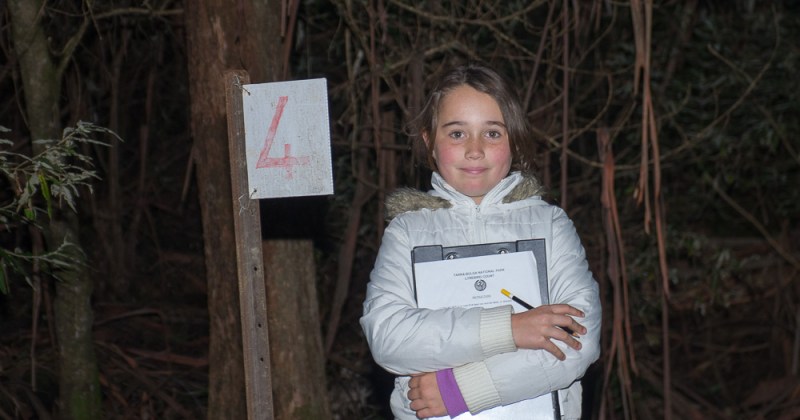
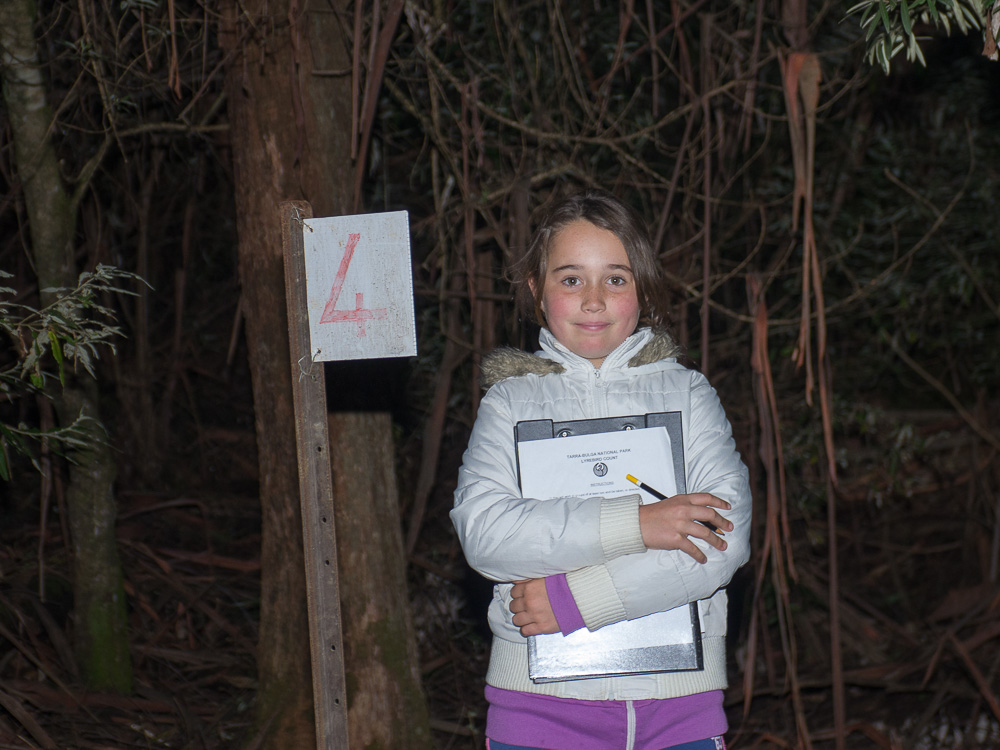
Monitoring Station #4

2015 Lyrebird Survey Report

We always cross our fingers and hope for favourable conditions on the morning of our annual Lyrebird Survey which this year was held on Saturday May 30th.  This year there was no rain but unfortunately the wind was up and noisy gusts were swirling through the canopy.

The logistics of getting a large crew of volunteers up and ready to participate at 6.15am means that we can’t afford to be flexible with our dates so it is a matter of carry on regardless. This year we had 22 volunteers turn up for the count, with most people pairing up, we were able to cover 12 out of our 16 monitoring stations, as is often the case the 4 stations in the southern section of our count area were left out.

Volunteers did a great job of arriving by 6.15 and by the time instructions were given and stations allocated it was still a rush to get into position. I found that the sun was rising and some birds had started calling a few minutes before I made it to my monitoring point at 6.55am.

Monitoring Station #4

The next ½ hour was spent listening out for birds, at our site we could hear calling from three directions and once bearings were taken and noted we just settled in and enjoyed the surrounds. I noted some noisy Yellow-tailed Black Cockatoos moving in the canopy overhead as well as the odd loud crack from randomly scattered Eastern Whipbirds may potentially cause confusion for novice counters. Once our time was up we headed back along the track and soon came across a live sighting of a female Lyrebird (or perhaps a juvenile male?) wandering along the path.

Back at the guest house we once again had a great breakfast (thanks to Torben and Pam). After all the monitoring sheets were handed in it was time to analyse the results. The number of birds detected this year was down, although hopefully this is not cause for alarm; the survey relies on hearing the calls and the background noise of the wind makes them more difficult to detect. We definitely had 4 male birds calling in the survey area with one other likely one. Instances where it was noted that birds were calling very close to monitoring stations, helped to identify some of the Lyrebird locations with certainty.

A big thank you to everyone who made the effort to drag themselves out of bed so early and travel up to Balook to help out, your efforts to help conduct our annual surveys and monitor the local Lyrebird population is very much appreciated.  Also thank you to our Ranger Craig who does a fantastic job setting up the monitoring stations and organising the troops. At the start of the count Craig pointed out that this was our 20th Annual Lyrebird Survey and that he had attended every one. Next year will be a big one (our 21st).

Clink on the link for a pdf map of the survey results.

Lyrebird Survey 2015 results