A very common site in the Strzelecki Ranges, the Common Wombat – (Vombatus ursinus) is mostly nocturnal and shelters in large burrows. The single young leave the pouch around 6-9 months of age and follow the mother on foot until they are fully weaned at about 20 months old. They only produce one young every 2 years. They feed on grasses, sedges and tubers. Be on the look out for them on the roads at night, They have absolutely no road sense and are likely to run straight in front of your vehicle if startled.
It was the first time we had done one for a while, but it went very well so we are certainly going to do some more (Guided walks that is). On a damp Saturday October 29th a group of close to 30 walkers fronted up for the first Friends of Tarra Bulga walking activity for many years. The Boondarra walking group coincidentally had a posse of walkers planning to do the same walk that day so they were invited to join us which was one contributor to the healthy numbers.
It was apparent early on that the moist conditions were very suitable for small hitchhikers so regular stops were made as seen it the picture below, to stop and search and turf off any castaways.
First of many checks for passengers
We organised a car shuffle and the walk started from the Tarra Bulga Visitors Centre. One of the first sections you encounter is through a pine plantation which is a bit dull, but that soon gives way to some impressive forest.
Rare Burrowing Crayfish – One of several spotted on the walk
One early feature of the walk was the occurrence of several rare Burrowing Crayfish. As we got further into the walk towards the Tarra Valley section the large tree ferns became a feature with many epiphytic plants on their trunks as well as a range of impressive fungi species and the massive trees that are a feature of the park. The recent rainfall meant that gullies were flowing with water and it was a great opportunity to see some waterfalls cascading next to the track.
First of many checks for passengers
Boring Pine Plantation Bit
Open Ferny Area
Waterfall along Diaper Track
Diaper Track Scenery
Tree Fern
Plate Fungi on Trunk
Rare Burrowing Crayfish – One of several spotted on the walk
On Saturday March the 31st the friends held their annual Sycamore Maple pull. It was very encouraging to see that although there were still quite a number of large seedlings (up to 2.5m tall) and a bit of re-sprouting from previous weeding efforts. There was only a handful of new seedling sprouting (despite the wet seasons we have had) compared to the hundreds that we were pulling out when we first started working on this site back in 2006.
The source of the infestation was from some large established trees planted on the other side of the Tarra Valley Road. The large trees for many years had blown their light papery seeds into the surrounding native forest. Thanks to our efforts in starting the work in the park and with co-operation with the WGCMA and Parks Victoria, work was done to remove these large established trees, The photo above shows a large tree maple that was ringbarked and poisoned. Now all that should be required to stop the maple from spreading into the the magnificent forests of Tarra Bulga is a quick bit of regular follow up to eliminate any seedlings that pop up from viable seed still stored in the soil or regrowth of plants that we have already pulled out.
Sycamore Maple Removal
Fortunately we did not find to many plants that had re-grown but it was apparent that the ones that did resprout were generally not cut off very close to the ground. So the lesson learnt “cutting the stems as close to the ground as possible is vital”.
Sycamore Maple reshooting from stump
While we have had some great success with the maples here we have some more significant tasks ahead. This includes efforts to re-habilitate the site (only recently discovered) of a huge infestation of around 2ha of established maples in the park. In this area of the park there are also large infestations of Tutsan and Blackberries that are of great concern.
This presence of this Long Nosed Bandicoot ( Perameles nasuta ) is one of the many insights we are gaining about the habits of the Fauna of Tarra Bulga with the use of our remote infrared cameras. Long-nosed Bandicoots are active from dusk to dawn, digging cone-shaped holes in their search for insects, fungi and fleshy plant roots (tubers).



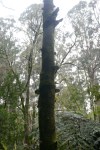


 On Saturday March the 31st the friends held their annual Sycamore Maple pull. It was very encouraging to see that although there were still quite a number of large seedlings (up to 2.5m tall) and a bit of re-sprouting from previous weeding efforts. There was only a handful of new seedling sprouting (despite the wet seasons we have had) compared to the hundreds that we were pulling out when we first started working on this site back in 2006.


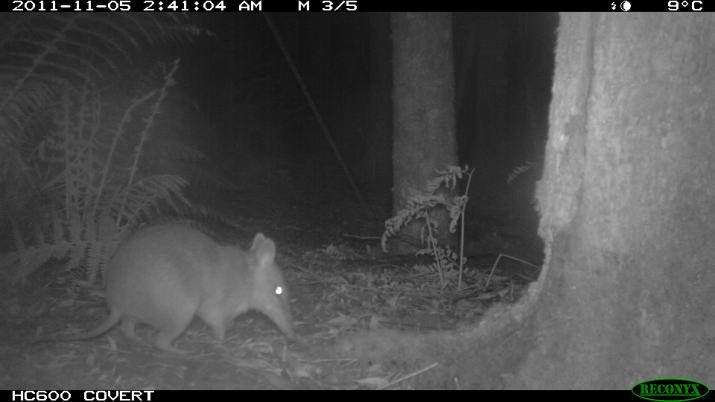 This presence of this Long Nosed Bandicoot ( Perameles nasuta ) is one of the many insights we are gaining about the habits of the Fauna of Tarra Bulga with the use of our remote infrared cameras. Long-nosed Bandicoots are active from dusk to dawn, digging cone-shaped holes in their search for insects, fungi and fleshy plant roots (tubers).

