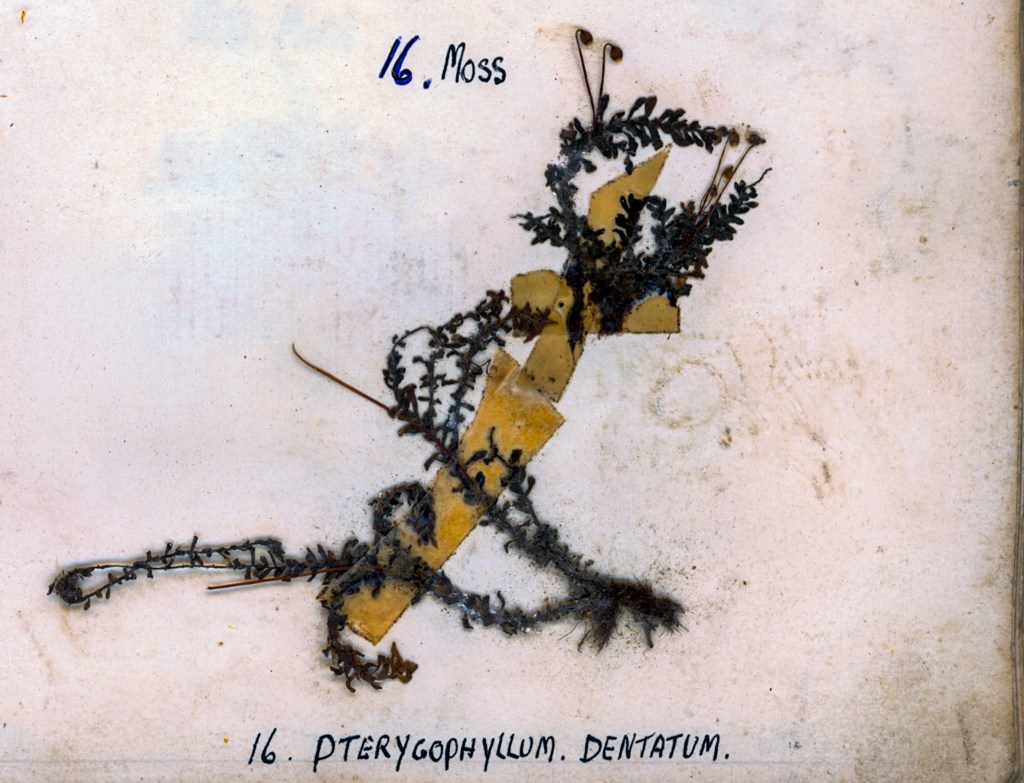
A specimen of moss, identified as Pterygophyllum dentatum, attached to a background with some yellow labels.
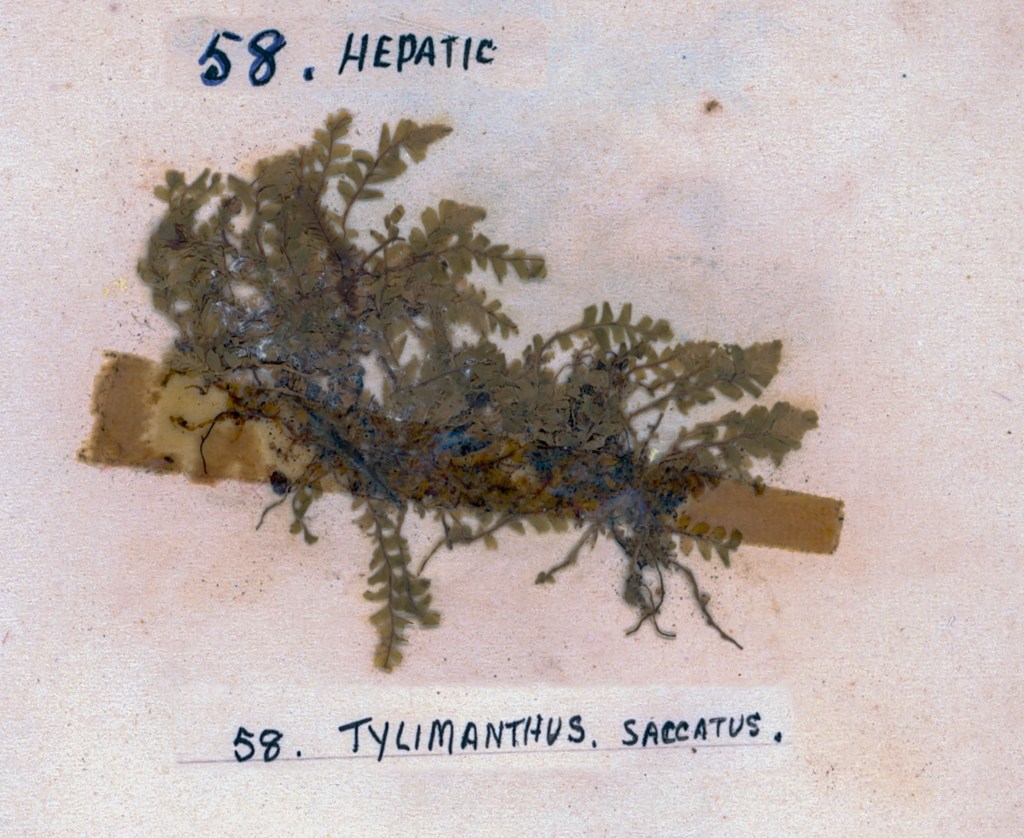
A pressed plant specimen labeled '58. HEPATIC' and '58. TYLIANTHUS SACCATUS', depicting a small leafy fern or liverwort on a paper background.
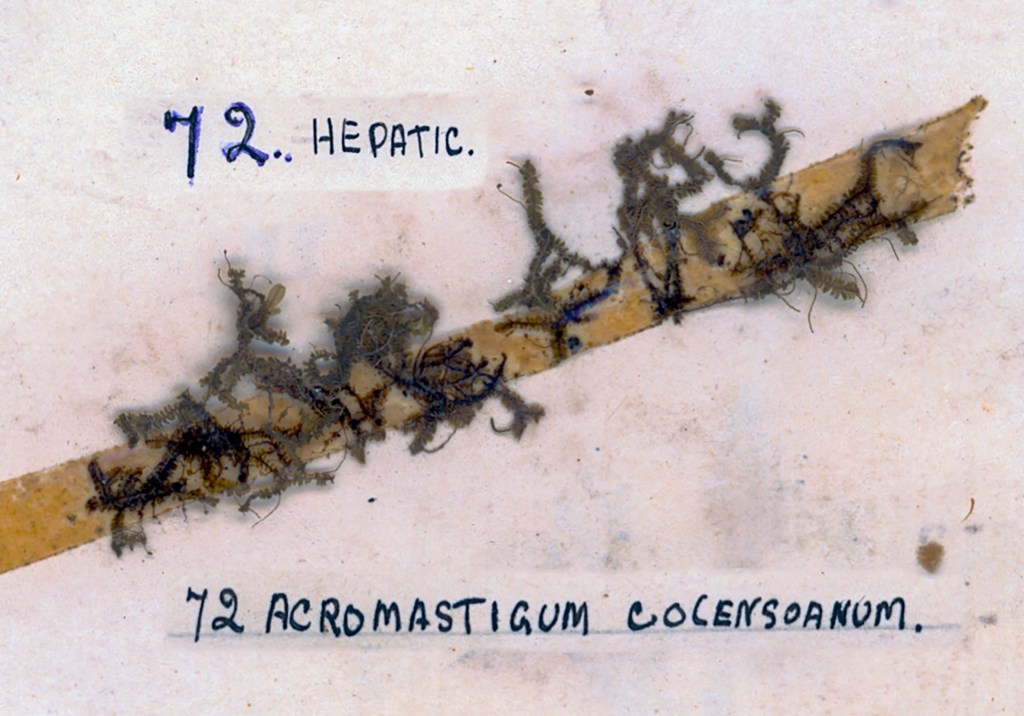
A botanical illustration featuring a specimen labeled '72. Hepatic' with a detailed drawing of Acromastigum colensoanum on a brownish background.
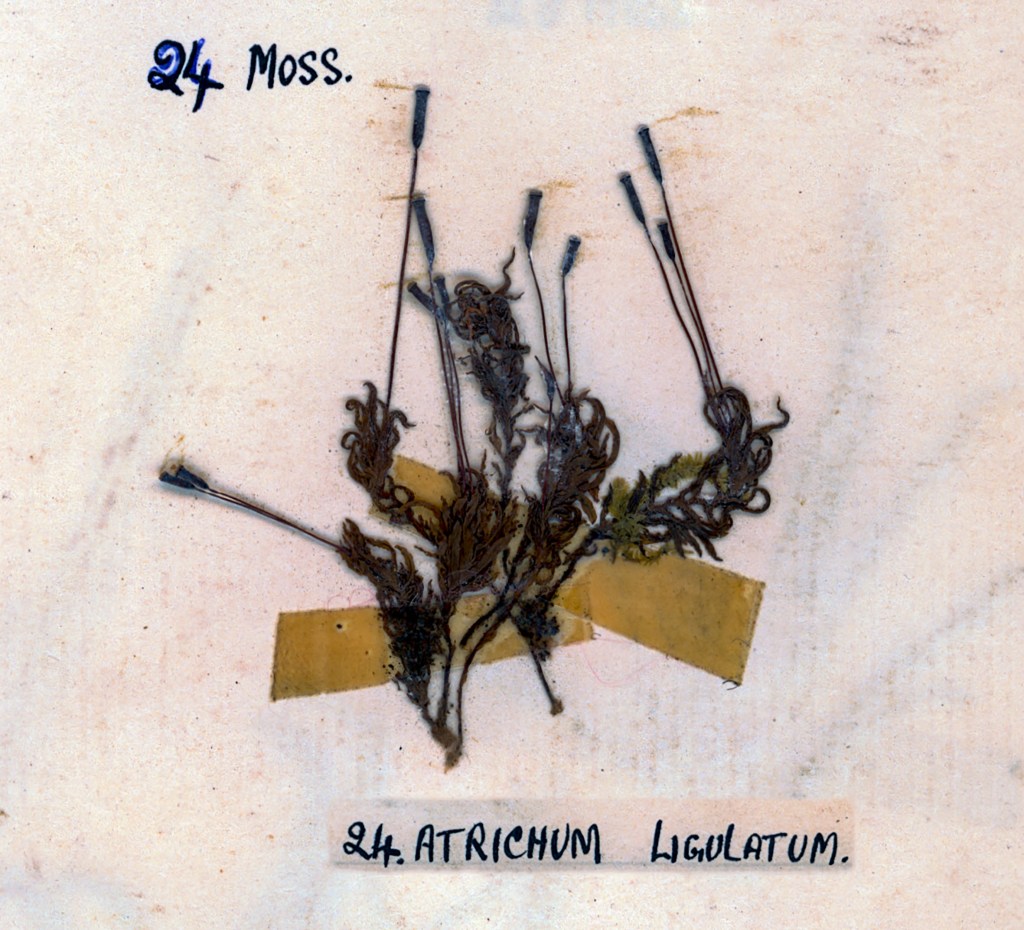
A pressed specimen of moss labeled '24 Moss. 24 Atrichum ligulatum.' on a light background.
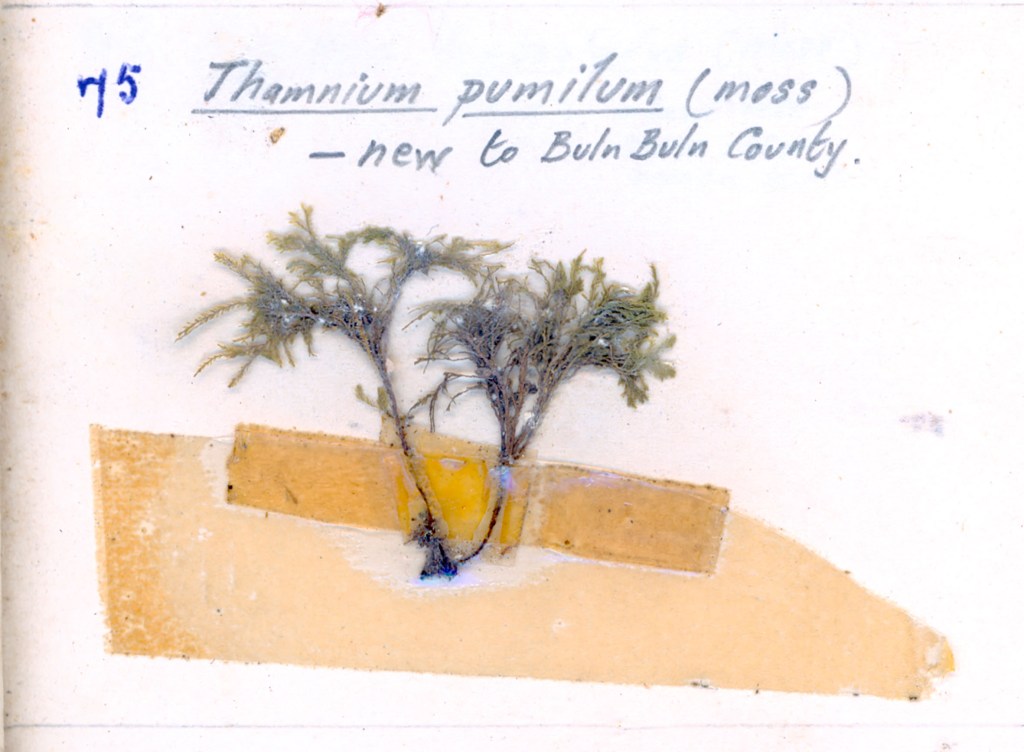
A dried specimen of Thamnidium punilium moss, mounted on a piece of paper with handwritten notes indicating it is new to Buln Buln County.
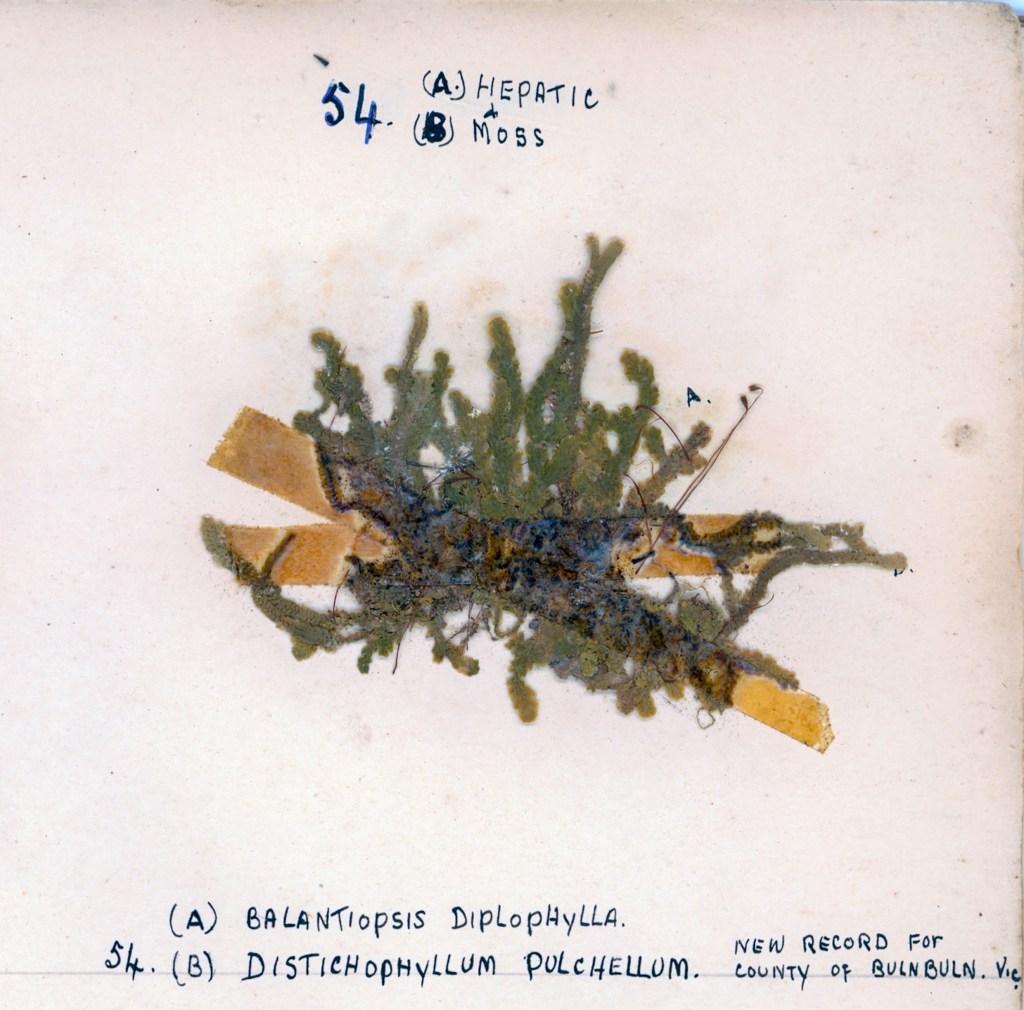
Close-up view of two types of bryophytes labeled as (A) Balantiopsis diplohylla and (B) Distichophyllum pulchellum, mounted on a white background with handwritten notes and labels.
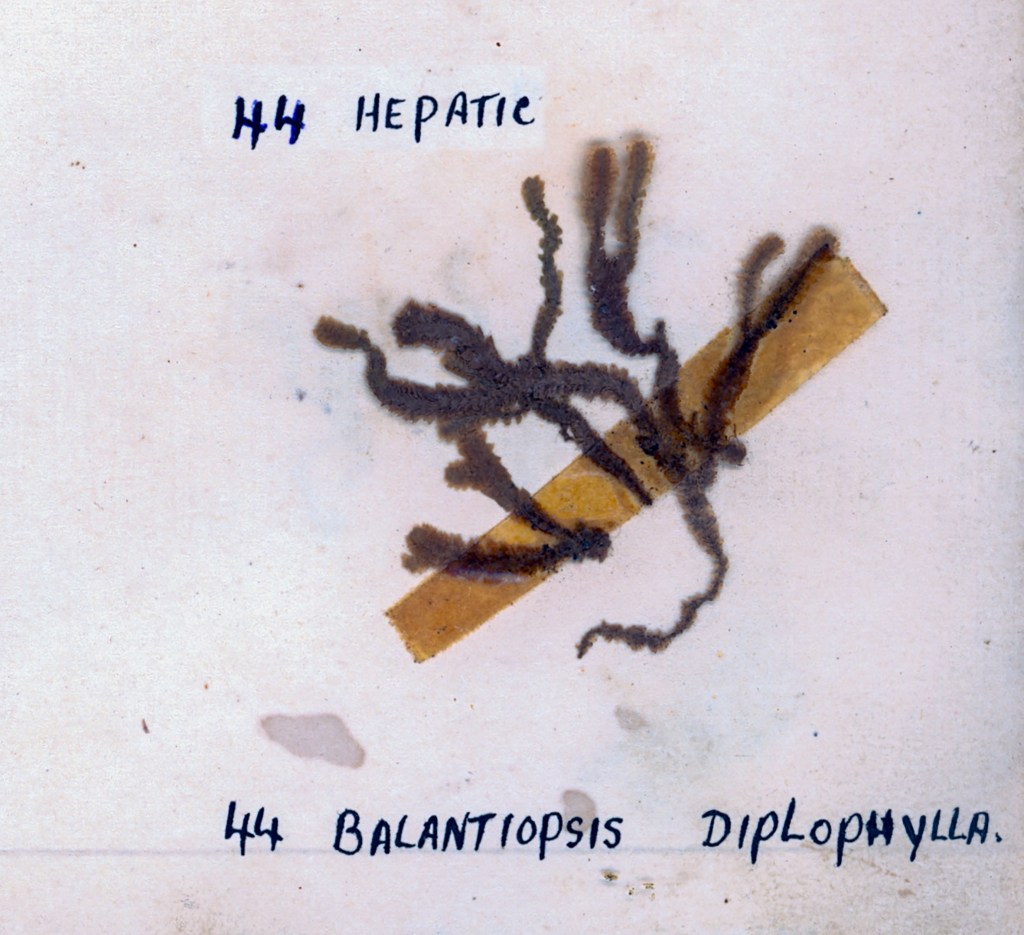
An image featuring a specimen labeled '44 Hepatic' and '44 Balantiopsis Diplophyllia,' showcasing a specimen mounted on a yellow strip against a white background.
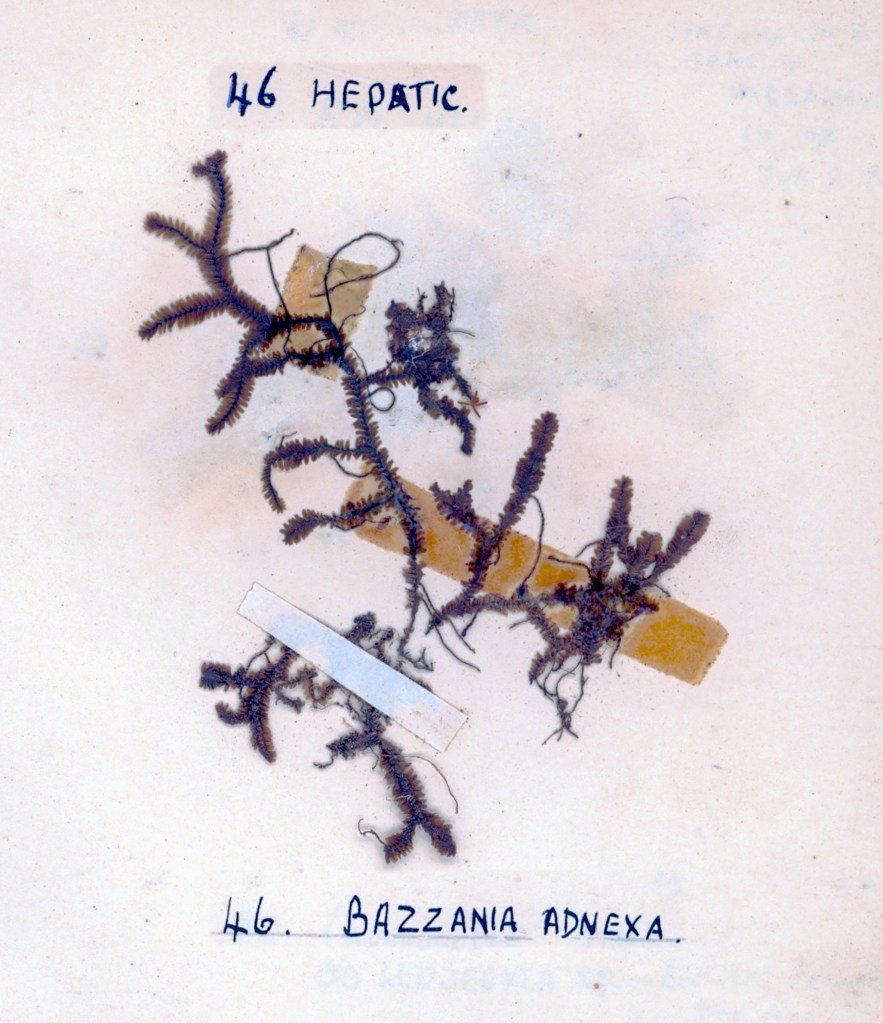
A botanical illustration featuring hepatic plants labeled '46 HEPATIC' and '46 Bazzania adnexa', with detailed depictions of the plants on a pale background.
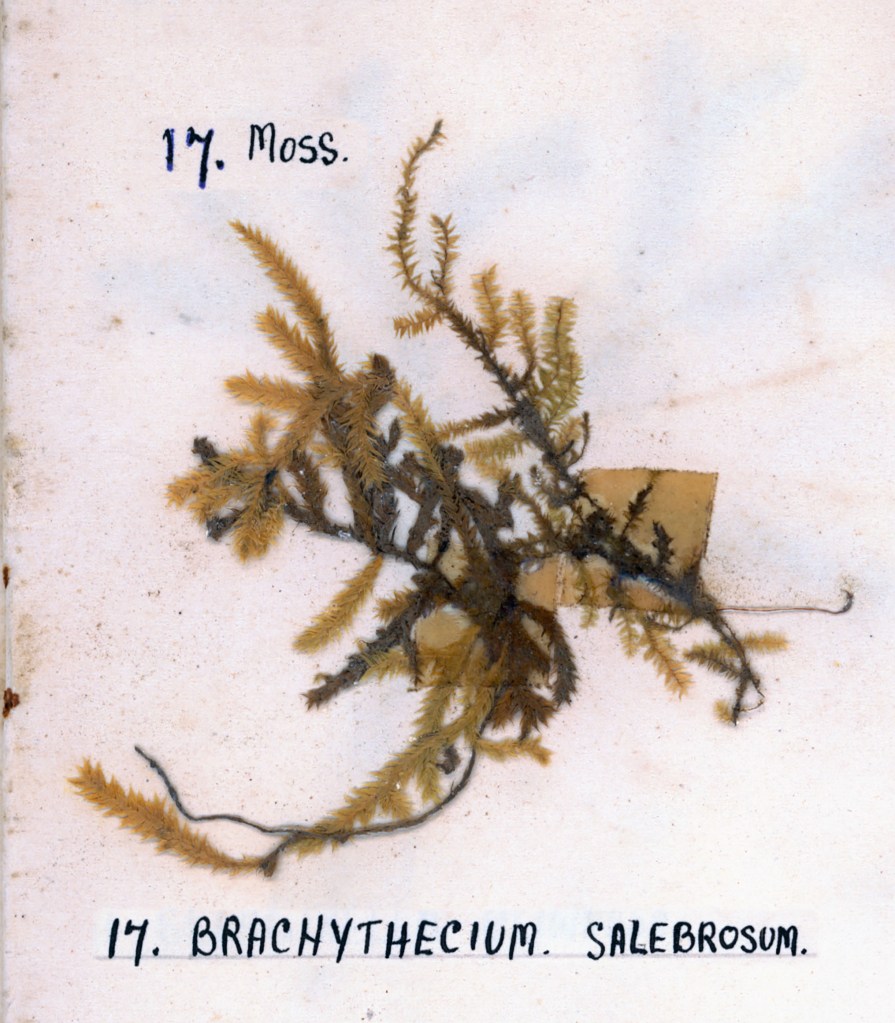
Dried specimen of Brachythecium salebrosum moss mounted on a beige background with handwritten labels.
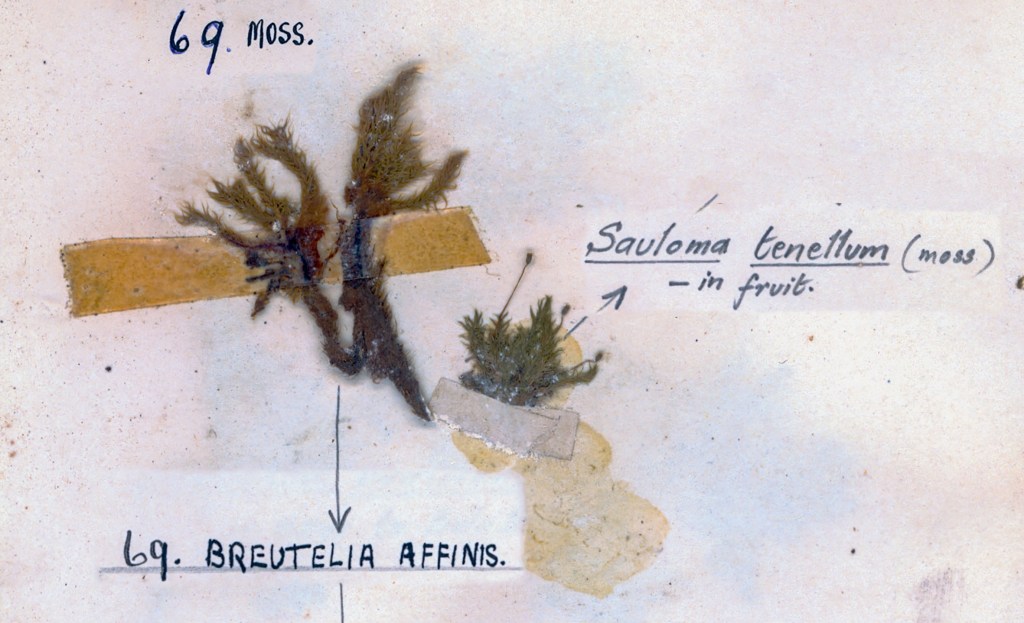
A preserved specimen of moss labeled 'Sauloma tenellum (moss) - in fruit' alongside another specimen labeled '69. Bruetelia affinis.' The specimens are attached to paper with tape.
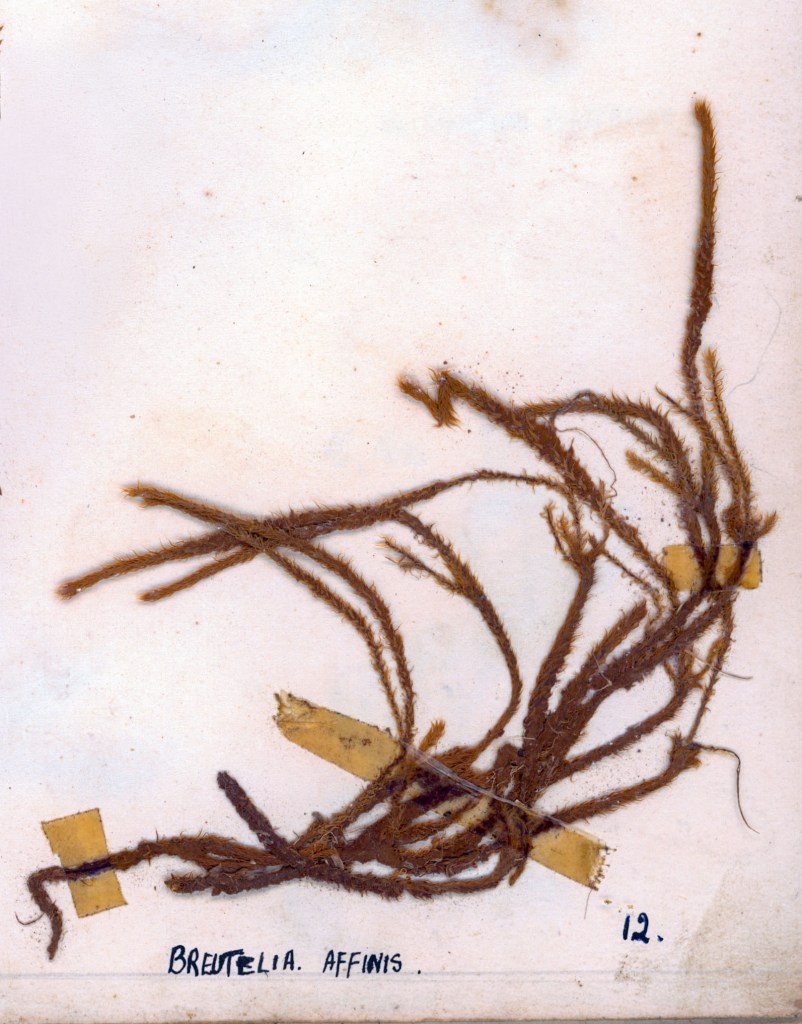
Dried specimen of Breutelia affinis, displaying multiple brown, hairy stems or fibers on a background with handwritten labels.
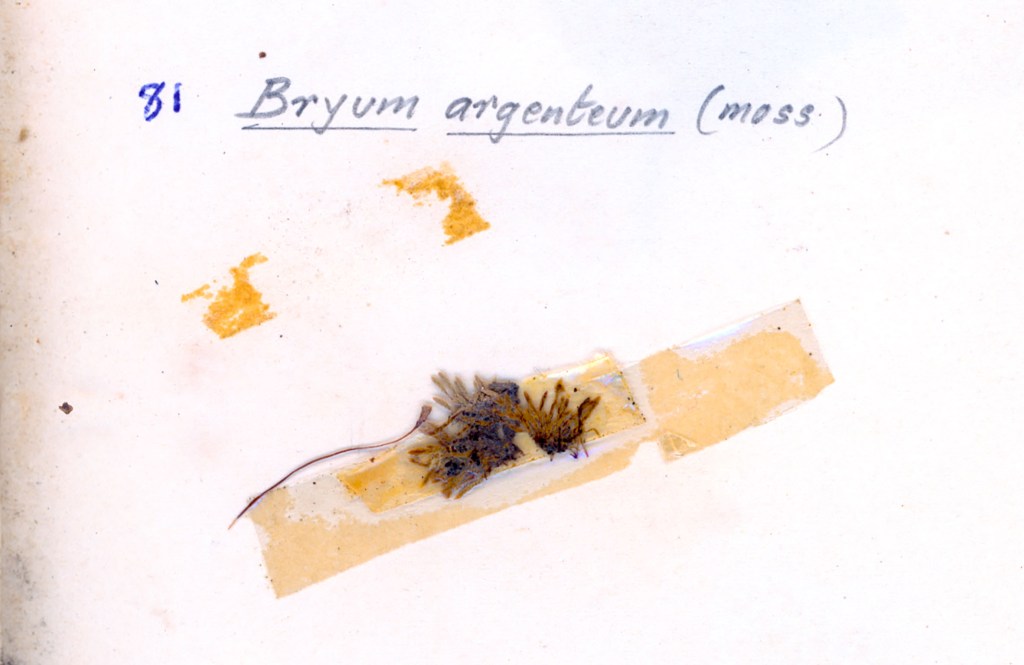
A section of Bryum argenteum moss, mounted on a page with adhesive tape, accompanied by a handwritten label.
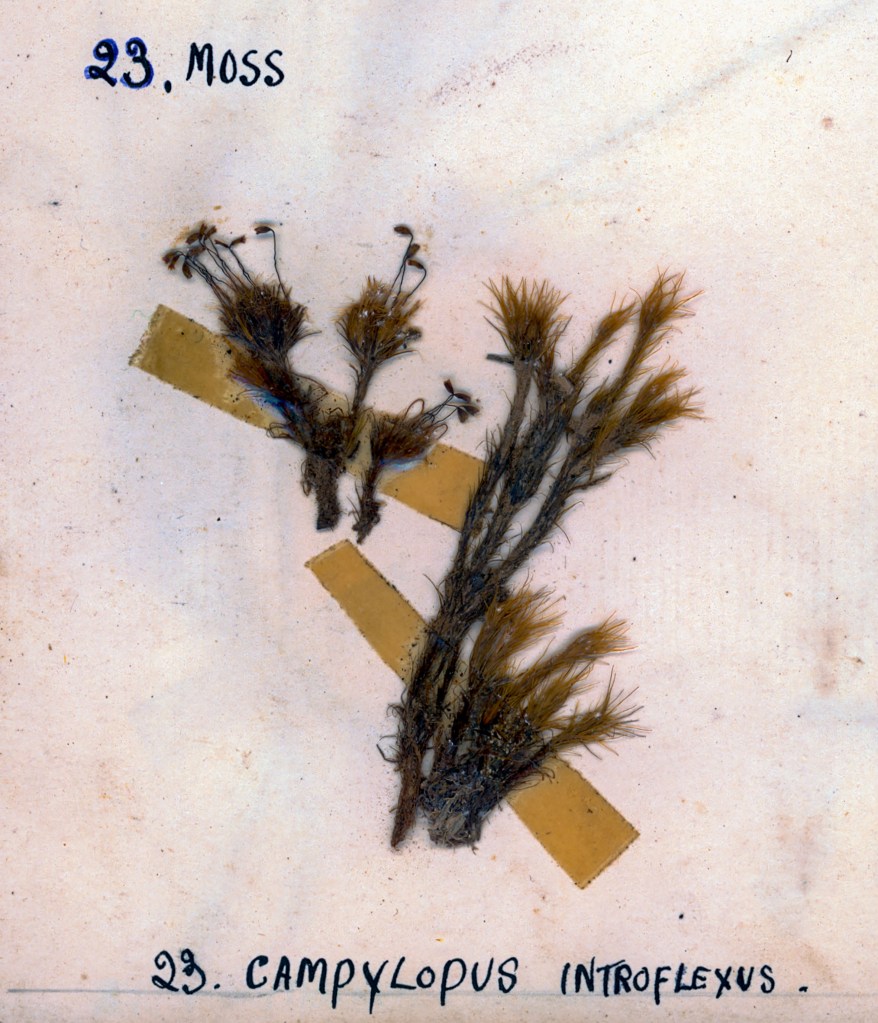
A specimen of moss labeled 'Campylopus introflexus' with brownish-green branches mounted on a light background, featuring two yellow paper strips.
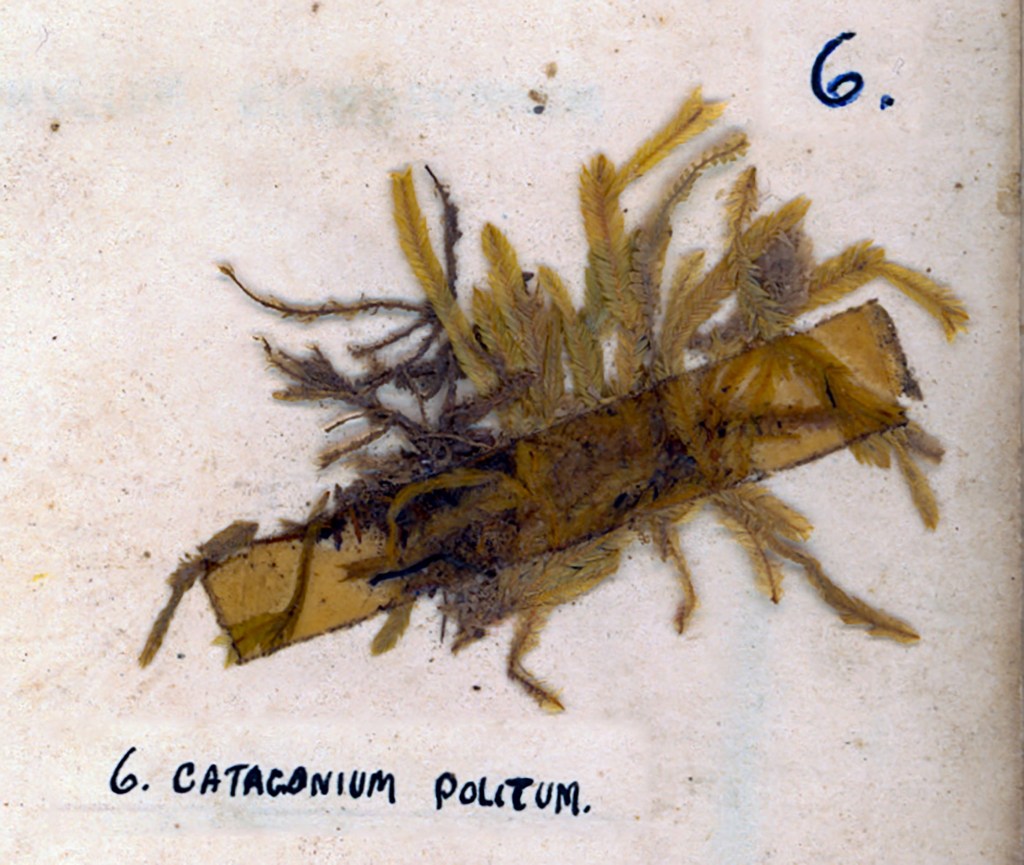
A preserved specimen of the plant Catagonium poltum, displayed on a light background with handwritten labels.
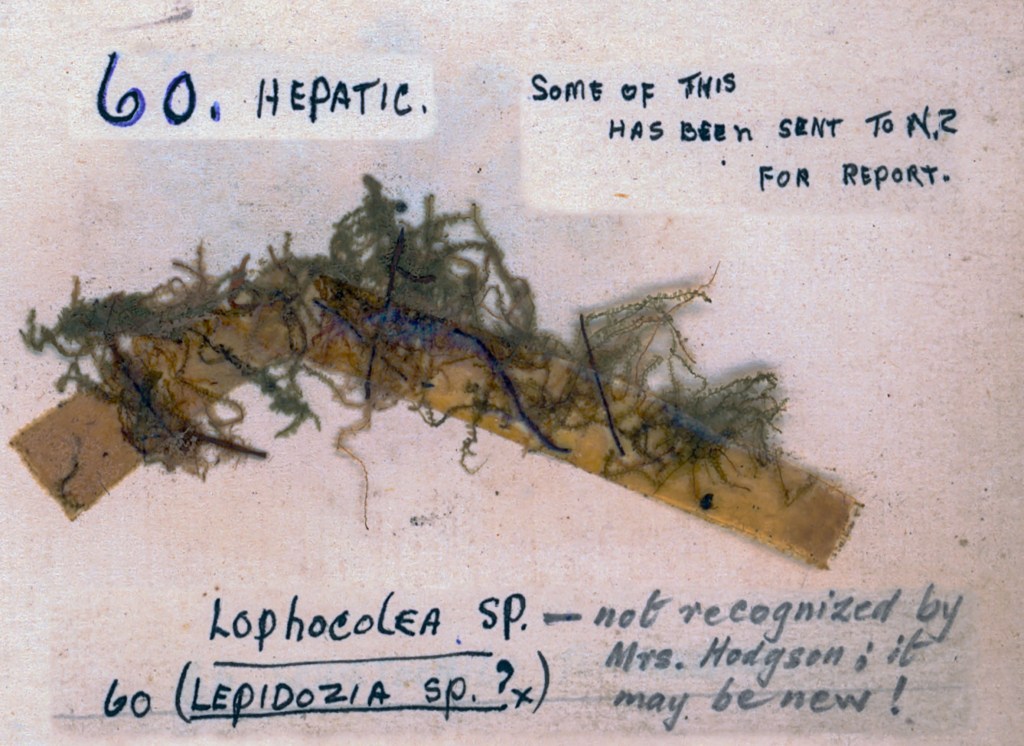
A scientific image displaying a sample labeled '60. Hepatic' with details about Lophocolea sp. and Lepidozia sp., along with handwritten notes regarding its examination and a report sent to New Zealand.
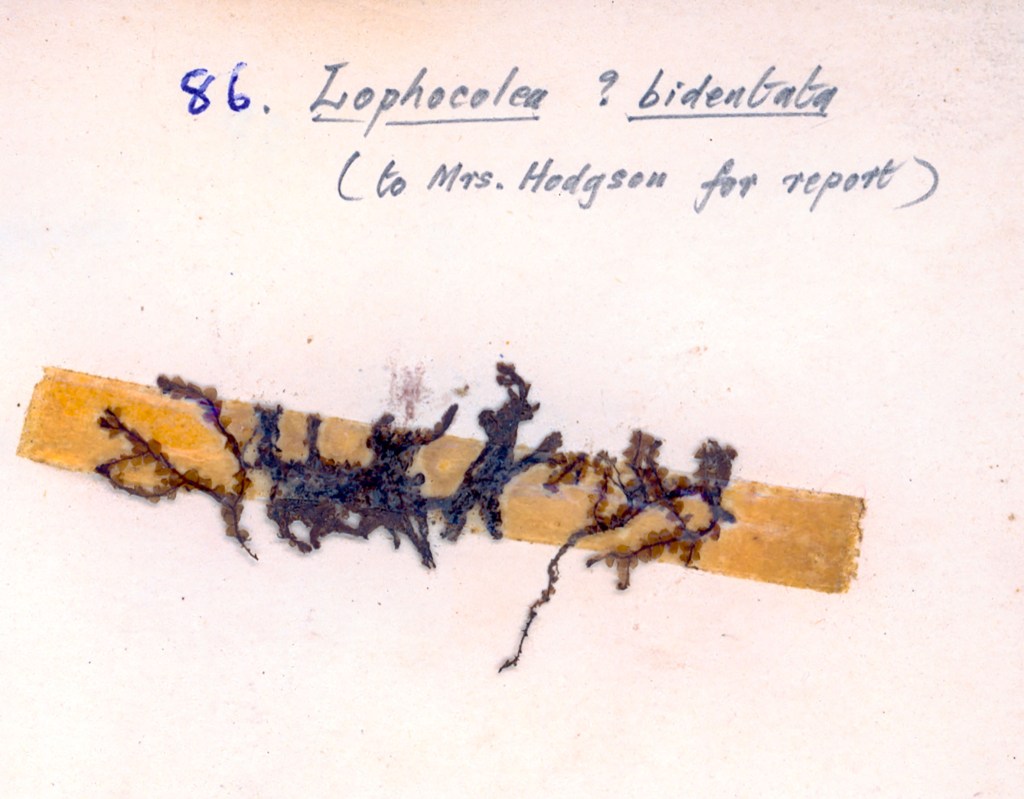
An illustration of the plant Lophocolea bidentata, showing its intricate structure on a yellow strip of paper, with handwritten notes above for reference.
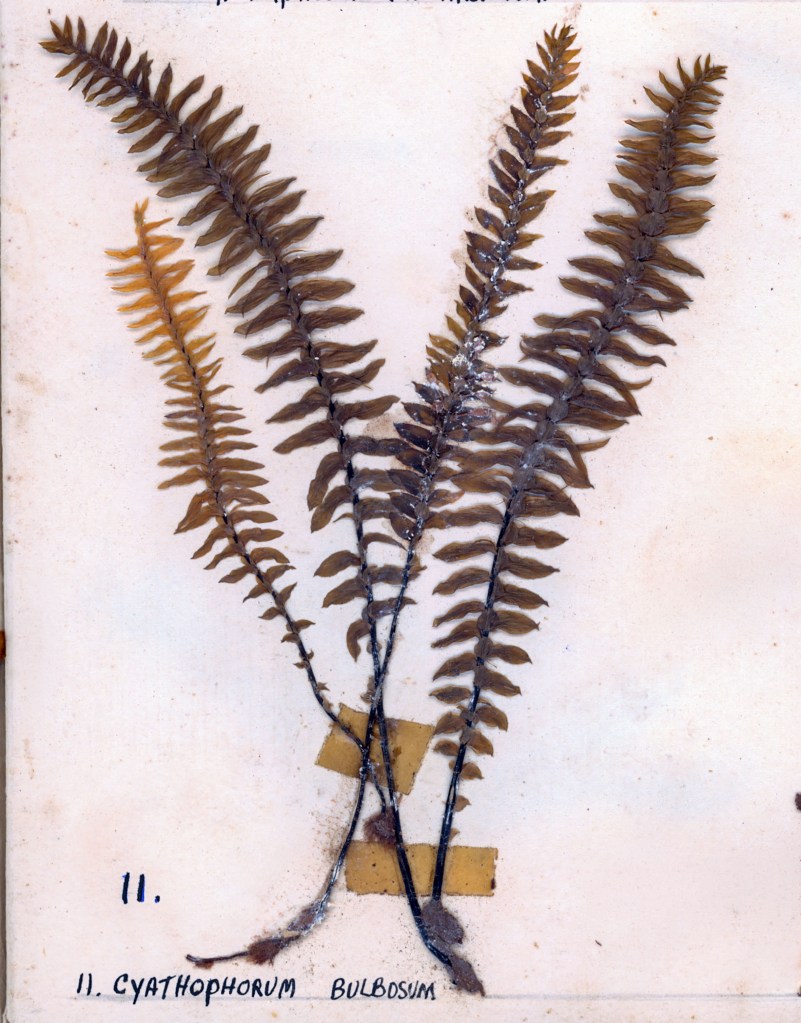
Preserved ferns labeled 'Cyathophorum bulbosum' on a cream-colored background.
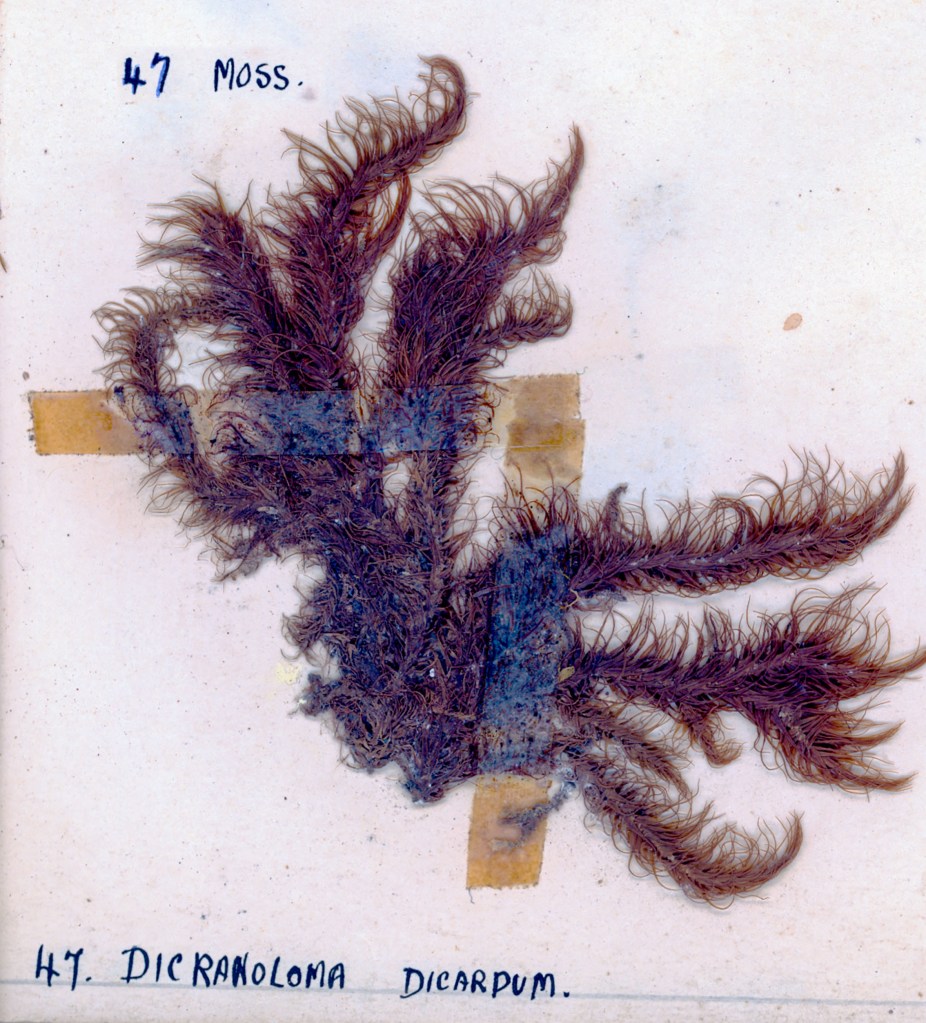
A dried specimen of moss labeled as Dicranoloma dicarpum, featuring intricate, feathery leaves, mounted on a pale background with tape.
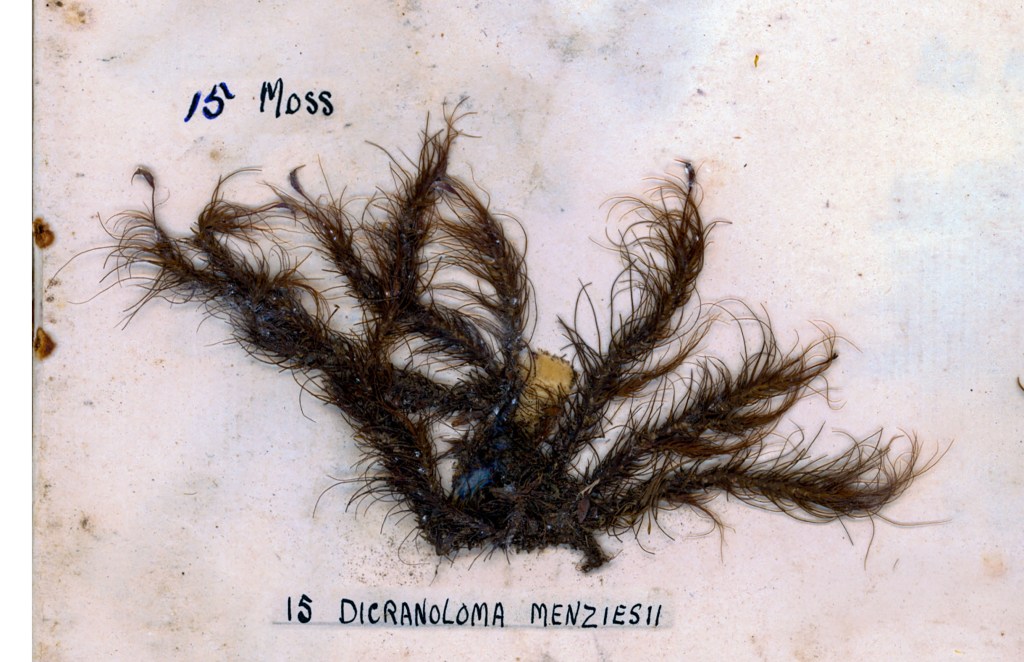
A close-up image of Dicranoloma menziesii moss, showcasing its intricate, feathery structure on a light background.
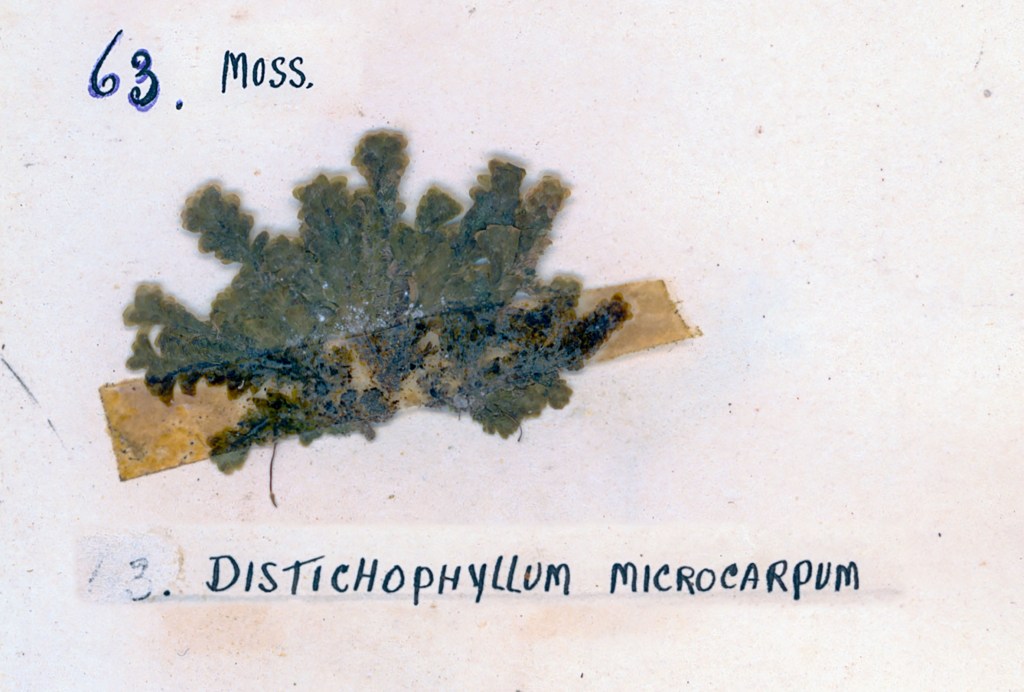
An image of a moss specimen labeled 'Distichophyllum microcarpum', mounted on a light background with a small piece of tape.
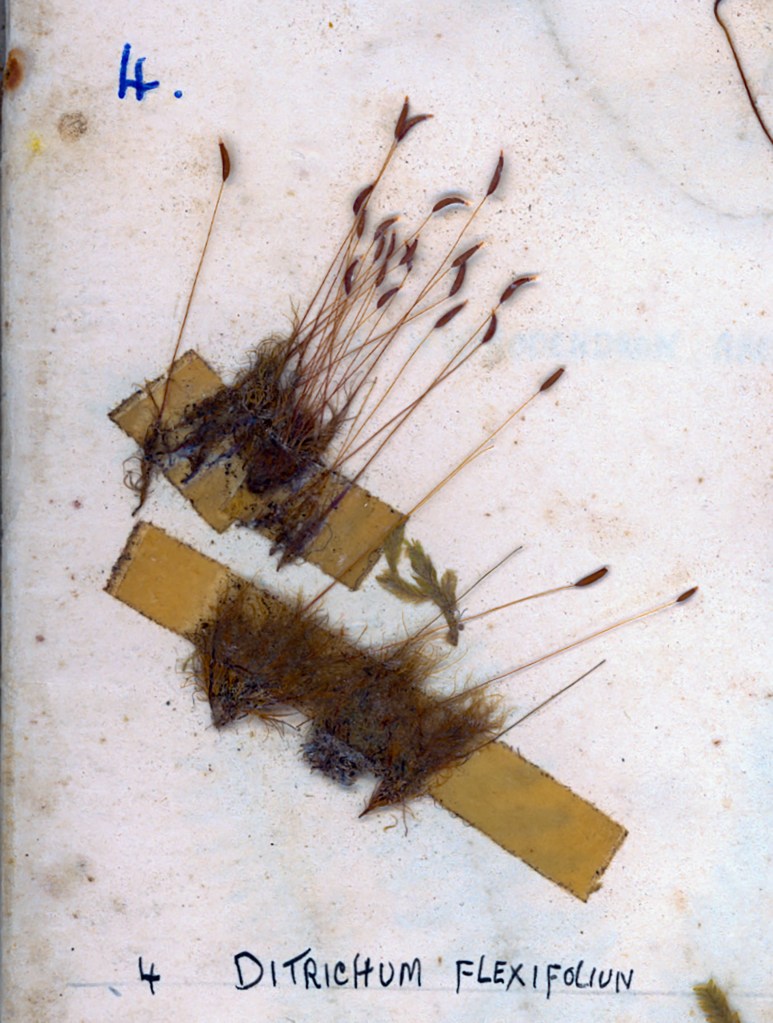
A preserved specimen of Ditricum flexifolium moss attached to a yellow label, showcasing thin brown stems and green foliage on a light background.
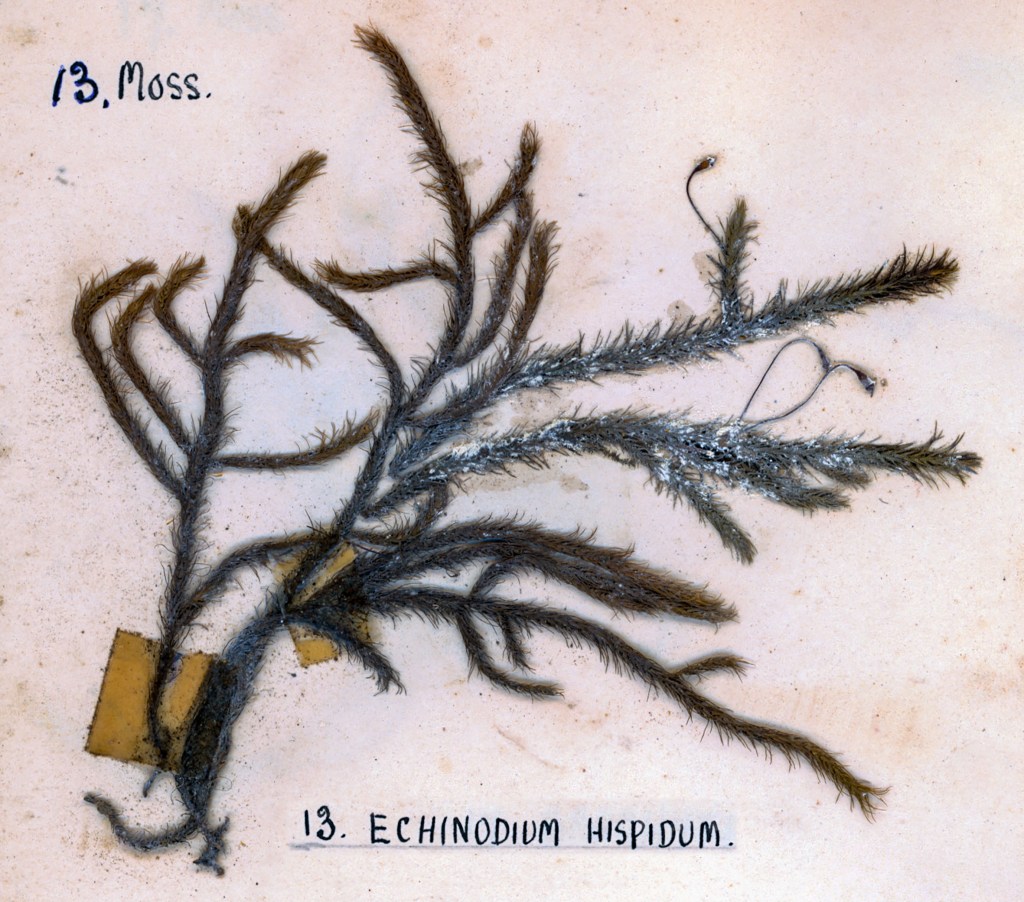
A pressed specimen of Echinodium hispidum moss, showcasing its branched structure on a light background, labeled with its name and number.
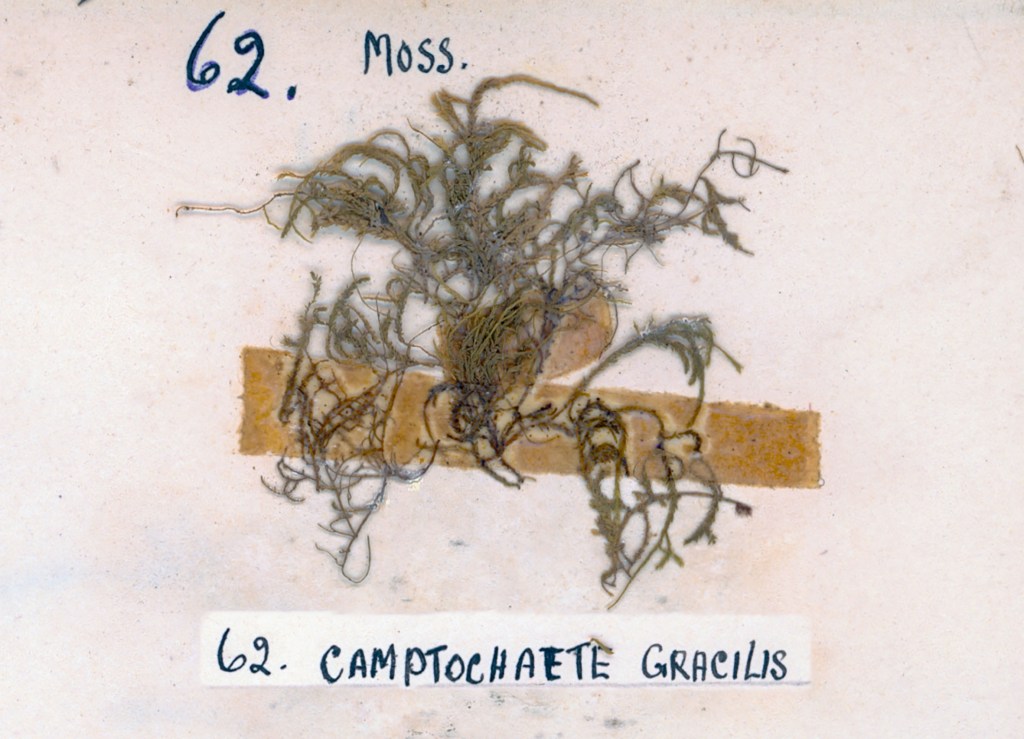
A specimen of moss labeled '62. Camptochaete Gracilis' displayed on a light background.
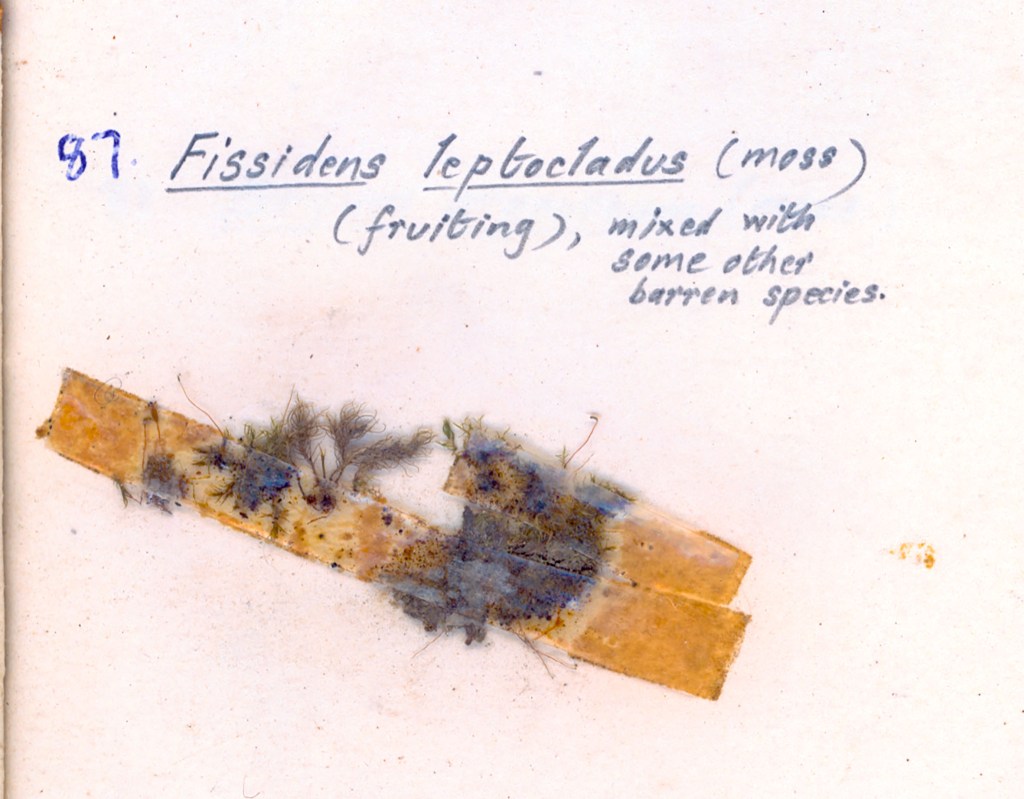
Specimen of Fissidens leptocladus moss (fruiting), labeled and mixed with other barren species.
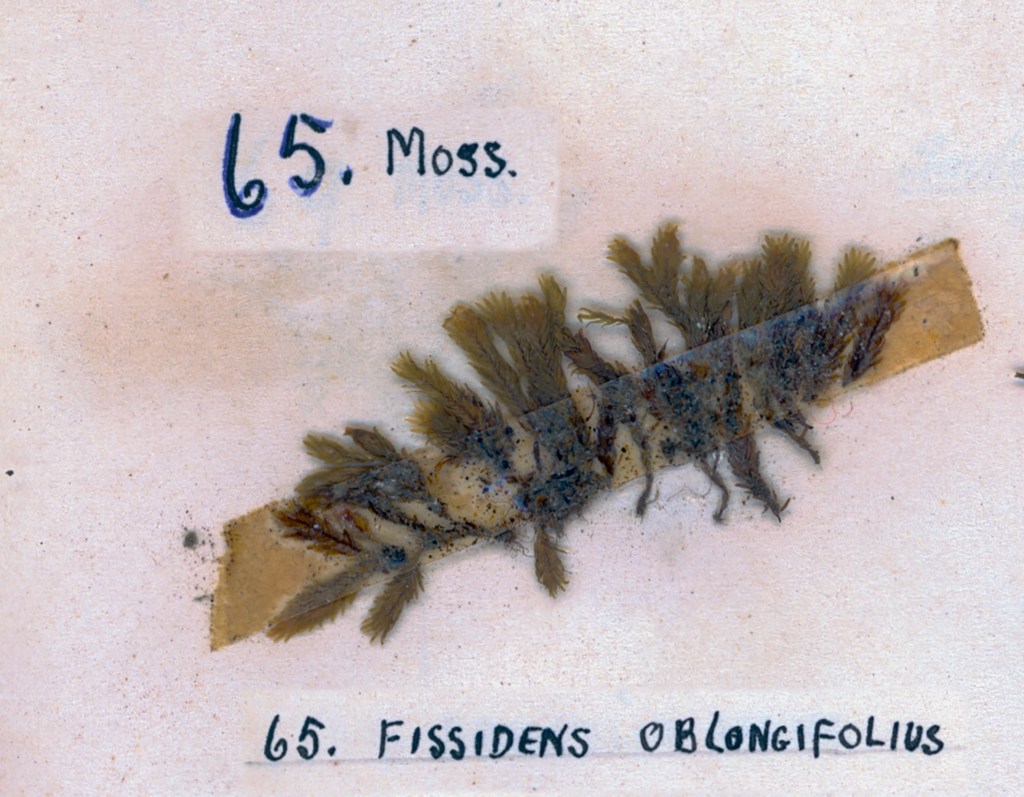
A dried specimen of moss labeled '65. Fissidens oblongifolius,' displayed on a neutral background.
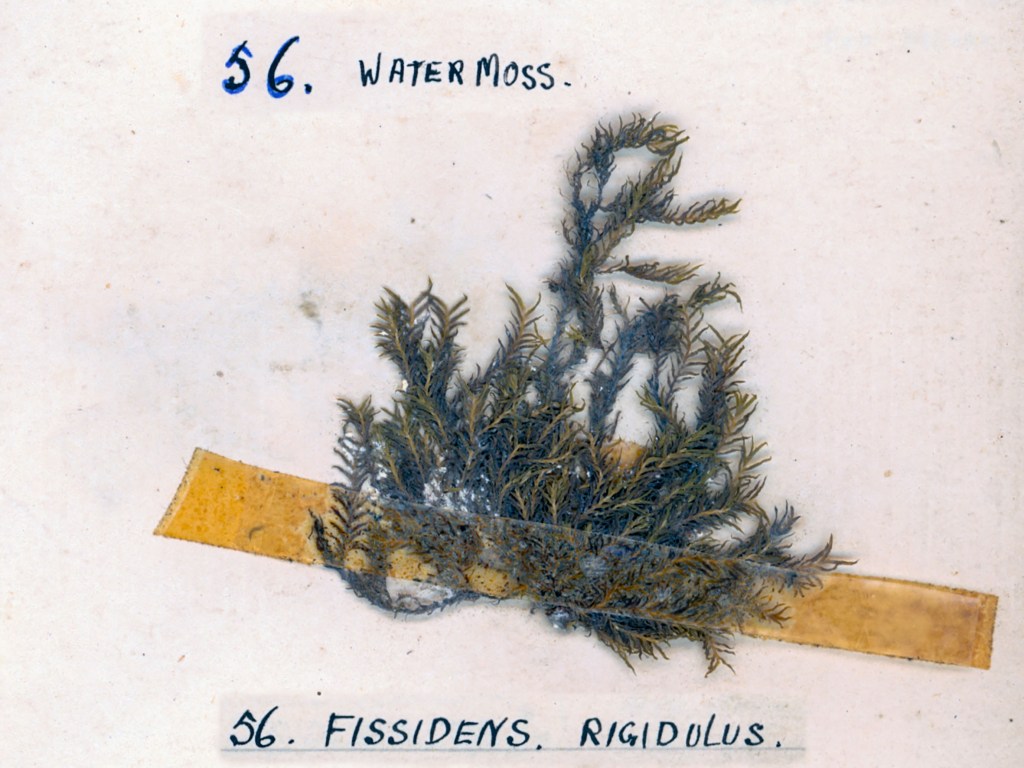
A specimen of water moss labeled as '56. Water Moss' and '56. Fissidens rigidulus' displayed on a light background.
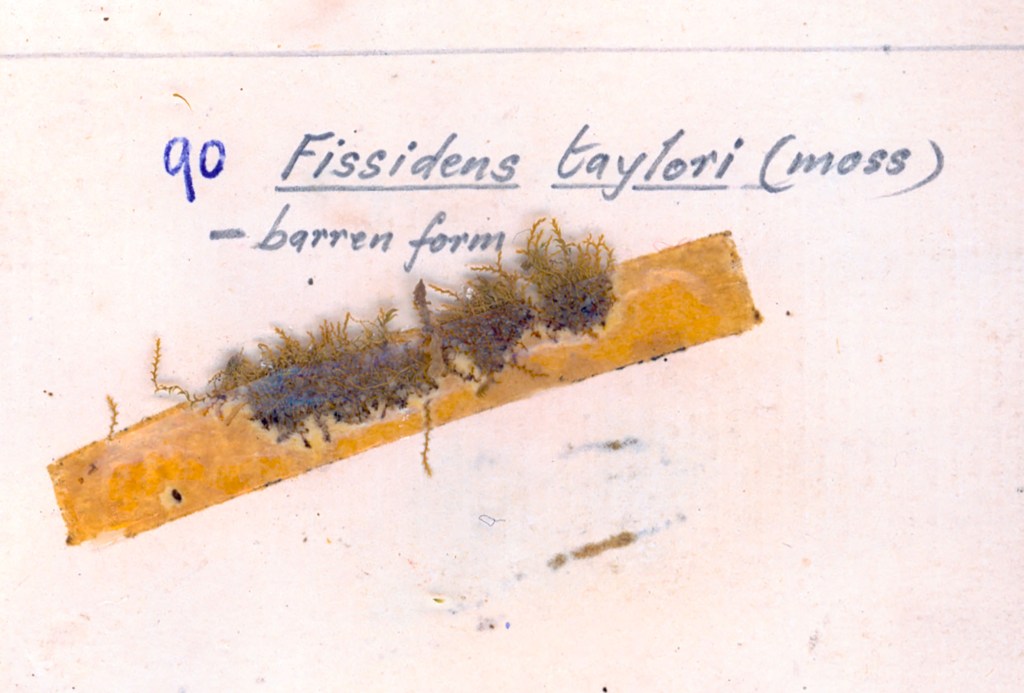
A specimen of Fissidens taylori moss in its barren form, mounted on a paper label with handwritten notes.
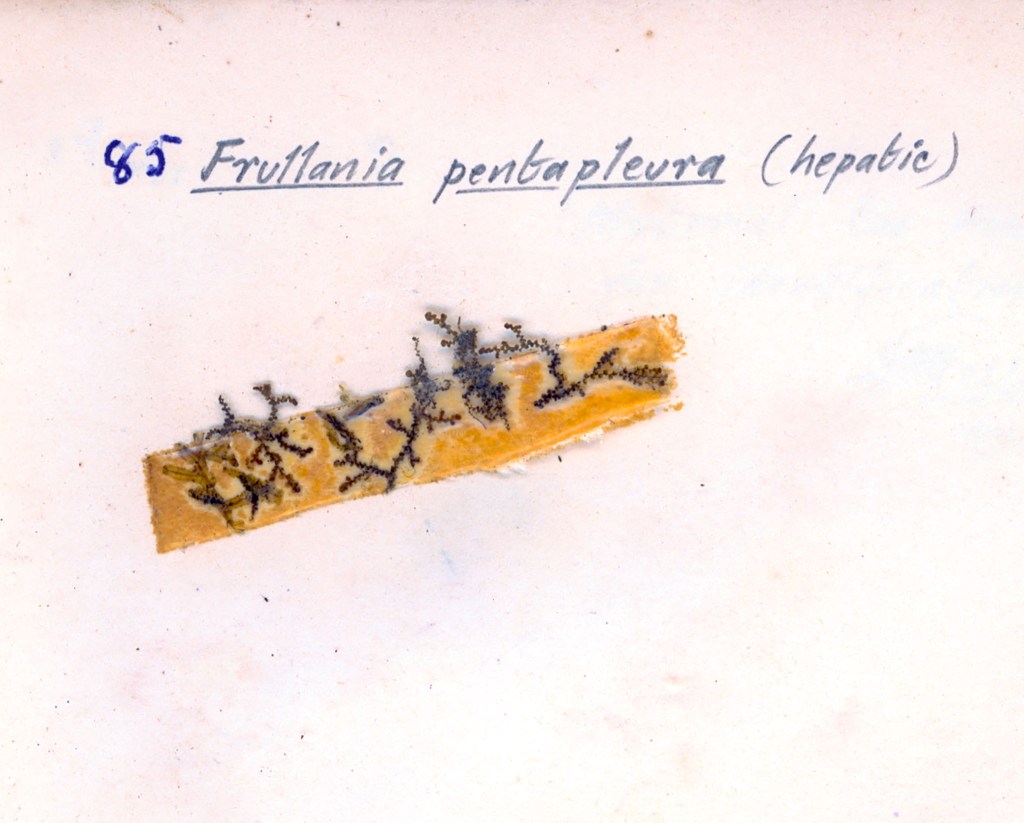
A scientific illustration of Frullania pentapleura, a type of hepatic (liverwort), displayed on a light background with detailed features labeled.
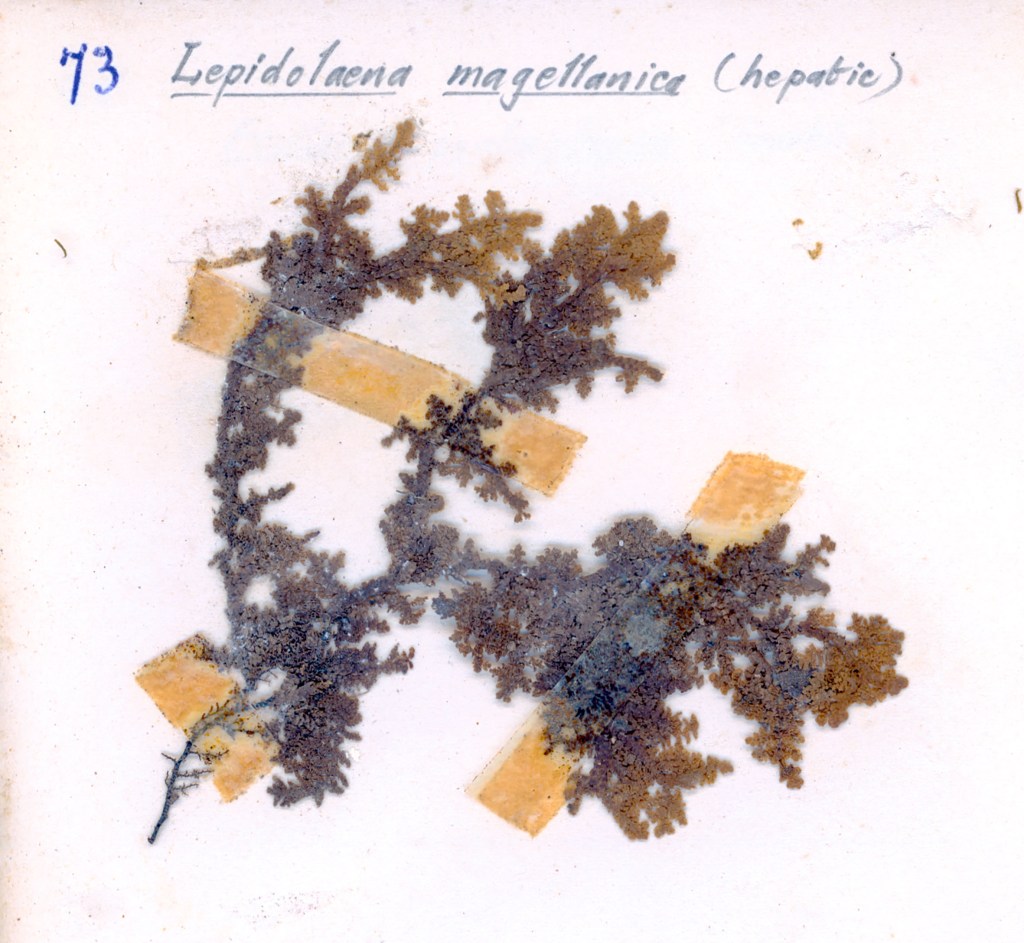
A pressed specimen of Lepidolaena magellanica (hepatic) mounted on a light background with two pieces of tape holding it in place.
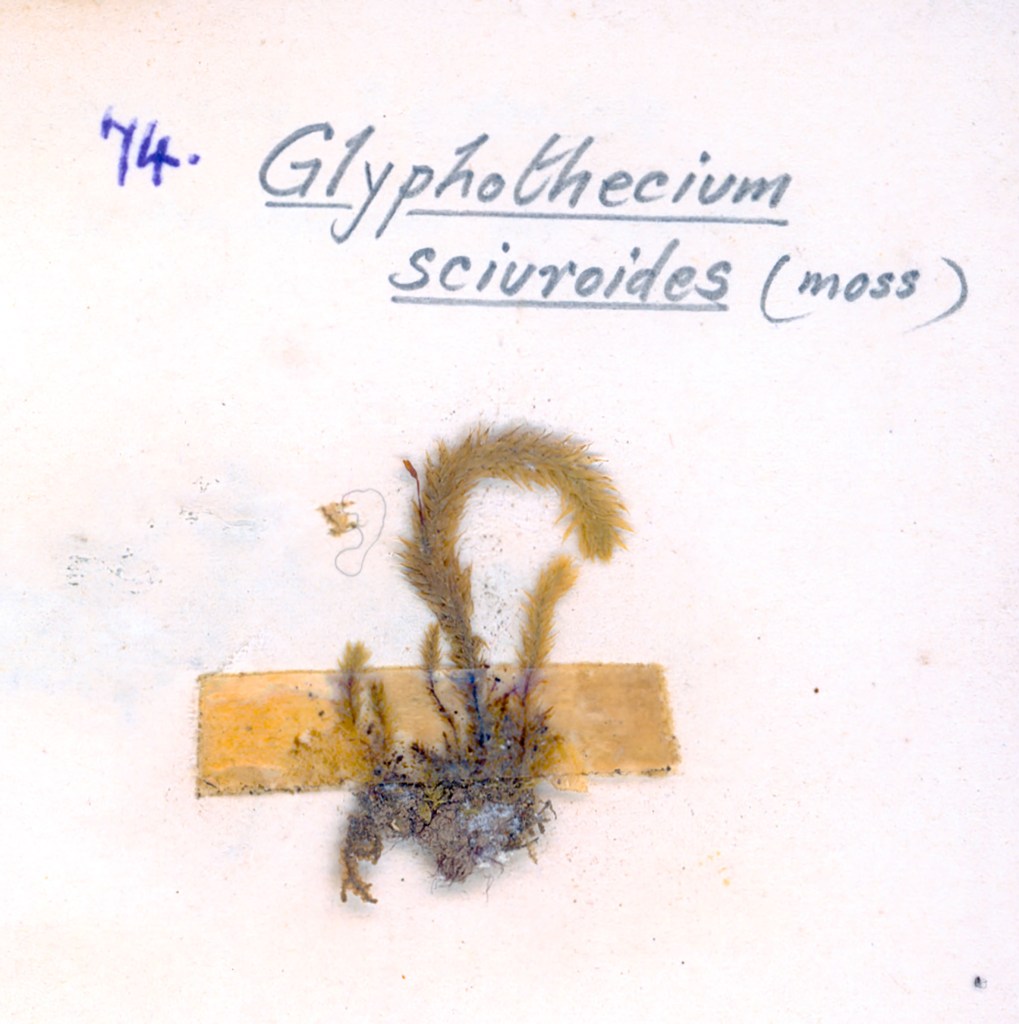
Botanical specimen of Glyphothecium sciuroides moss mounted on paper with a handwritten label.
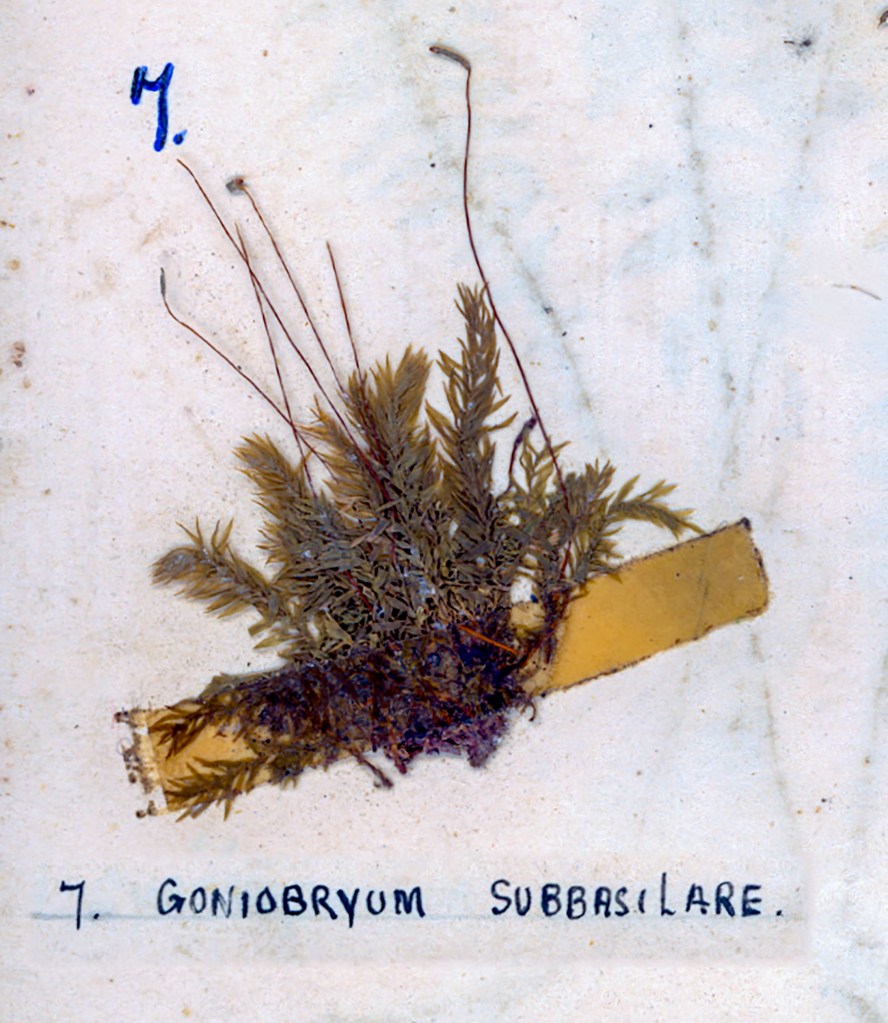
A specimen of Gonio bryum subbasilaris, displayed on a white background with a yellow label and handwritten text.
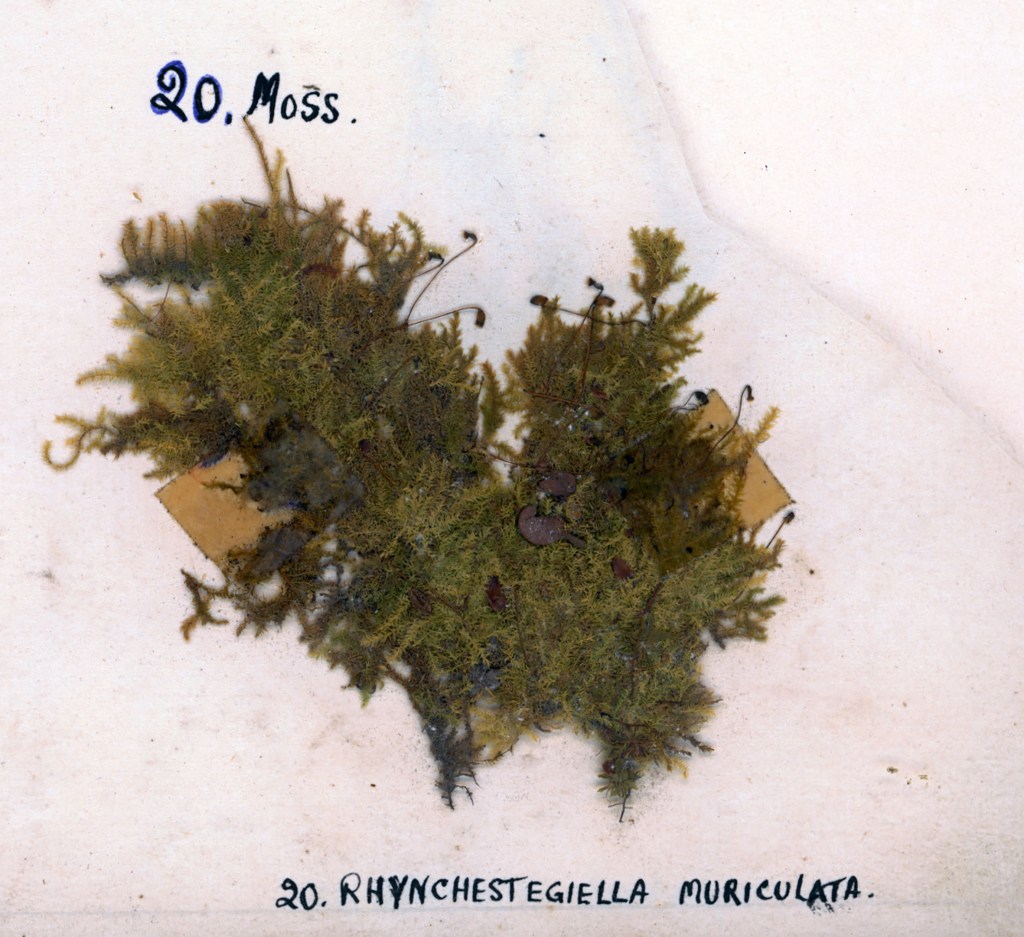
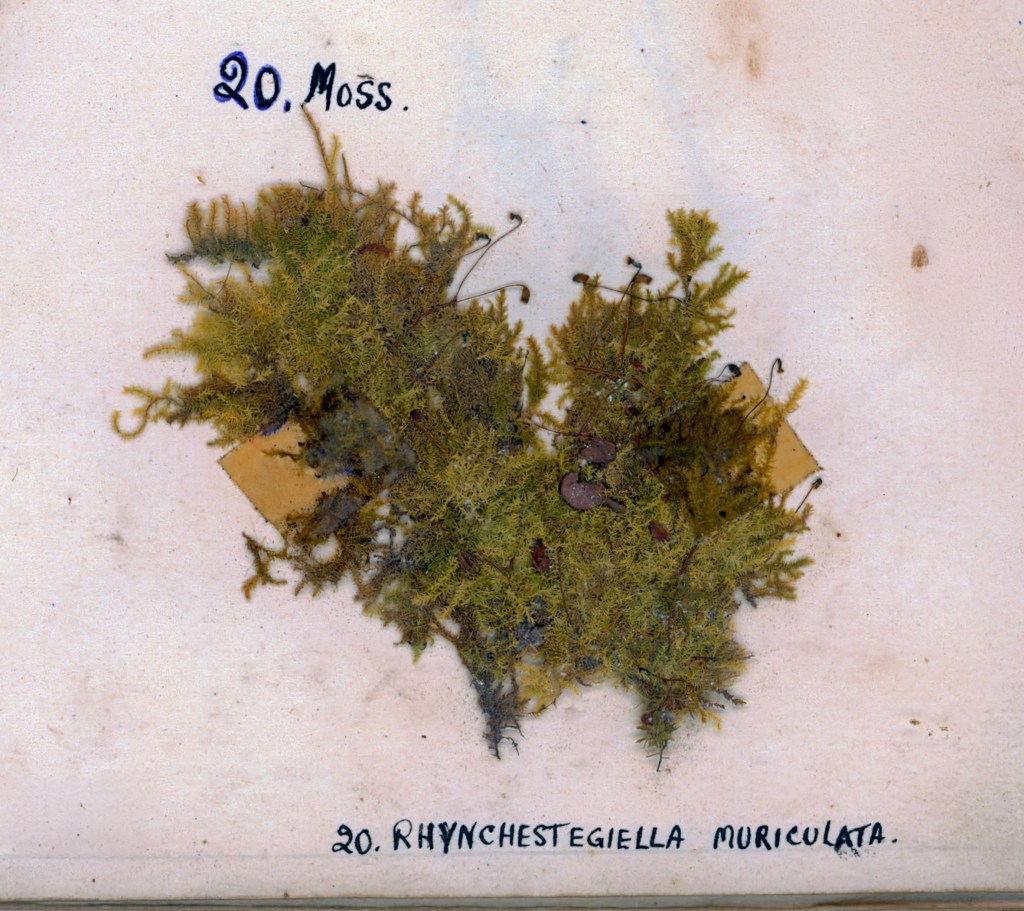
A close-up image of moss, specifically Rhynchostegium muriculatum, mounted on paper, with handwritten labels at the top and bottom indicating the specimen number and name.
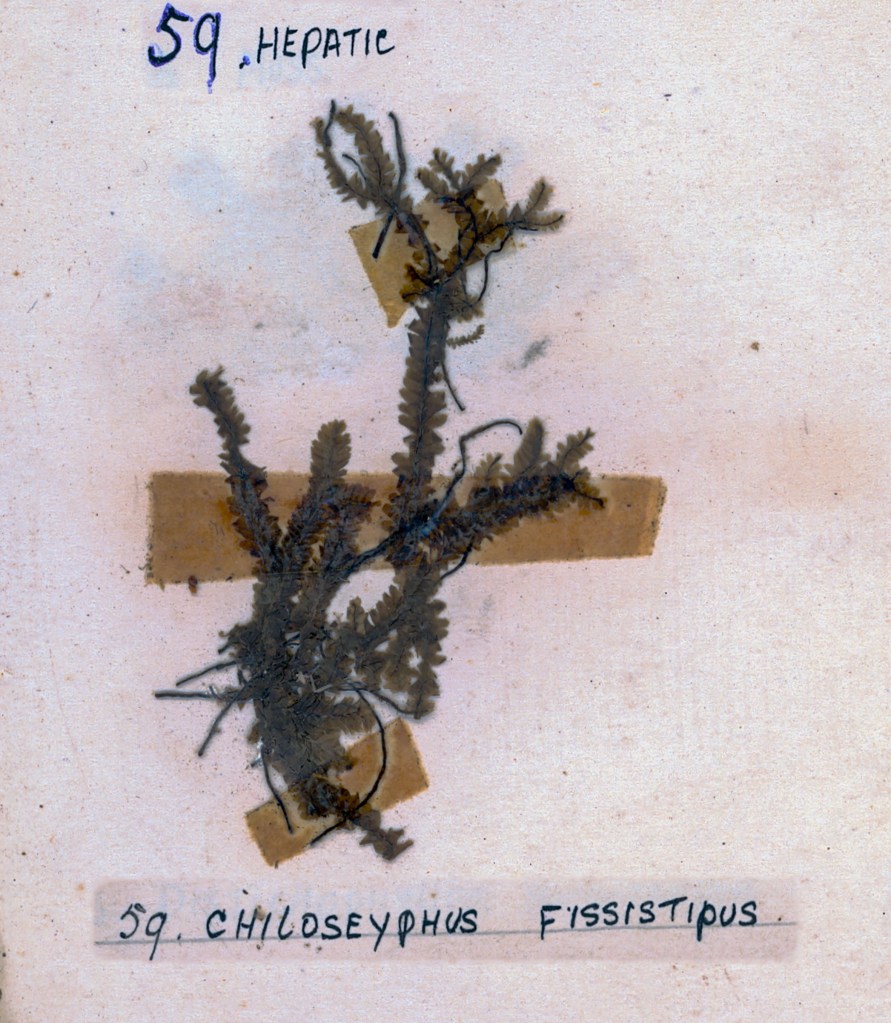
Pressed specimen of a hepatic plant, labeled with '59. Hepatic' and '59. Chiloscyphus Fissistipus'.
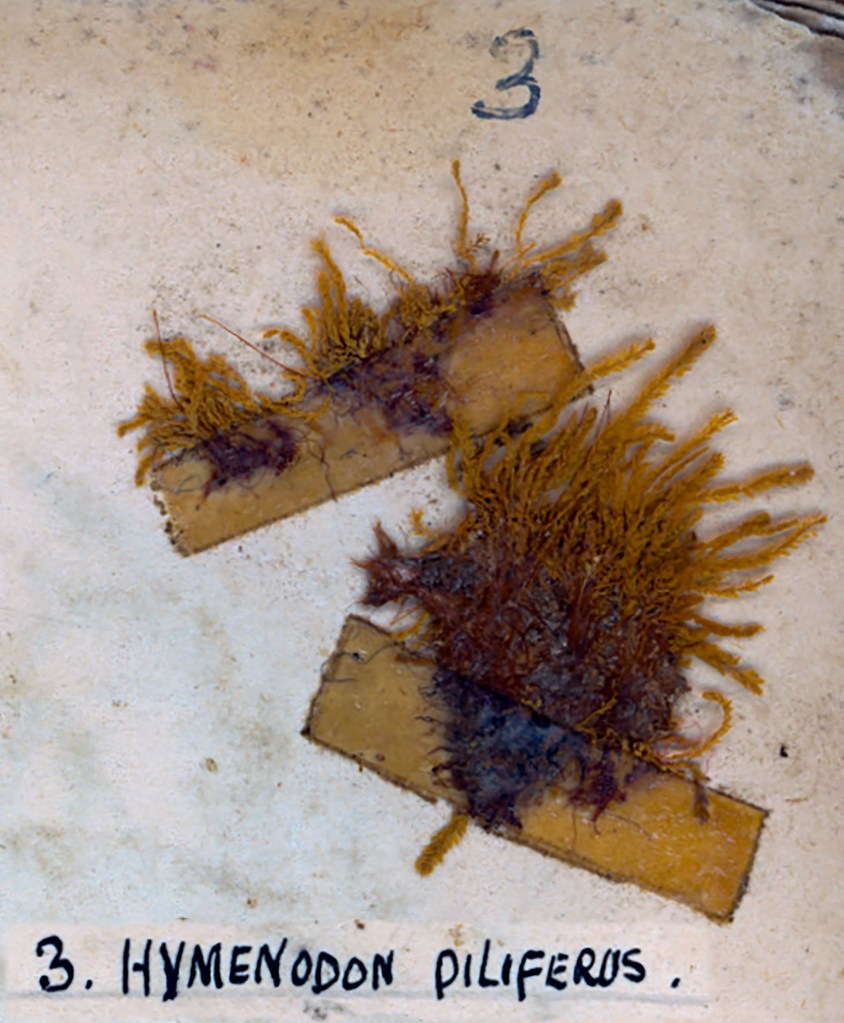
Illustration of two specimens of Hymenodon piliferus mounted on a pale background with handwritten label.
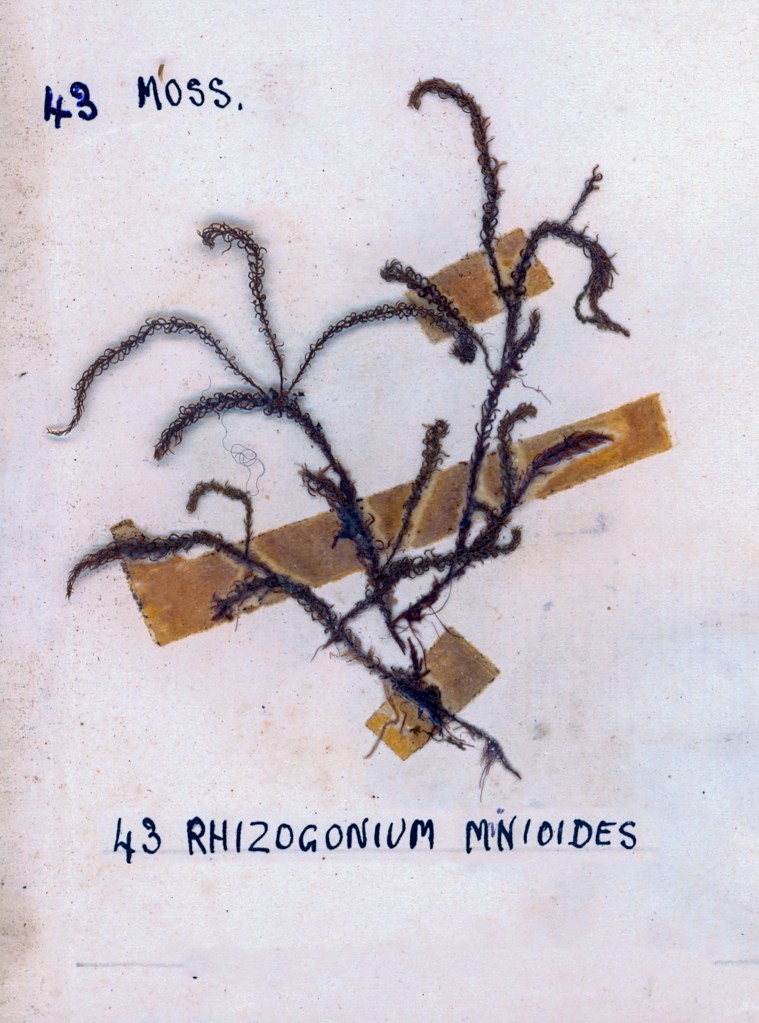
Dried moss specimen labeled '43 Rhizogonium miniodes' displayed on a pale background with tape.
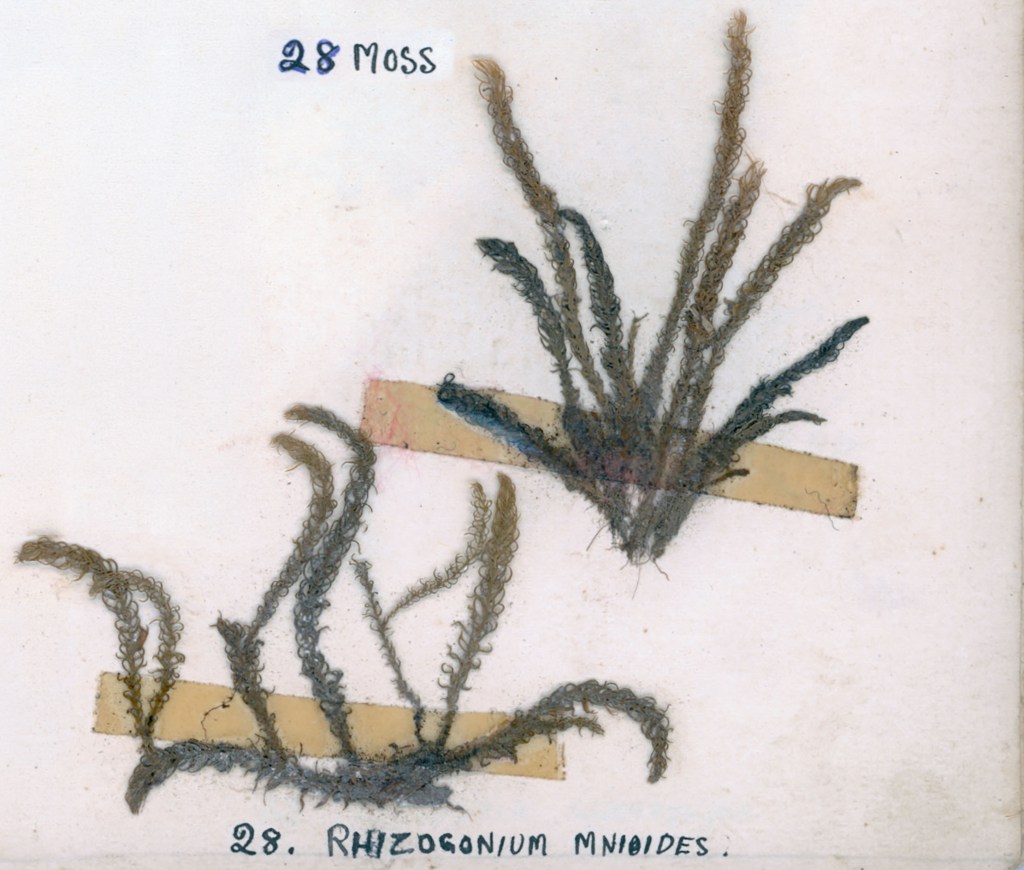
A botanical illustration showing two species of moss: the top labeled '28 Moss' and the bottom labeled '28. Rhizogonium minioides'. Both are displayed on paper with yellow labels.
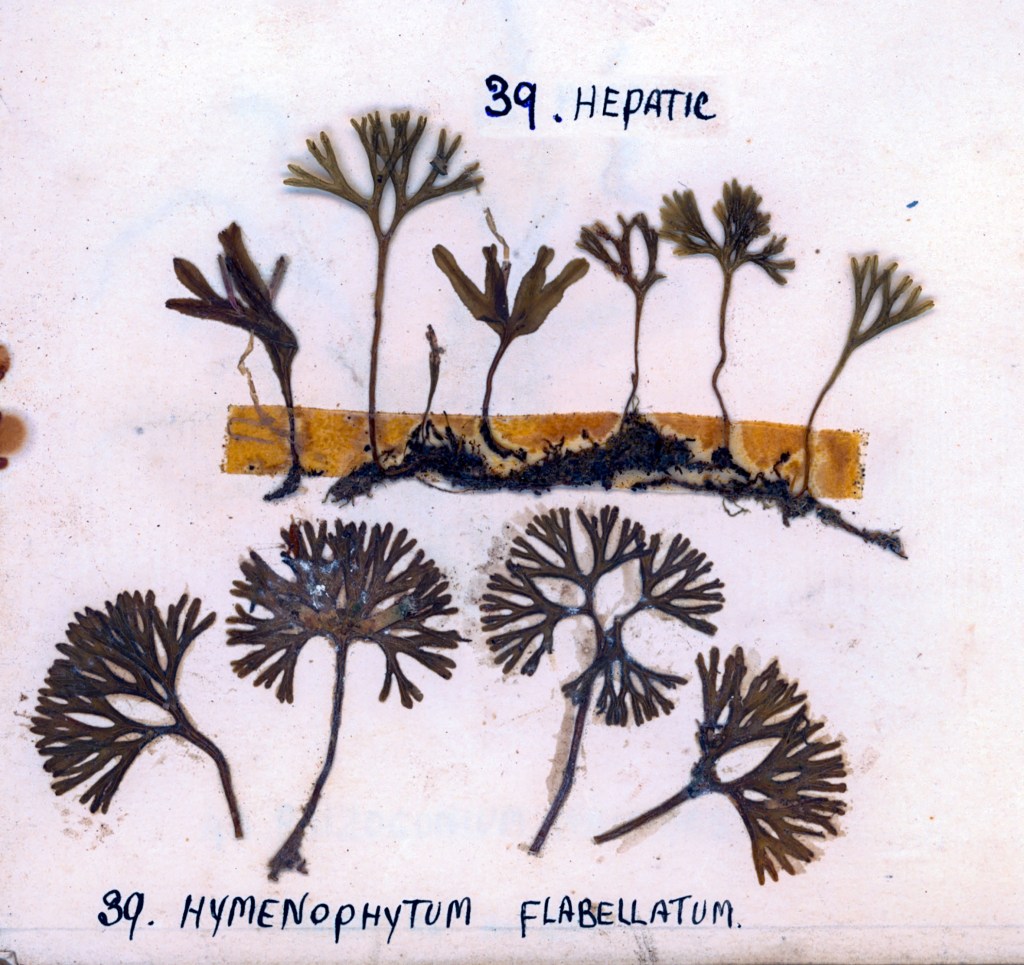
A collection of hepatic bryophytes displaying various forms, with labels for 'Hepatic' and 'Hymenophyllum flabellatum'.
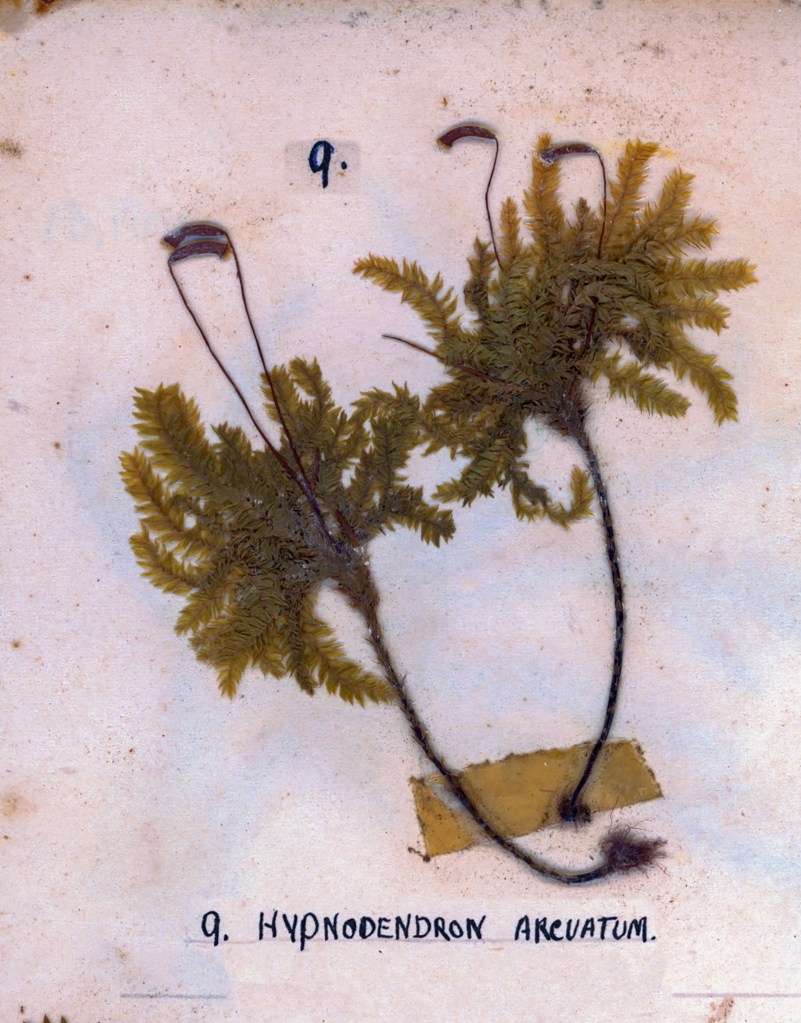
Dried specimen of Hypnodendron arcuatum, featuring green leafy fronds and elongated stems, mounted on a paper background with a label.
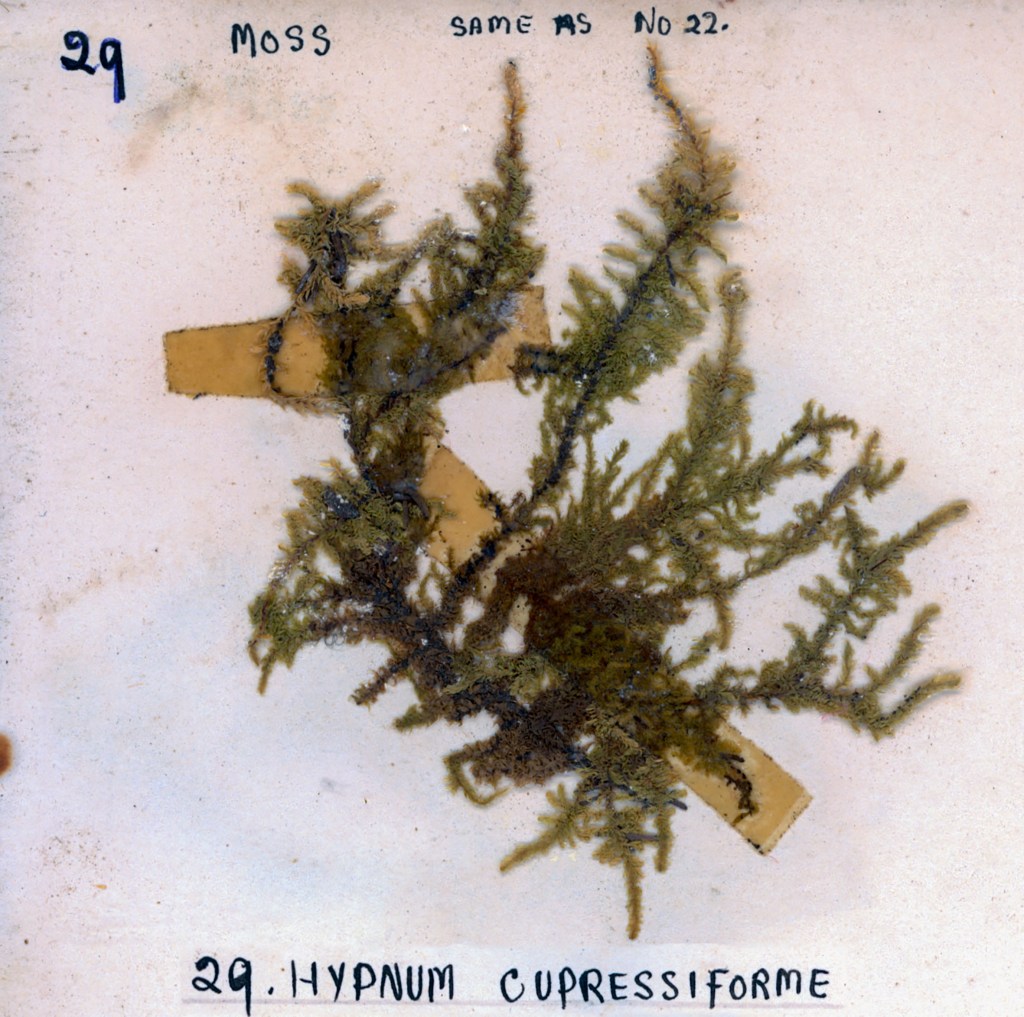
A pressed specimen of Hypnum cupressiforme moss mounted on a beige background, with labels indicating its identification number and name.
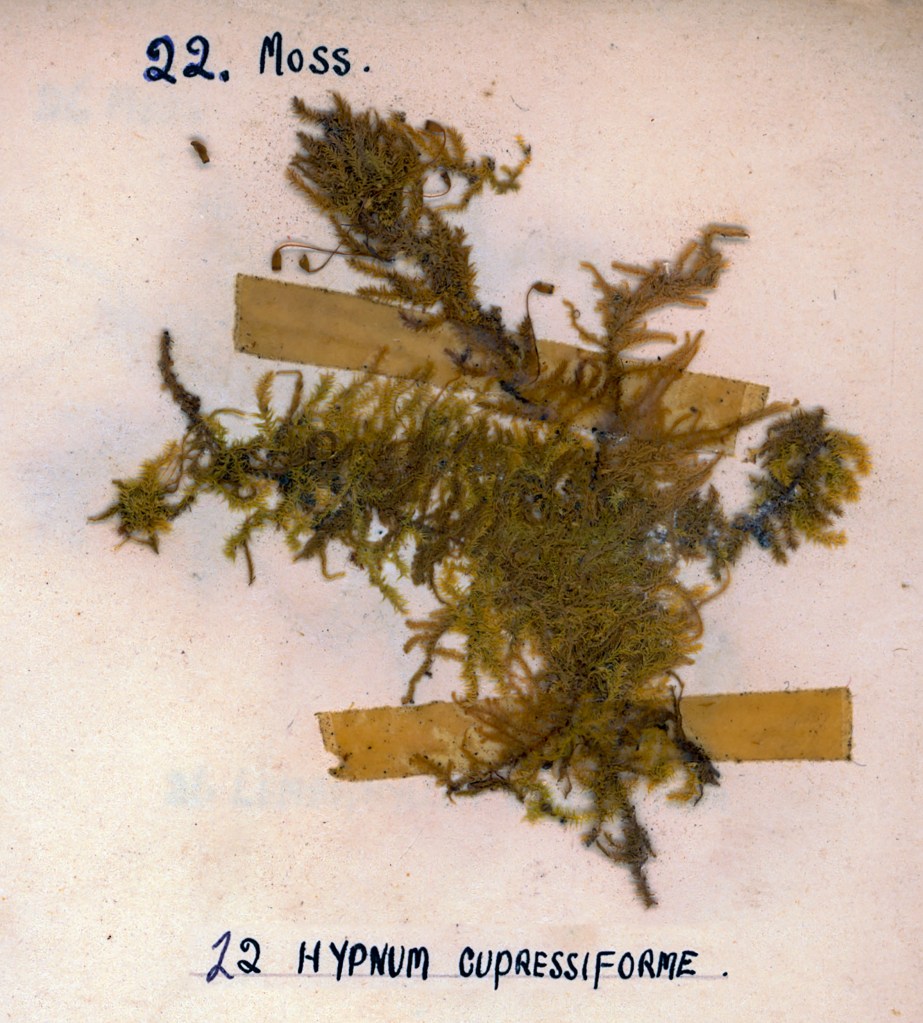
A specimen of moss labeled '22. Moss' and '12 Hypnum cupressiforme' on a light background.
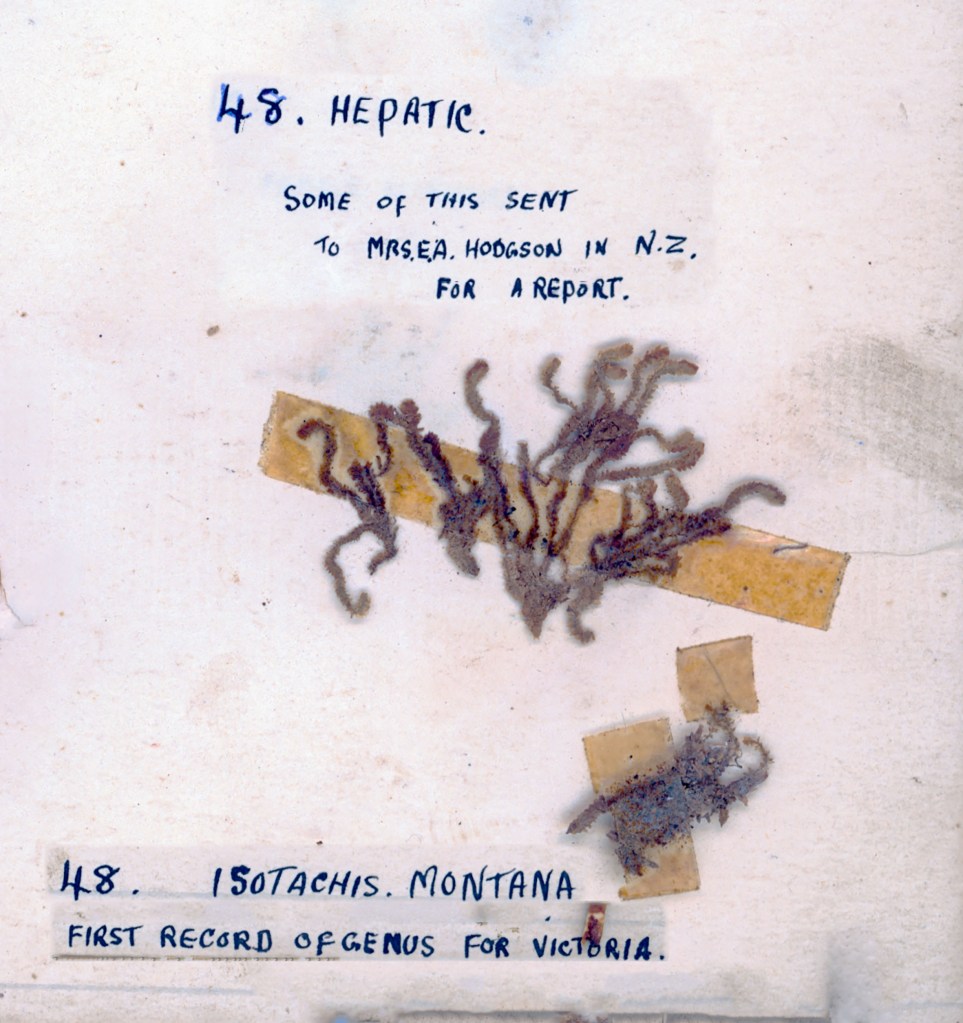
An illustration of a plant specimen labeled 'Hepatic' and 'Isotachis montana', with handwritten notes about its identification and report details.
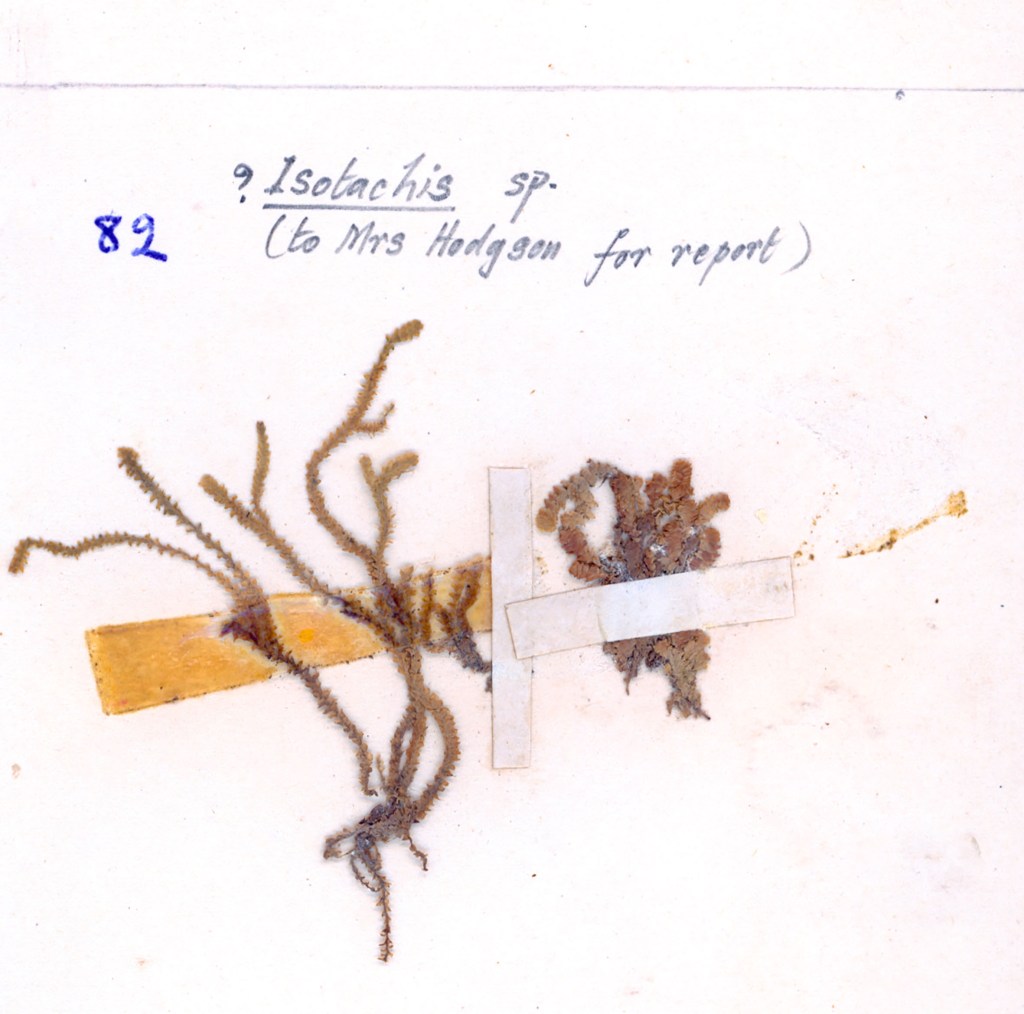
A botanical specimen of Isotachis sp. attached to a paper backing with labels for report purposes.
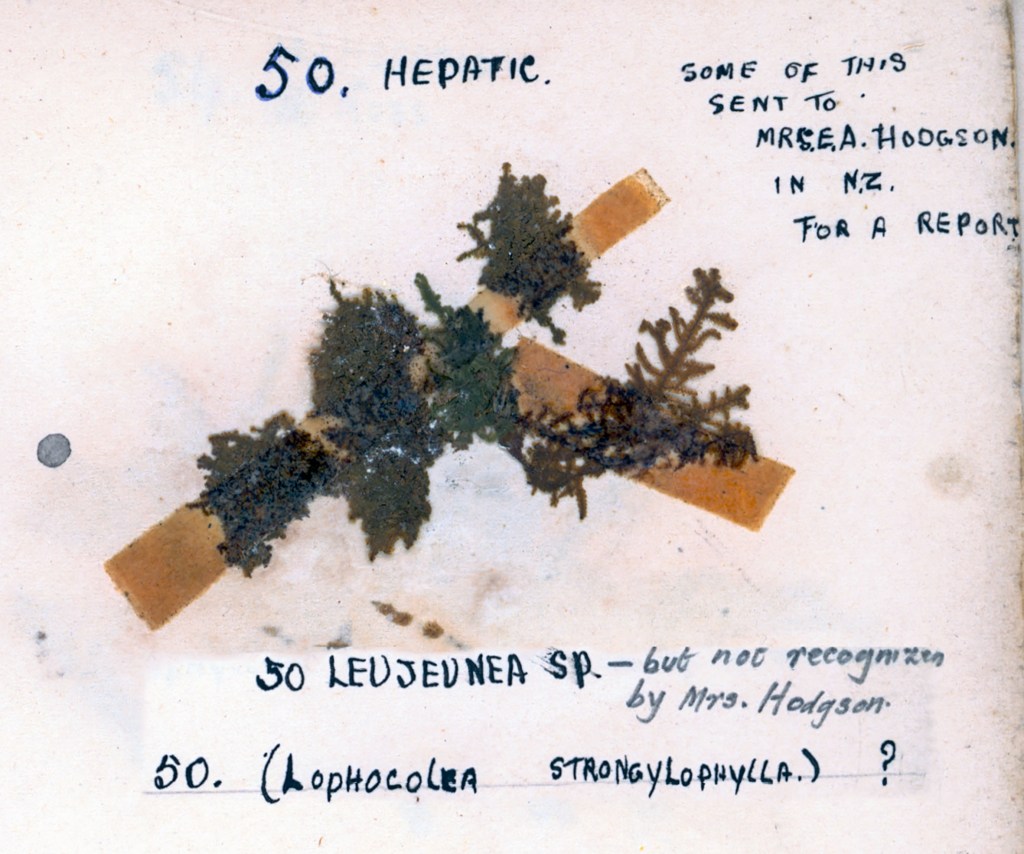
A botanical specimen of hepatic liverworts mounted on a page, labeled with '50, Hepatic' and '50 Lejeunea sp. - but not recognized by Mrs. Hodgson.'
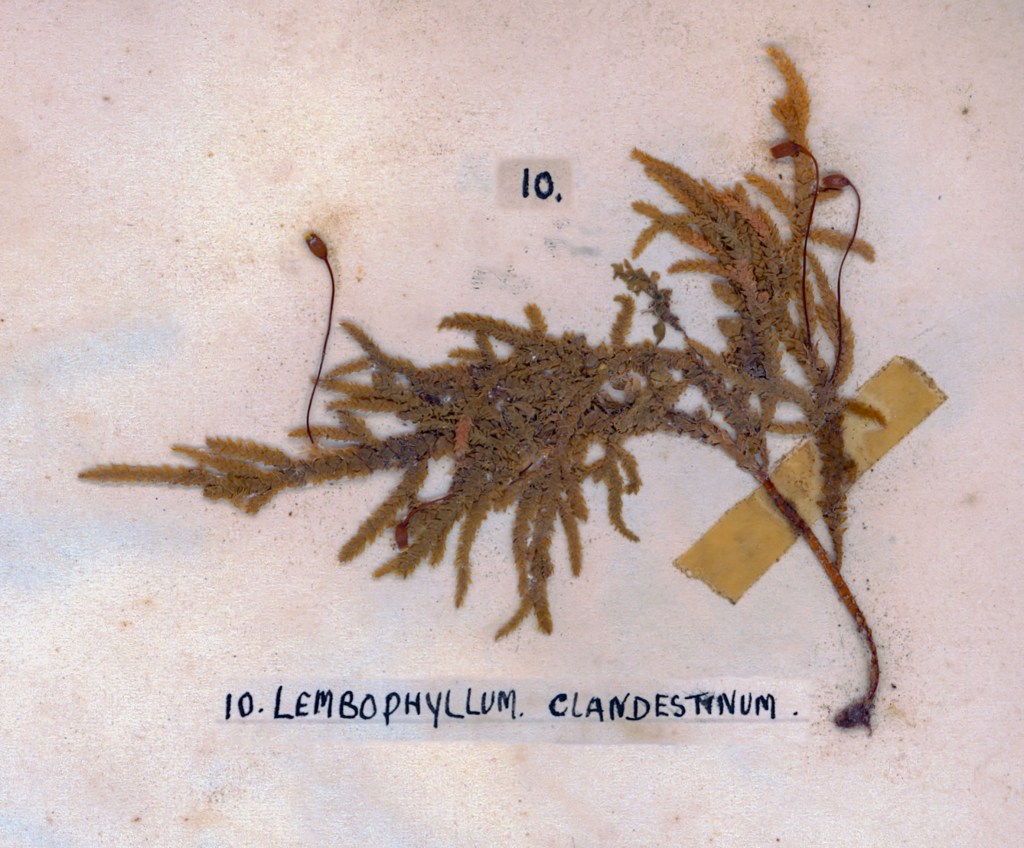
A pressed specimen of Lembophyllum clandestinum mounted on paper, labeled with the number 10.
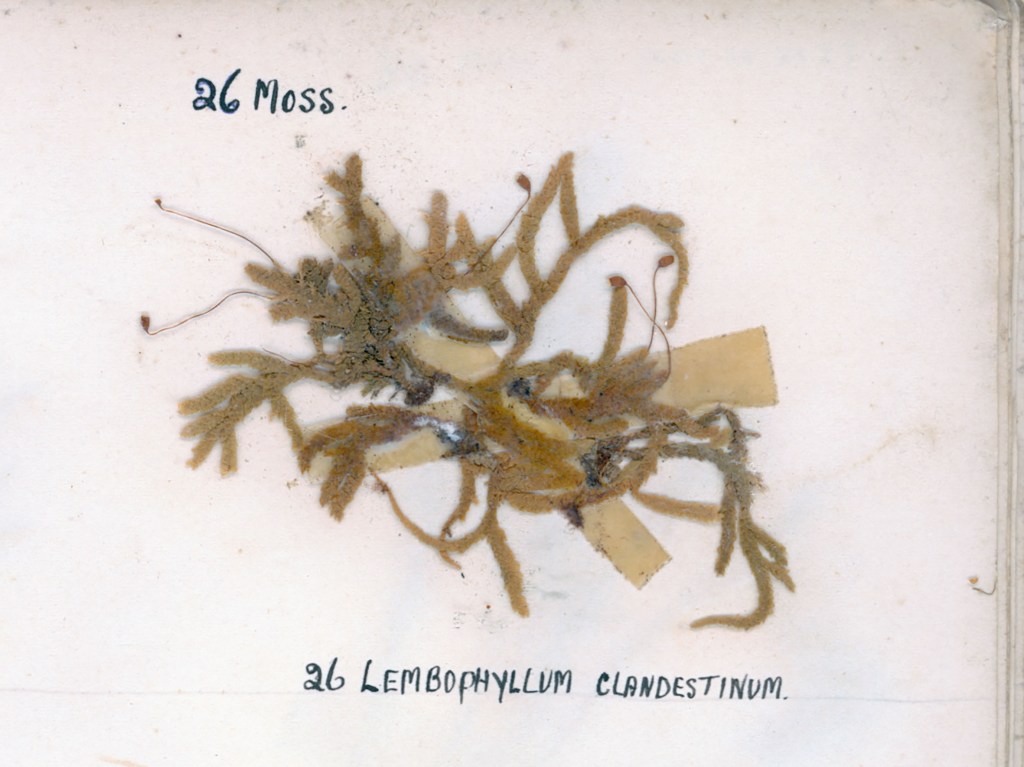
Specimen of moss labeled as '26 Lemnophylum clandestinum', featuring a brownish-green cluster of moss with delicate branches.
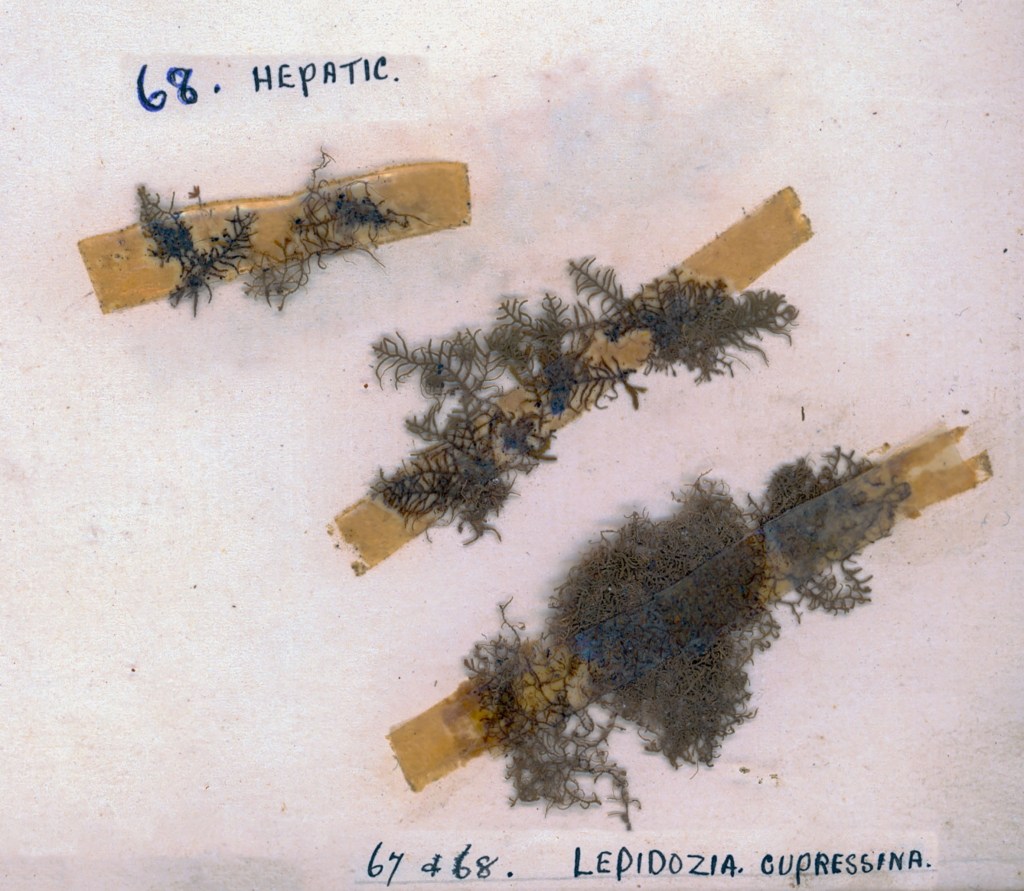
Three mounted samples of hepatic plants, labeled 67 and 68, with fine, intricate textures on a light background.
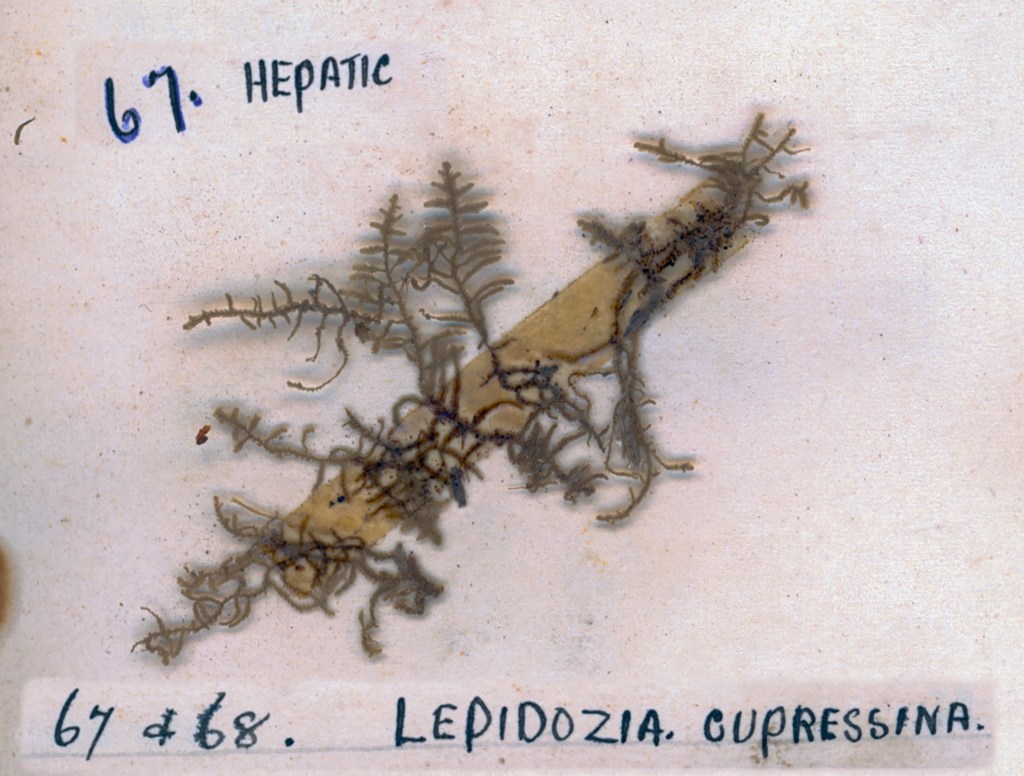
A specimen of Lepidozia cupressina, a type of hepatic liverwort, displayed on a light-colored background. The specimen features intricate branching structures.
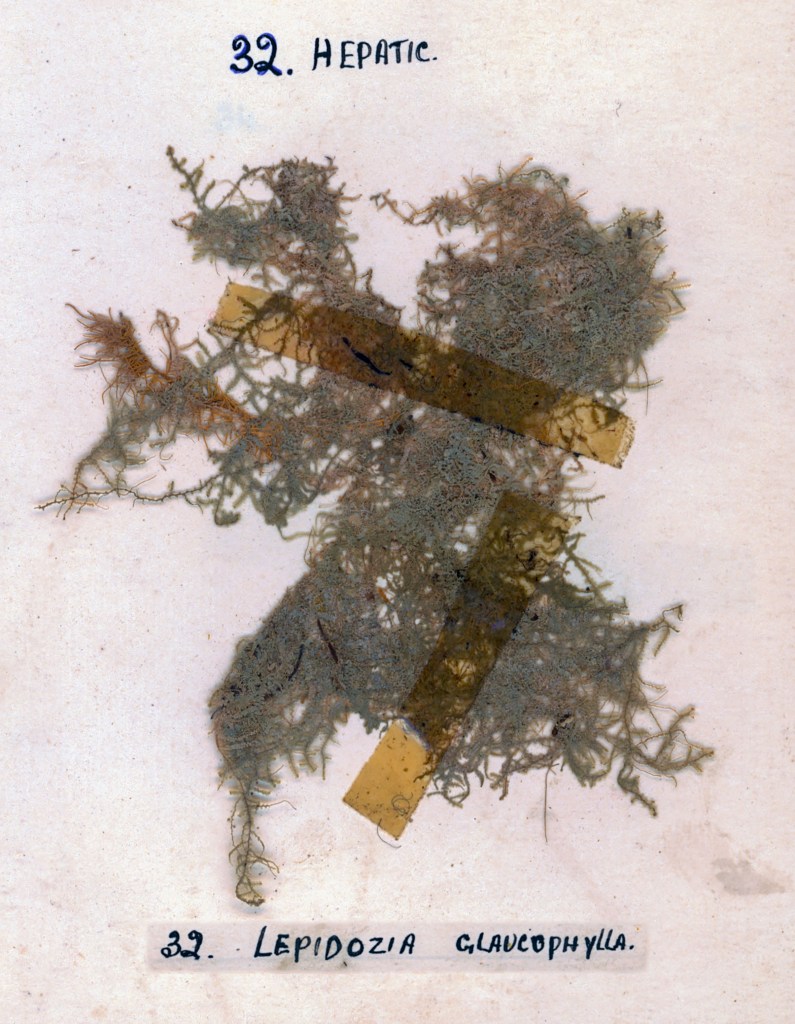
Botanical specimen of Hepatic plant, labeled with '32. HEPATIC.' and '32. Lepidozia glaucephylla.'
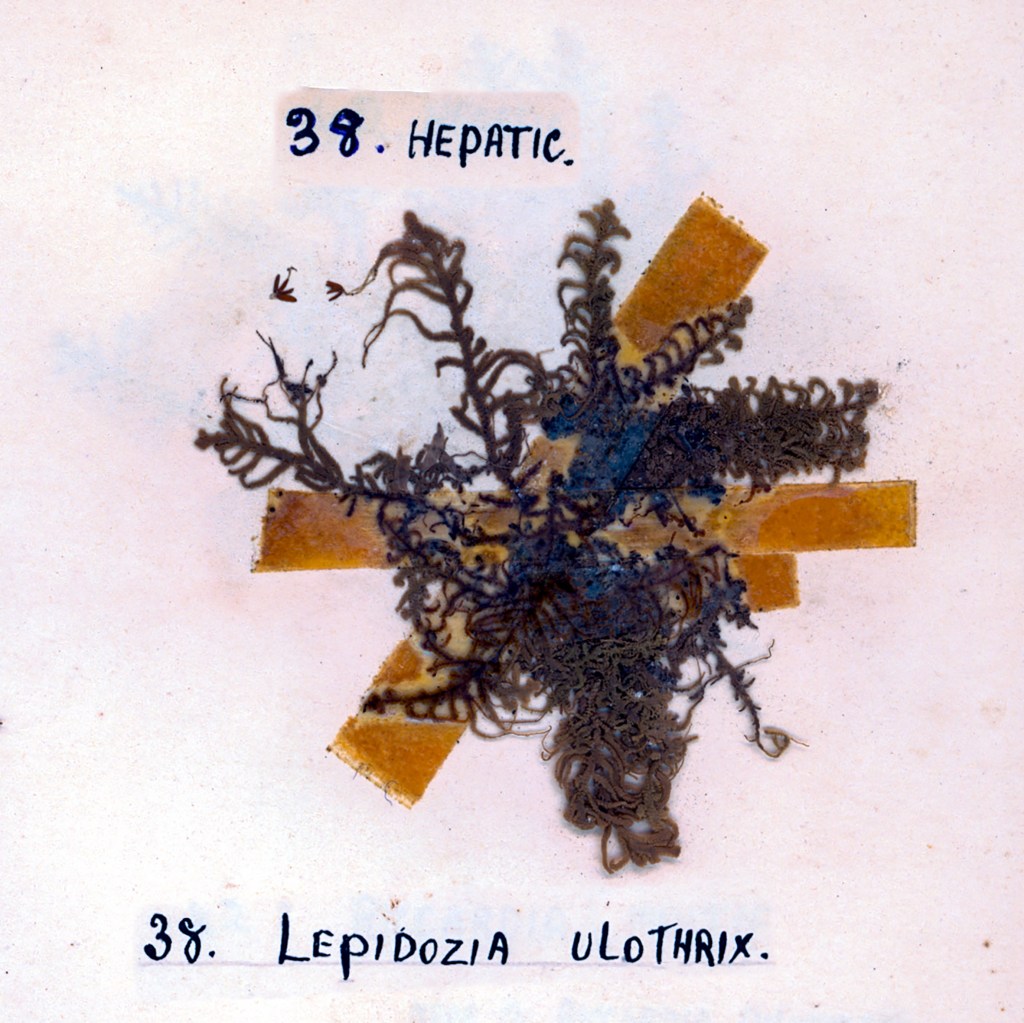
A specimen labeled '38. Hepatic' with the scientific name '38. Lepidozia ulothrix', featuring a dark, lacy plant specimen mounted on a light background with yellow tape.
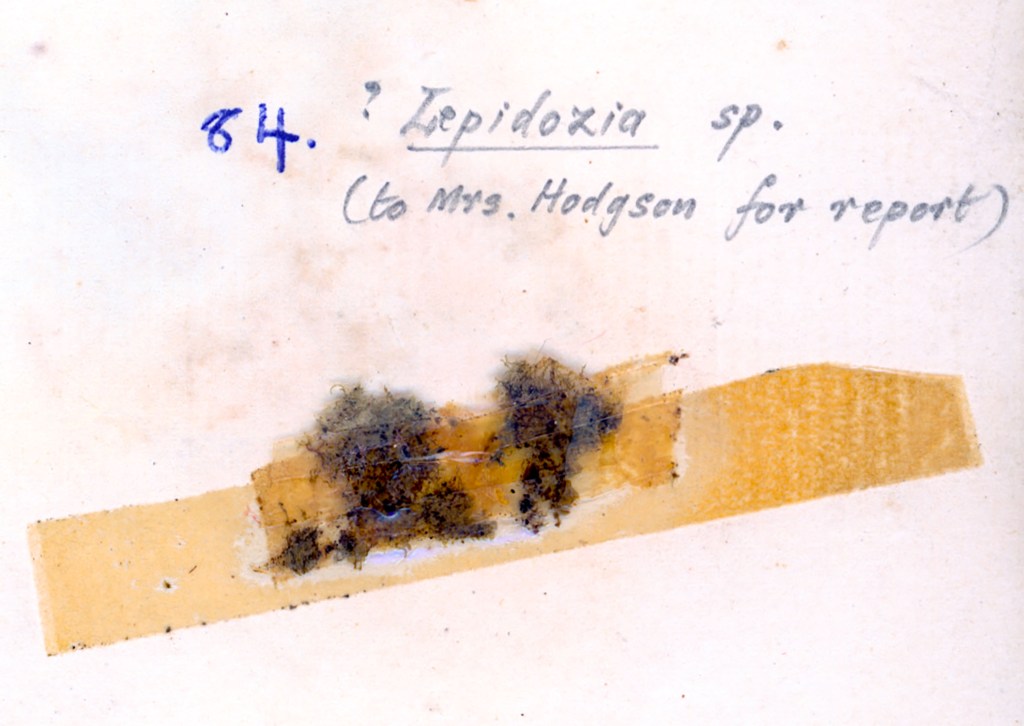
An old scientific label featuring the handwritten name '? Lepidozia sp.' and a note indicating it is for Mrs. Hodgson for report, with a small specimen attached to transparent tape.
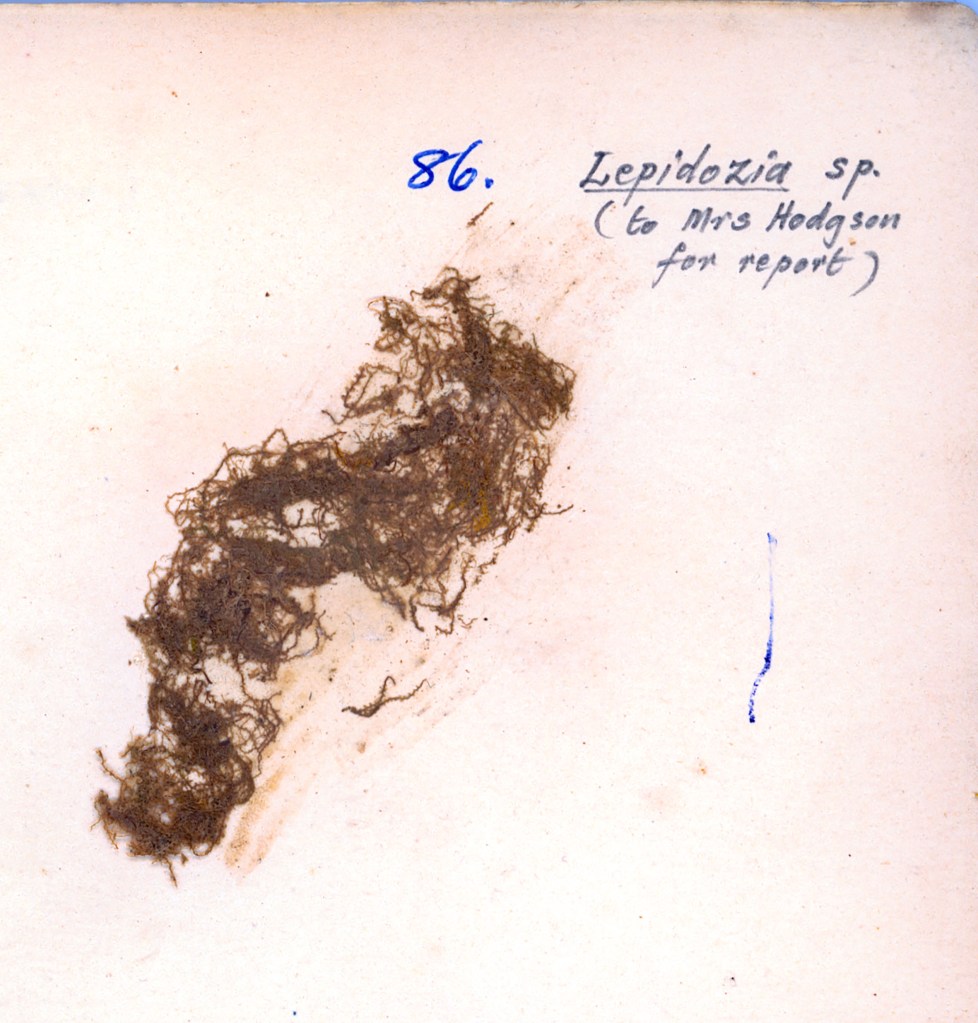
A dried sample of Lepidozia sp., showing thin, tangled strands on a light background, with handwritten labels indicating the specimen number and notes.
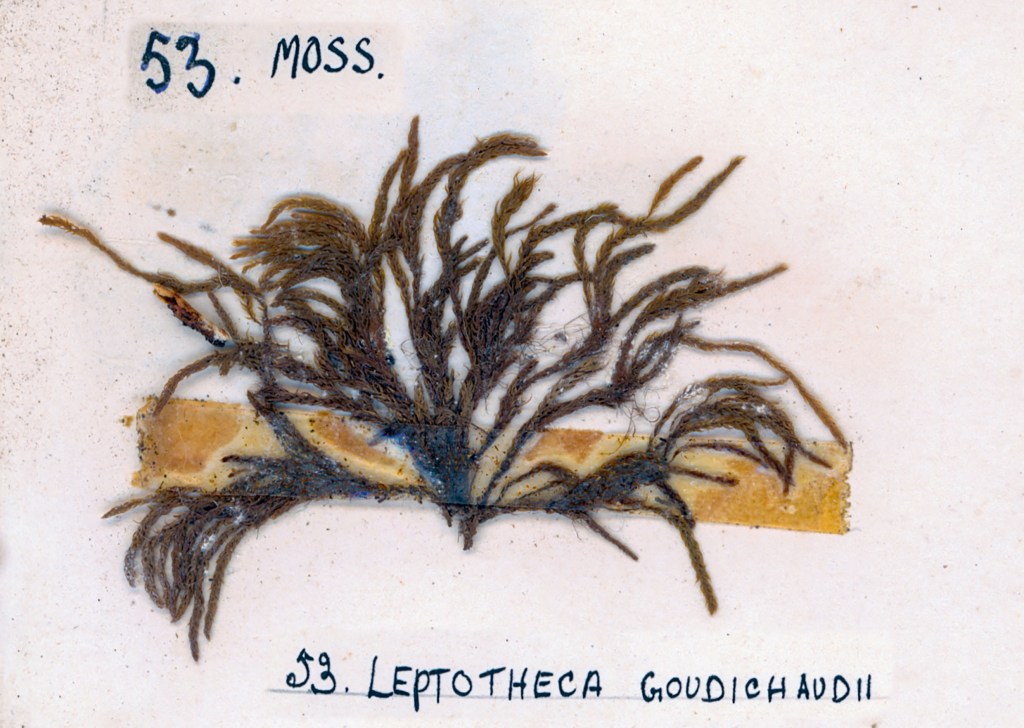
A preserved specimen of moss, labeled as Leptotheca goudichaudii, displayed on a white background with handwritten notes.
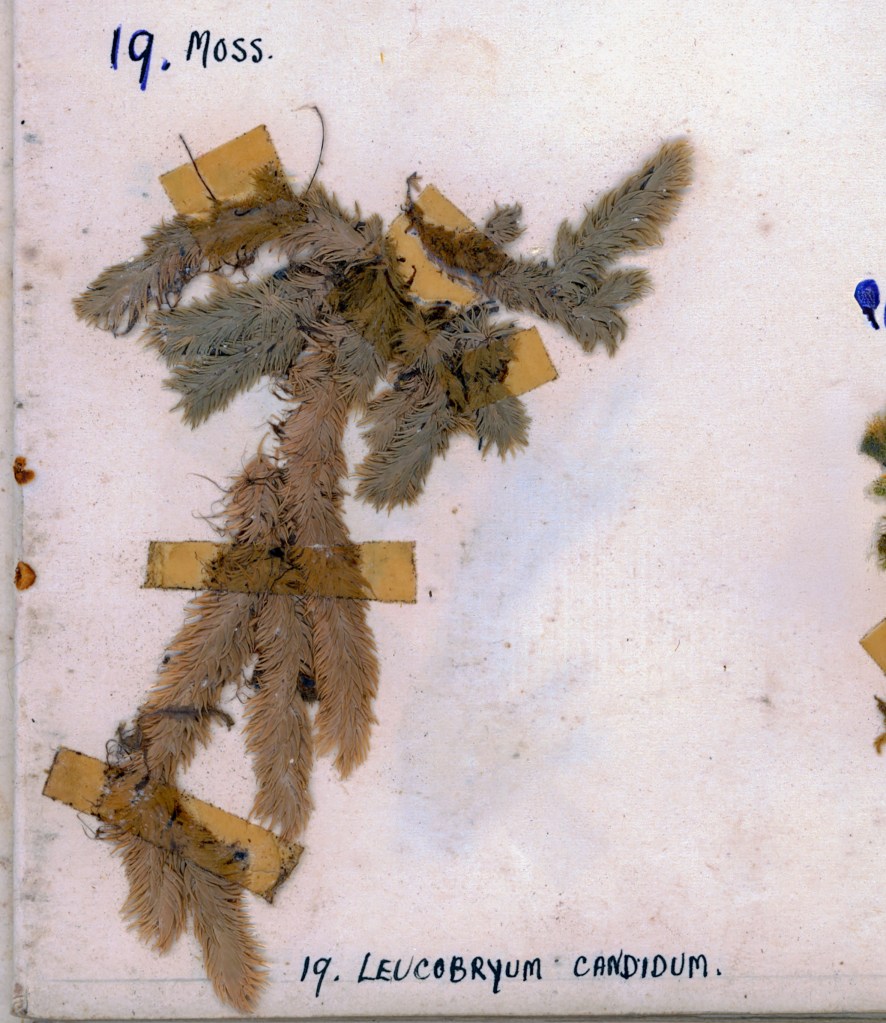
A preserved specimen of moss, identified as Leucobryum candidum, mounted on a white background with labels indicating its name and number.
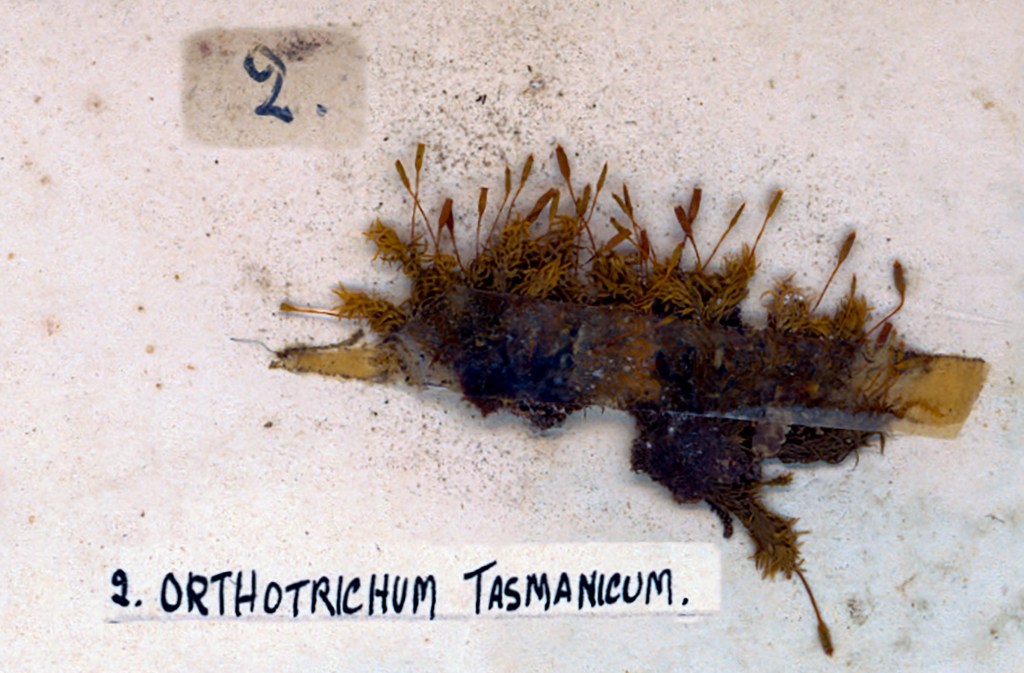
A close-up image of dried Orthotrichum tasmanicum moss sample adhered to a label with the number '2' above it.
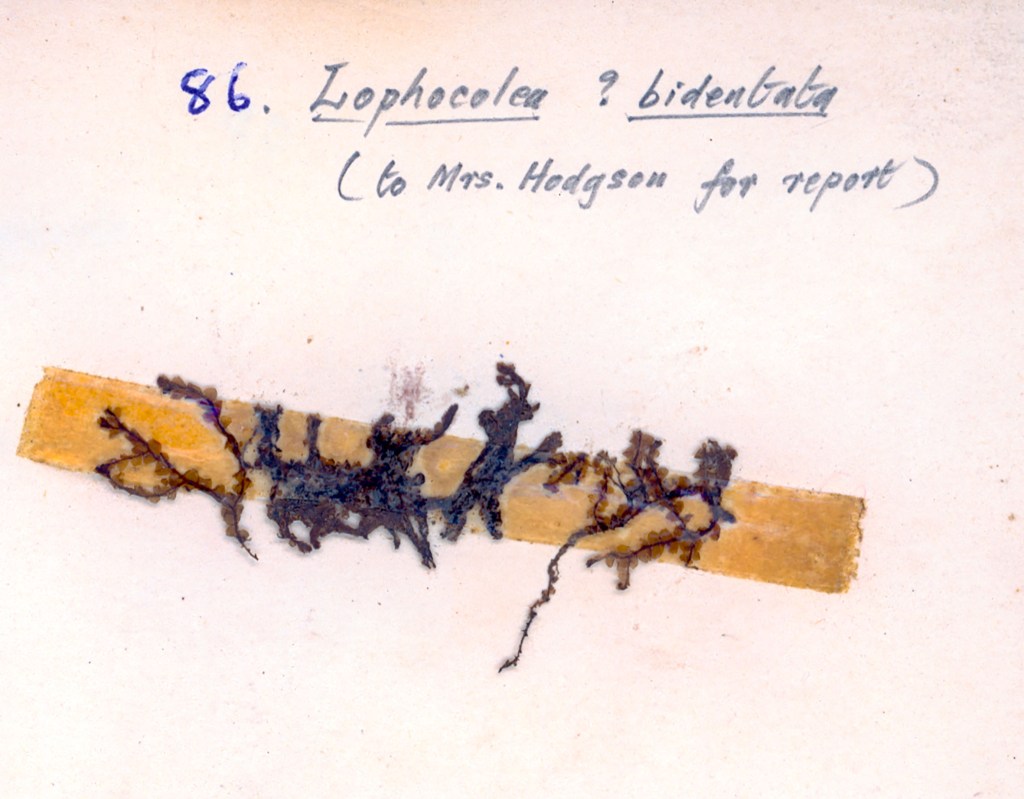
A botanical specimen labeled as 'Lophocolea ? bidentata' attached to a strip of paper, with handwritten notes indicating it is for Mrs. Hodgson's report.
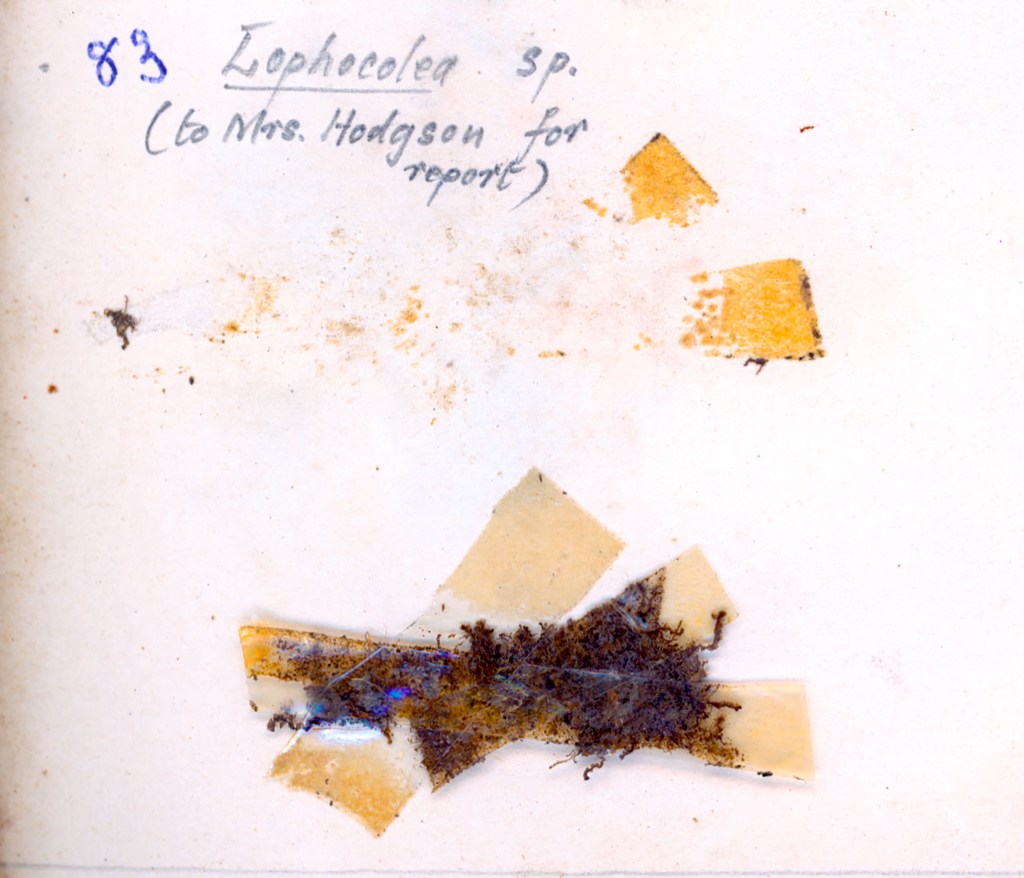
Preserved specimen of Lophocolea sp. with accompanying labels on a light background.
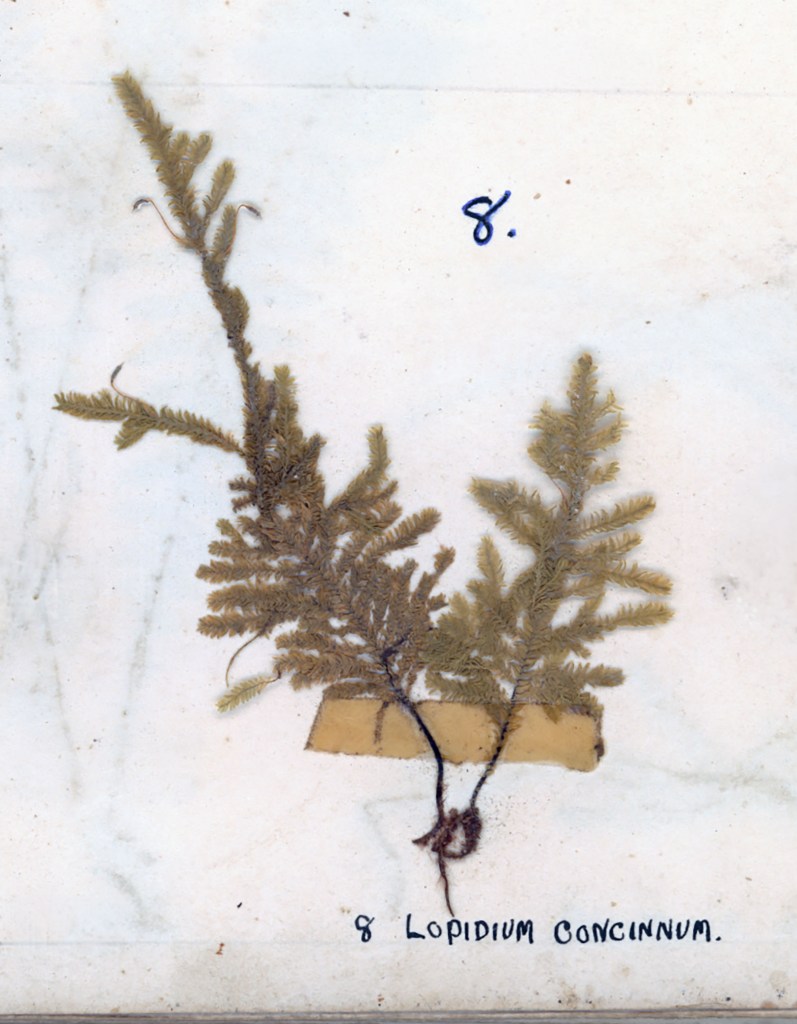
Dried sample of Lopidium concinnum with delicate, feathery leaves mounted on white paper.
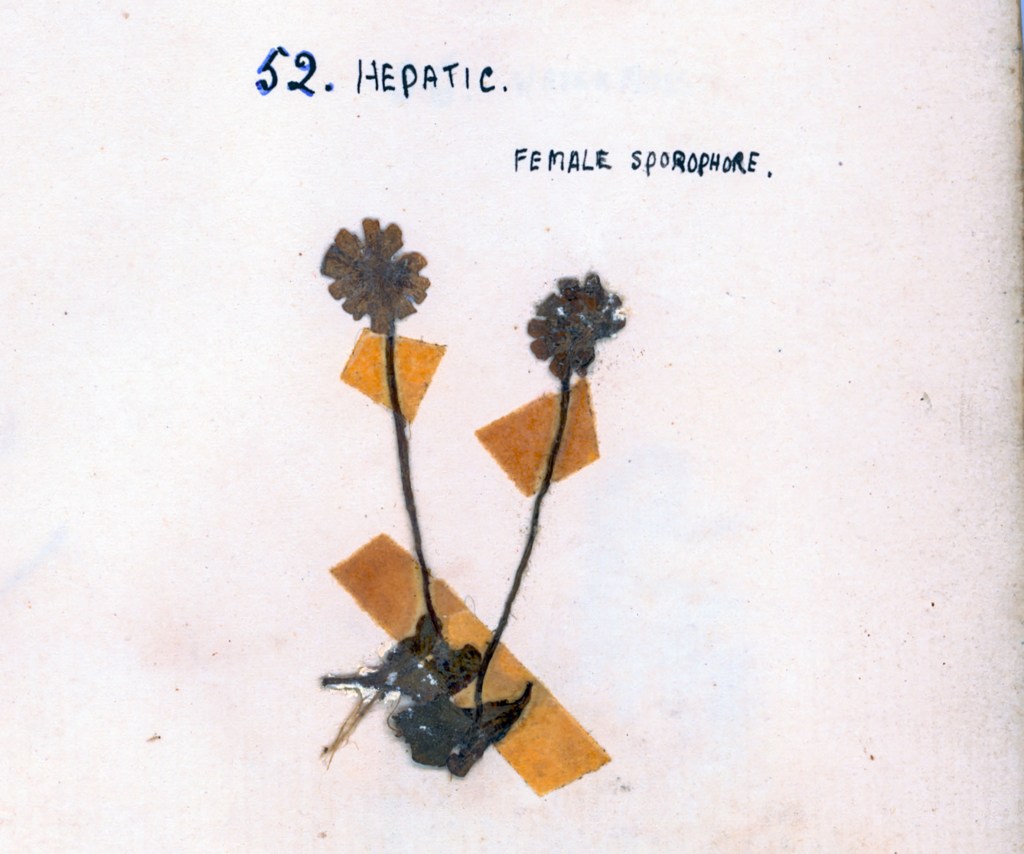
Illustration of two female sporophytes labeled '52. Hepatic.' with brown flowers on stems and orange triangular pieces of paper.
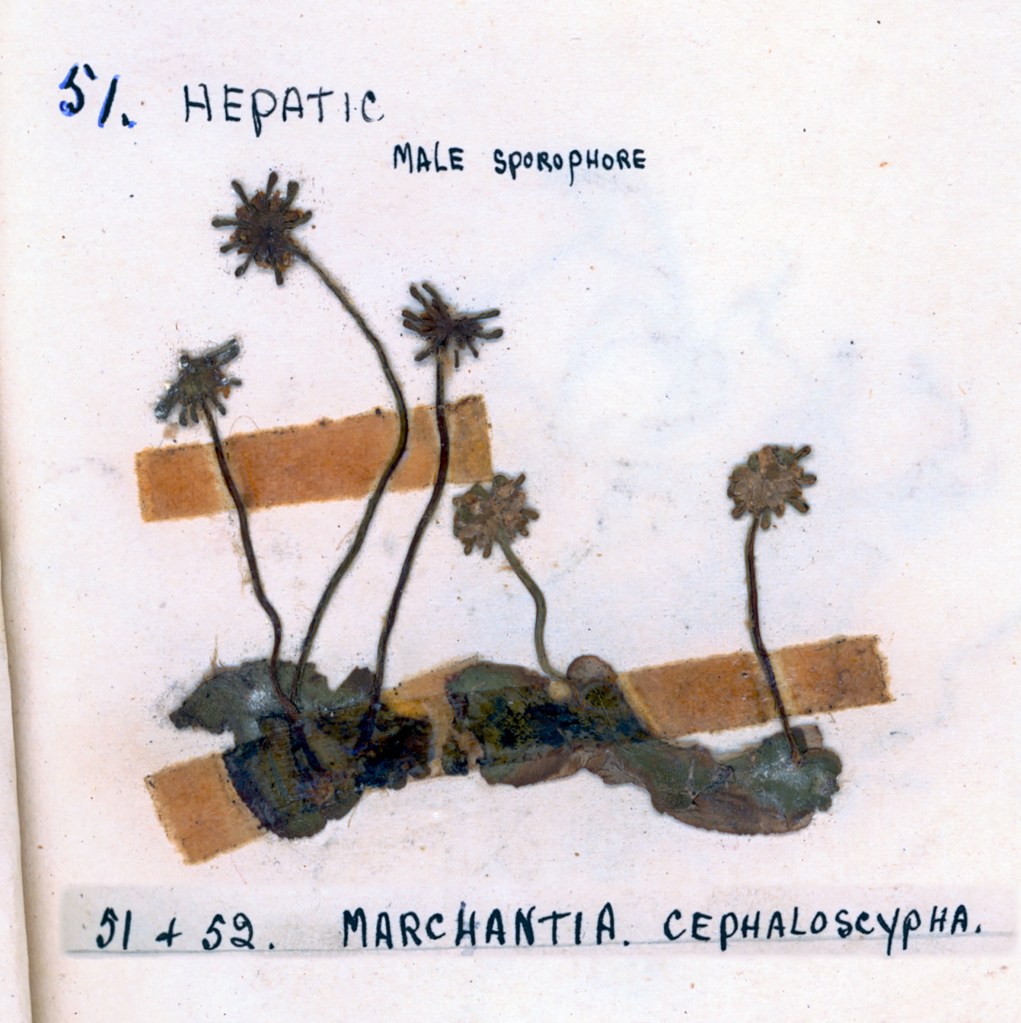
Illustration of Marchantia cephalocypha, a type of liverwort, showing male sporophytes with green leaves and brown stems on a white background.
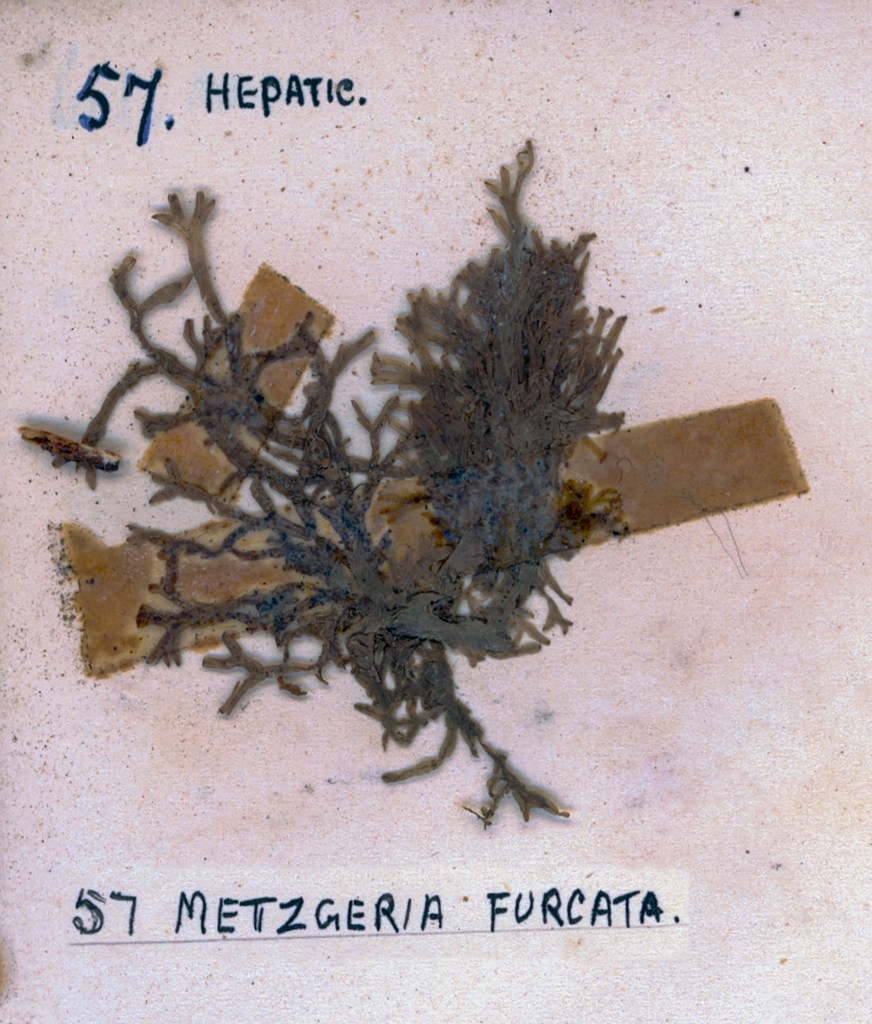
Preserved specimen of Metzgeria furcata, a type of hepatic liverwort, displayed on a creamy background with handwritten labels.
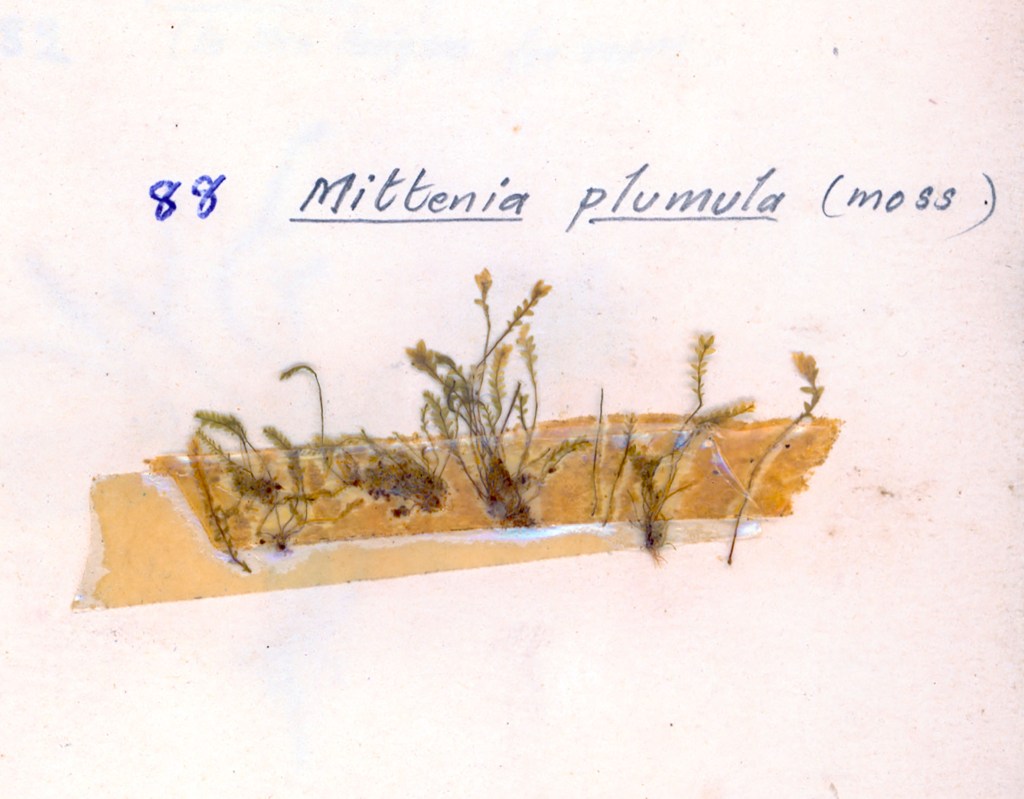
Specimen of Mittenia plumula moss displayed on paper with handwritten labeling.
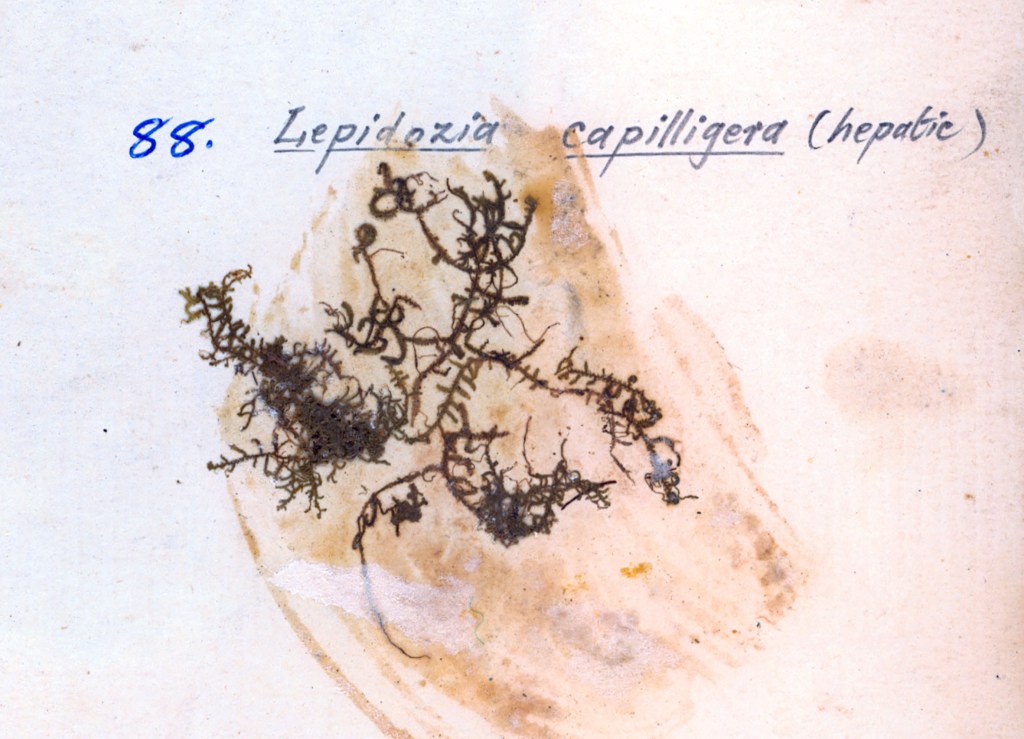
Botanical illustration of Lepidozia capilligeria, a type of hepatic moss, featuring intricate, branching structures on a pale background with handwritten labels.
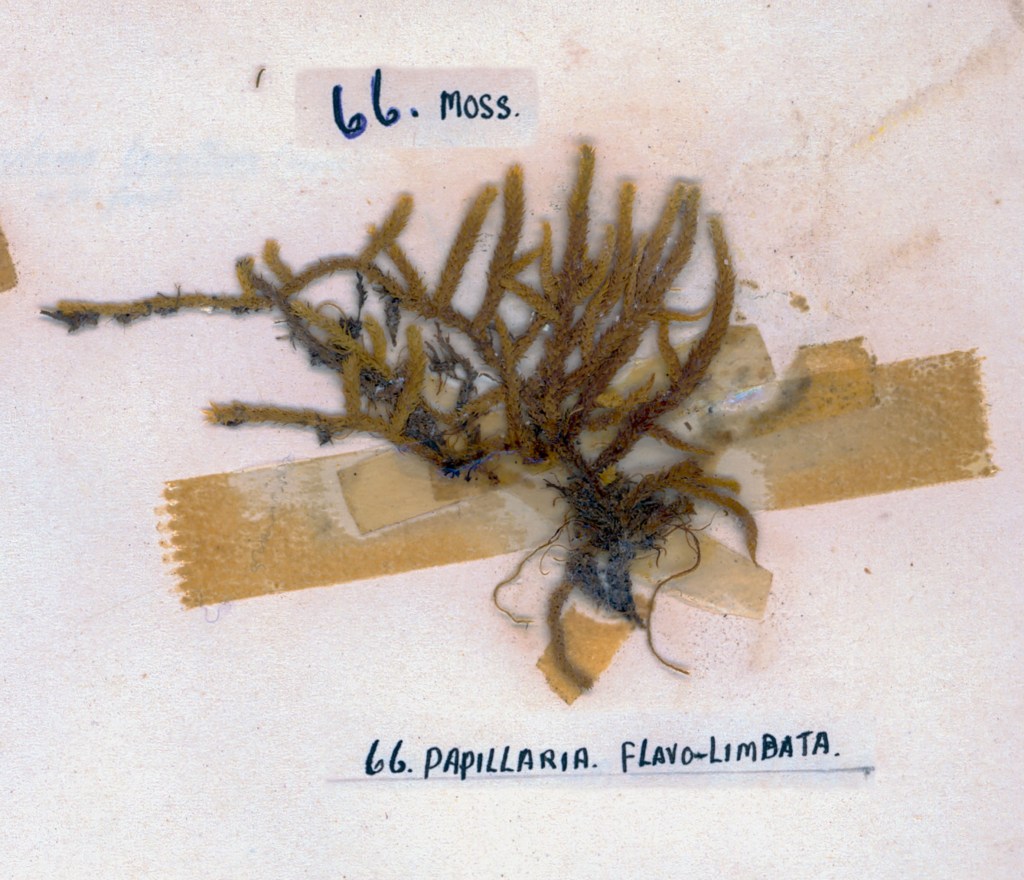
A pressed specimen of moss labeled '66. Papillaria Flavo-Limbata' on a light-colored background with tape.
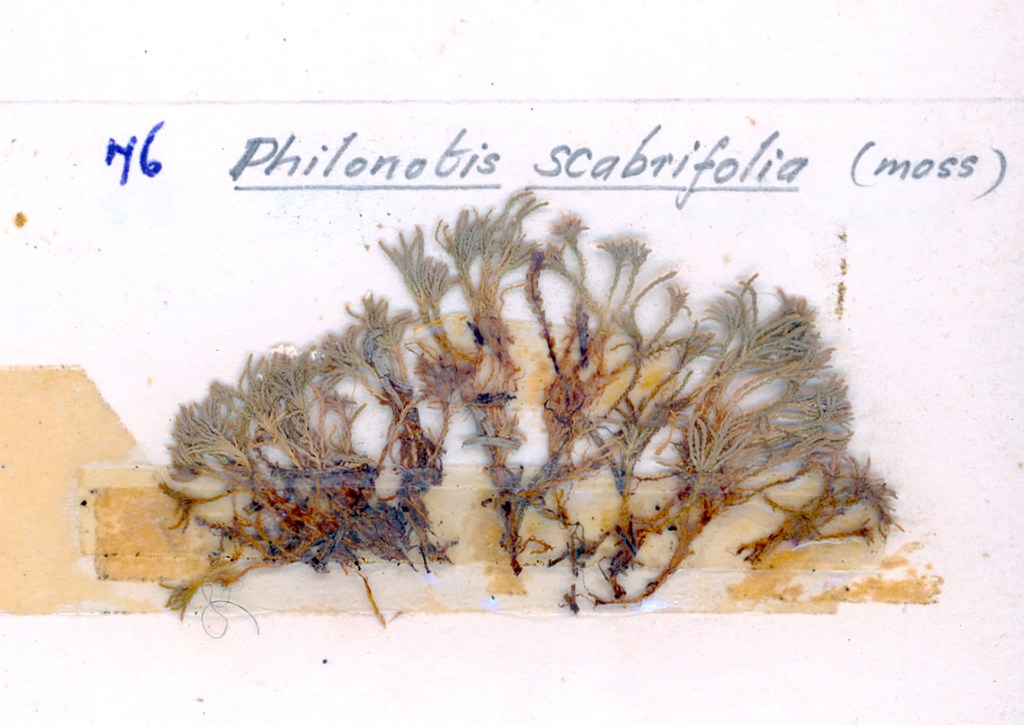
Dried Philonotis scabrifolia moss specimen mounted on paper, labeled with its scientific name.
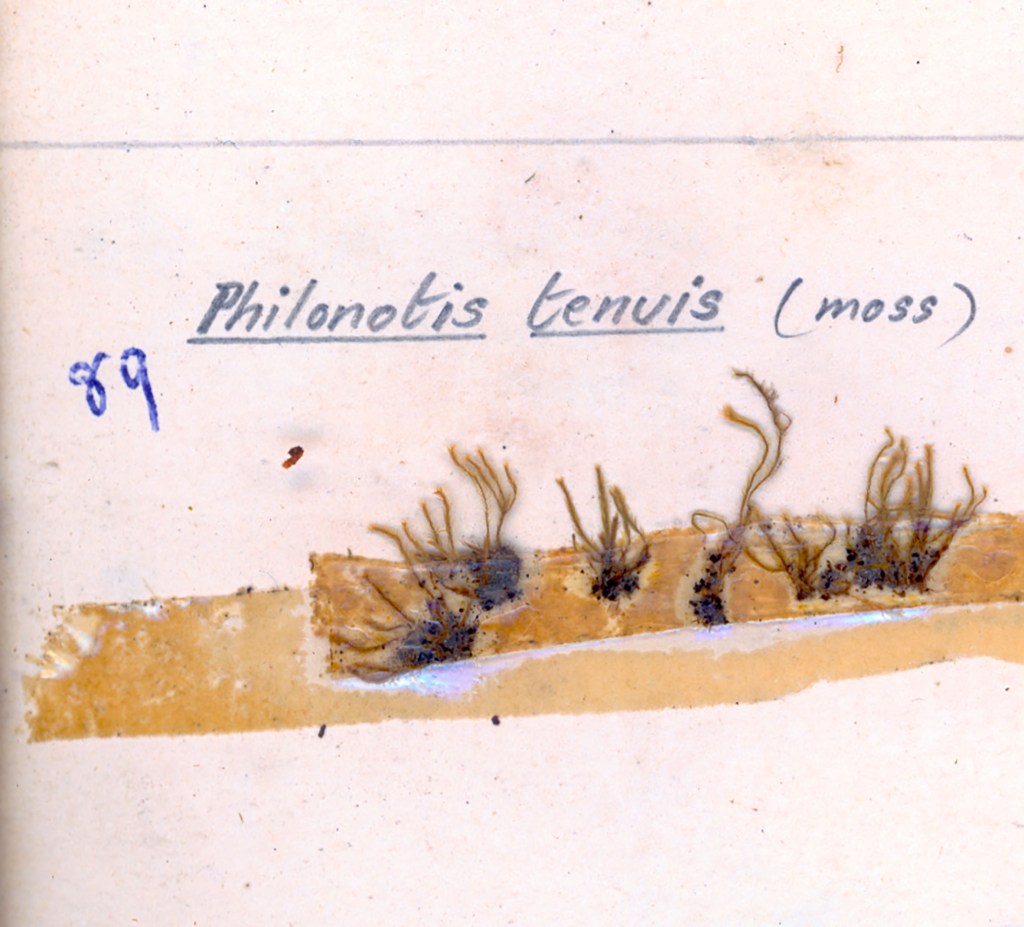
A scientific illustration of Philonotis tenuis moss, showing a sample mounted on paper with handwritten labeling.
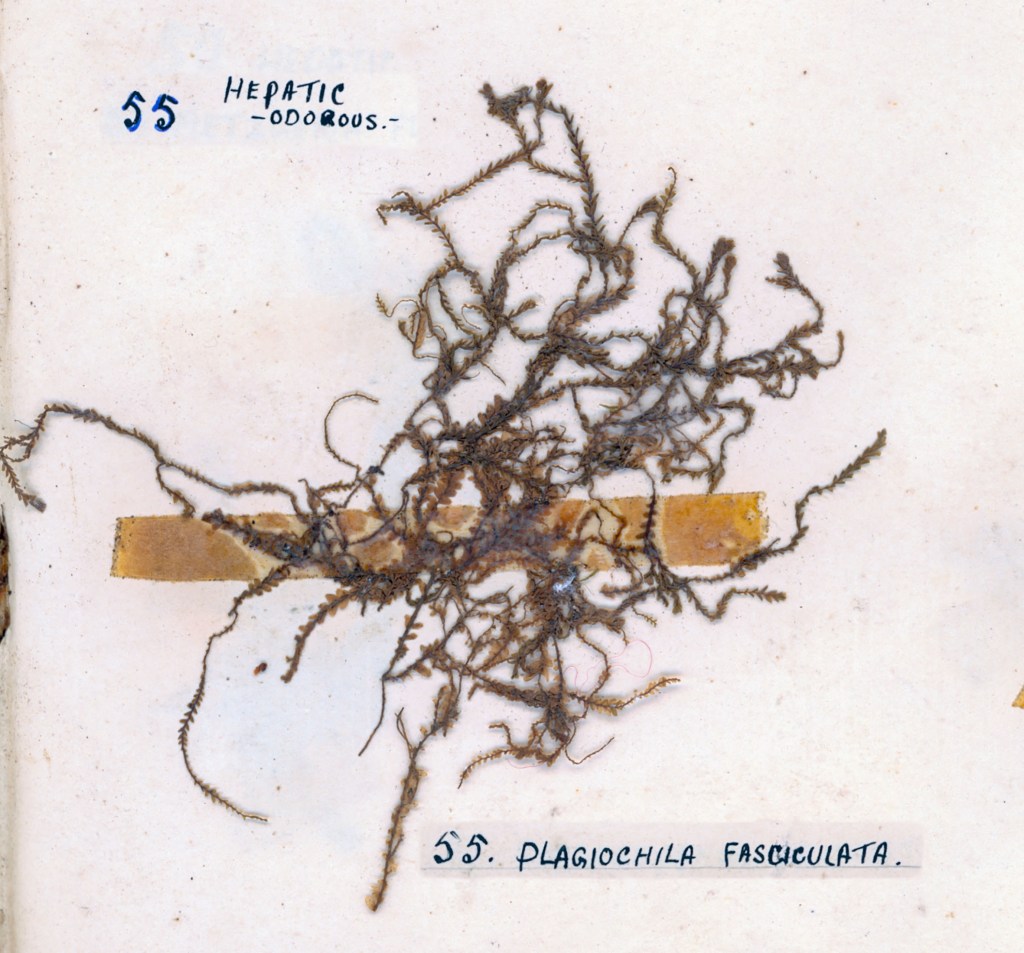
A dried specimen of Plagiochila fasciculata, an odorous hepatic plant, mounted on a page with handwritten labels.
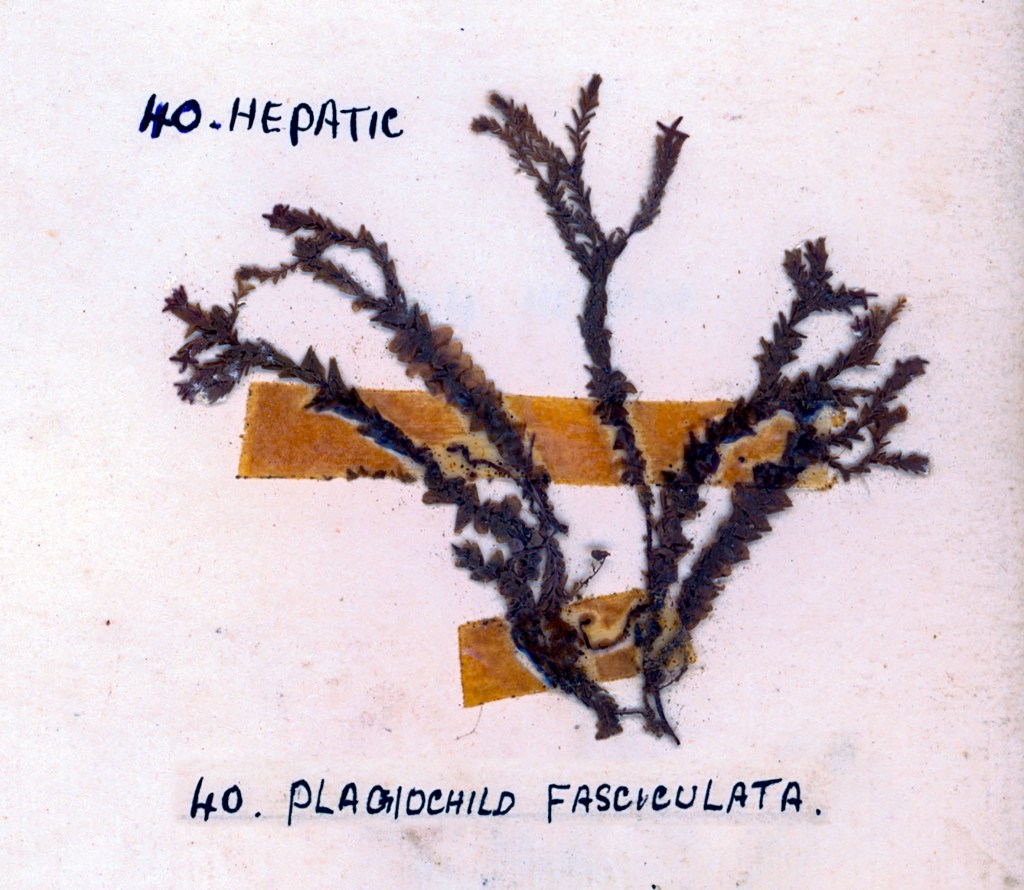
A preserved specimen of the hepatic plant Plagiochila fasciculata, mounted on paper with handwritten labels.
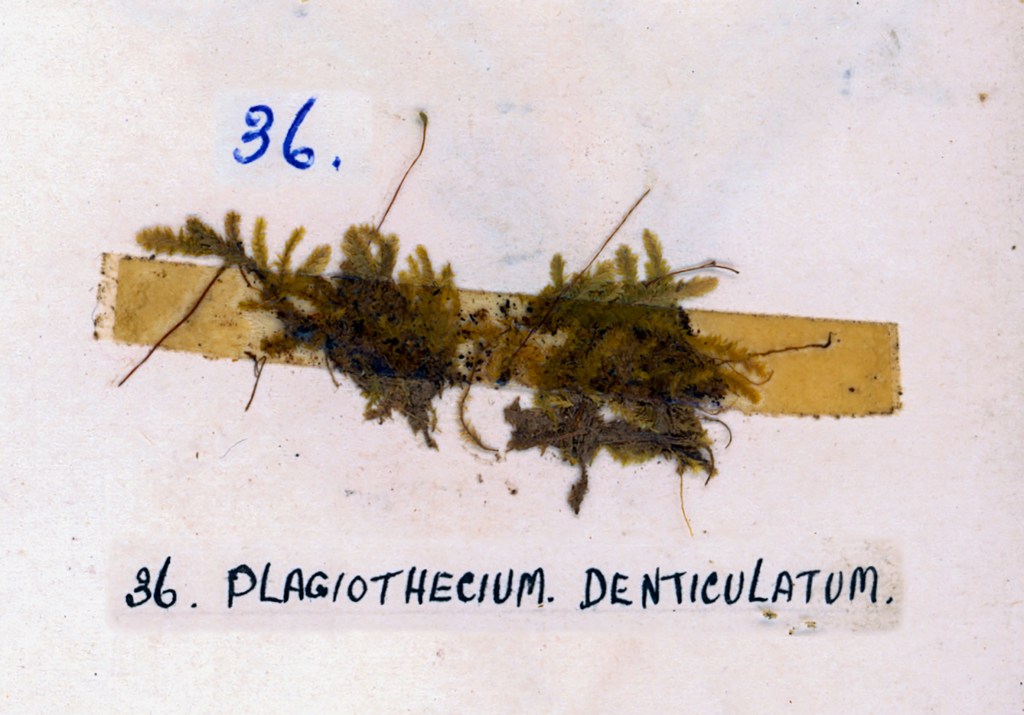
A preserved specimen of Plagiothecium denticulatum moss mounted on a label, with the number 36 written in blue ink.
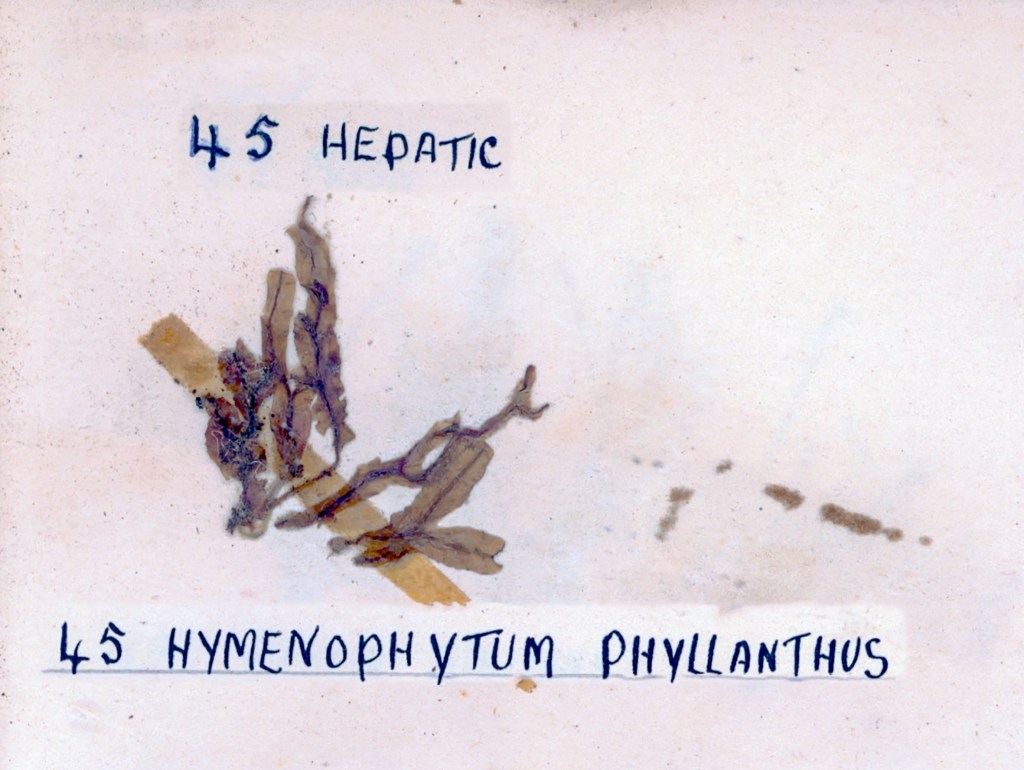
Microscopic image of the hepatic plant species Hymenophyllum phyllanthus, labeled with identification numbers.
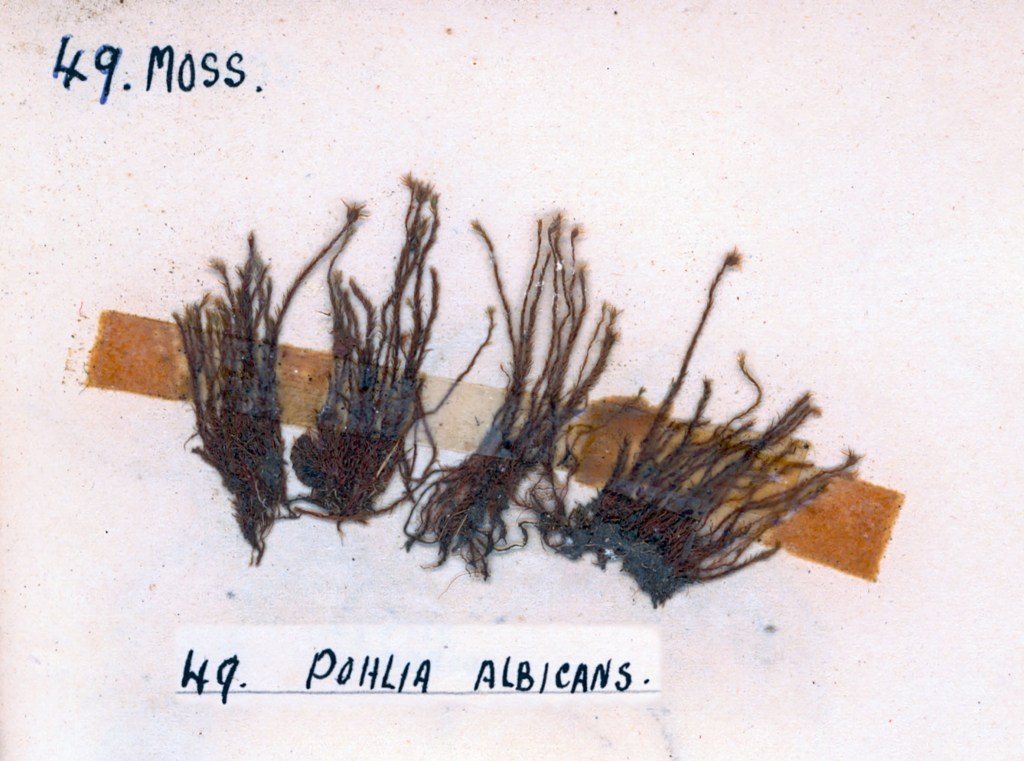
A botanical specimen of moss labeled 'Pohlia albicans' with several strands attached to a backing paper, featuring handwritten notes above and below.
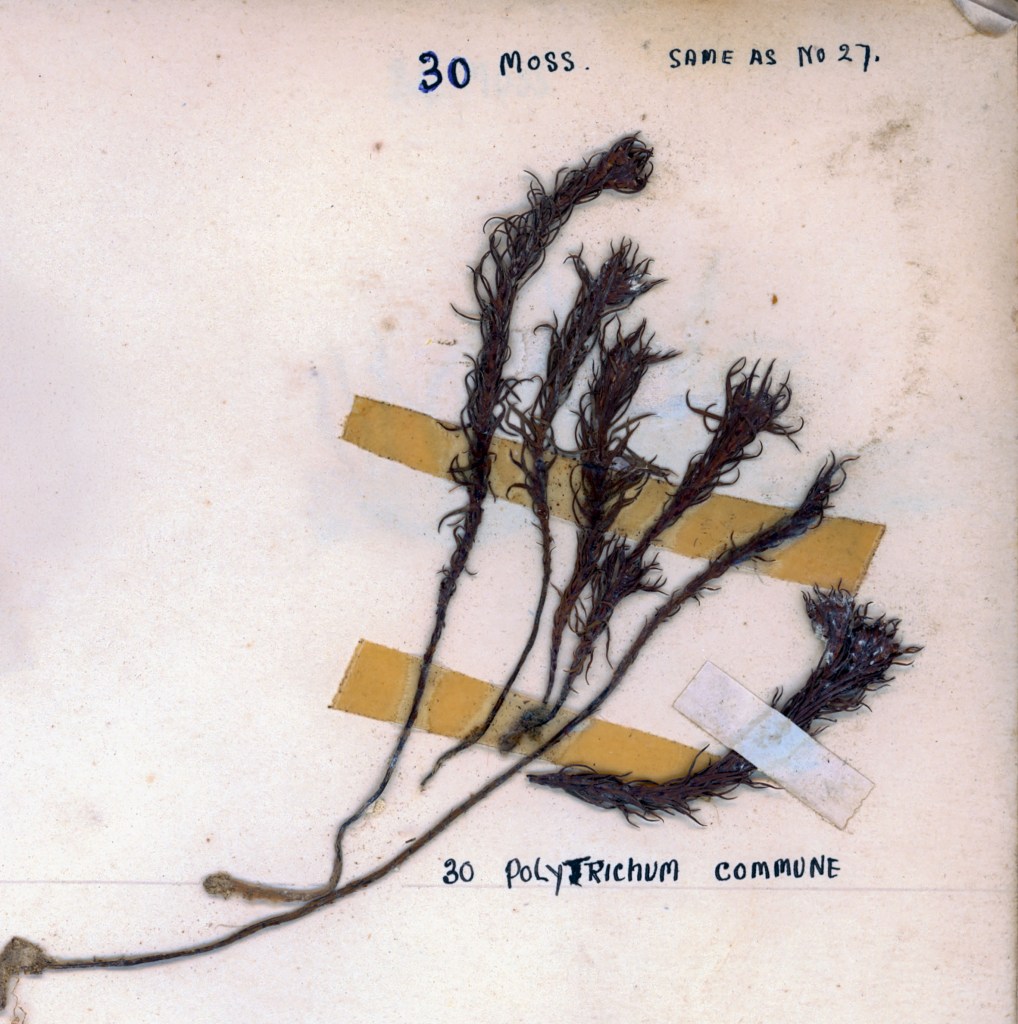
Pressed specimen of Polytrichum commune moss, attached to a page with labels and tape.
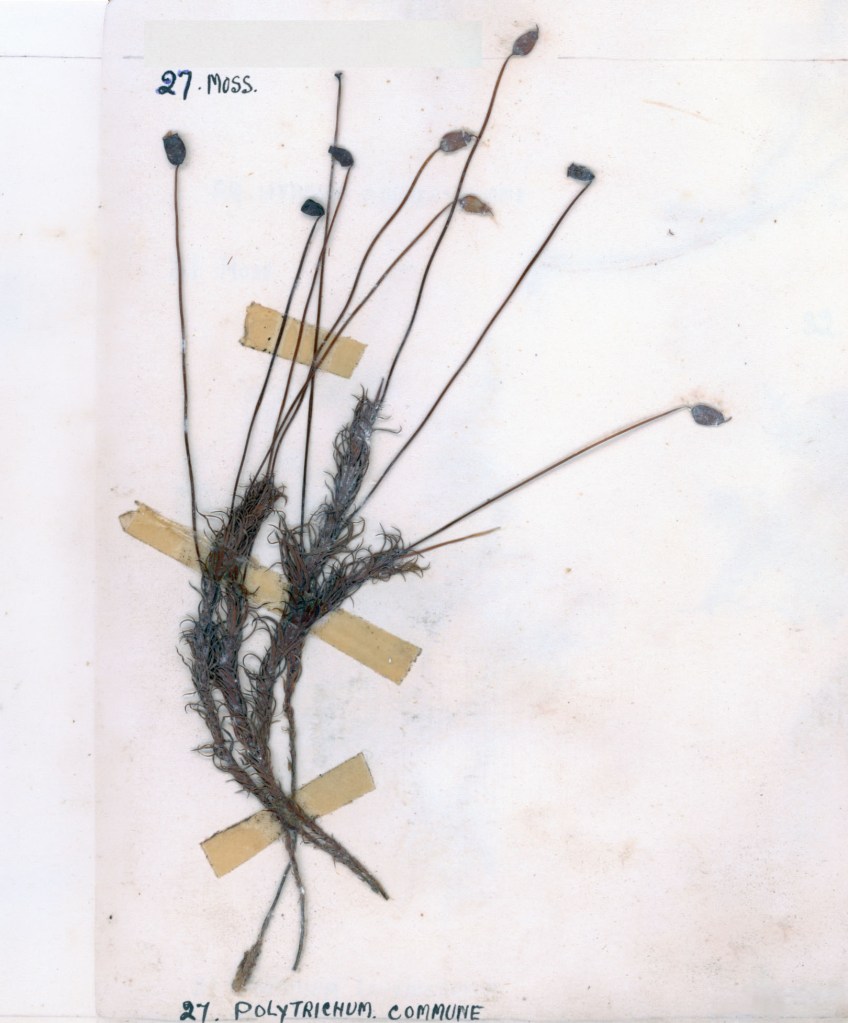
Dried specimen of Polytrichum commune moss, with multiple stalks and capsules, adhered to a white background with tape.
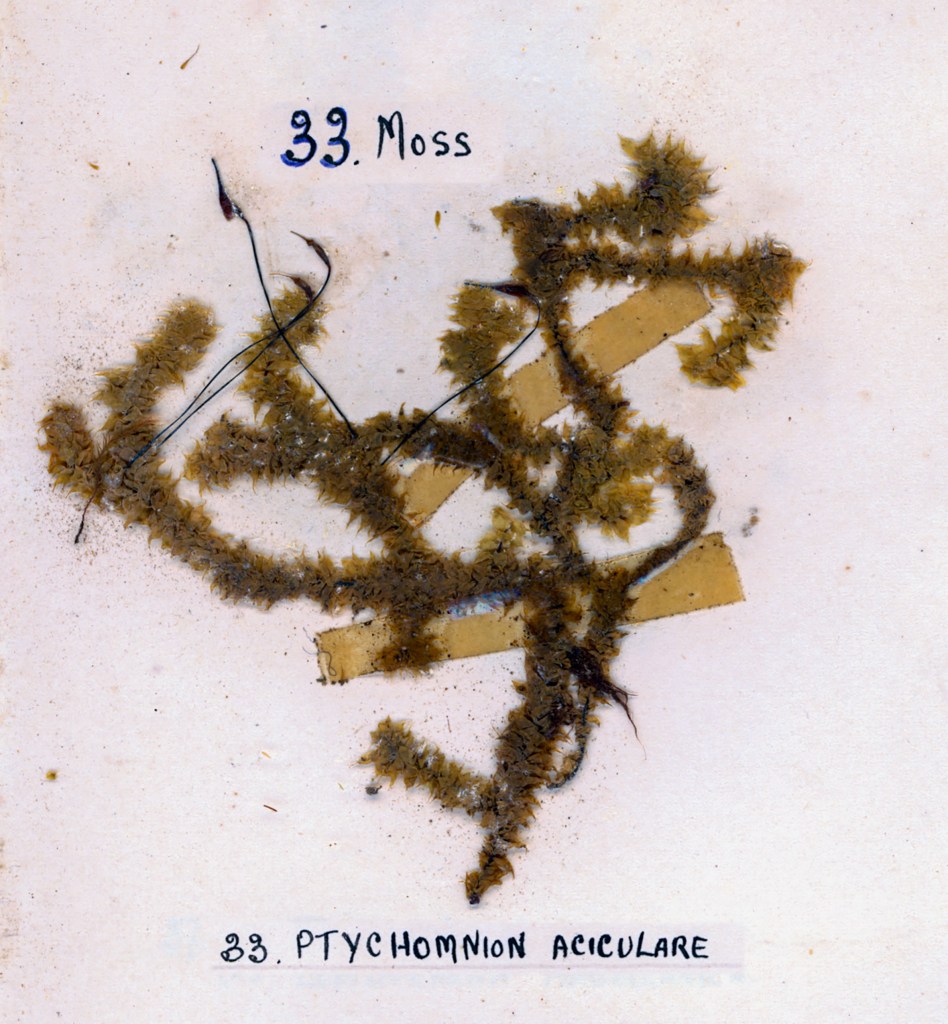
A specimen of moss labeled '33. Moss' and '33. Ptychomnium aciculare', featuring thin, tangled greenish-brown fibers on a beige background.
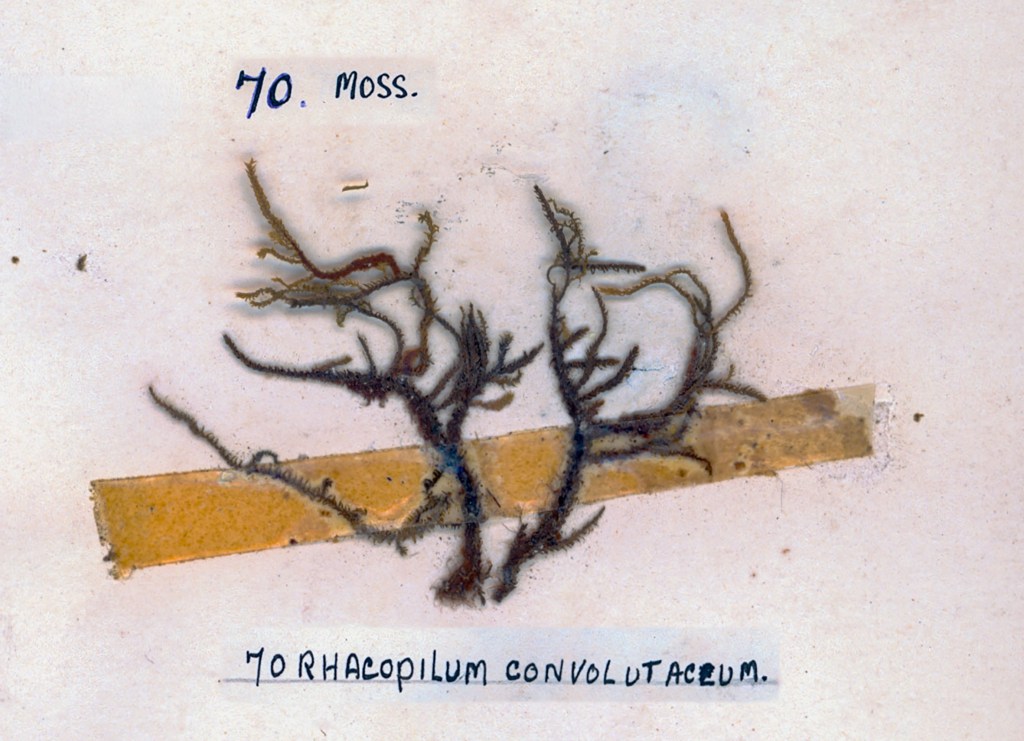
Dried moss specimen labeled '70. Moss.' with the scientific name 'MORHACOPILUM CONVOLUTACEUM.' placed on a light background.
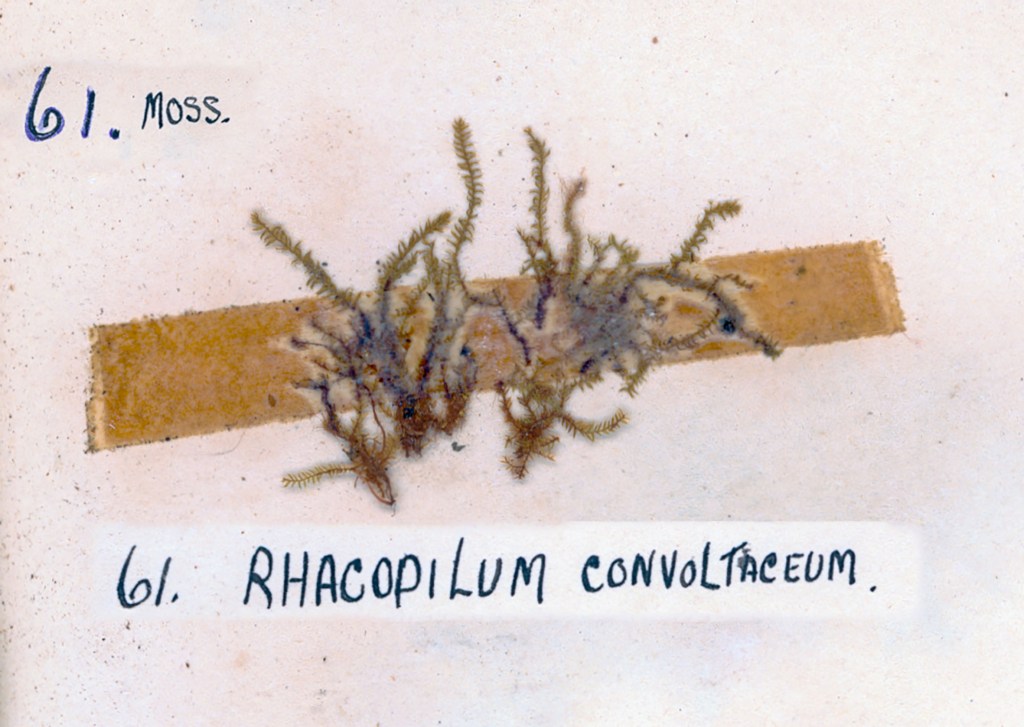
A specimen of moss labeled '61. Rhacopilum convolutaceum' displayed on a beige background with handwritten notes.
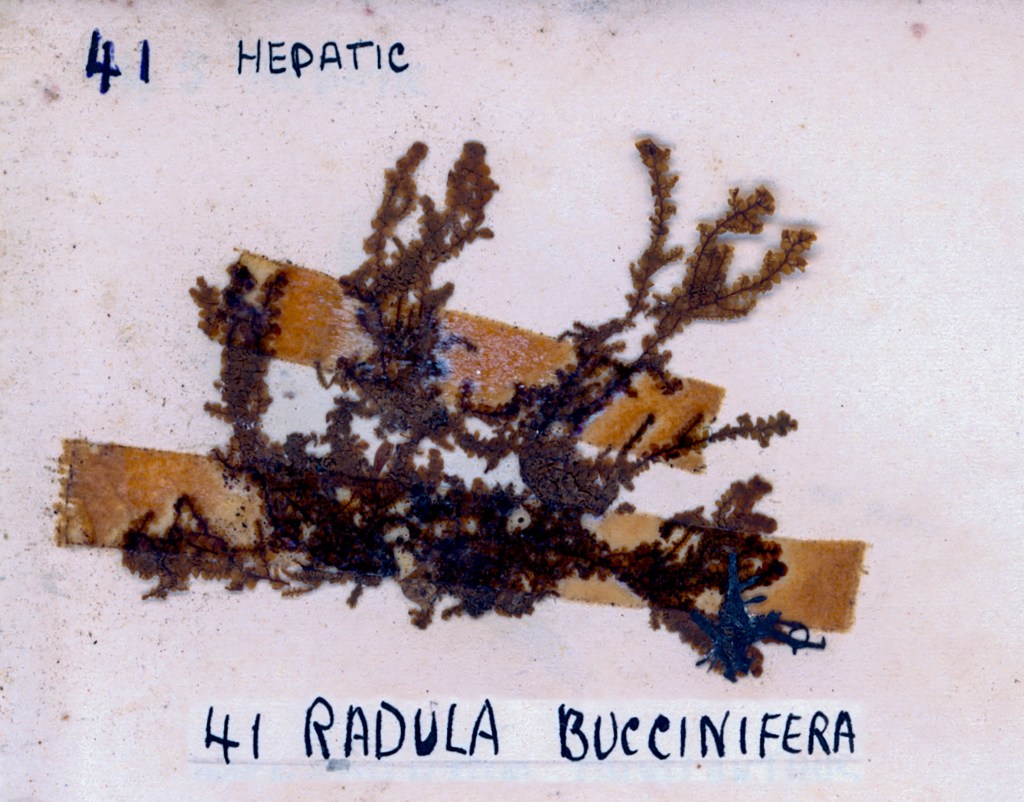
A specimen labeled '41 Hepatic' and '41 Radula Buccinifera' showing a detailed arrangement of a plant-like organism on a white background.
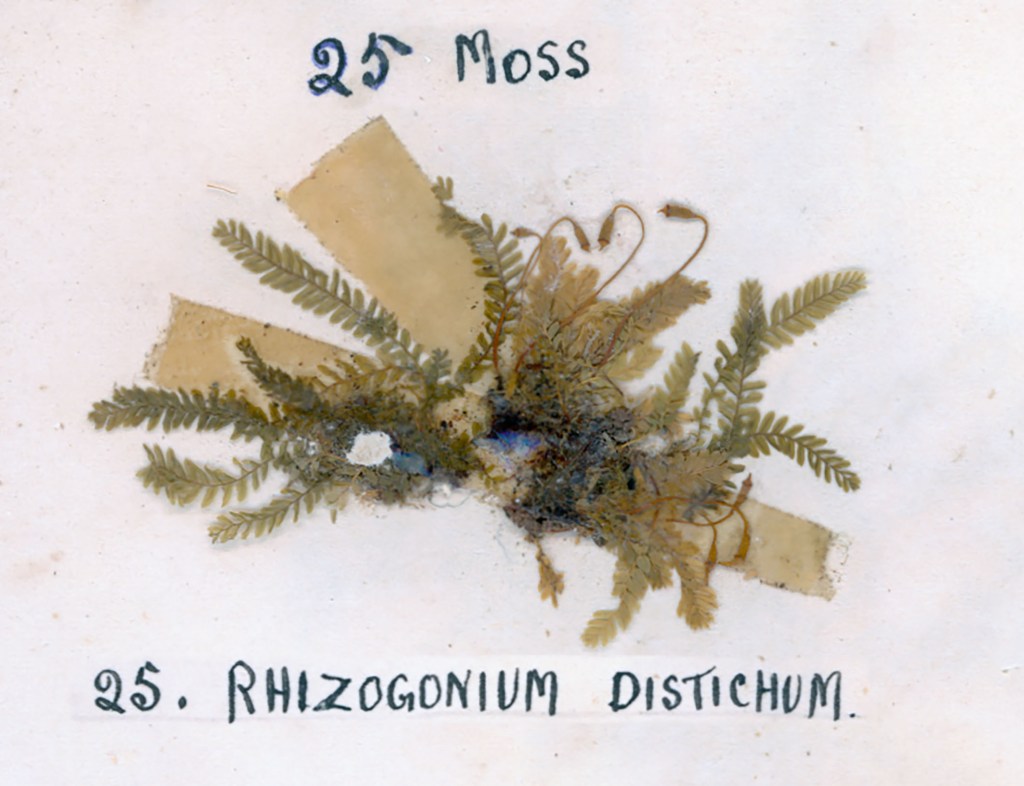
A pressed specimen of moss labeled '25 Moss' and '25. Rhizogonium distichum' on a white background.
Close-up view of a specimen of Rhynchostegium muriculatum moss displayed on a page, with labels indicating '20. Moss' and '20. Rhynchostegium muriculatum.'
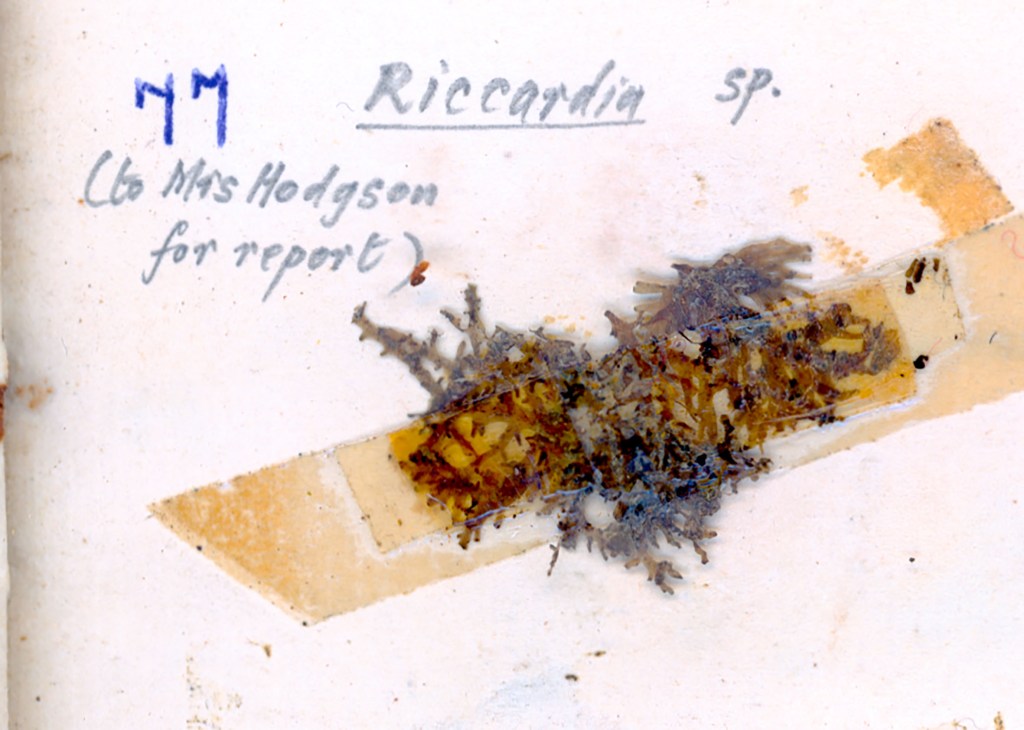
An image of a scientific specimen labeled 'Riccardia sp.' on a piece of tape, with handwritten notes and a note addressed to Mrs. Hodgson for reporting purposes.
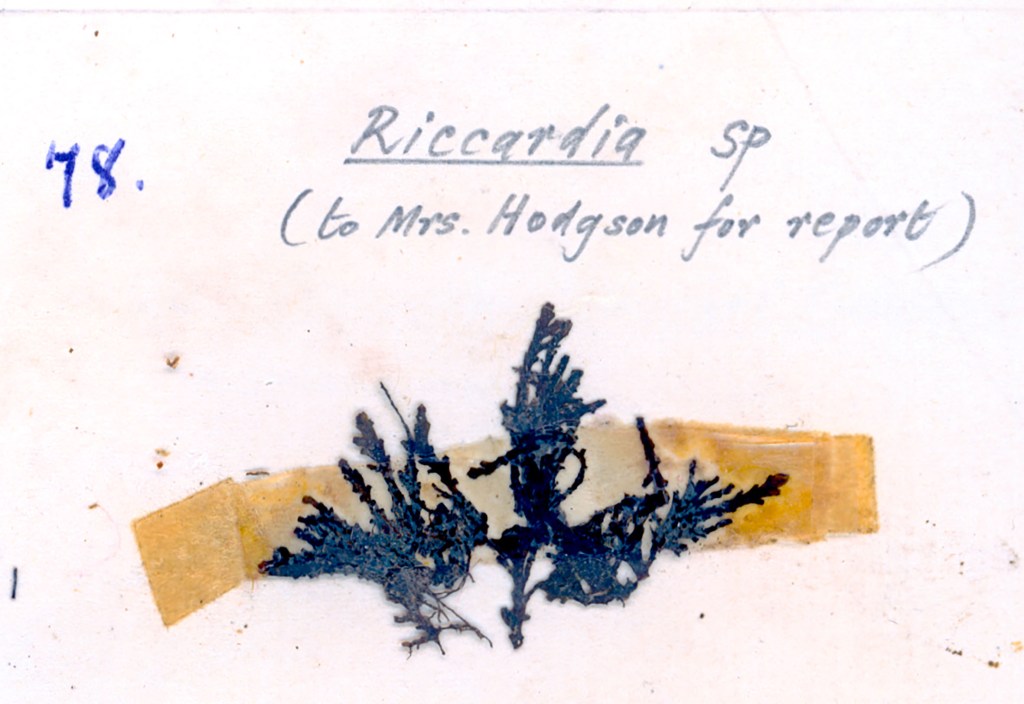
Botanical specimen of Riccardia sp. mounted on paper with handwritten notes for Mrs. Hodgson.
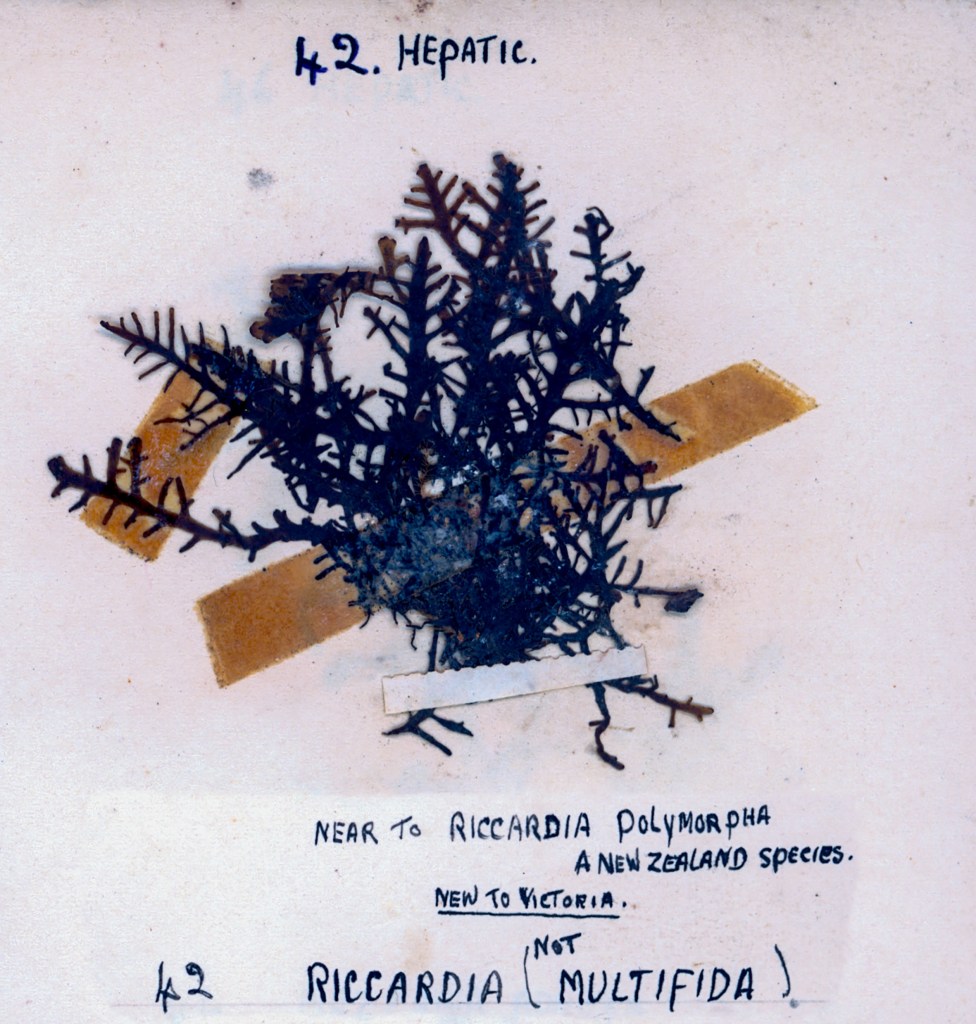
A botanical specimen labeled as '42. Hepatic' showing a dark, leafy structure resembling liverworts, mounted on a paper background with notes regarding its species and geographical origin.
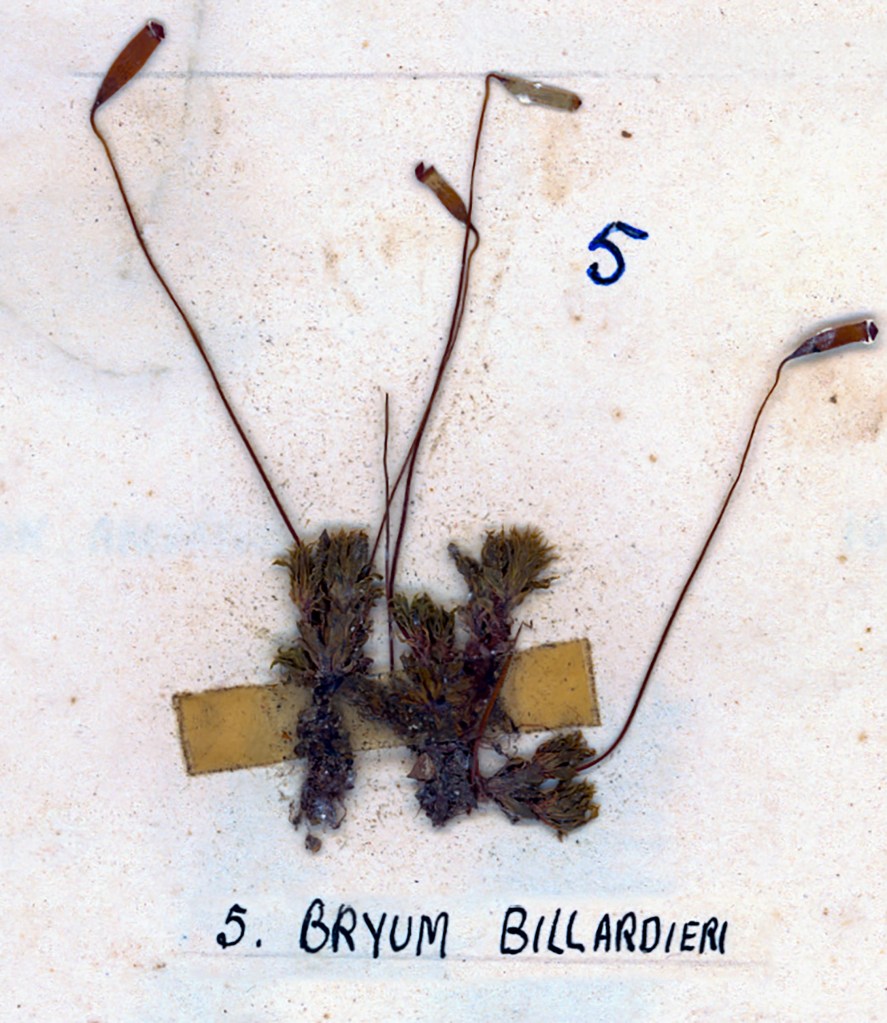
A botanical specimen of Bryum billardieri, showcasing several green shoots with elongated stems and pointed tips, mounted on a labeled background.
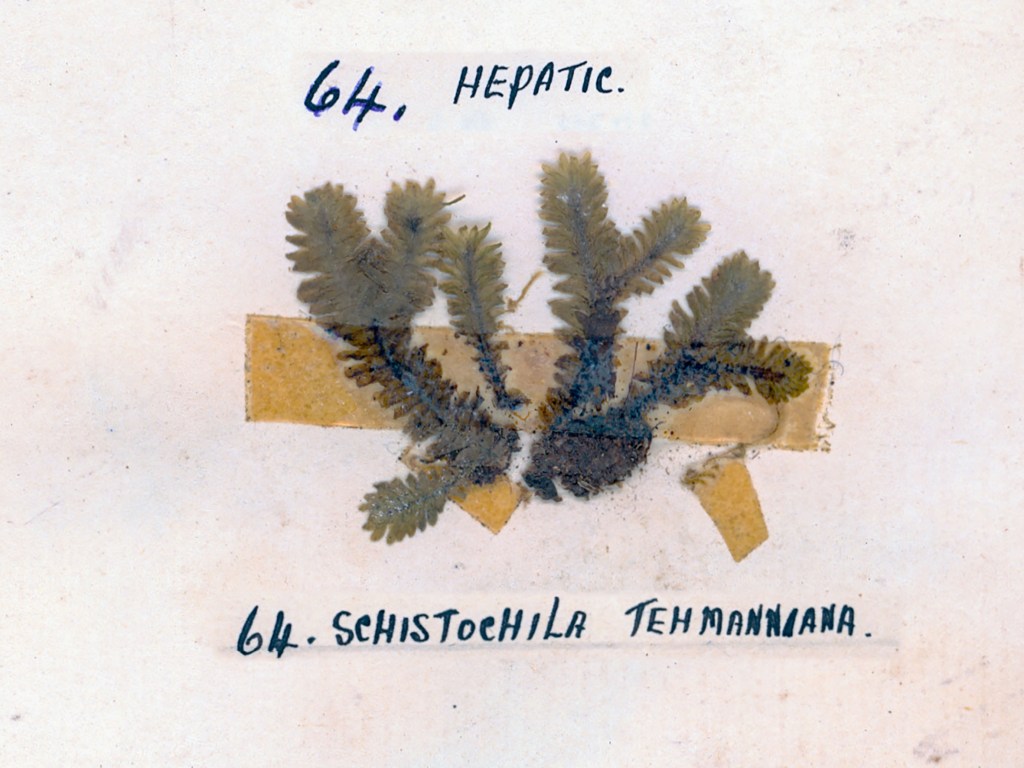
A botanical illustration featuring a specimen of Schistochila tehamaniana, labeled with the number 64 and the word 'Hepatic'. The specimen is mounted on a background with a light color and includes a piece of tape.
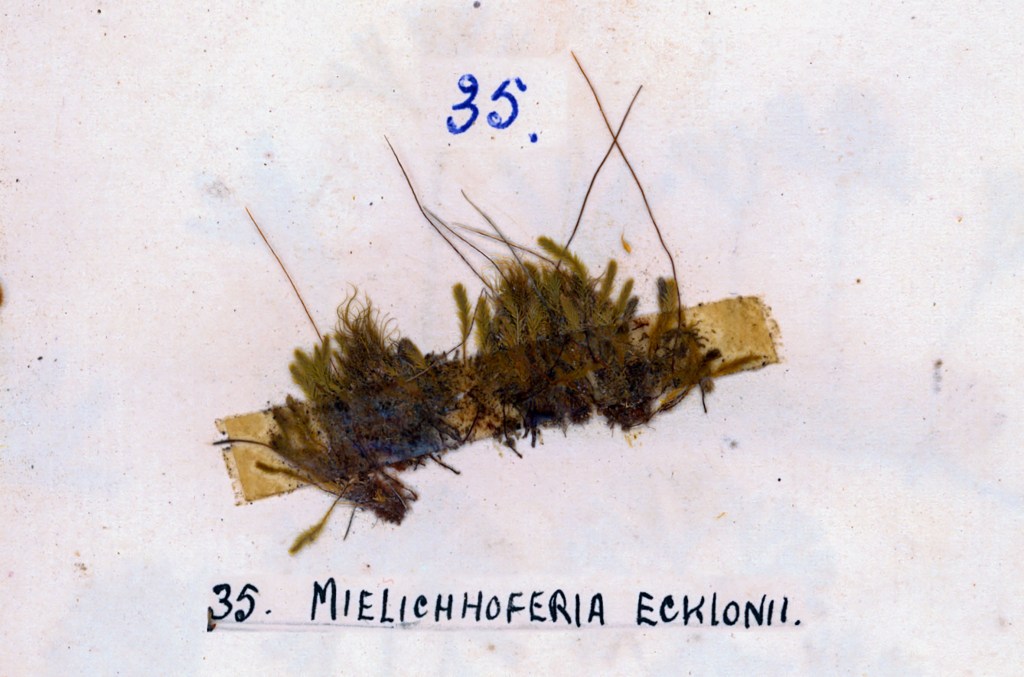
A botanical illustration showing a specimen of Mielichhoferia ecklonii, labeled as number 35, with details of its green foliage and structure.
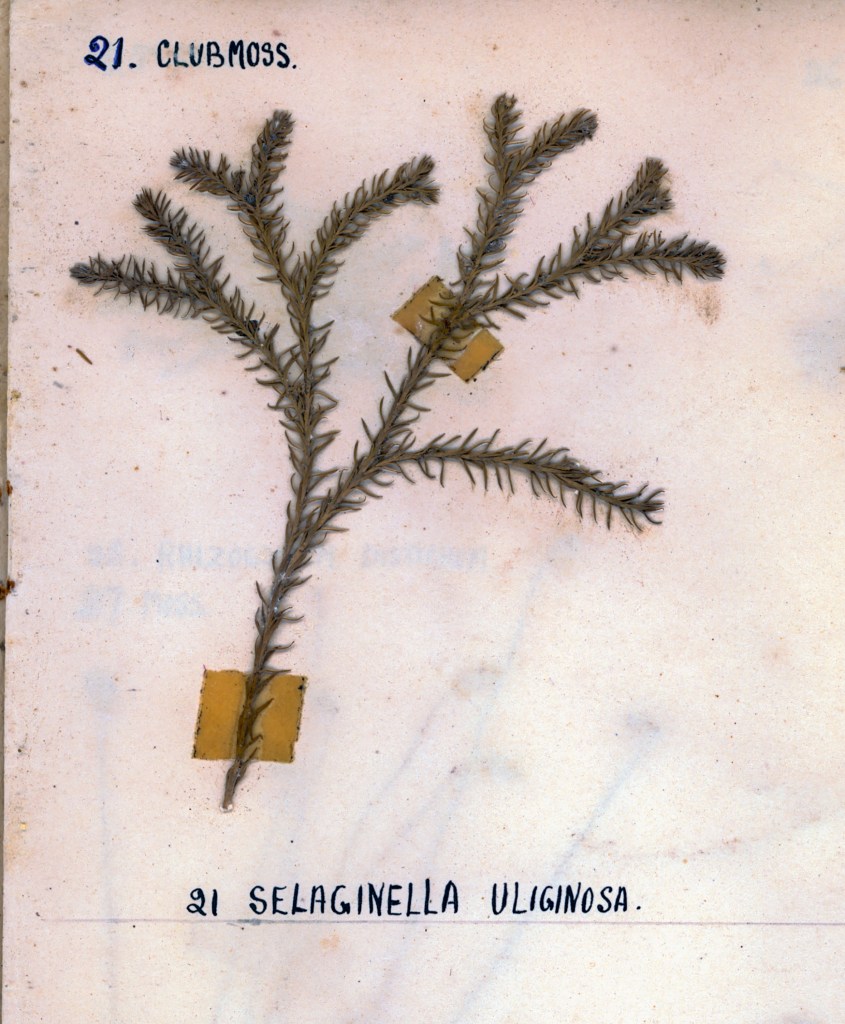
A preserved clubmoss specimen, labeled '21. Clubmoss' and '21 Selaginella uliginosa', with a yellow square tag on a light background.
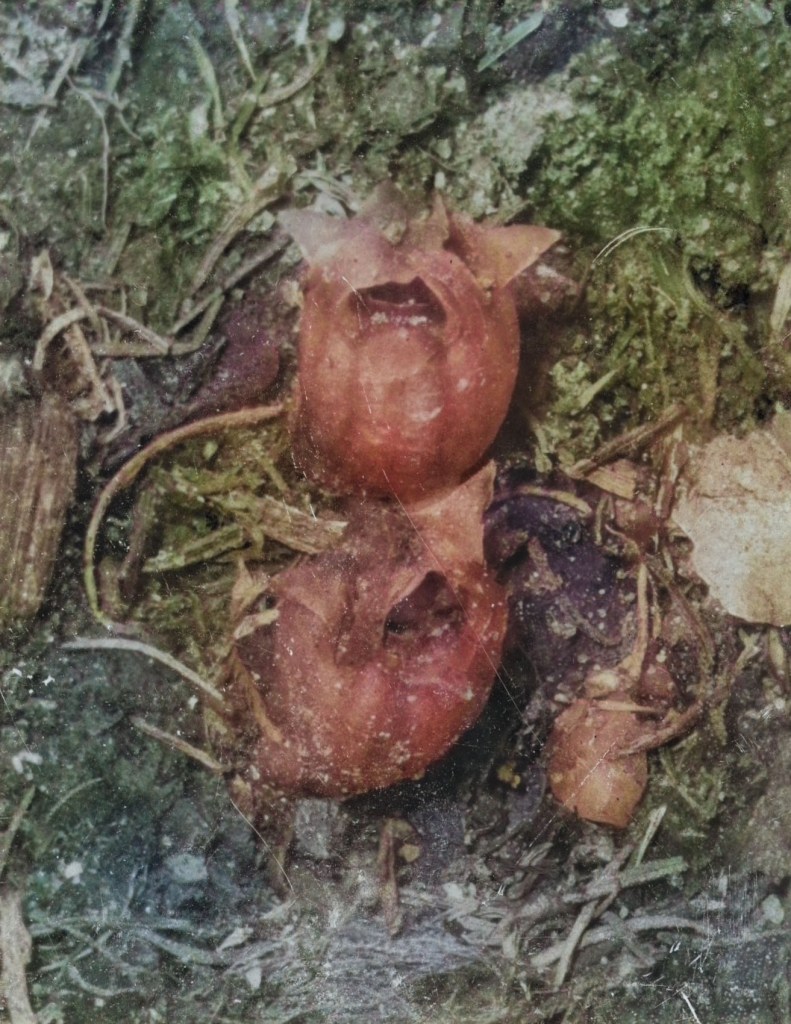
Close-up of brown, bulbous structures resembling flowers or fungi on a mossy ground, surrounded by dried leaves and grass.
An old, sepia-toned photograph depicting two objects that resemble plant bulbs, partially buried in soil with some roots and debris around them.
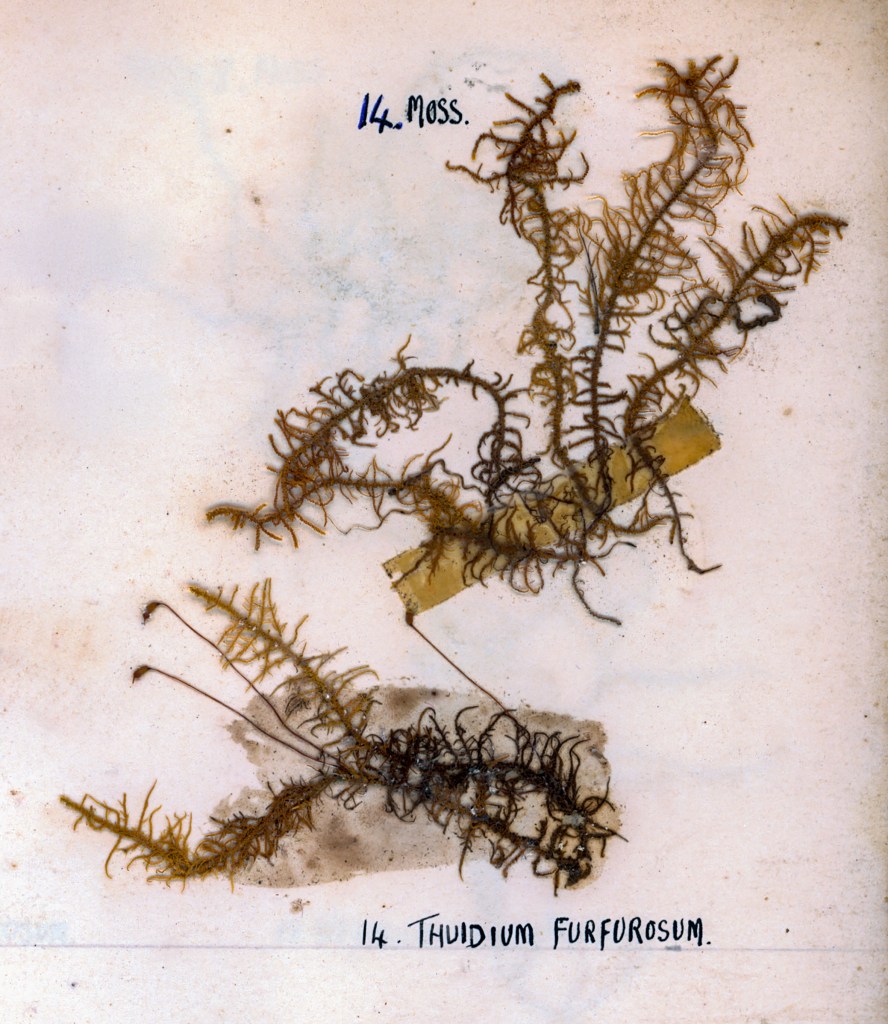
Two samples of moss, labeled '14. Moss' and '14. Thuidium furfurosum,' mounted on a page with yellow tape and a slightly stained background.
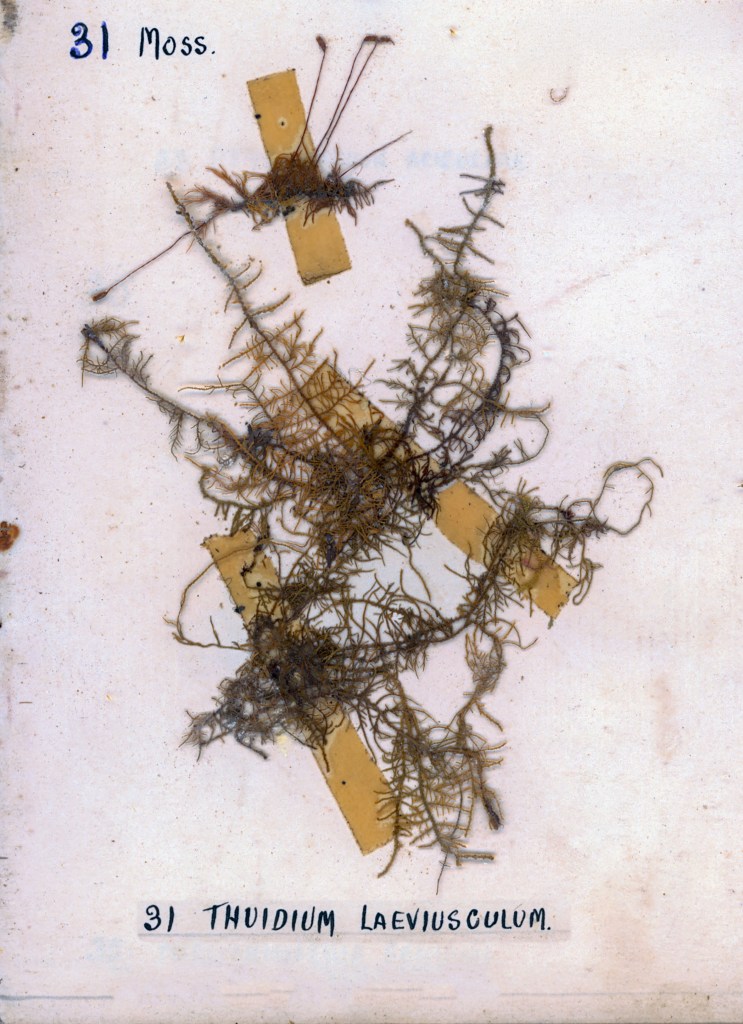
Dried specimen of Thuidium laeviusculum moss mounted on paper with identification label.
A handwritten note stating '(Material too inadequate for identification)' accompanied by a small specimen taped to a background with the date '4/4/1963' and an author's signature.
A handwritten note dated 4/4/1963 indicating 'Material too inadequate for identification' alongside small samples of material on a page.
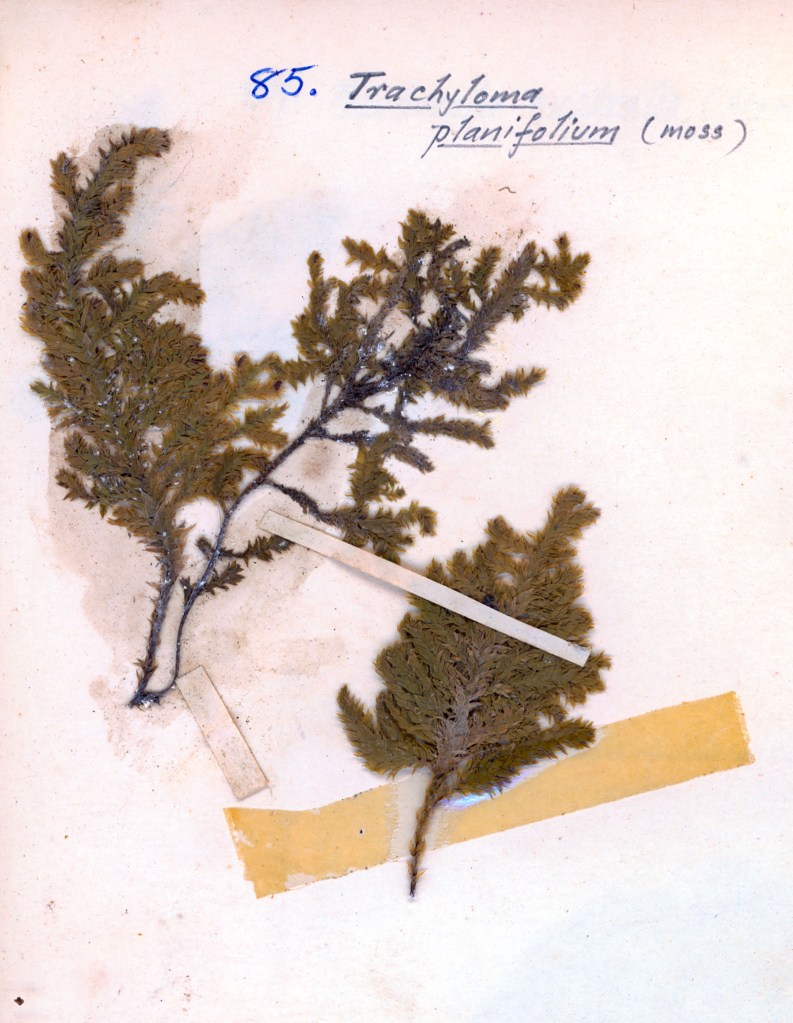
Preserved specimen of Trachythecium planifolium moss, mounted on a page with a label indicating the species name.
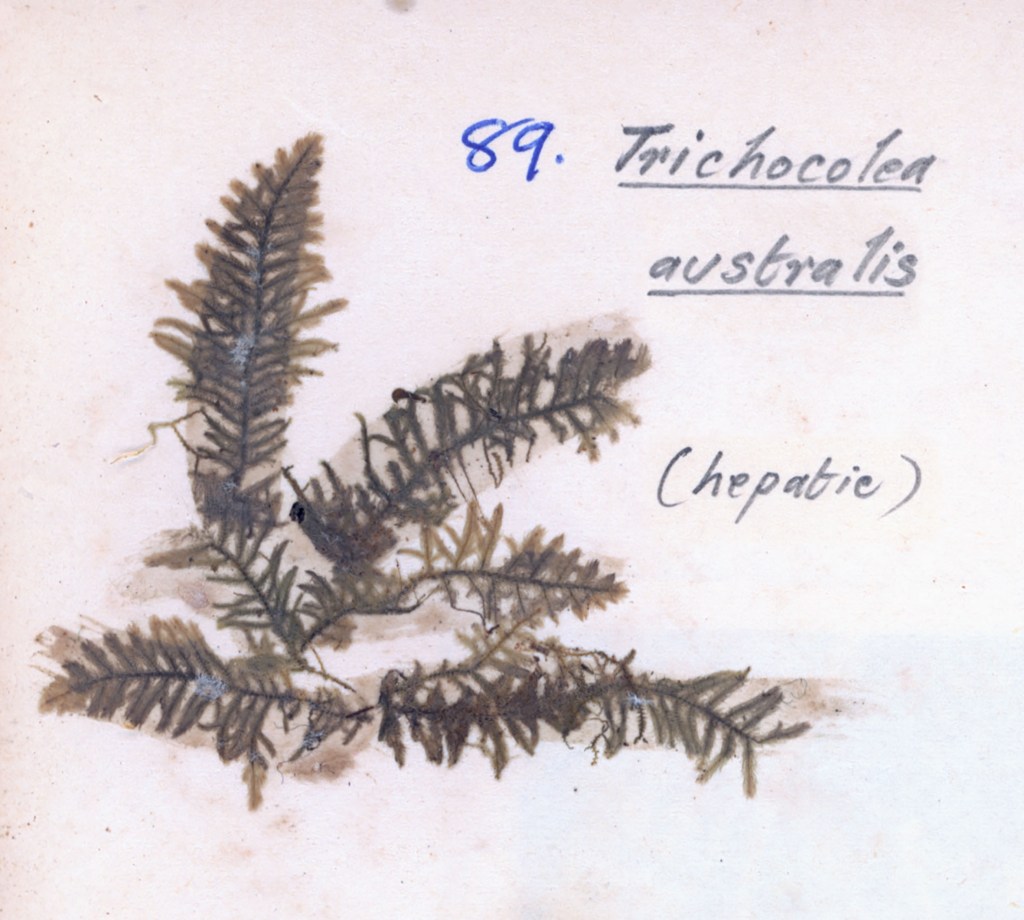
Botanical illustration of Trichocolea australis, a type of hepatic, featuring detailed, delicate green fronds on a light background.
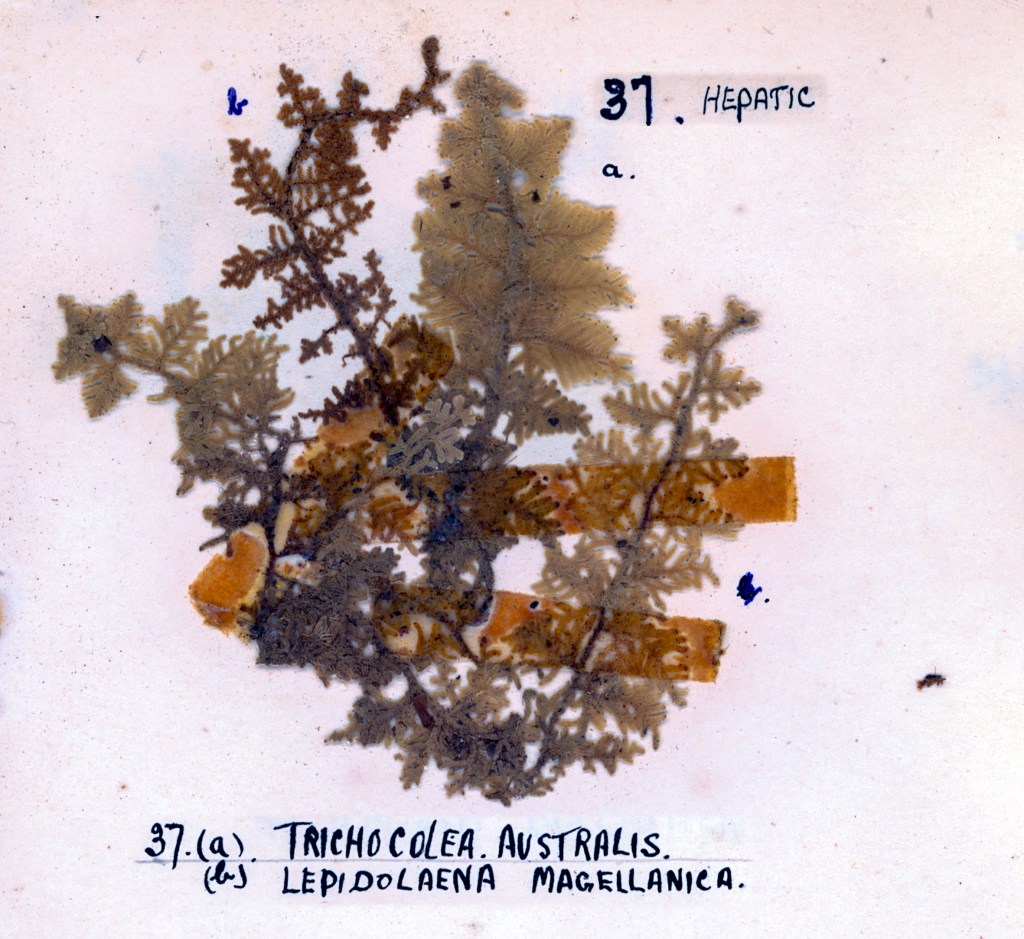
Dried specimens of Trichocolea australis and Lepidolaena magellanica, mounted on a pale background with handwritten labels.
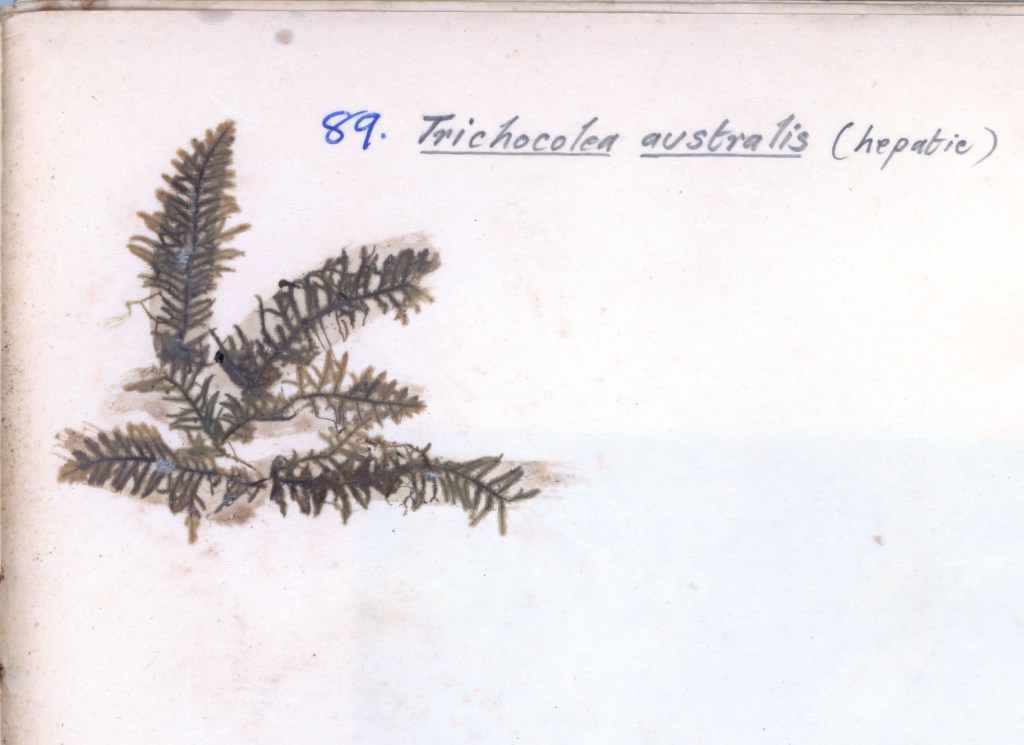
A botanical illustration of Trichocolea australis, a type of hepatic plant, with labeled identification.
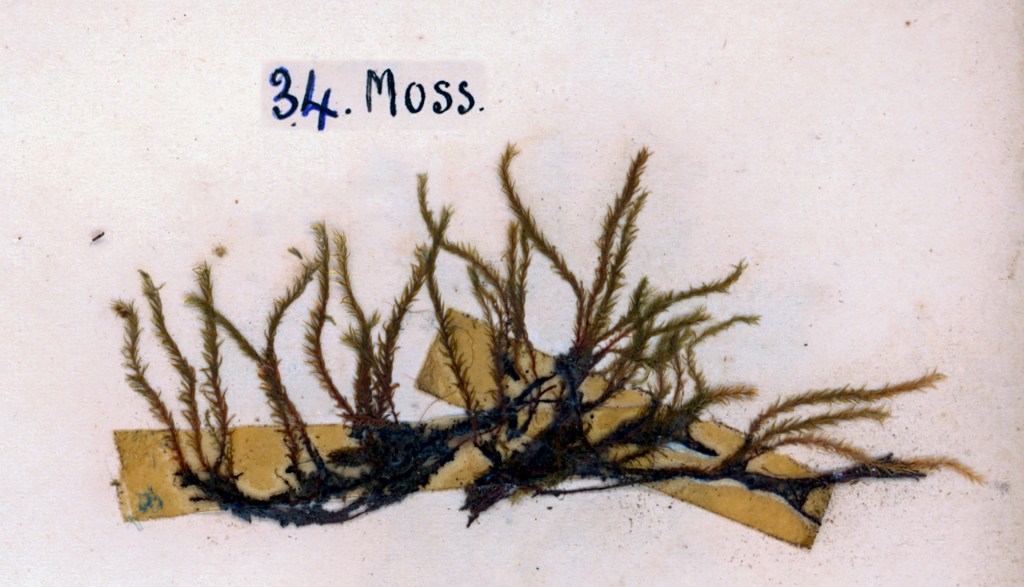
Dried moss specimen with a label marked '34. Moss.'
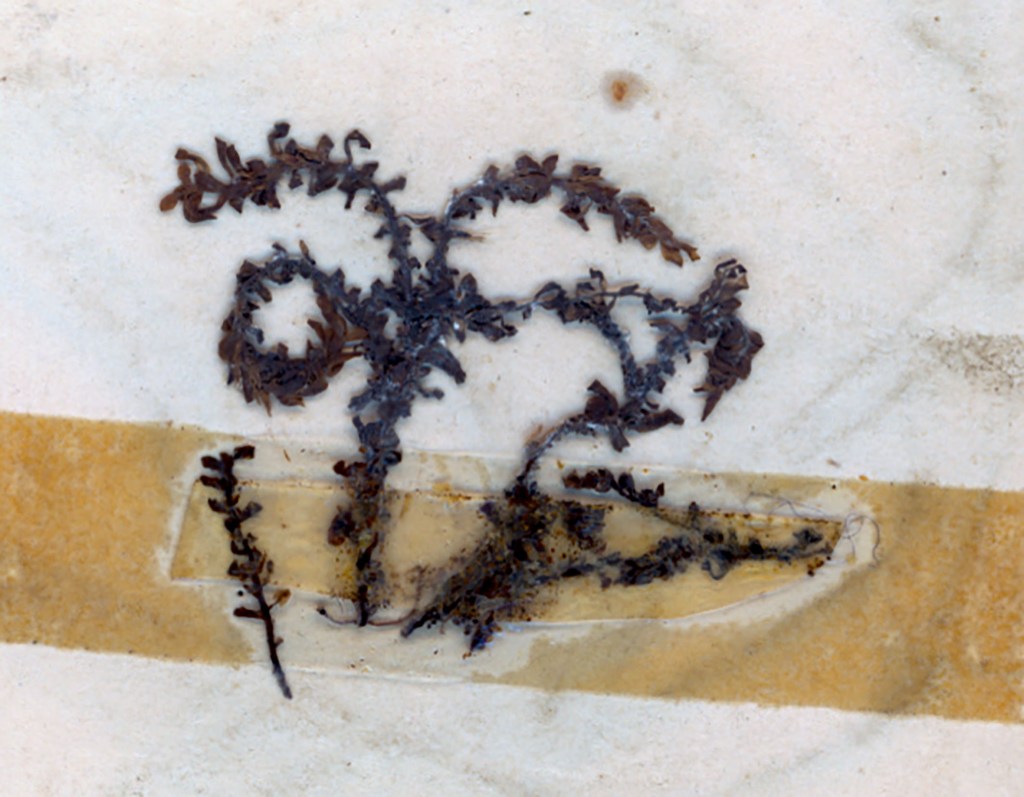
A close-up image of a fossilized plant with dark leaf-like structures, set against a light background with a yellowish band.
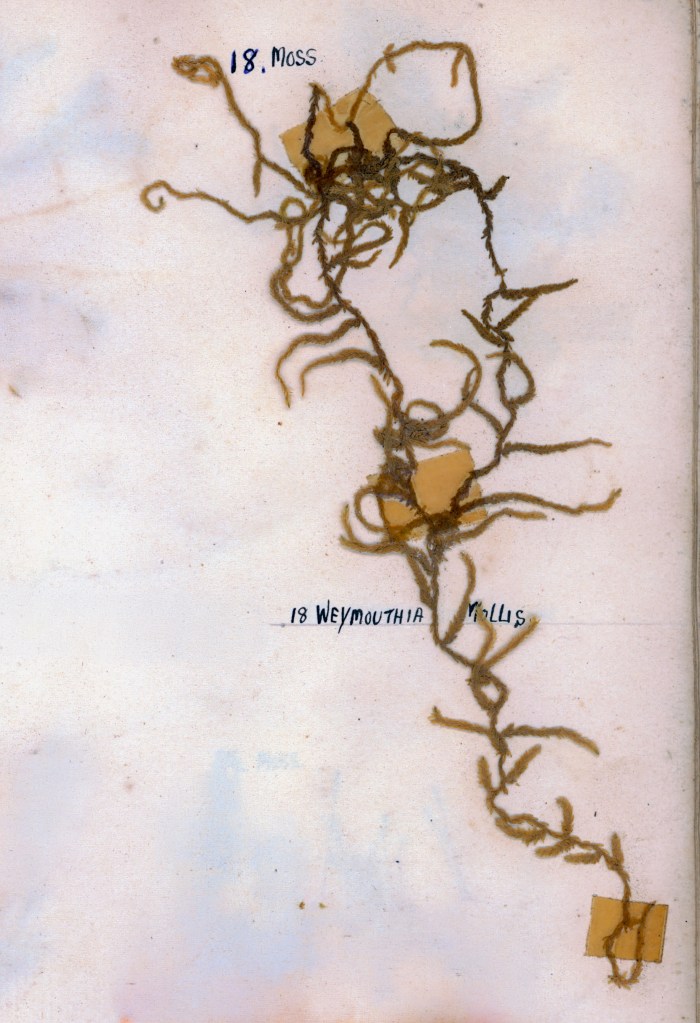
An illustration of a moss specimen labeled '18. Moss' and '18 Weymouthia vallis', featuring dark, wavy strands against a light background.
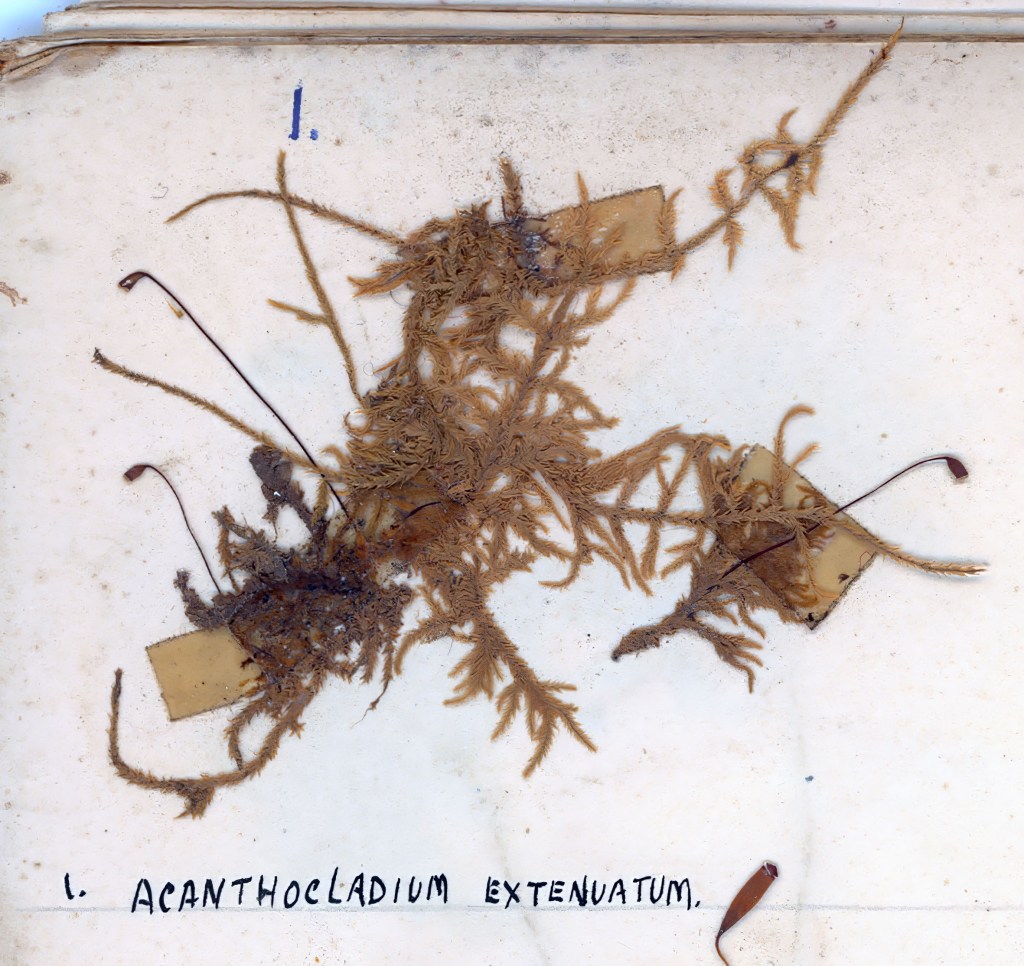
A preserved specimen of the seaweed Acanthocladium extenuatum mounted on a page, with labels underneath.
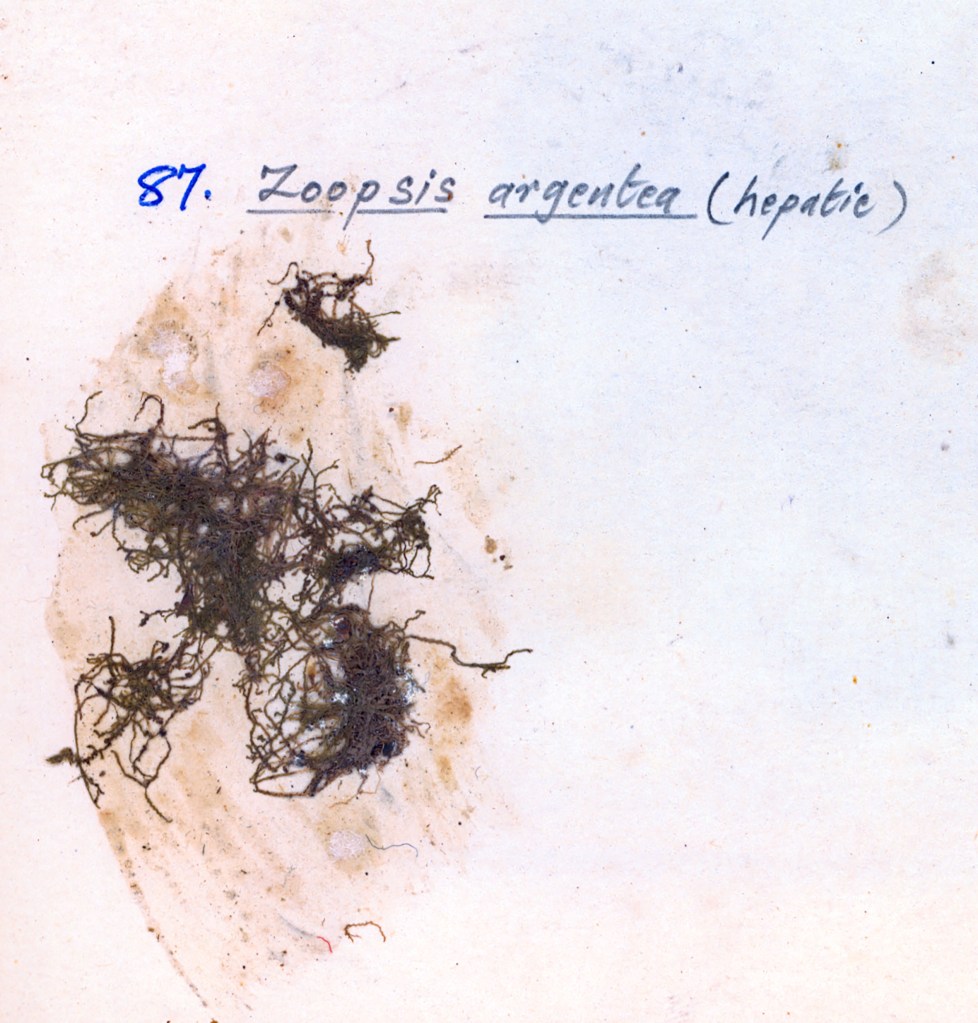
Close-up image of dried Zoopsis argentea (hepatica) specimens on a page with handwritten text.
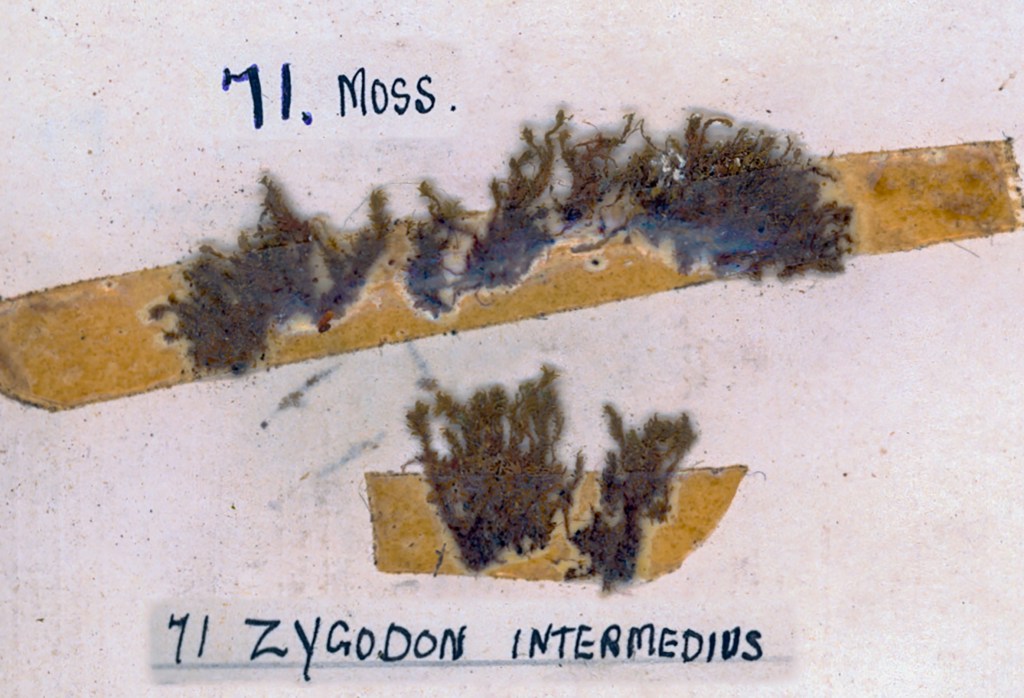
A botanical specimen illustration showing moss labeled '71. Moss' and '71 Zygodon intermedius' on a white background.

Kara Healey’s Bryophyte Collection

Activity Coming up this Saturday

Fire damaged re-vegetation.
Project Site in 2010, previous re-vegetation efforts were destroyed in the Black Saturday fires.

This Saturday July 28th, we are inviting people to join us

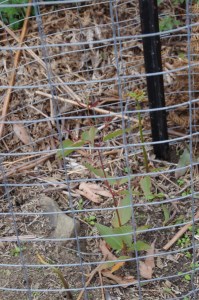
New Seedling
Newly planted seedling in a wire tree-guard

for an activity at one of our on-going project sites. The aim is to remove wire tree-guards from successfully plantings which are part of the recovery from 2009 bushfires.

Meeting point is the Tarra-Bulga Visitors centre at 10am and the activity will finish around 1pm. Please let us know if you intend to come along in case there are any change of plans. Phone 0488 035 314 or email: friendsoftarrabulga@gmail.com

OLYMPUS DIGITAL CAMERA
Project Site Showing Progress June 2018

Cats in Tarra-Bulga National Park

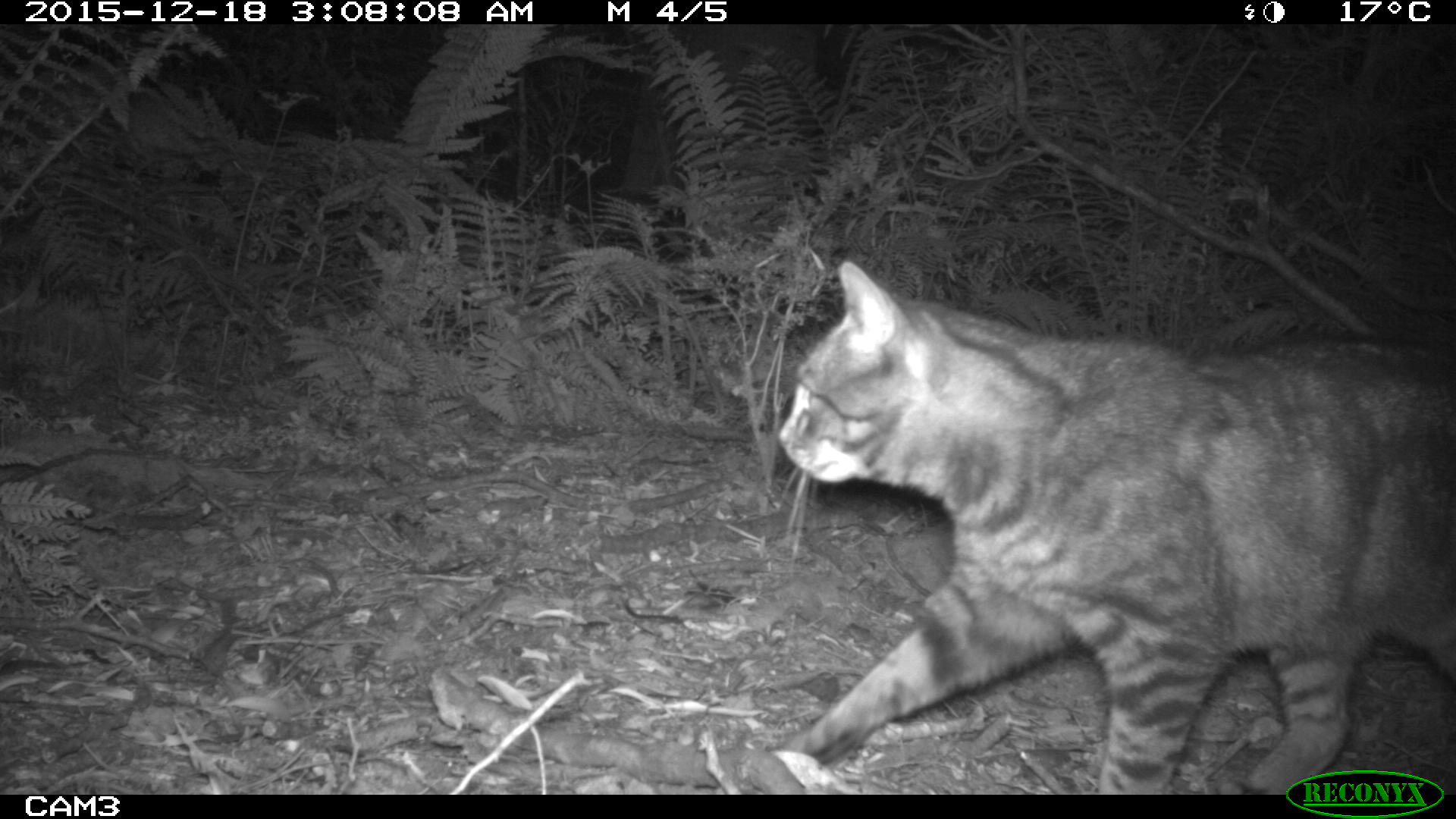
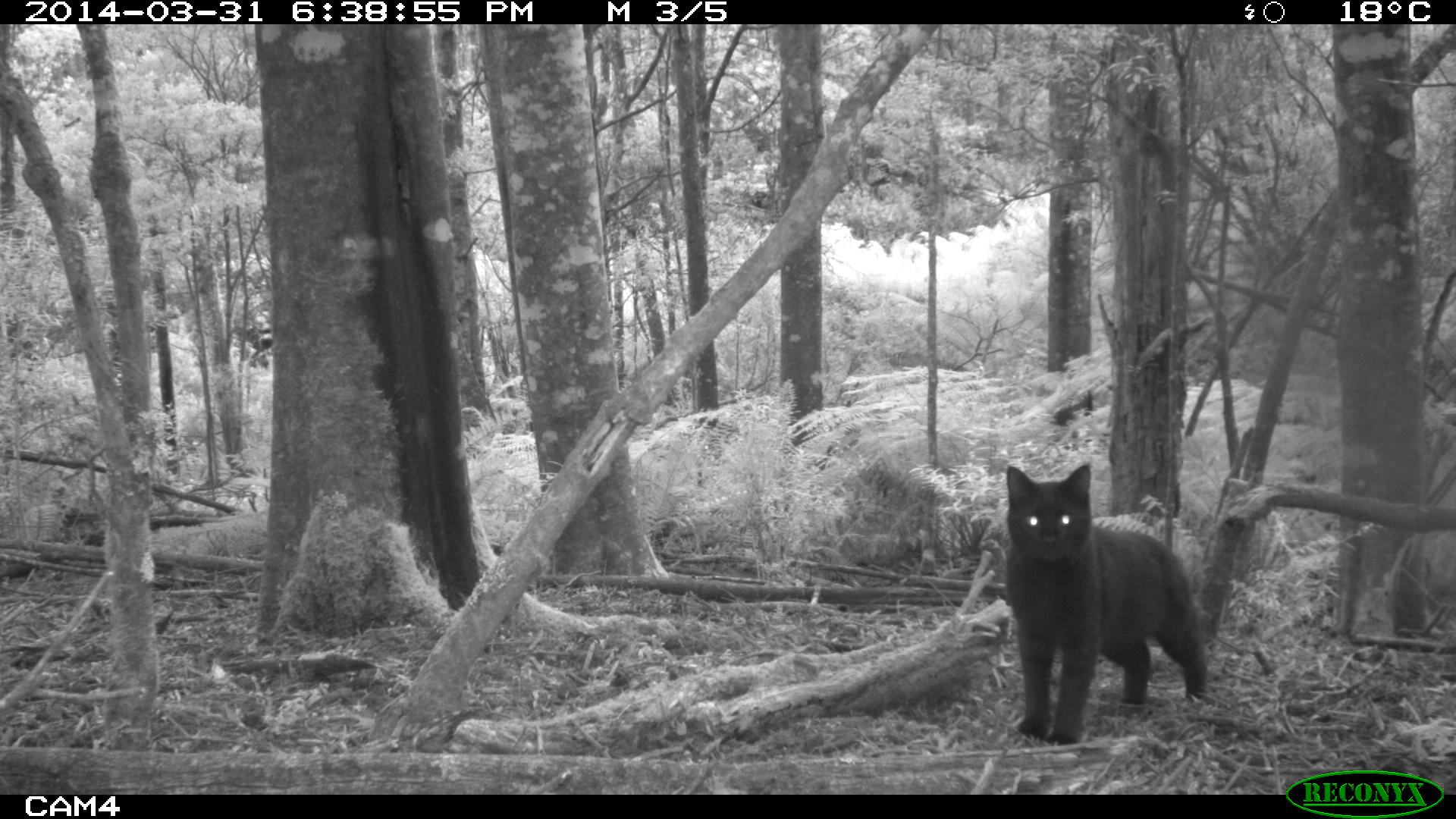
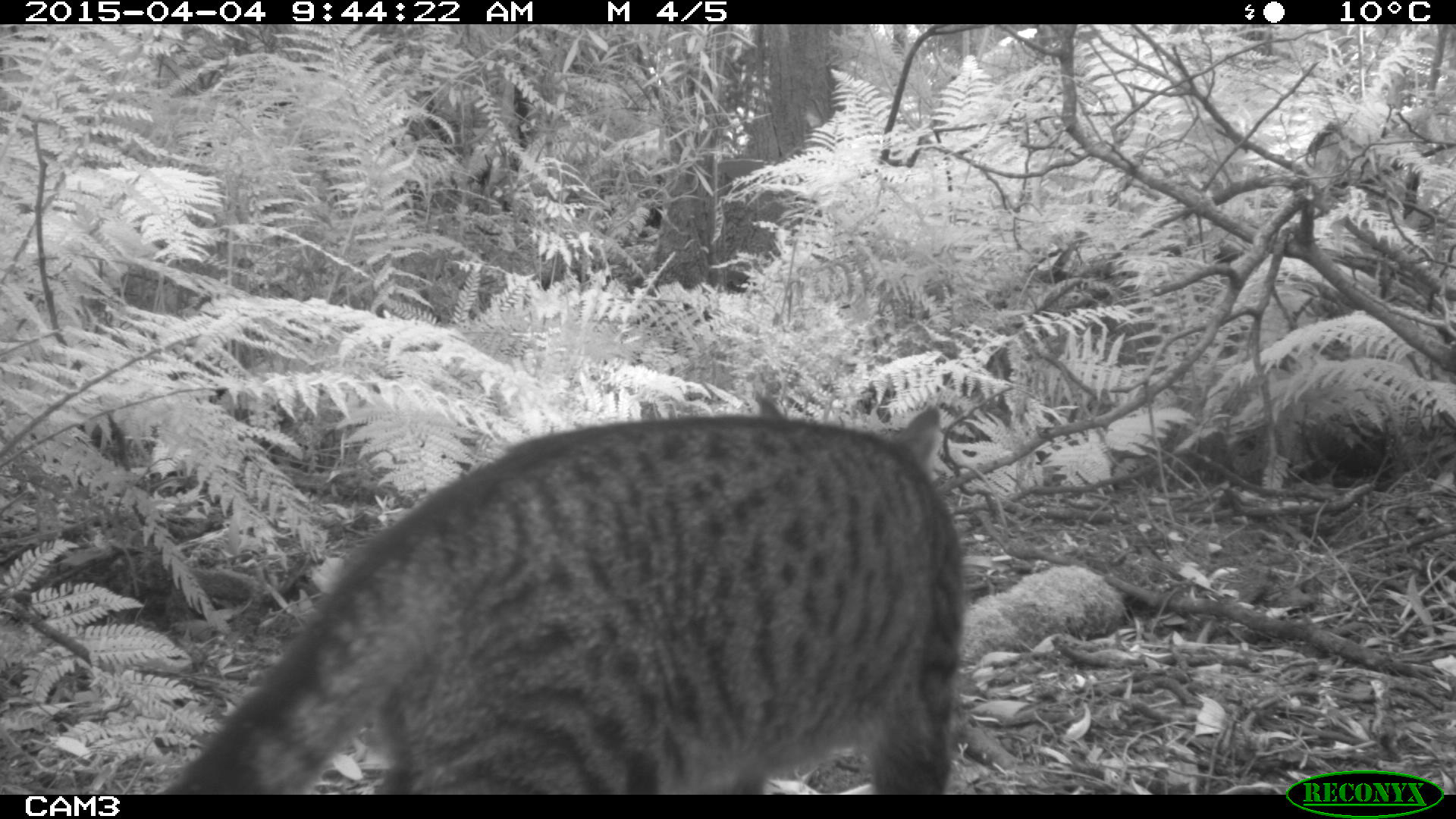
Although they are not often seen by visitors, feral and domestic cats are established predators at Tarra-Bulga National Park and our remote camera results suggest they are becoming more common.

The table below shows results from five years of remote camera monitoring carried out by the Friends of Tarra-Bulga Park. Cat numbers as a percentage of total species recorded rose dramatically from 0.7 to 3.9%.

Year201220132014201520162017
No. of Cats Records163364594164
Total Records220828984827380413521638
Percentage of Cats0.7%1.1%1.3%1.6%3.0%3.9%

The impact these cats are having on the birds, small mammals and reptiles is a real concern. Although there are many variables in the ways we set up our cameras, the general trend in the last few years is for them to be detecting greater numbers of cats and less small native mammals (e.g. Antechinus and Bush Rats). Sadly we have also been detecting less of the smaller birds such as Pilotbirds and White-browed Scrubwrens. (For a summary of sightings of others species download this Percentage of sightings per year for commonly detected species captured in remote camera photos )

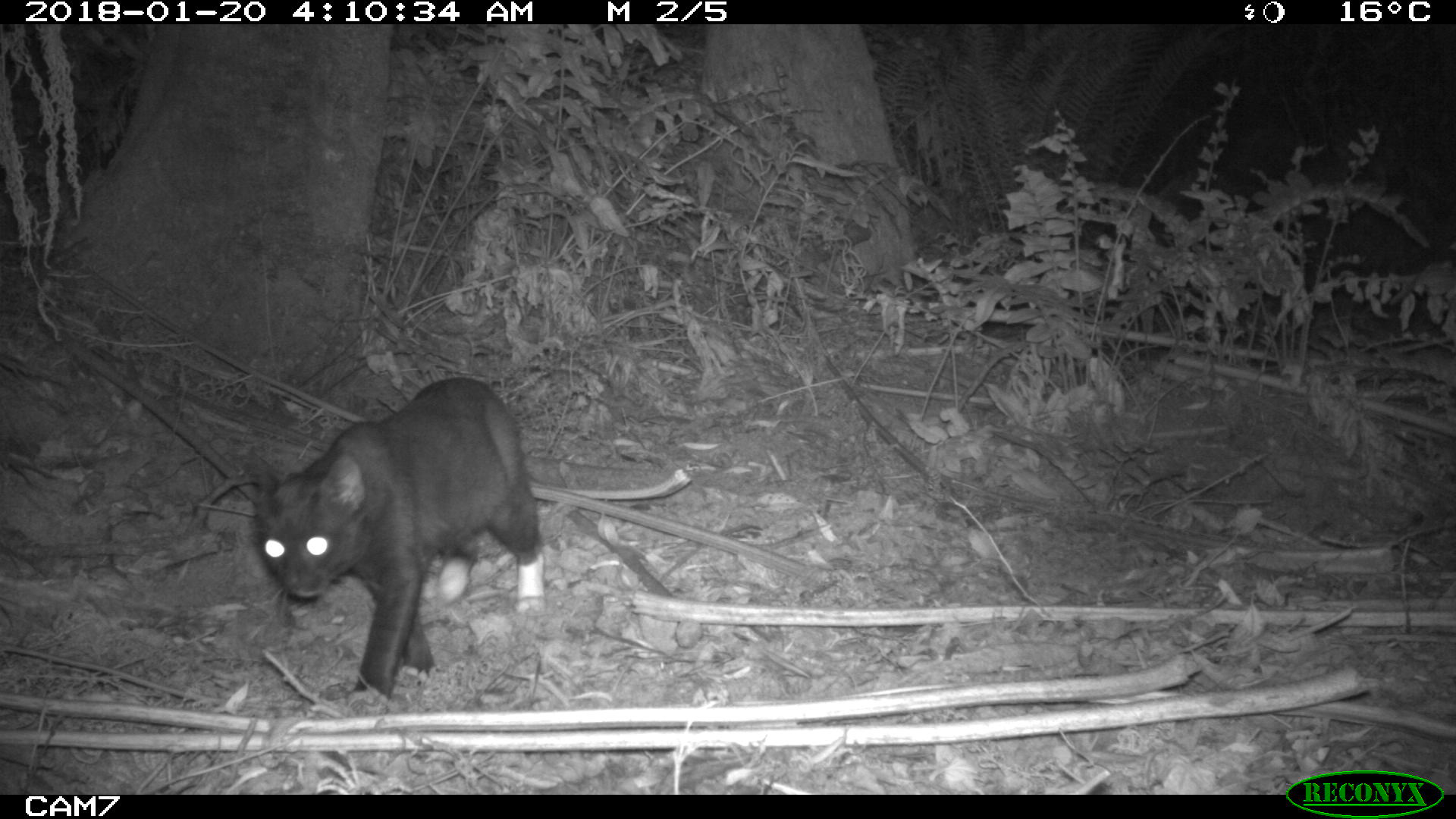
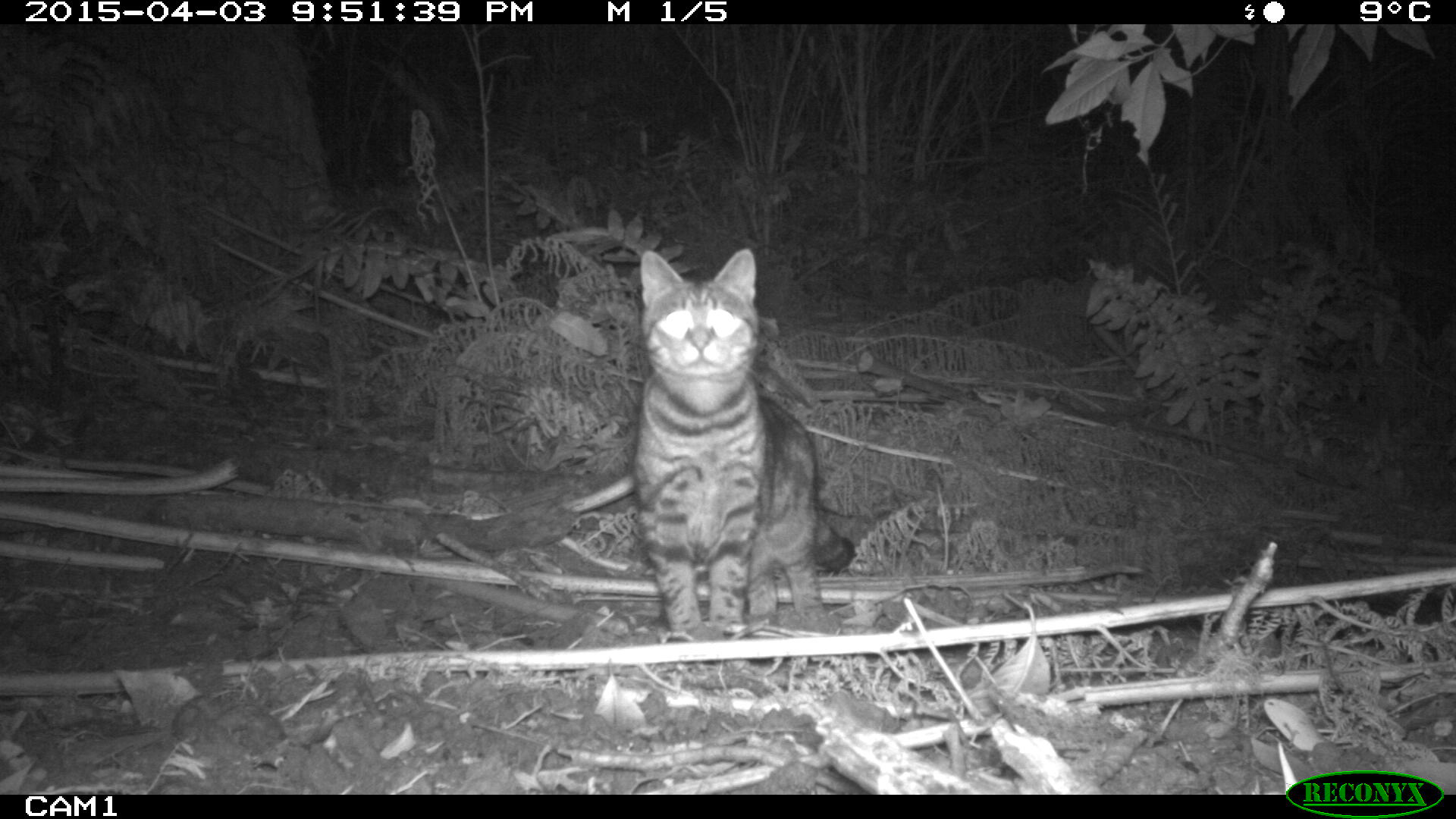
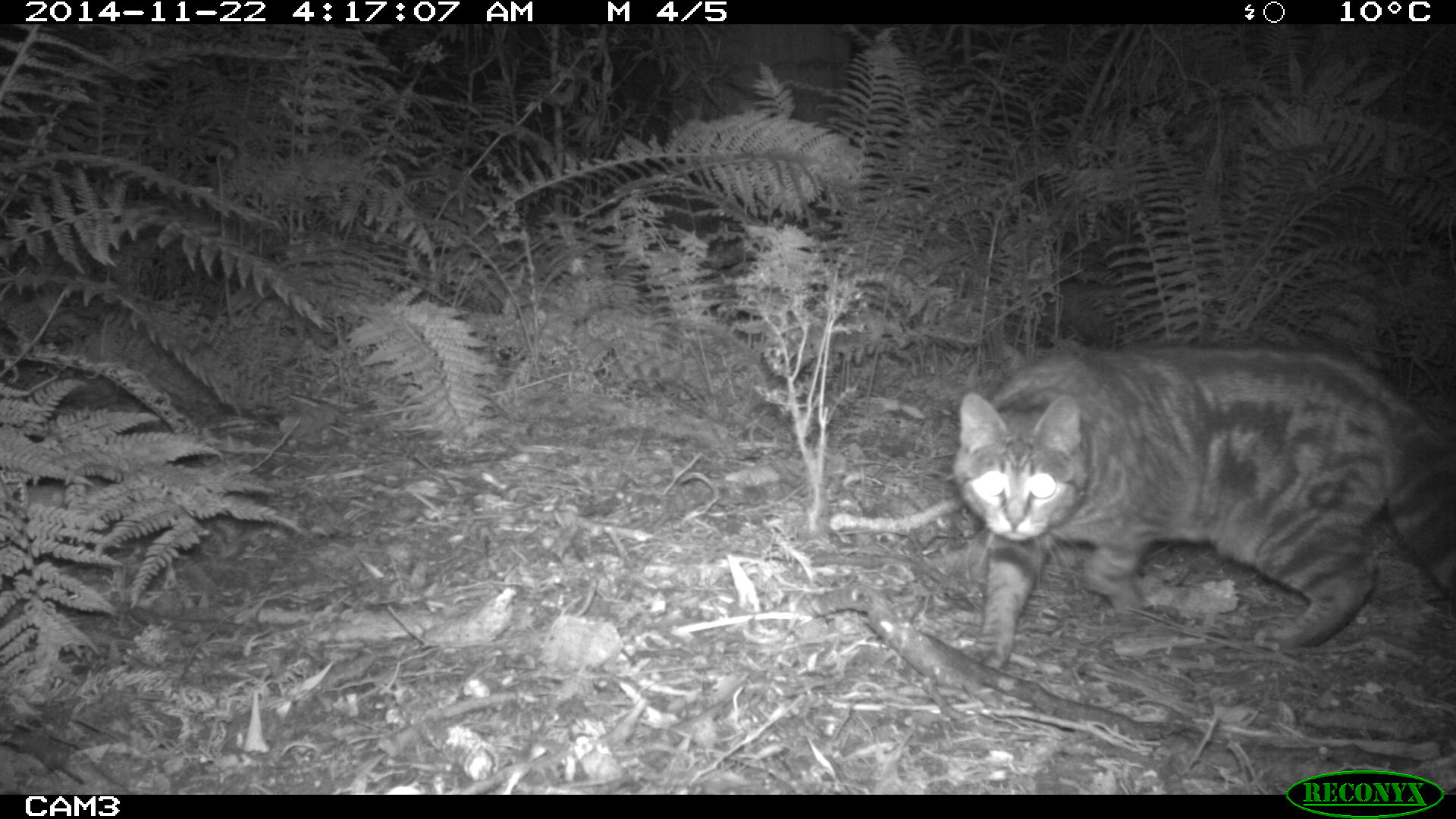
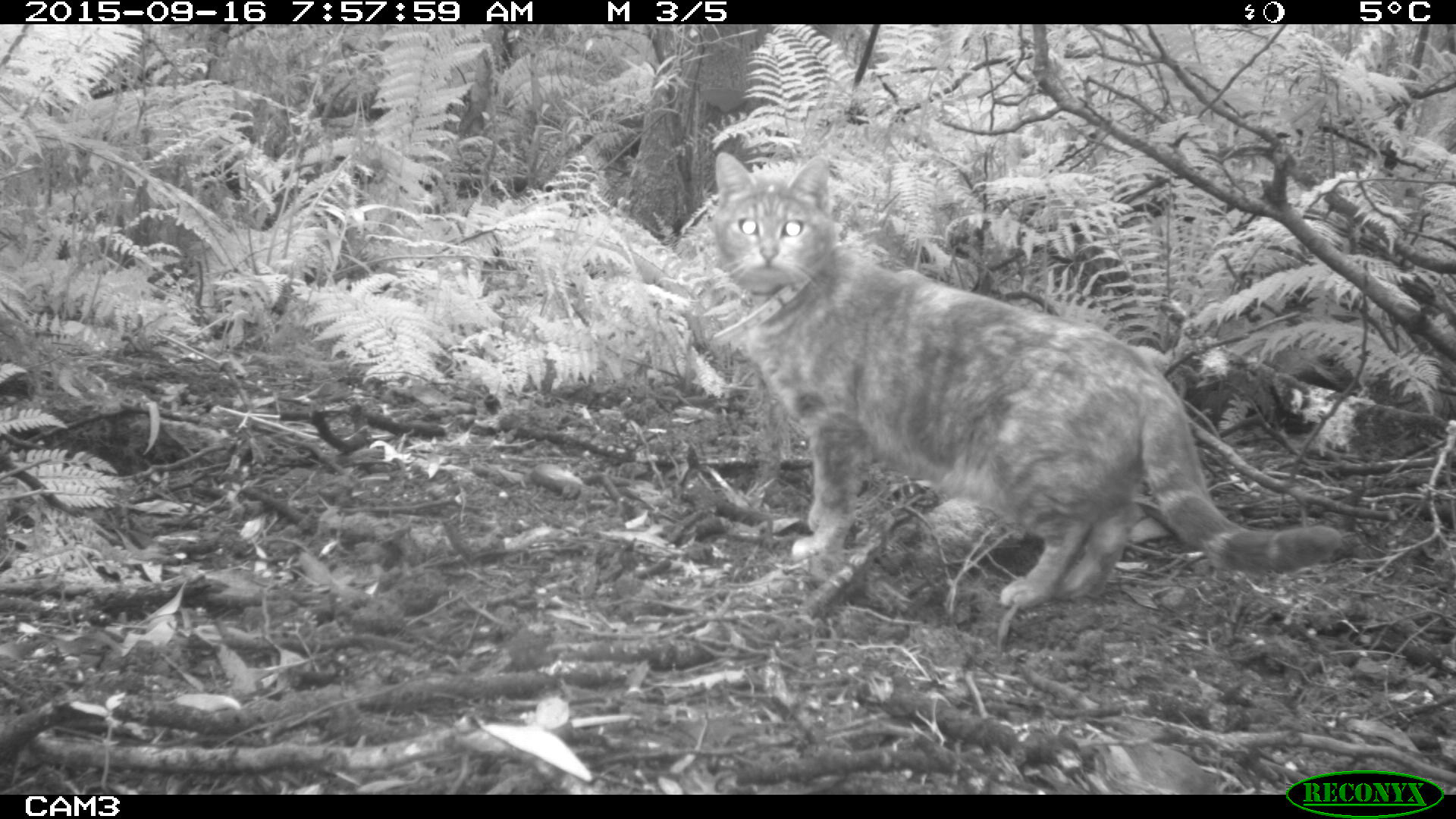
The gallery below shows that cats in Tarra-Bulga range from large ferals and panther look-alikes to small (some might say cute) looking kittens, some even have collars. What is undeniable though, is that their presence has a major impact on the ecology of Tarra-Bulga National Park.

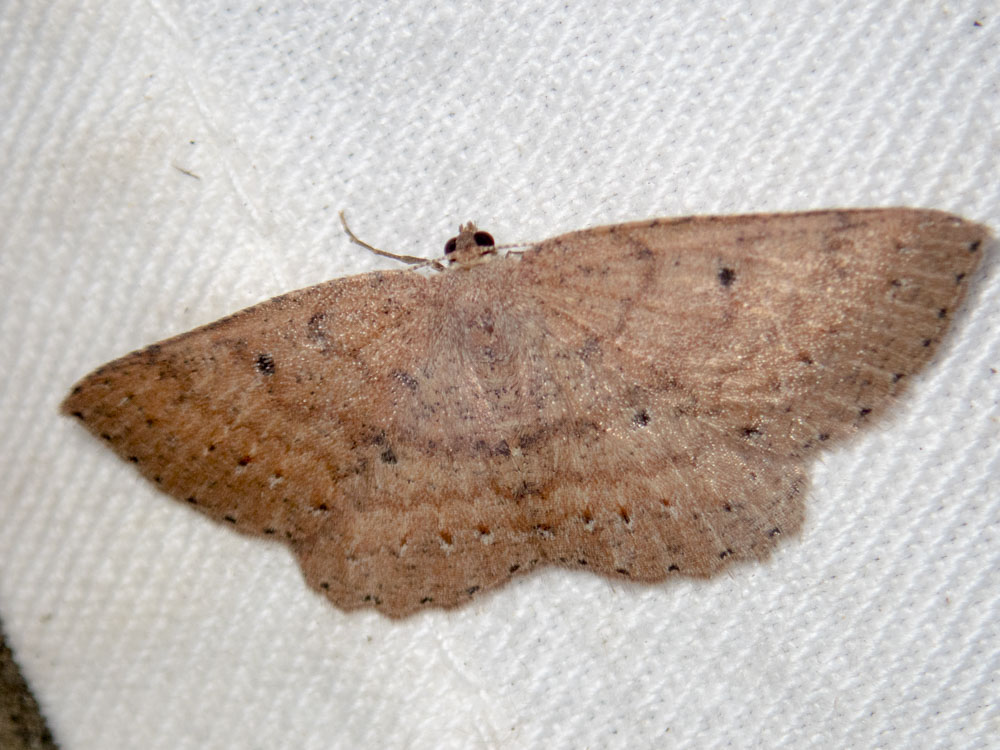
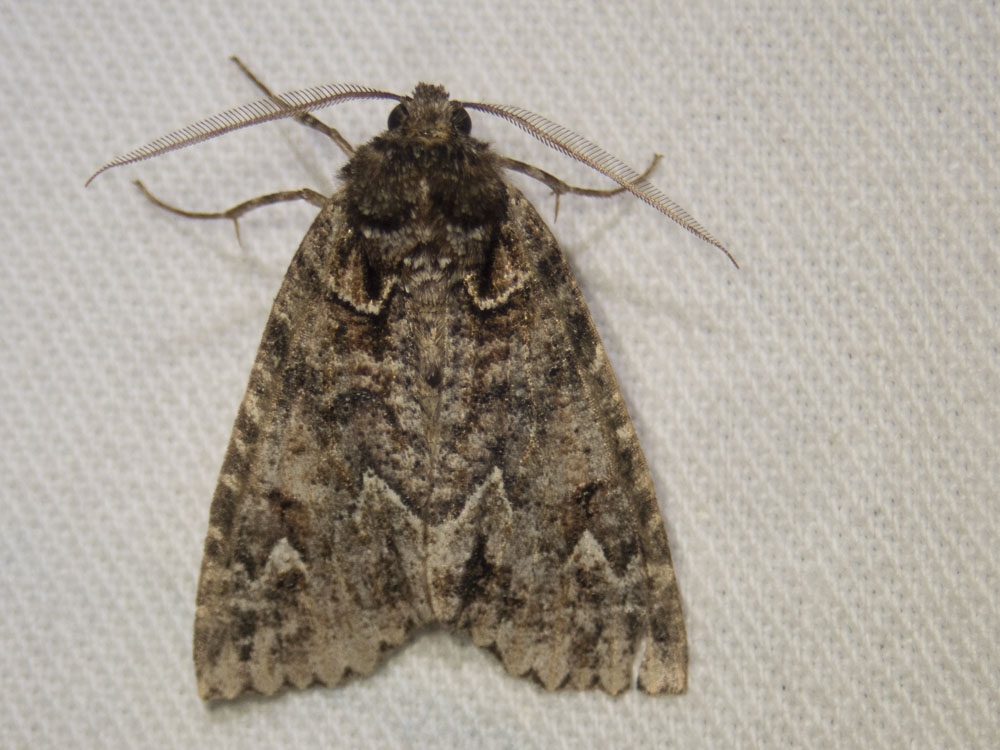
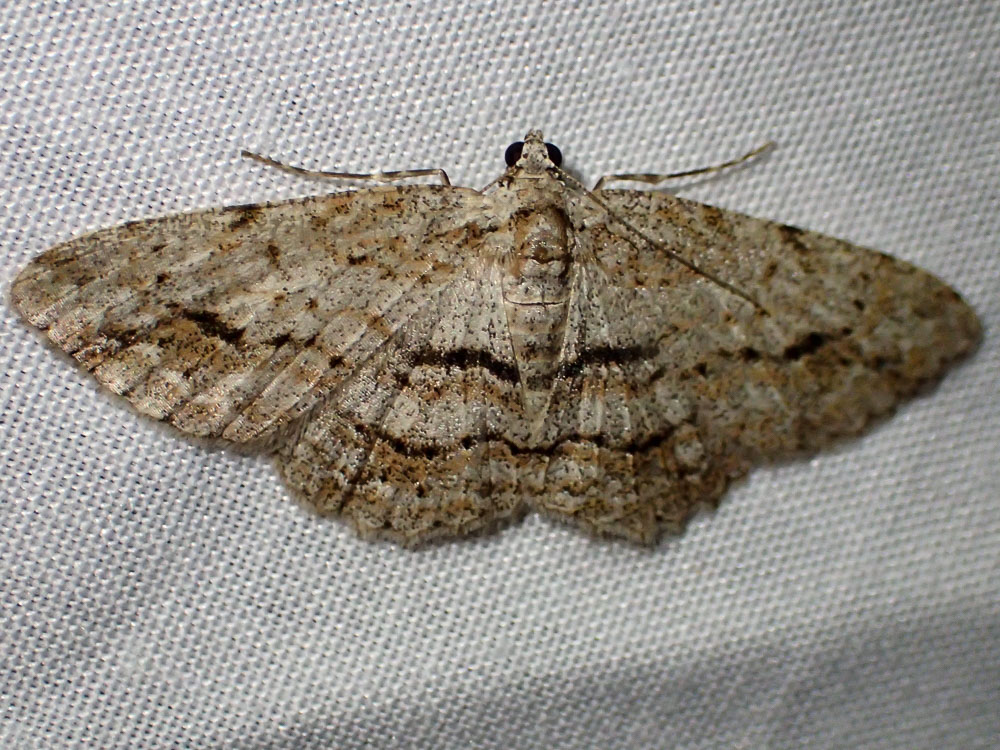
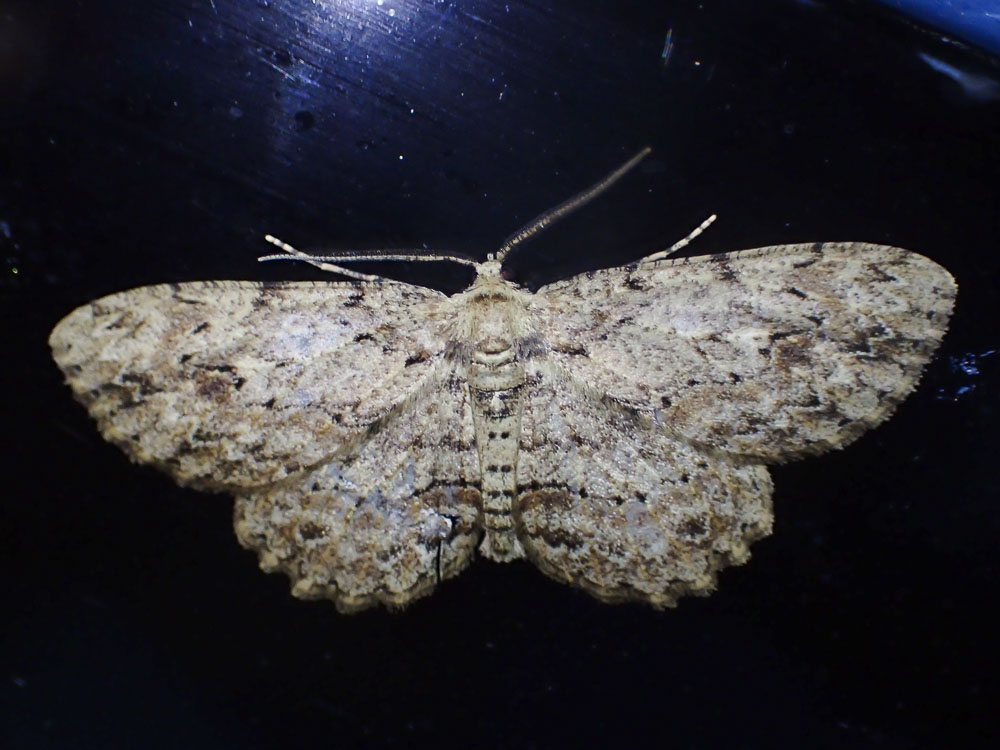
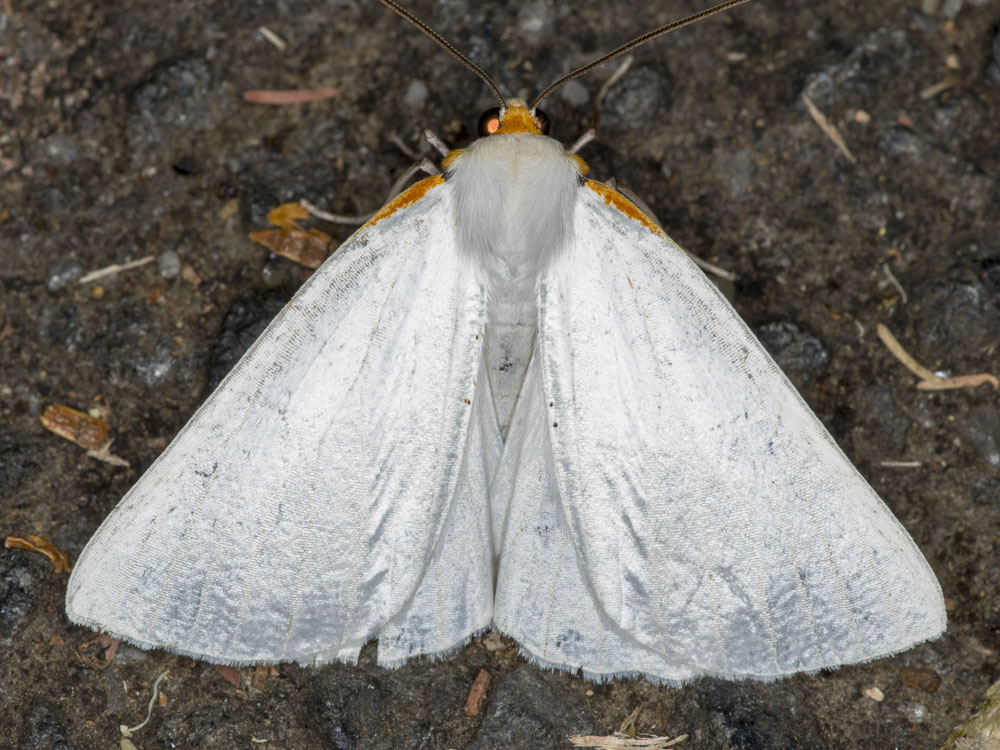
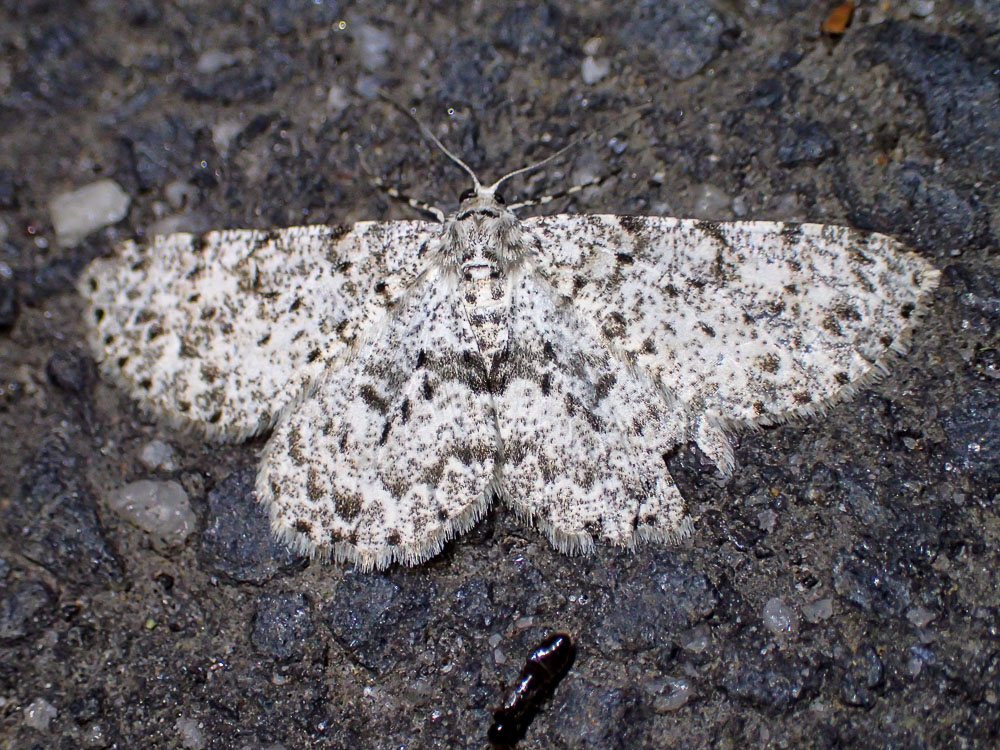
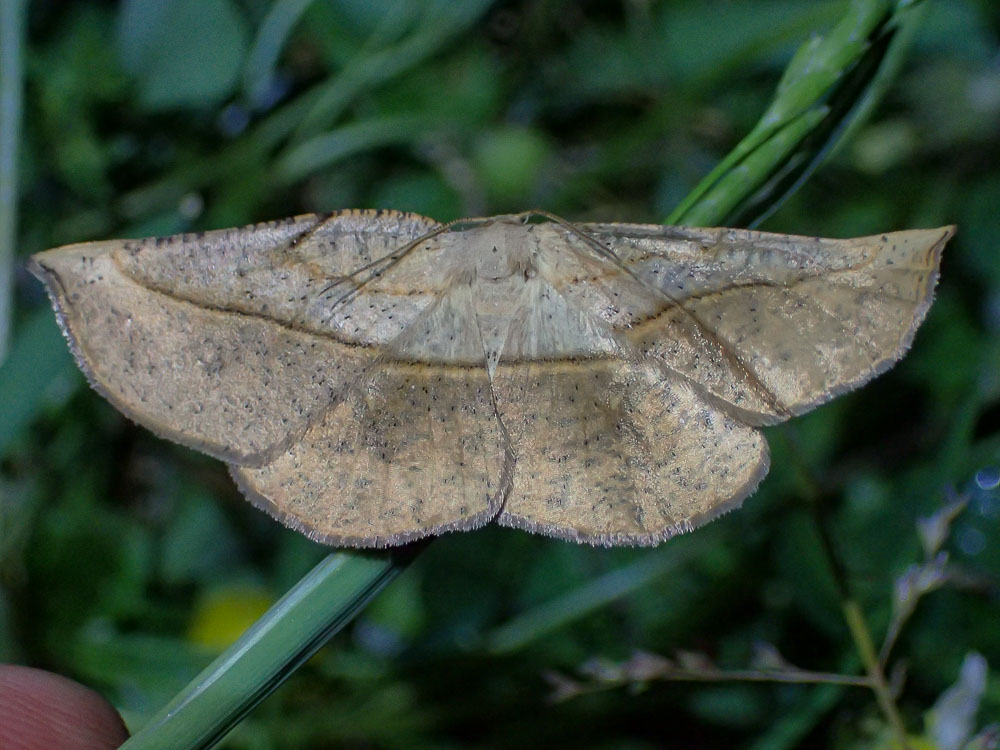
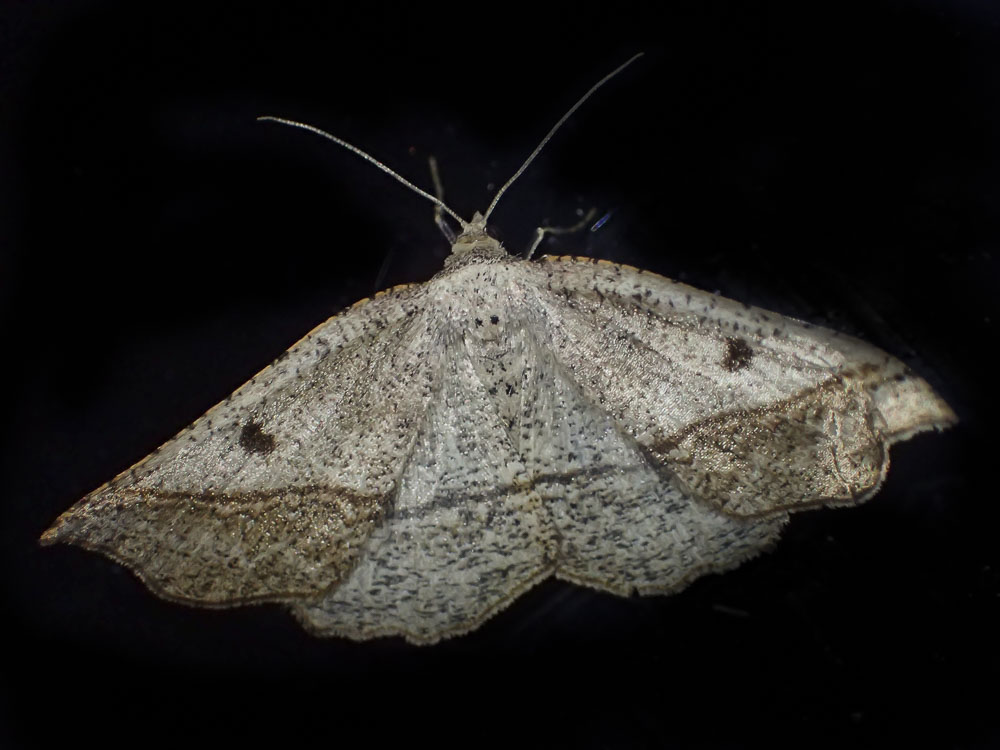
Ennominae

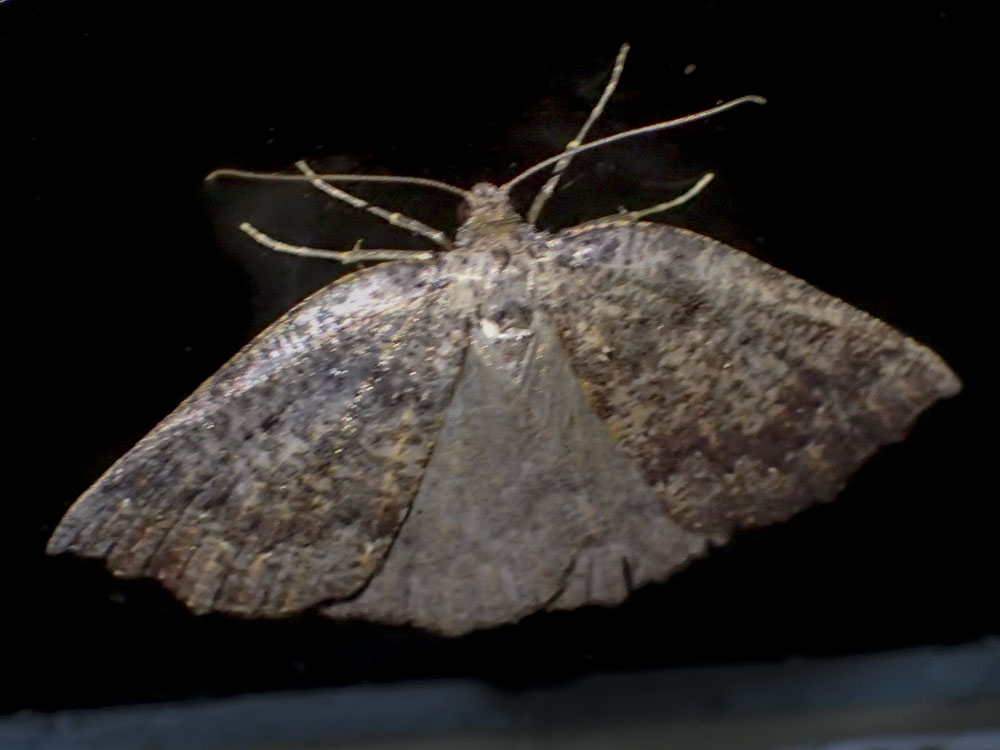
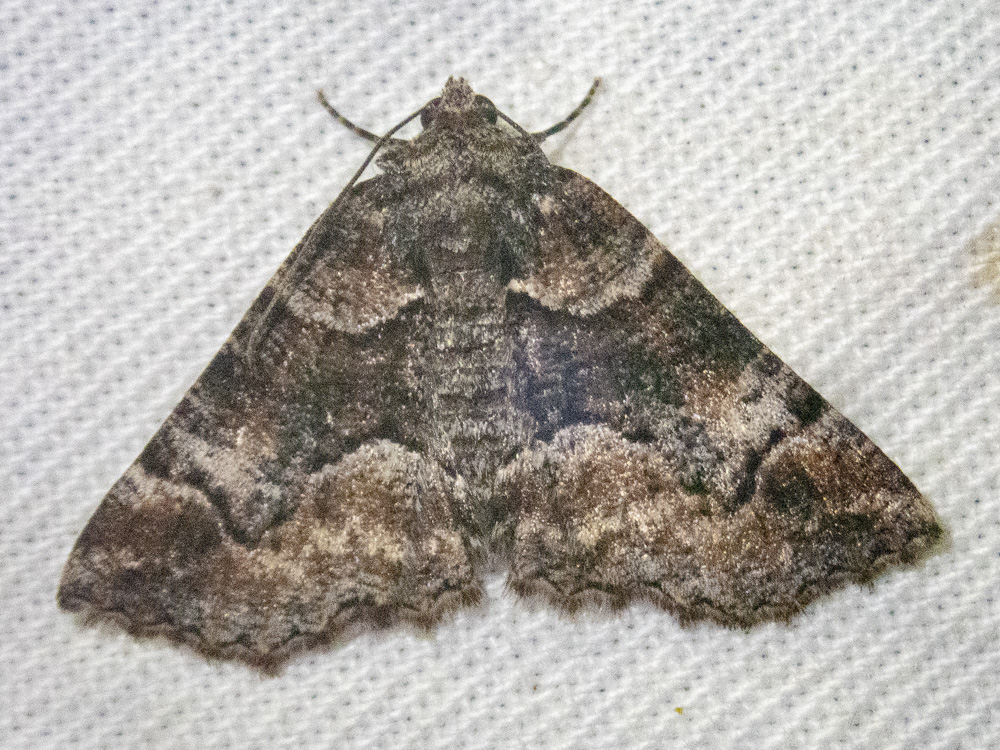
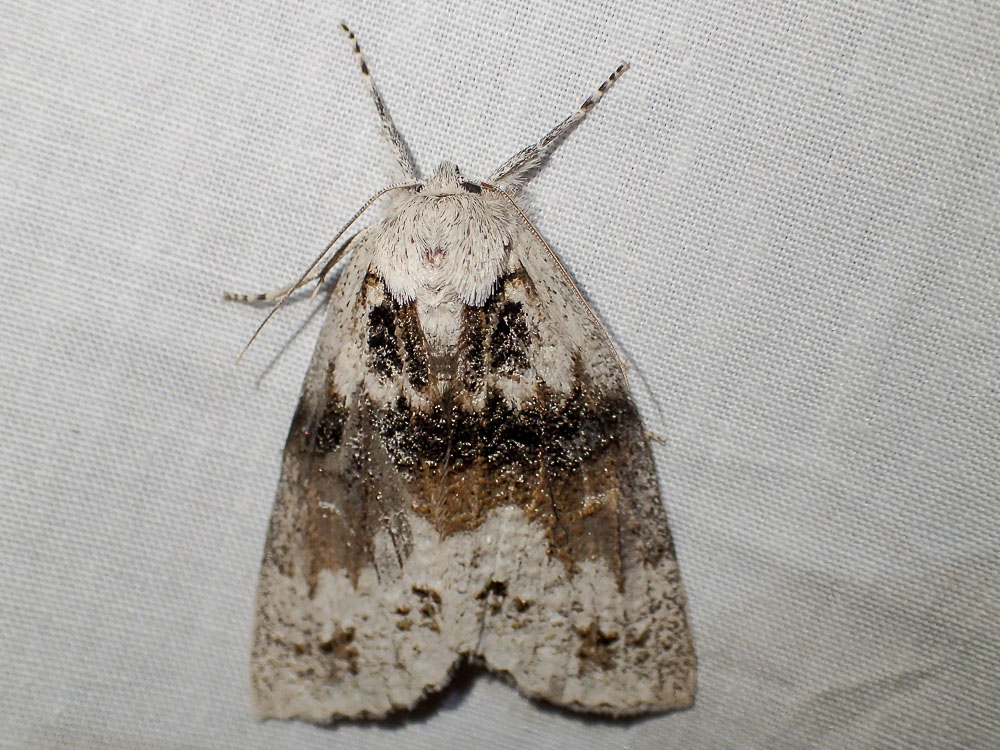
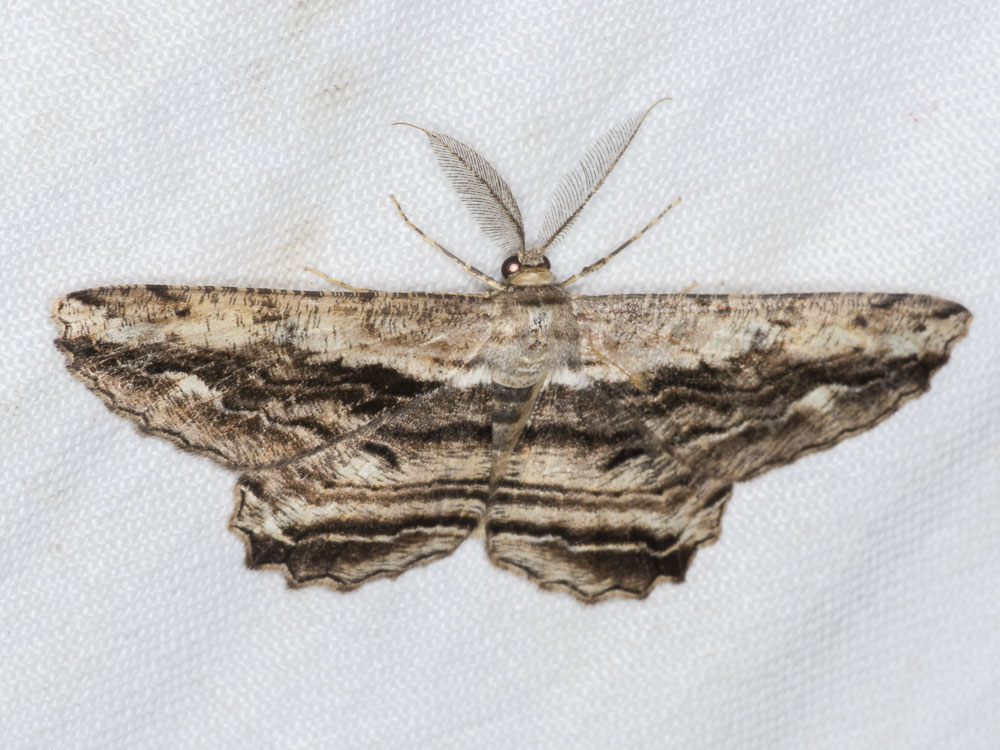
Ennominae are a sub-family of Geometridae. They include tribes Nacophorini (Satin Moths) and Boarmiini (Bark Moths) as well as a number of other smaller tribes.


Junior Rangers holiday fun at Tarra-Bulga

Fantastic News that Parks Victoria are providing some holiday programs for Primary School age children at Tarra-Bulga this year. With opportunities coming up for kids to undertake a “Mini-beast Discovery” or a “Flora Explorer” activity and learn more about the awesome things that nature has to offer. For more info and bookings head to www.juniorrangers.com.au 

JR Ranger Tarra-Bulga

JR_whatson_Tarra-Bulga 2018

Tree Guard Removal – Working Bees

Friends of Tarra-Bulga have a couple of days coming up where we plan to remove wire mesh guards from successfully established trees, if we have enough volunteers we might even re-use the guards to plant some more.
Both sessions will target the area we are replanting after the 2009 fires. Parks Victoria have kindly re-cleared some access tracks to make the task a bit easier.
The first planned date is Saturday July 29th (was originally planned for the 22nd on our calendar) and the second date is Saturday, August 26th. Meeting point for both days is the visitors centre at 9.30am
If you are keen to lend a hand at either or both of these sessions please either register via email to friendsoftarrabulga@gmail.com or telephone 0488 035 314. There is also an exciting new option to register for our events via www.parkconnect.vic.gov.au

Successfully grown tree
A successfully grown Mountain Ash freshly liberated from its wire tree-guard.
2017 Lyrebird Survey

Don’t miss your chance to be involved with Friends of Tarra-Bulga National Park Annual Lyrebird Survey. This year it will be held on Saturday, June the 3rd. The meeting point for all volunteers is the park visitors centre at 6.15 am. The Survey takes only 30 minutes from the time the sun rises and the birds start calling, Straight after the count a free breakfast for all volunteers will be provided at the Lyrebird Cafe. To secure your place please email friendsoftarrabulga@gmail.com or call David on 0488035314 by Wednesday 31/5/2017

Lyrebird Survey 2017