Are you up for the challenge?

Friends of Tarra Bulga have a big new project and we are looking for some enthusiastic helpers to get things off to a great start. A couple of years back a huge infestation of Sycamore Maple trees, which can grow up to 30m tall, was discovered in the park. These trees produce winged seeds which can spread in the wind, so the plant has the potential to invade further into the surrounding Mountain Ash forests.

Contractors were used to cut down the Maples and poison the stumps, and the result so far has been a big success. The canopy has opened up and native understorey plants are taking advantage of the light and space and popping up everywhere. To be a complete success however and to help prevent re-growth of the Maple, canopy species such as Mountain Ash need to be re-established. The friends group has secured funding from the Victorian Government’s, Communities for Nature Grants to do this and are holding a planting day on Saturday August the 11th.

The friends are keen for as many helpers are possible on the day but please note the task is a bit of a challenge. Access to the site is 2.5km along a walking track from the nearest road. The planting site itself is covered in logs and branches of what remains of the dead Sycamore Maple trees. While these branches are an obstacle we also plan to use them to our advantage, by planting amongst them we hope they will act as natural tree guards, keeping the new seedlings out of reach of hungry Swamp Wallabies that are notorious for eating newly planted trees. So if you are ready willing and able please come along. The meeting spot will be at the Tarra Bulga Visitors Centre Carpark at 9am on Saturday August the 11th. Please RSVP to Friends of Tarra Bulga – Activities Co-ordinator David Akers at dakers@activ8.net.au or by phoning 5189 1330. (BYO lunch)

Rough terrain at Planting Site
Wet Forest
This is what we hope the planting site will eventually look like.

Communities For Nature Grant

The friends of Tarra Bulga are happy to announce that they have been successful in obtaining a grant from the Victorian Government’s Communities for Nature Grants for a major restoration project in the park. The project site is one that is tucked away in a remote section of the park and was only discovered by chance when some contractors were doing some minor control of what was thought to be only a minor incursion of Sycamore Maple (Acer pseudoplatanus) on the edge of Diaper Track. 

Communities for Nature - Project Site
Communities for Nature – Project Site in Tarra Bulga National Park

Once they began it became clear that the task was much bigger than first thought and in the end it was found that this plant was dominating the canopy in a large thicket about 2ha in area. Much expense was spent destroying these invasive trees but the site has now been left with no overstorey species and the potential for the weedy Maple to return.

Thankfully securing this grant will enable the friends group in partnership with Parks Victoria to work to restore this area, by establishing a wet forest overstorey with species including Eucalyptus regnans (Mountain Ash) and also allowing the understorey to recover while destroying re-germinating weed species.

Maple Resprout
Sycamore Maple – Re-shooting from the base after the initially felling and poisoning of the stump.

The friends group are planning a tree planting working bee on Saturday August the 11th. For further details or to register your interest in attending please contact David Akers at dakers@activ8.net.au

Lyrebird Survey Map

To all of those people who did the Lyrebird Survey this map can give an indication of what was going on this year.Geographic Information System (GIS) software was used to plot the location of all of the monitoring sites. Then the lines coming out from each site were drawn using the information that all the volunteers recorded during the survey. Once all the lines have been drawn we can then find points where several lines from different monitoring points intersect. At these points we can be confident that there was a Male Lyrebird calling during the survey period.

Tarra Bulga Lyrebird Survey 2012 Map

2012 Lyrebird Count

We were happy to have perfect weather for Lyrebird Counting, still calm conditions meant that Lyrebird calls would be easy to detect. We had an excellent turnout with 32 helpers including a contingent of Scouts. Ranger Craig briefed the early morning crowd about their roles and passed on his knowledge in terms of taking a compass bearing. We then raced out to our monitoring points, in order to be in position before the first birds began calling at the break of dawn. After only a quarter of an hour or so all groups recorded several different birds calling and there were a number of live sightings. It was then (as is the custom) time to migrate to the guesthouse for a hearty breakfast. After all the recordings were logged and mapped we can confirm at least 6 birds were present in the target area, which thankfully shows that the Parks Lyrebird populations are still going strong.

Pre Count Briefing
Everyone paying attention to the instructions before going out to their positions.
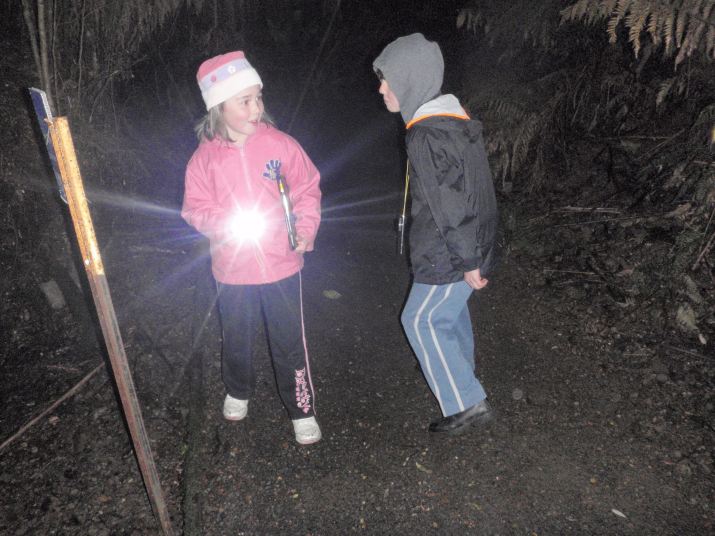
Two young helpers ready to start the Lyrebird Survey
Lyrebird Surveyors Breakfast

2012 Tarra Bulga National Park Lyrebird Survey

It’s on again. The Friends of Tarra Bulga are looking for interested volunteers to participate in our Annual Lyrebird Survey on Saturday June the 2nd. It involves an early start, people need to be at the Tarra Bulga National Park at 6am so we can get organised to get to our monitoring positions before sunrise. The survey itself only takes half an hour and after that a cooked breakfast is on the menu. If you would like to come along you need to contact ranger Craig Campbell on 5172 2508 or email craig.campbell@parks.vic.gov.au. Wear warm clothing, bring a watch, a torch and a compass (if you have one).

Superb Lyrebird - Menura novaehollandiae
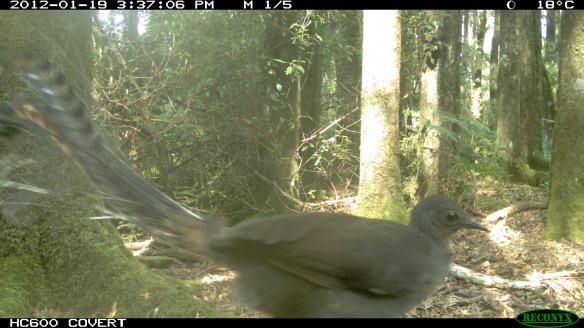
Superb Lyrebird – Menura novaehollandiae – All ready to be counted!

Agile Antechinus

This little critter nearly went by unnoticed until we went back through some remote picks and spotted it here. It is an Agile Antechinus – Antechinus agilis. They mainly feed on invertebrates such as spiders and beetles. Like all antechinuses, the Agile Antechinus has a short and violent breeding season, after which the males all die.

Agile Antechinus - Antechinus agilis
You might have to look closely to find this little Antechinus

Wombats in Tarra Bulga

A very common site in the Strzelecki Ranges, the Common Wombat – (Vombatus ursinus) is mostly nocturnal and shelters in large burrows. The single young leave the pouch around 6-9 months of age and follow the mother on foot until they are fully weaned at about 20 months old. They only produce one young every 2 years. They feed on grasses, sedges and tubers. Be on the look out for them on the roads at night, They have absolutely no road sense and are likely to run straight in front of your vehicle if startled.