It’s on again. The Friends of Tarra Bulga are looking for interested volunteers to participate in our Annual Lyrebird Survey on Saturday June the 1st. The survey, which aims to help to monitor the health of the local Lyrebird population involves an early start. People need to be at the Tarra Bulga National Park Visitors Centre at 6am so we can get organised to get everyone to their monitoring positions before sunrise when the Lyrebirds will (hopefully) burst into song. The survey itself only takes about half an hour and following that as a reward for your support and the early start, a cooked breakfast is on the menu. If you would like to come along you need to contact ranger Craig Campbell (by Wednesday May the 29th on 5172 2508 or email craig.campbell@parks.vic.gov.au. Wear warm clothing, bring a watch, a torch and a compass (if you have one).
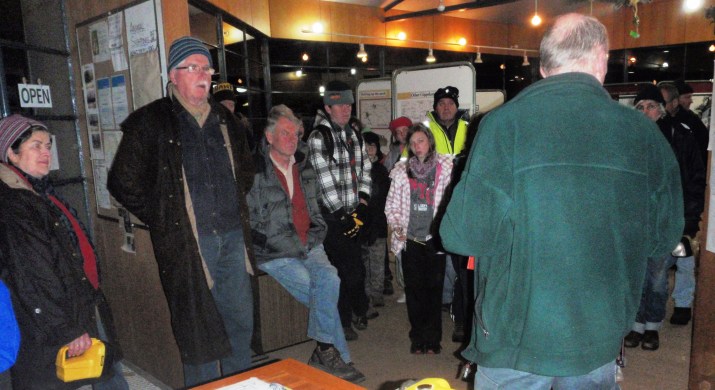
Volunteers line up to get final instructions before heading out to take their positions for last year’s survey.
Camera 1- Has been repaired after Lyrebird attack and will be back in action ASAP.
Camera 2 – is still placed in an area that has quite prolific wildlife sightings.
This month it captured a variety of birds, which surprisingly is not always the case given the diversity of species in the park. Birds pictured were the Yellow Robin, Crimson Rosella, Grey Shrike-thrush, Satin Bowerbird, Lyrebird, White-browed Scrub-wren and the Bassian Thrush, Also picked up some nice photos of Some very active Brushtails, Antechinus, Wombats and Echidnas. On the down side there was a feral Cat sneaking Foxes around and no sign of any Bandicoots. Apologies to the Wallabies we spotted having a rather private moment.
Tarra Valley South West – Species Count
White-browed Scrub-wren
Wallaby with Bulging Pouch
Possum on Hind Legs
Lyrebird
Feral Cat
Echidna
Eastern Yellow-robin
Crimson Rosella
Brush-tail Possum
Bassian Thrush
Antechinus
Amorous Male Swamp Wallaby closely behind female.
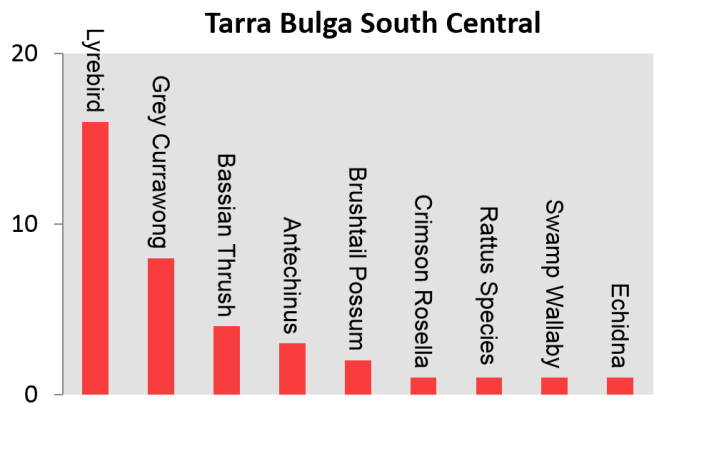
Camera 3 – Was on a steep slope and this month produced a lot more photos, probably due to just a slight change of position which was aimed at more level ground. Grey Currawongs were hanging around the site along with Antechinus, Lyrebirds, Brushtail’s and Echindna’s. This was a much better result than the last time where only Foxes, Wallabies and Lyrebirds were detected.
Tarra Bulga South Central – Species Count
Antechinus
Brush-tail Possum
Grey Currawong
Unidentified Rodent Species
Camera 4 – Was located at a site that was also surprisingly busy given that has a lower diversity because it is an area of shrubby regrowth forest with a ground cover of only bark, leaf litter and bare soil. Grey Currawongs again seemed to be active at the moment; Brush Bronzewings seem to like this area as well as Lyrebirds (sometimes in pairs). Crimson Rosellas, Eastern Whip-birds and Bassian Thrushes were also spotted. Wombats, Wallabies and Antechinus were the main mammals along with visits by two Feral Cats and a Fox. The results were similar to last time and the camera has now been moved into some different habitat.
Balook West – Camera 4, Species Counts
Another good shot of the Lyrebird
Antechinus
Bassian Thrush
Female Lyrebird
Feral Cat 2
Feral Cat
Fox
Pair of young Crimson Rosellas
Rodent on Tree
Male Superb Lyrebird 2
Superb Lyrebird
Swamp Wallaby
Unidentified bird possibly grey shrike thrush
Camera 5 This camera was located at the bottom of a damp fern gully, With only 400 photos in the six week period it was actually a bit quieter than some of the other locations, although there was a lot of Brush-tailed possum activity (Good spot for Powerful Owls to get some tucker!!) and a lot of Pilotbird activity. Other Mammal species were an unidentified rodent, Antechinus, Wallabies and the ubiquitous Foxes (which were seen at all 7 Camera sites scattered around the park).
Balook Gully Species Count
Young Swamp Wallaby
Rear of a Brush-tail Possum
Headless Brush-tail
Fox
Evening Lyrebird
Brushtail Possum
Bassian Thrush
Antechinus hiding under a branch
Camera 6 – Is a site located close to old-growth forest, it has deep leaf litter on the ground. Surprisingly we haven’t been picking up a lot of diversity here. There has been lots of Lyrebirds photographed as well as Wallabies and Foxes but little else. Potentially the camera is too high to pick up smaller species. I have made an adjustment to see if it makes any difference.
Tarra Bulga North West – Species Count
Fox
Swamp Wallaby
Camera 7 – Was in the same place as last time and once again it was prolific even though the vegetation is mainly scrubby regrowth with no large canopy trees. Again there were lots of cute mother Wallaby and Joey in pouch photos. There were more good shots of Long-nosed Bandicoots and Lyrebirds. Other birds were Pied Currawongs and Grey shrike-Thrushes. There were some busy Wombats and some handsome looking but evil Foxes no doubt sniffing around for a meal of fresh Bandicoot.
Balook West – Species Count
Wallabies
Wombat
Wallaby Mother
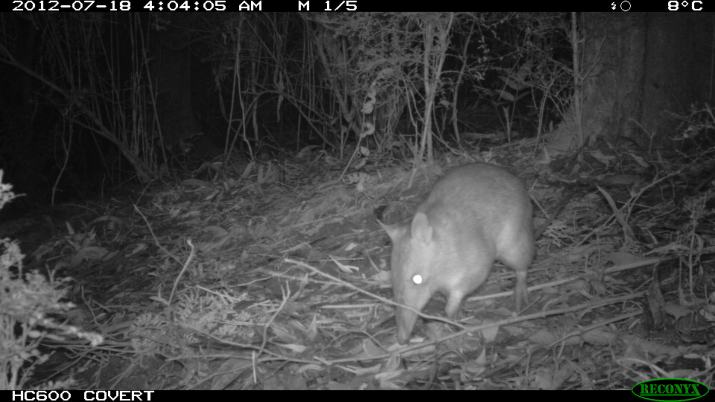
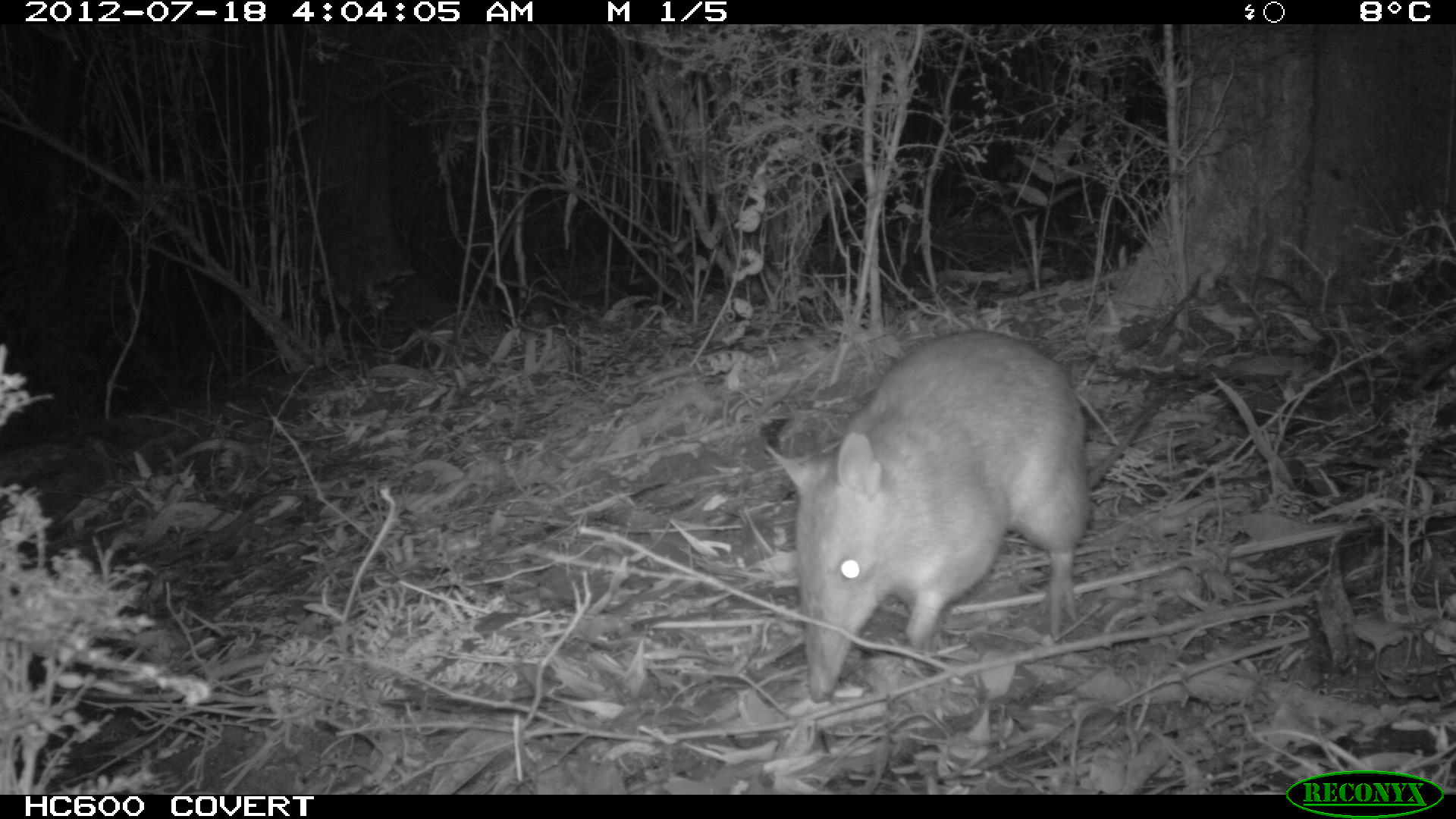
Very Long-nosed Bandicoot
Unidentified Bird
Tail sticking out of Pouch
Pied Currawongs
Pair of Lyrebirds
Pair of Lyrebirds
Lyrebird
Long-nosed Bandicoot
Long-nosed Bandicoot
Wallaby with Passenger
Fox
Common Wombat
Bandicoot
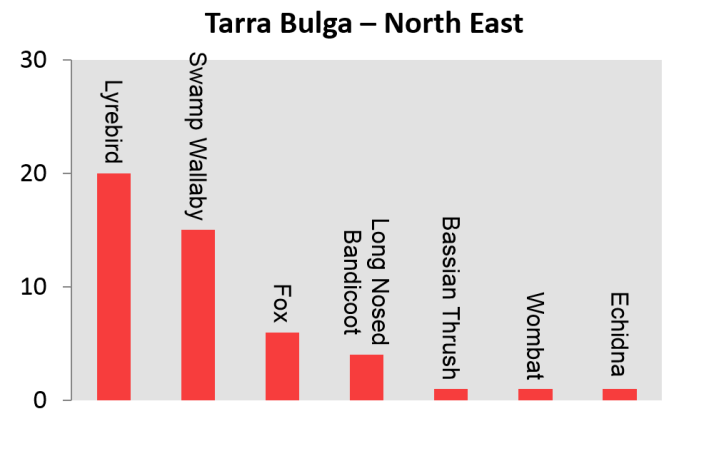
Camera 8 –No sign of any snakes this time, but similar results to last time at this site which was on the Eastern edge of Tarra Bulga. Lots of Lyrebird activity, Wombats, Wallabies and Echidnas as well as some Long-nosed Bandicoots and Foxes.
This video made up from a series of still photos from one of our remote cameras along with some sound recorded by our songmeter shows a Male Superb Lyrebird systematically scratching around for food underneath the leaf litter. This scratching results in the leaf litter being turned over and is thought to improve the rate of nutrient cycling in the forest, helping to create compost that will feed the vegetation.
Tonight’s the Friends of Tarra Bulga National Park committee had one of their regular meetings. It is always interesting to make the evening trip up to Balook, as you are almost guaranteed to see an interesting array of wildlife along the way. Tonight was no exception on the way up in the last hour of daylight there were plenty of wallabies darting out in front of the car and a couple of lyrebirds doing their last rounds of the day.
Long- nosed Bandicoot – Perameles nasuta
After the meeting it was now a couple of hours since dusk, back in the car and around the first few bends we catch some eye shine and a shape at the side of the road, slowing down it becomes clear that it is a fox with something in its mouth. With light from the headlights and the full moon, I can see a short tail and on the other side of the foxes snout a long pointy nose, unmistakably a bandicoot, bit sad that my first live sighting of a bandicoot at Tarra Bulga had to be this way. The full moon seems to get the fauna out and about and a little further on we stop the car when we spot a brush-tailed possum on the roadside. With the car stationary it strides across, with a tiny offspring hanging tenaciously on to its mother’s back. Next sighting is a couple of rabbits, which surely would have been our preferred option for the fox to be dining on.
Before the friends started monitoring with remote cameras, there had been no official records of bandicoots in the park for at least a decade (wildlife surveys can be an expensive business). What impacts do fox numbers have on bandicoot or lyrebird populations or even rabbits? How common are other feral animals in the park and what impact could they be having e.g. cats? What else is out there that we don’t know about (Could there be any Tiger Quoll? We could guess but without some means of surveying we wouldn’t really know. The Friends of Tarra Bulga now have a network of remote cameras across the park, we aim to use them to the best of our ability to get a much greater understanding of what is happening out there with all them critters.
We recently moved one of our cameras down to a site in the Tarra Valley section of the park, to get a better idea of what wildlife is hanging around there. After the camera was checked the first time we had plenty of shots of Swamp Wallabies but nothing else apart from foxes. The camera was then moved a few metres to a new position where it could be set closer to the ground and the difference in the number of species photographed was quite remarkable. There are some great Long-nosed Bandicoot photos along with Antechinus and Rattus pictures, an Echidna and Possums (Not certain whether they are the Common Brush Tailed Possum of the Mountain Brush Tail (Bobuck) or whether we have both, The Bobuck’s have smaller more rounded ears.
Unfortunately there are still plenty of introduced predators at this site with Foxes and Feral Cats present. We have been recording quite a few cats with our monitoring lately.
This slideshow requires JavaScript.
Antechinus
Antechinus – Hopefully you can spot it!
Brush-tailed Possum – This one seems to have shorter and more rounded ears, so it could be a Mountain Brushtail Possum (Bobuck)
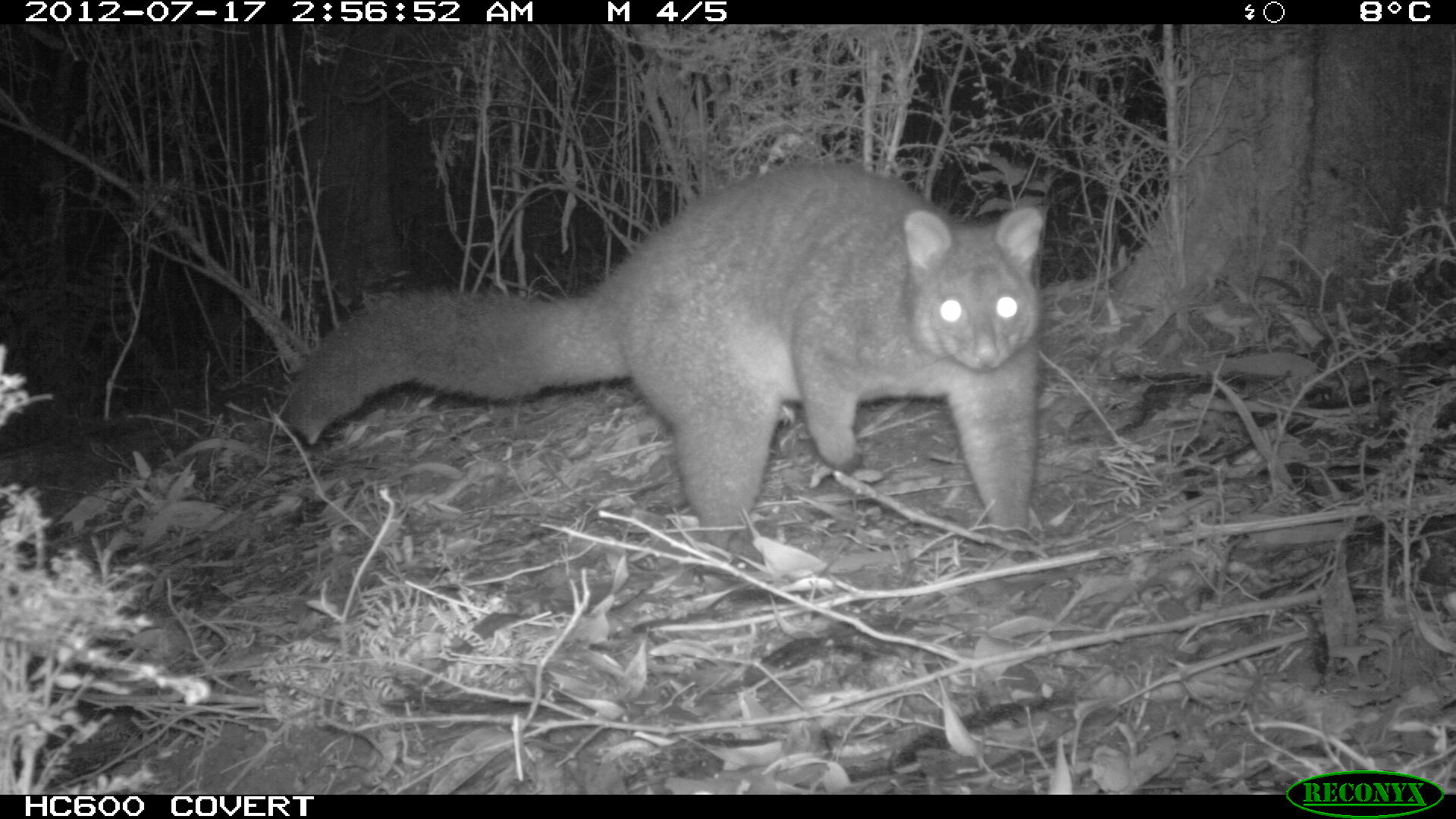
Brush-tailed Possum – This one seems to have large is so is probably a Common Brushtail.
To all of those people who did the Lyrebird Survey this map can give an indication of what was going on this year.Geographic Information System (GIS) software was used to plot the location of all of the monitoring sites. Then the lines coming out from each site were drawn using the information that all the volunteers recorded during the survey. Once all the lines have been drawn we can then find points where several lines from different monitoring points intersect. At these points we can be confident that there was a Male Lyrebird calling during the survey period.












 Friends of Tarra-Bulga National Park