2017 Lyrebird Survey Results

271A4102 copya
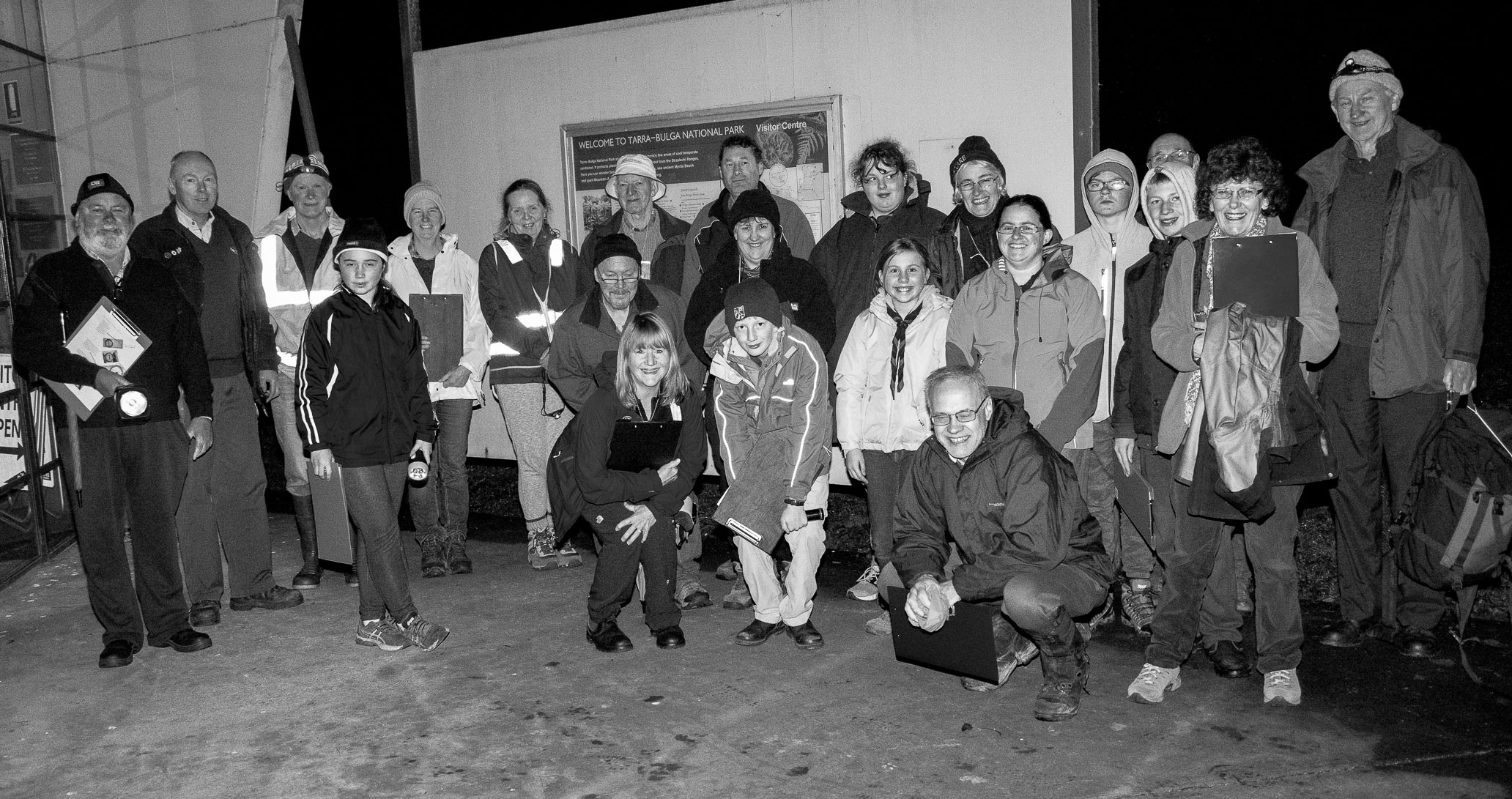
A bumper crew  for this years survey.
  • We had a fantastic turnout of volunteers, which meant that all 16 sites could be covered with at least 2 volunteers at each site. (This is the first time we have covered all 16 sites since at least 2010).
  • Weather conditions were ideal (2nd year running) with little or no wind to muffle the sound of calls and it was not really all that cold!
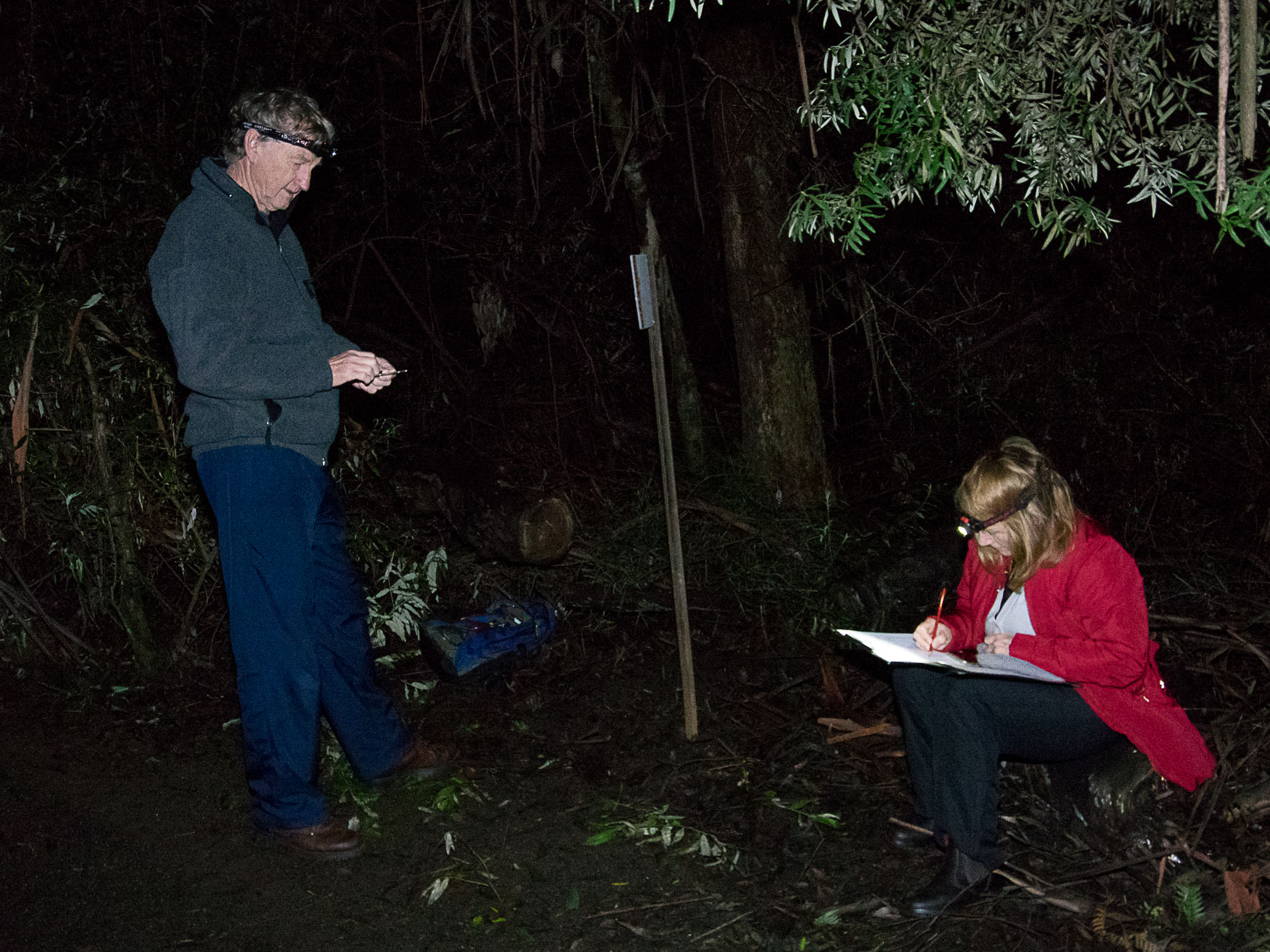
  • Everyone got out to their respective positions in time; the earliest call was heard at 6.49am and by 6.55am every monitoring station had Lyrebirds calling.
  • The official sunrise time for Saturday Jun 3rd at Balook was 7.23am and first light was scheduled to appear at 6.53am. So, it seems Lyrebirds are fairly well tuned to begin calling at first light.
  • From our results, we detected 11 male birds calling, (not sure if it would be possibly with our method to detect two birds calling in close proximity to each other, but a couple of stations noted the possibility that they could possibly hear multiple birds calling from around the same direction.
  • Note: we only count birds that are detected by at least 2 monitoring stations.
  • This is our second highest number of birds recorded since at least 2010.
  • Thanks to AGL who helped to pay for the breakfast.
  • Results Tablea

Summary of results for the last 8 years.
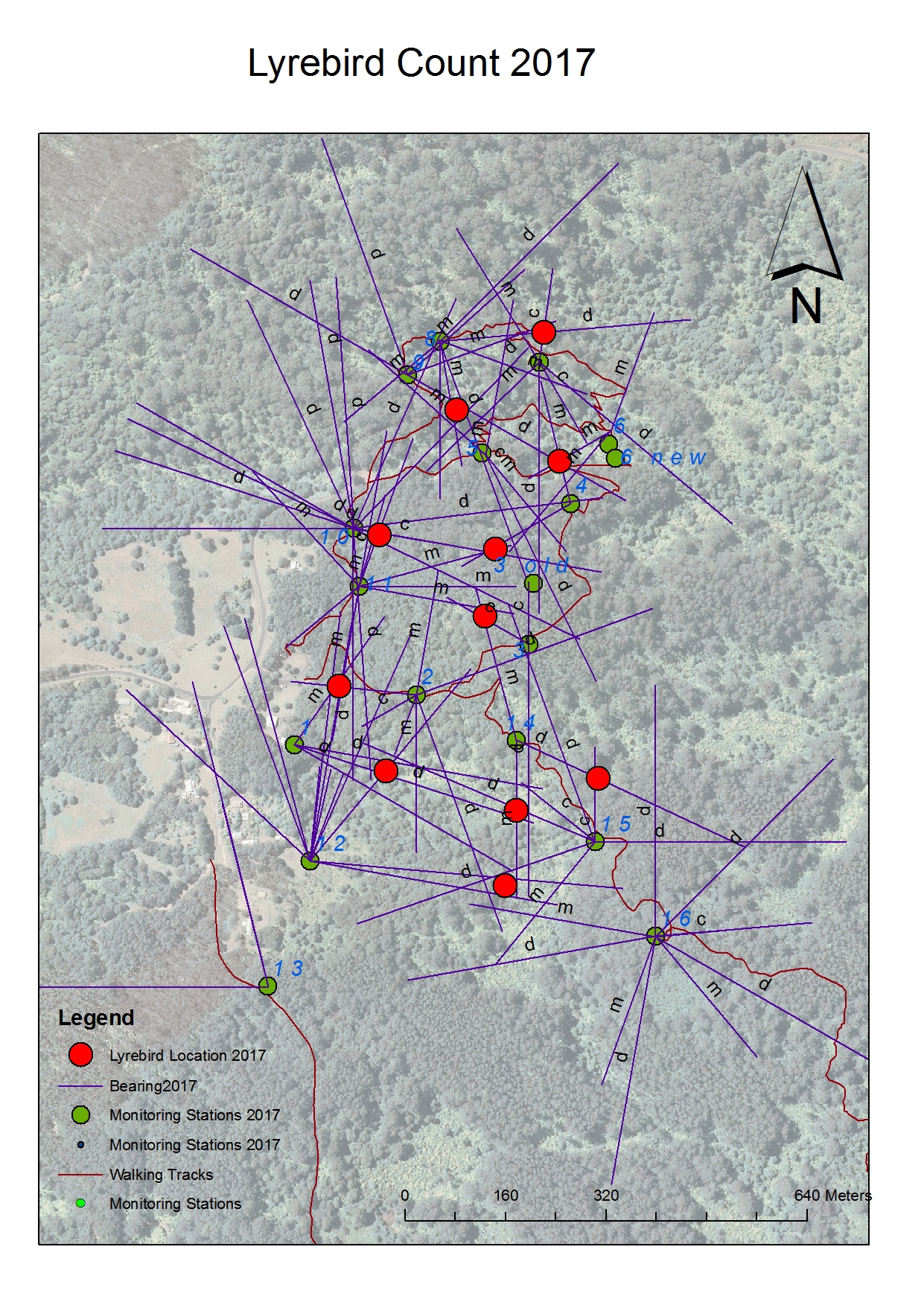
Lyrebird Count 2017 150dpi

2017 Lyrebird Survey

Don’t miss your chance to be involved with Friends of Tarra-Bulga National Park Annual Lyrebird Survey. This year it will be held on Saturday, June the 3rd. The meeting point for all volunteers is the park visitors centre at 6.15 am. The Survey takes only 30 minutes from the time the sun rises and the birds start calling, Straight after the count a free breakfast for all volunteers will be provided at the Lyrebird Cafe. To secure your place please email friendsoftarrabulga@gmail.com or call David on 0488035314 by Wednesday 31/5/2017

Lyrebird Survey 2017

Working Bee/Scenic Walk

The Friends of Tarra-Bulga National Park are holding a working bee on this coming Saturday April 29th  and are would welcome new or existing volunteers to come along.

 The worksite is in a remote part of the park and getting there will involve a scenic 3km walk through beautiful tree-fern filled Mountain Ash forest. The work will involve removing tree-guards from previous plantings and re-using them to plant more over-storey trees.

The meeting point will be the park visitors’ centre at 9am. BYO snacks, drink, gloves.  For planning purposes please RSVP to David on 0488 035 314 or email friendsoftarrabulga@gmail.com P4180171a_2


Tarra-Bulga National Park: A Work in Progress.

Renowned for its stunning cool-temperate rainforest, luxuriant tree-ferns and towering Mountain Ash trees, Tarra-Bulga National Park is cherished by Gippslanders and enjoyed by visitors from all over the world.  The original separate small, but significant, Bulga and Tarra Valley Parks were reserved just over a century ago while the giant forests surrounding them were being laboriously hand cleared by selectors to turn into farms. Clearing this land turned out to be folly, the terrain, cold winters, bushfires, weeds and rabbits all contributed to the farmers giving up and walking away, leaving scrub and noxious weeds in their wake. Forestry and sawmilling in the area for timber and pulpwood also led to the loss of more of the original giant trees.

Alberton Shire_0002a_2
Bulga Park Entrance Circa 1930

In recent years Tarra-Bulga National Park has expanded. New areas including abandoned farmland have been added with the goal of physically linking Tarra Valley and Bulga Parks as well as to reduce visitor pressure on significant sites, provide greater recreational opportunities and protect additional vegetation communities representative of the Strzelecki Ranges. It is recognised that Tarra-Bulga National Park has the potential to become even more spectacular and significant as cleared land is successfully regenerated.

P2170039a
Monitoring past  work by the Friends of Tarra-Bulga National Park

To this end the Friends of Tarra-Bulga National Park are seeking volunteers interested in helping with the regeneration process. The group holds occasional work days on weekends, undertaking activities such as planting over-storey trees and controlling noxious weeds. The next activity is scheduled for Saturday July the 23rd  30th and will focus on removing tree guards from successful new plantings. The meeting point will be at 9.30am at the Visitors Centre Car Park. For further details or to register your interest in helping out Friends of Tarra-Bulga with any of their activities email friendsoftarrabulga@gmail.com  or phone 0488 035 314.

2016 Lyrebird Survey Results

In the pre-dawn darkness on Saturday the 18th of June, twenty-five volunteers and one Park Ranger were greeted with perfectly calm conditions for Tarra-Bulga National Park’s Annual  Lyrebird Survey. Overnight showers had passed by leaving moist dripping foliage in their wake.

The survey is designed to monitor the density of Lyrebirds living in 60ha comprising of wet sclerophyll and cool temperate rainforest immediately to the east of the Tarra-Bulga National Park Visitors Centre. There are sixteen monitoring points strategically placed throughout the site and volunteers move to each site before adult male Lyrebirds start their morning calls at dawn. Volunteers then use a compass to record the direction and proximity of the Lyrebird calls. This year we had enough volunteers to cover all but one of the monitoring points.

2016 Lyrebird Survey
2016 Lyrebird Survey crew ready for action.

Following the survey, lines representing the direction of the calls are plotted onto a map, and triangulation is used to establish the spots where birds were calling from. This year the results indicate we had at least nine (male) Lyrebirds calling in our 60ha zone. This corresponds to a density of one adult male Lyrebird per 6.7 ha. You can also assume that there will be female lyrebirds and immature males or non-calling males within our target area. To account for this to get our overall population of Lyrebirds we multiply the number of calling males by a factor of 2.5. It is believed that male Lyrebirds do not begin to breed until they are around 6 or 7 years old.

Summary of Tarra-Bulga National Park Lyrebird Surveys

Summary of Tarra-Bulga National Park Lyrebird Surveys

2016 Survey Map
Map showing bearings taken from monitoring points and the estimated location of calling male Lyrebirds from the 2016 survey.


June 2016 Snow Photos

Snow photos from this afternoon. Got up there just in time to see the snow come in. Not sure if there will still be any around tomorrow morning, might depend on conditions overnight. There are a couple of large trees down one near the suspension bridge and another along the Ash Track so access is a little bit difficult, hopefully they will be cleaned up soon.


Tarra-Bulga National Park on Bowerbird.org.au

With the rise of information technology and social media there is now an assortment of worthy projects that volunteers or “citizen scientists” can join in with. One of the best in our estimation is www.bowerbird.org.au which is a wonderful tool for uploading any photos of flora or fauna that you may encounter. Not only can other users of Bowerbird assist you by using their knowledge to aid you with the identification of unfamiliar sightings you upload. Once fully identified to species level the sightings are then included as permanent records on the Atlas of Living Australia (ala.org.au) and which has an online searchable database with an amazing range of features, Bowerbird now has over forty thousand species records with peoples’ images from across Australia loaded onto the site and in its own right has virtually become a free online field guide.

Bowerbird users come from all over Australia with a strong representation from people in Gippsland so it is a great way of seeing what other local people are finding including a range of fascinating insects and fungi. There is the opportunity to create your own projects on Bowerbird and henceforth we have created a project for Tarra-Bulga National Park. To date we have around 320 sightings uploaded and identified with 5 different contributors. Morwell National Park also has a project which impressively has now over 1200 diverse records. So if you are a budding naturalist or just like looking at cool images of things like fungi, plants and insects check out http://www.bowerbird.org.au/projects/5665/sightings  and if you feel inclined please feel free to add your own.

Bowerbird Project
This is an screenshot of our Tarra-Bulga National Park Project Page on Bowerbird.org.au from earlier this year.