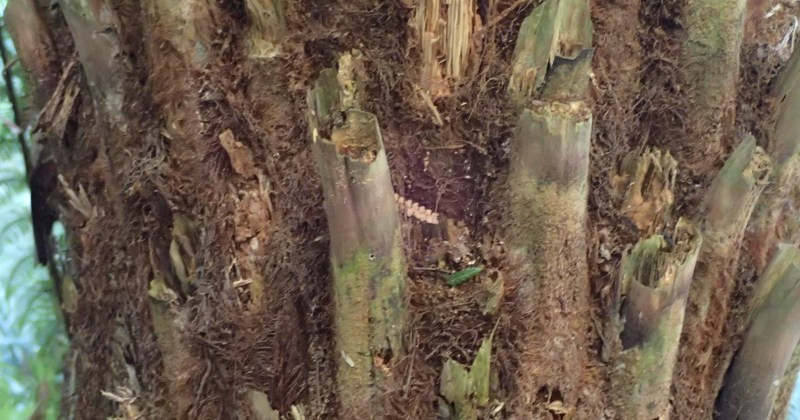
Dicksonia antarctica Soft tree-fern

Tree Ferns at Tarra Bulga

There are four main species of tree ferns found in Tarra Bulga National Park, (along with many other fern species) The two most common you will see are Cyathea australis (Rough tree-fern) and Dicksonia antarctica (Soft tree-fern). The Soft Tree-fern is more common in the moister areas including the rainforest gullies while the Rough tree-fern is more dominant on the slopes. Once you get you eye in it is fairly simple to tell the difference between these two, the most obvious being by comparing the trunks. The Rough tree-fern has much of its trunk covered by the remains of broken off stems (Stipes) Which are rough to the touch, while the Smooth tree-fern is soft to the touch and is covered by masses of soft hairs which are actually roots.  On this soft trunk other species of plants will often grow including tree and shrub seedlings, epiphytes and other ferns.

Cyathea australis - Rough tree-fern
Cyathea australis – Rough tree-fern, the broken of scaly frond bases (Stipes) on the upper part of the trunk of these ferns are a quick aid to their identification.

Wallaby Pouch Action

This vision of a mother Swamp Wallaby (Wallaby bicolor) and her young one was snapped at one of our monitoring sites in the Tarra Valley section of the park. The camera was ideally located to catch the action.

Tarra Valley – Remote Camera Site

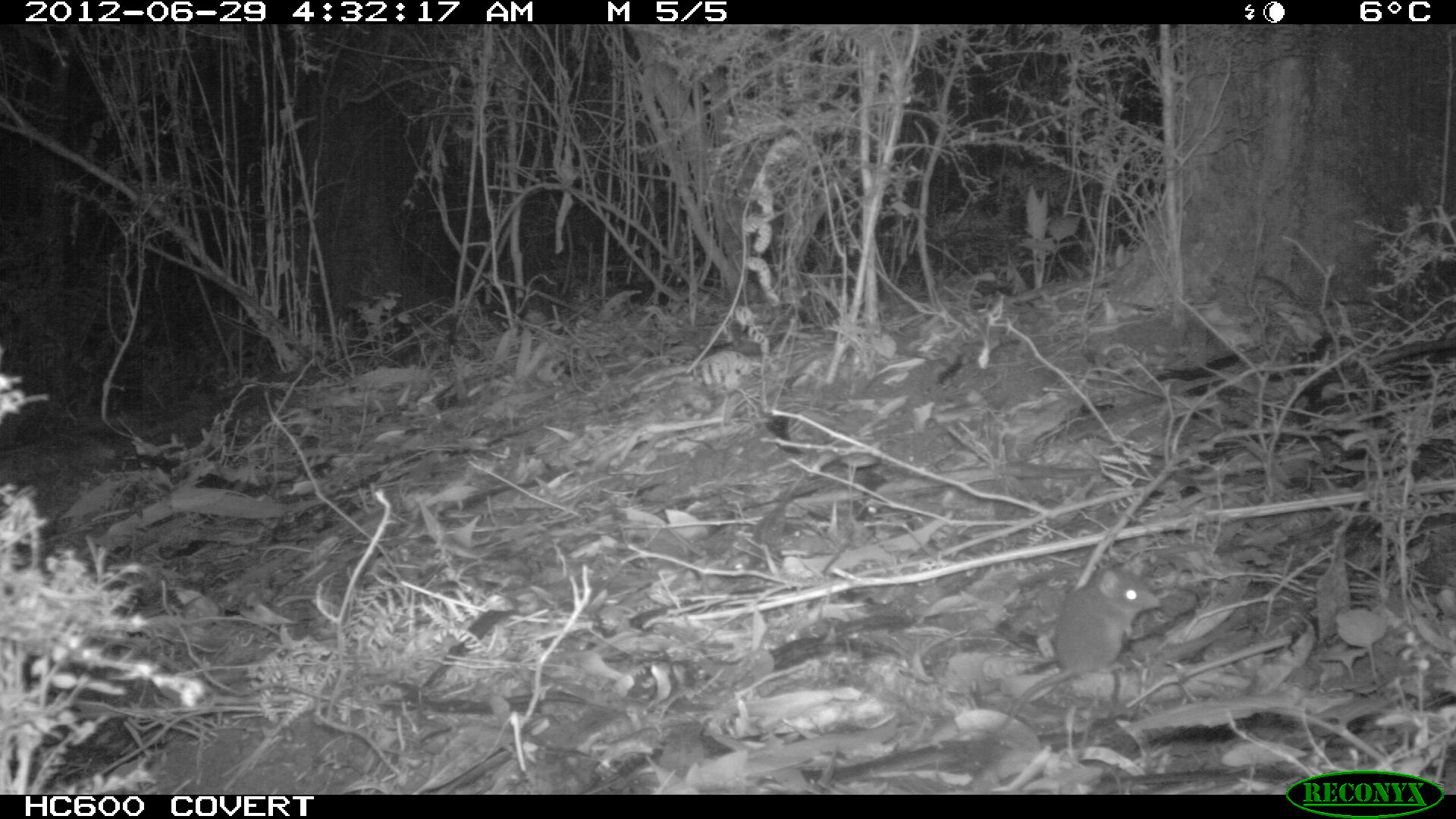
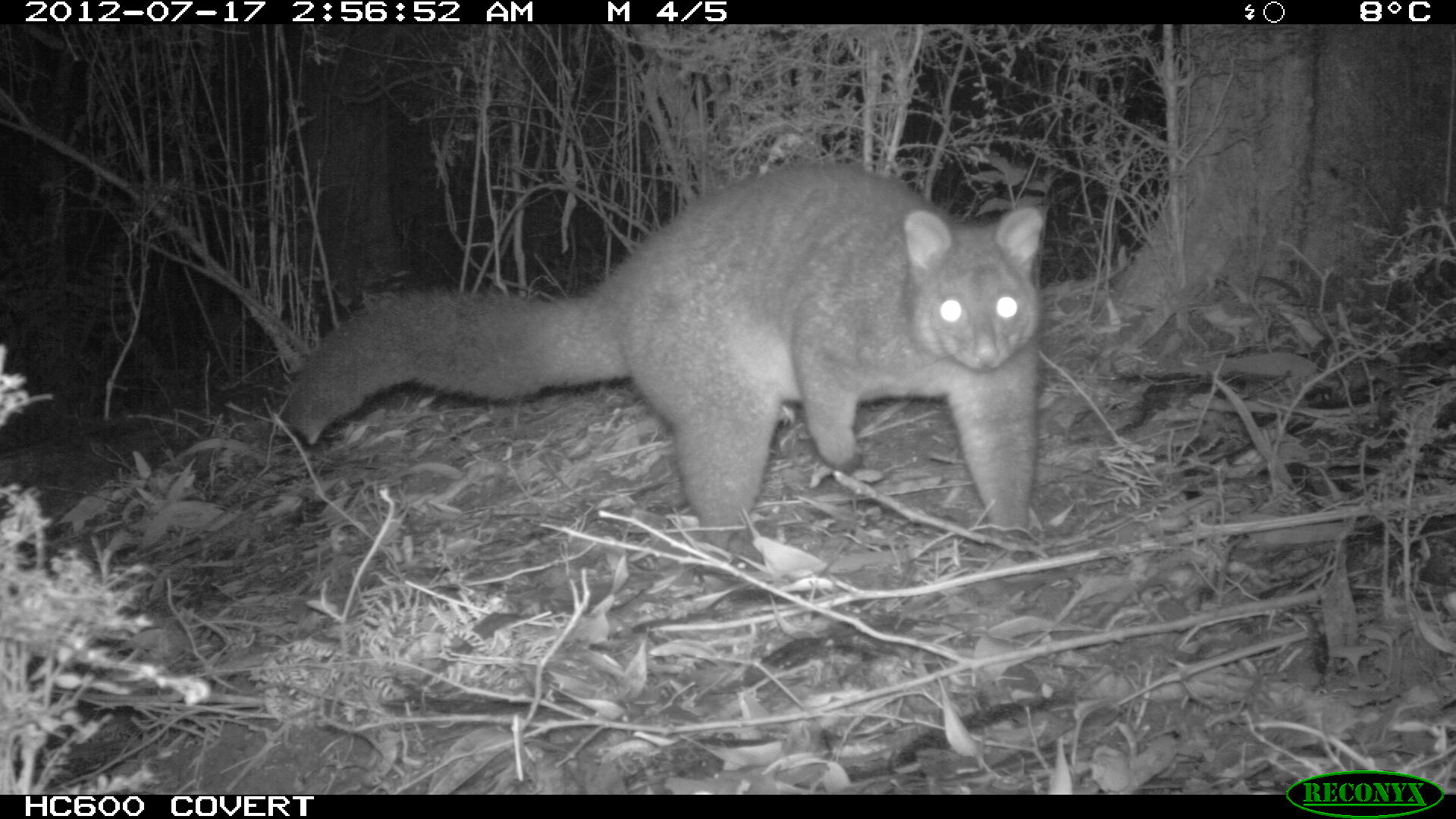
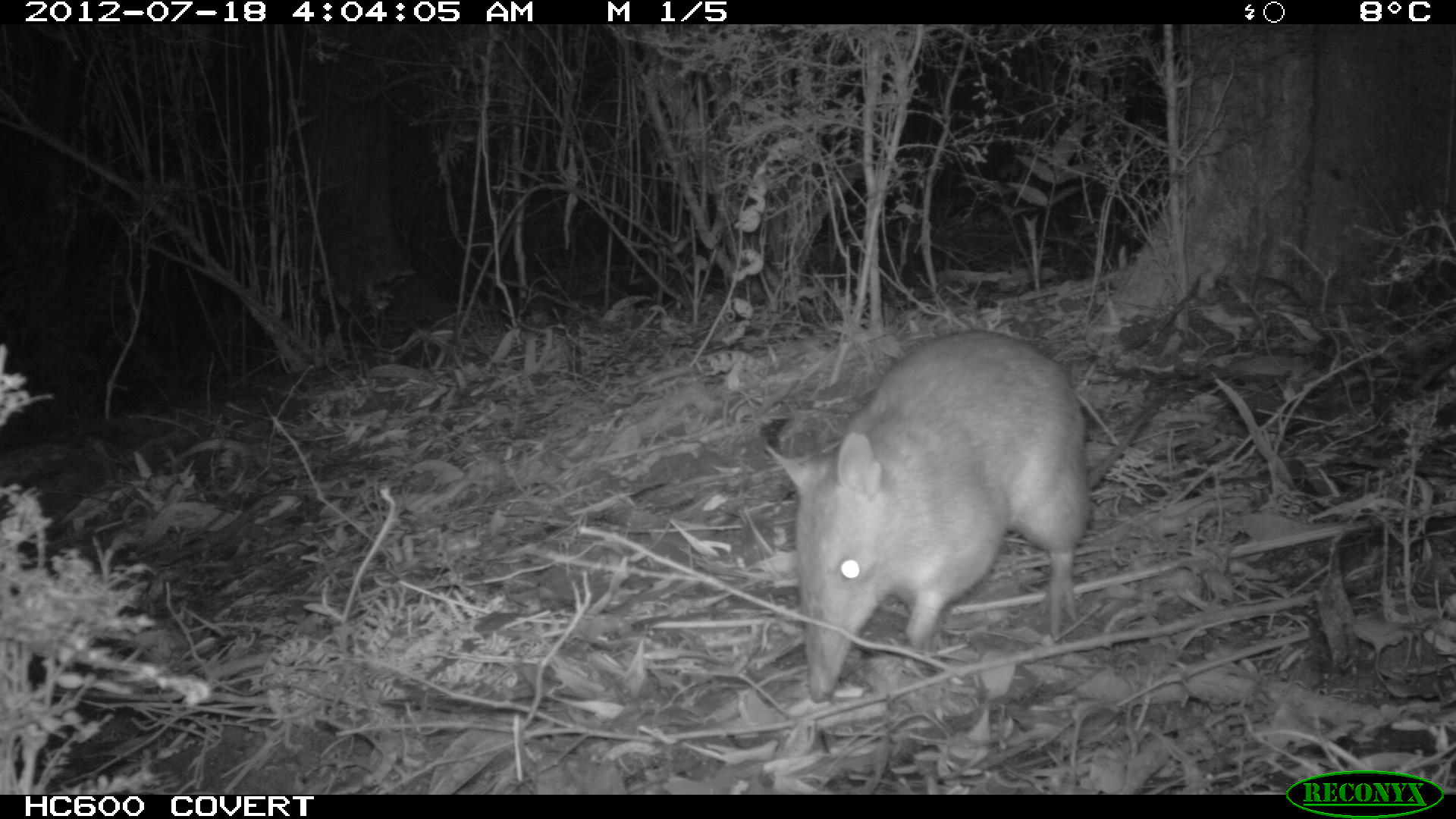
We recently moved one of our cameras down to a site in the Tarra Valley section of the park, to get a better idea of what wildlife is hanging around there. After the camera was checked the first time we had plenty of shots of Swamp Wallabies but nothing else apart from foxes. The camera was then moved a few metres to a new position where it could be set closer to the ground and the difference in the number of species photographed was quite remarkable. There are some great Long-nosed Bandicoot photos along with Antechinus and Rattus pictures, an Echidna and Possums (Not certain whether they are the Common Brush Tailed Possum of the Mountain Brush Tail (Bobuck) or whether we have both, The Bobuck’s have smaller more rounded ears.

Unfortunately there are still plenty of introduced predators at this site with Foxes and Feral Cats present. We have been recording quite a few cats with our monitoring lately.

This slideshow requires JavaScript.

2011 Lyrebird Count

Lyrebird - Male with tail in full display
Lyrebird – Male with tail in full display

We had a great turn out for the annual lyrebird survey on June 4thwith 28 volunteers turning up. This included 8 scouts from Sale and their leaders and it was great to see a number of new volunteers.

Fortunately the rain held off but windy conditions meant that listening out for Lyrebird calls was a little tricky. People in more sheltered positions were lucky to hear good numbers of birds calling but people in the outlying areas e.g. Ranger Craig (stationed at the depot) did not hear as much of a chorus of calls as he would have hoped. A number of the scouts were very excited at the number of birds they heard and did extremely  well to locate their stations in thedark given at least one marker post had been pulled out of the ground and hidden in the scrub prior to the survey. Evidently the scouts had a great time as they indicated they would be back next year to have another go.

A superb first up breakfast was provided by the new proprietors of the guest house (Nic and Steve) as a follow up to their great effort for the annual friend’s dinner. Thank you to Loy Yang Power for donating some funds to support the breakfast.  It is probably a good thing that the count only happens once a year given the early start but it is certainly a great event, with the highlight certainly being the experience of hearing the wake up calls of the birds as the sun rises in the rainforest.Lyrebird

If you would like to hear about upcoming activities such as the upcoming 2012 Lyrebird Count – please submit your details in the form below.

Go back

Your message has been sent

Warning
Warning
Warning
Warning

Warning.