This post is a summary of the Remote Camera Monitoring results over December and January 2012/13
Camera 1 – Still out of action after it was attacked by an aggressive lyrebird.
Lyrebird who got overly interested in one of our Remote Cameras
Camera 2 – Located in mature Wet Forest in the Tarra Valley was quite a prolific site, with the camera picking up lots of small birds e.g. White-browed Scrub Wrens and Bassian and Grey-Shrike Thrushes, as well as mammals such as Antechinus and Long-nosed Bandicoots, unfortunately there were plenty of Foxes and a Feral Cat present. Also plenty of Wombats, Wallabies and some Brushtails.
This video made up from a series of still photos from one of our remote cameras along with some sound recorded by our songmeter shows a Male Superb Lyrebird systematically scratching around for food underneath the leaf litter. This scratching results in the leaf litter being turned over and is thought to improve the rate of nutrient cycling in the forest, helping to create compost that will feed the vegetation.
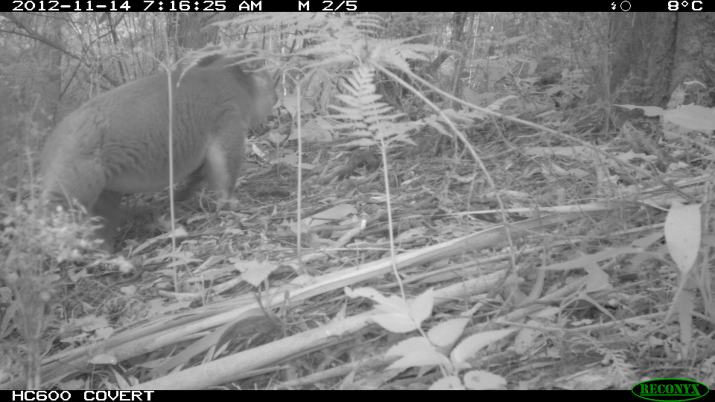
We have had what we hope is the first of many Koala’s detected by our remote cameras. This one was on the move past our camera site in the Tarra Valley. Koala sightings seem to be reported more frequently in the park in recent years, but this is only anecdotal as no proper ongoing survey has ever taken place. Importantly the park is part of the habitat of the Strzelecki Koala population, which is significant because the local Koalas are thought to be the only population in the state that are not descended from a handful of trans-located Koalas from French Island and hence are thought to be much healthier and genetically resilient.
This Koala is the first one we have seen one via our Remote Camera monitoring program.
This Koala was in an area of the Park that has some very large Mountain Grey-gum trees, (Eucalyptus cypellocarpa) which researchers believe is one of the local Koalas’ favourite food sources. Although not their first choice Mountain Ash (Eucalyptus regnans); which is the most common eucalypt within the park is thought to also be utilisted by Koalas as well as Messmate (Eucalyptus obliqua) which is also quite common. We would love to hear about any sightings in the park to add to our knowledge and to help contribute to regional efforts that are being made to get a better understanding about the distribution of the Strzelecki Koala and its health and well being.
Tonight’s the Friends of Tarra Bulga National Park committee had one of their regular meetings. It is always interesting to make the evening trip up to Balook, as you are almost guaranteed to see an interesting array of wildlife along the way. Tonight was no exception on the way up in the last hour of daylight there were plenty of wallabies darting out in front of the car and a couple of lyrebirds doing their last rounds of the day.
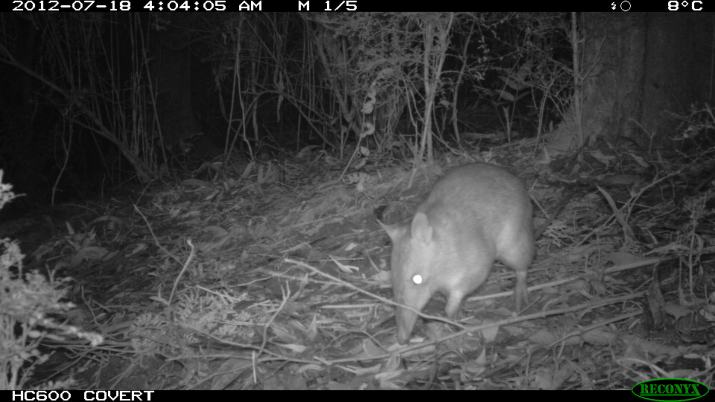
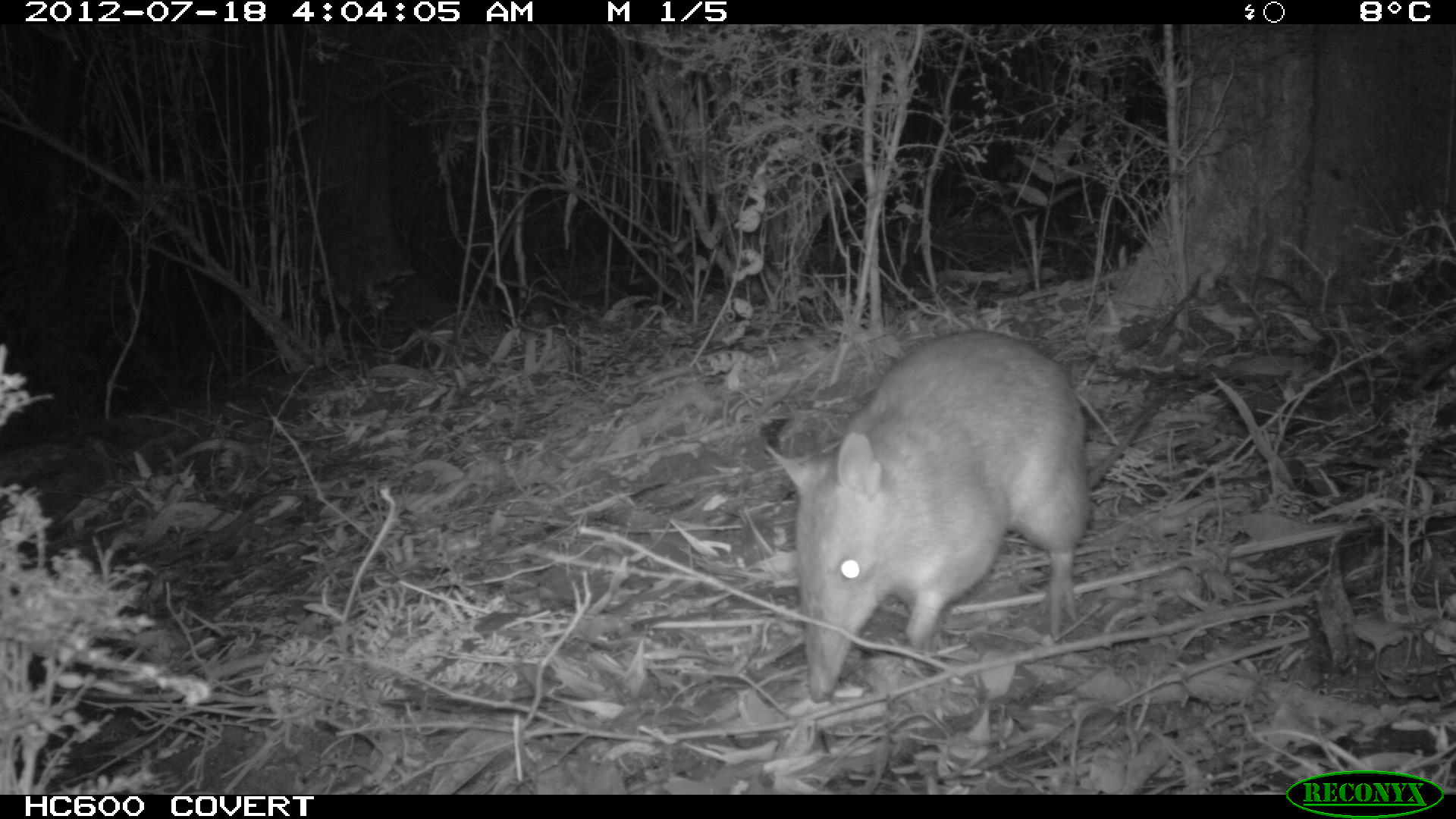
Long- nosed Bandicoot – Perameles nasuta
After the meeting it was now a couple of hours since dusk, back in the car and around the first few bends we catch some eye shine and a shape at the side of the road, slowing down it becomes clear that it is a fox with something in its mouth. With light from the headlights and the full moon, I can see a short tail and on the other side of the foxes snout a long pointy nose, unmistakably a bandicoot, bit sad that my first live sighting of a bandicoot at Tarra Bulga had to be this way. The full moon seems to get the fauna out and about and a little further on we stop the car when we spot a brush-tailed possum on the roadside. With the car stationary it strides across, with a tiny offspring hanging tenaciously on to its mother’s back. Next sighting is a couple of rabbits, which surely would have been our preferred option for the fox to be dining on.
Before the friends started monitoring with remote cameras, there had been no official records of bandicoots in the park for at least a decade (wildlife surveys can be an expensive business). What impacts do fox numbers have on bandicoot or lyrebird populations or even rabbits? How common are other feral animals in the park and what impact could they be having e.g. cats? What else is out there that we don’t know about (Could there be any Tiger Quoll? We could guess but without some means of surveying we wouldn’t really know. The Friends of Tarra Bulga now have a network of remote cameras across the park, we aim to use them to the best of our ability to get a much greater understanding of what is happening out there with all them critters.
This vision of a mother Swamp Wallaby (Wallaby bicolor) and her young one was snapped at one of our monitoring sites in the Tarra Valley section of the park. The camera was ideally located to catch the action.
When we checked one of the cameras after some of the recent windy weather, we arrived at the site to find it had had a close call with the base of a fallen tree landing only inches in front of our precious camera.
Figuring the the tree would be completely blocking the line of sight for the camera it was thought that there was no point leaving it in its current position. So the camera was relocated.
Later while checking the results computer we found there had been some interesting activity at the site with passing Echidna’s and Bandicoots and a Male Lyrebird strutting around and calling.
Nice shots of this male Lyrebird before the tree fell over and blocked the view.
After the tree fell we were not expecting much but the disturbance and obviously caused interest in feeding opportunities for some fauna. Antechinus and Eastern Whip Birds featured in a number of shots foraging in the rotten wood at the base of the fallen tree. As the tree was very close to the camera the shots are a little out of focus but they do give us a good look at the habits of species we would not have seen without the presence of the camera.
Antechinus Close Up foraging on newly fallen tree base.This Eastern Whip Bird (Psophodes olivaceus) was very interested in the base of this newly fallen tree, it seemed to be having a feast.
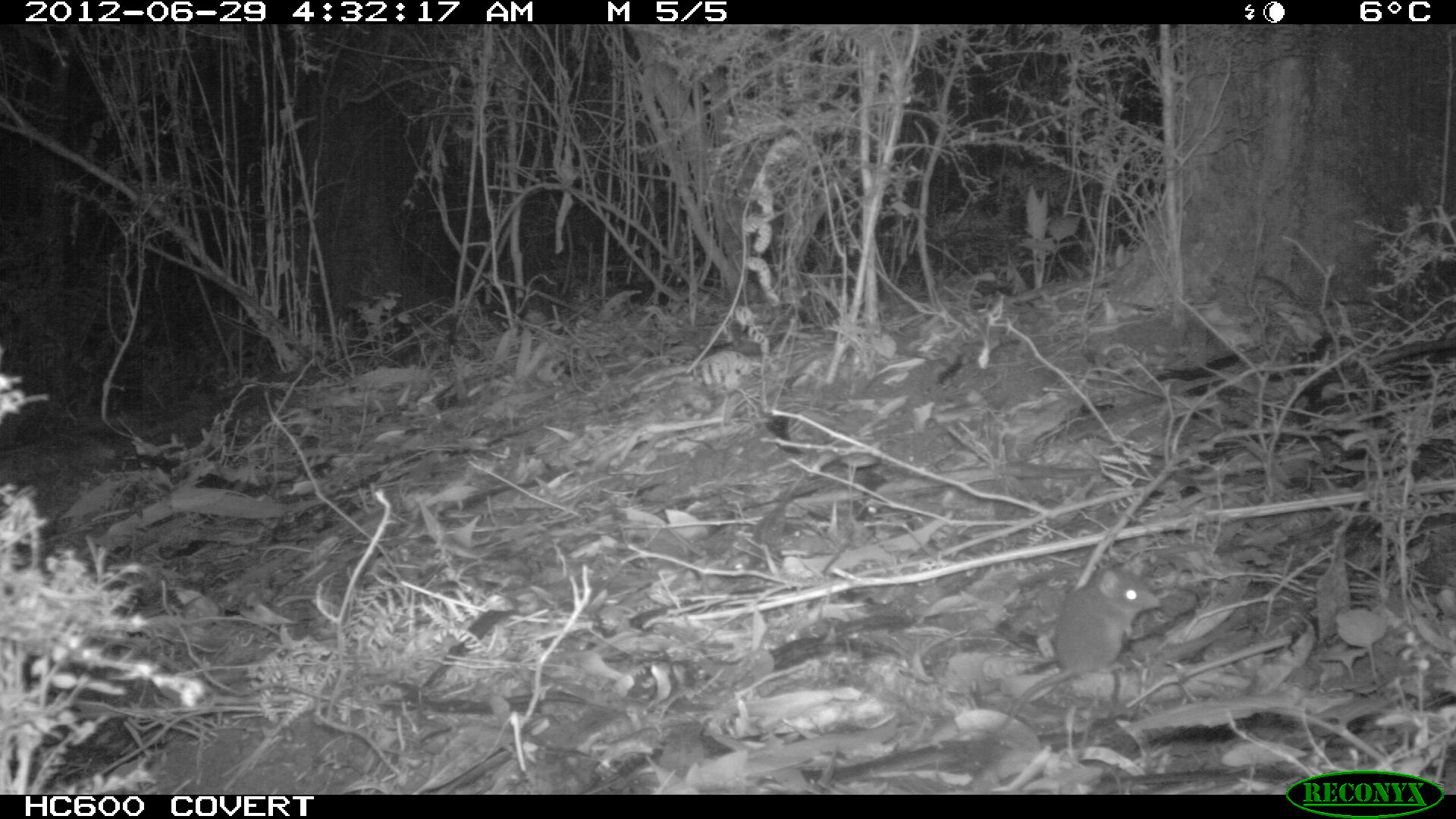
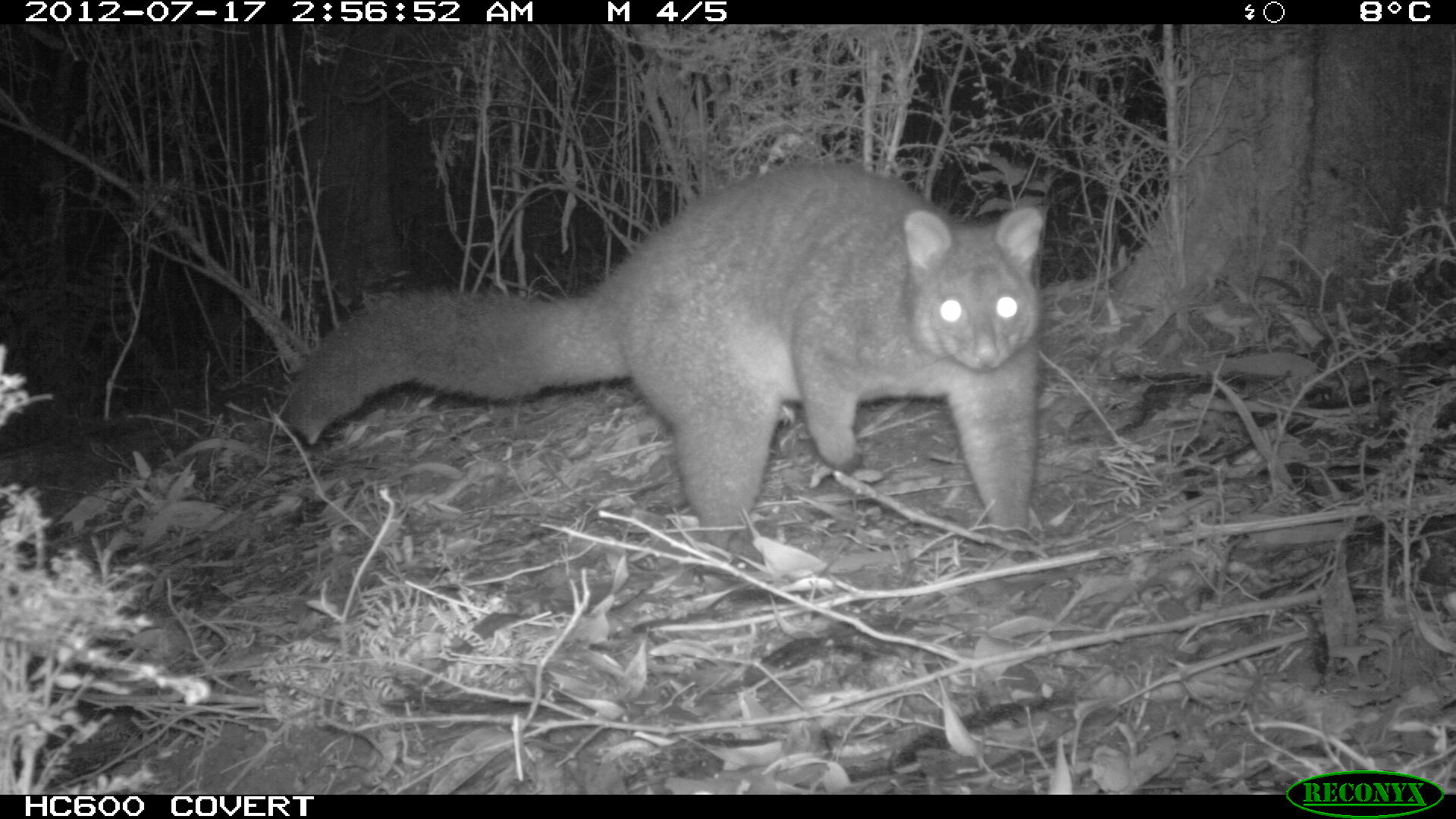
We recently moved one of our cameras down to a site in the Tarra Valley section of the park, to get a better idea of what wildlife is hanging around there. After the camera was checked the first time we had plenty of shots of Swamp Wallabies but nothing else apart from foxes. The camera was then moved a few metres to a new position where it could be set closer to the ground and the difference in the number of species photographed was quite remarkable. There are some great Long-nosed Bandicoot photos along with Antechinus and Rattus pictures, an Echidna and Possums (Not certain whether they are the Common Brush Tailed Possum of the Mountain Brush Tail (Bobuck) or whether we have both, The Bobuck’s have smaller more rounded ears.
Unfortunately there are still plenty of introduced predators at this site with Foxes and Feral Cats present. We have been recording quite a few cats with our monitoring lately.
This slideshow requires JavaScript.
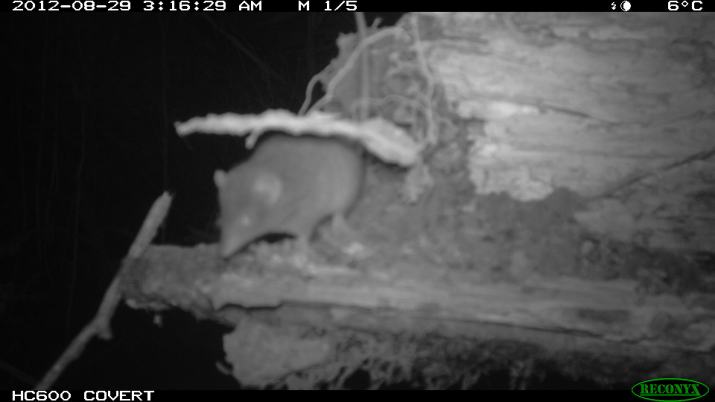
Antechinus
Antechinus – Hopefully you can spot it!
Brush-tailed Possum – This one seems to have shorter and more rounded ears, so it could be a Mountain Brushtail Possum (Bobuck)
Brush-tailed Possum – This one seems to have large is so is probably a Common Brushtail.

















 Friends of Tarra-Bulga National Park