A few night time visits to the park to get a better idea of the night flying insects that live in Tarra-Bulga have been reaping rewards. Here are just a few highlights of what is flying or crawling about our tall forests. All sightings are being uploaded to our project on www.bowerbird.org.au where they can hopefully be identified and then placed on the the Atlas of Living Australia and become a permanent record in their searchable online database.
Tarra Bulga
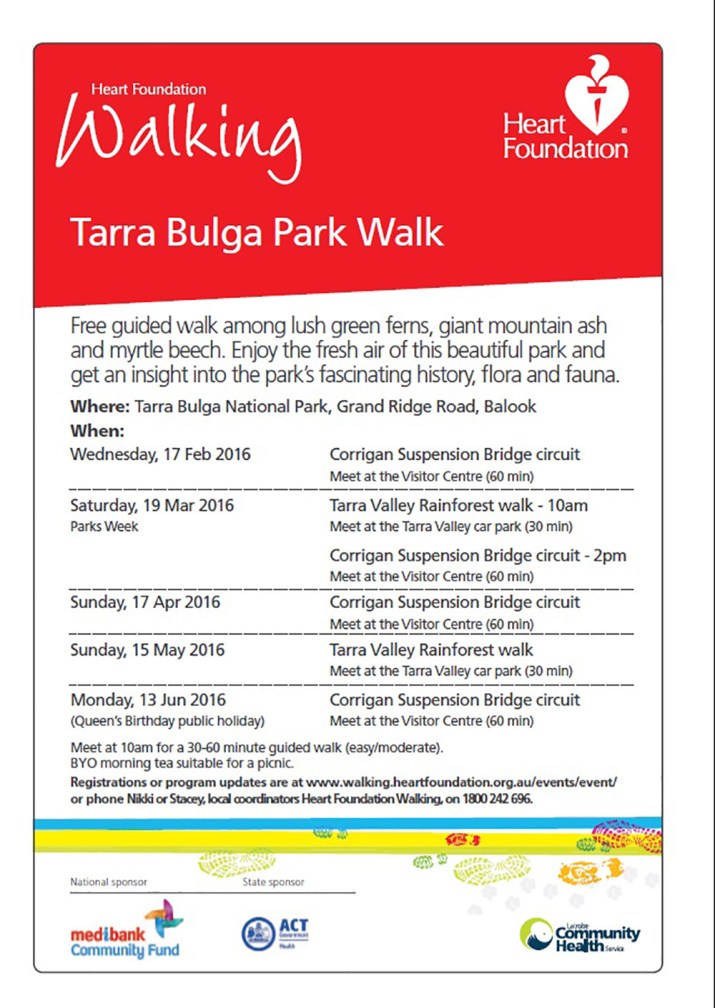
Parks Week Walks Saturday March 19th
Special guided walks led by Friends of Tarra-Bulga National Park will be held this Saturday March the 19th.
The morning’s guided walk will be is the Tarra Valley Rainforest walk – 10am Meet at the Tarra Valley car park (30 min)
The afternoon guided walk will be Corrigan’s Suspension Bridge circuit – 2pm Meet at the Visitor Centre (60 min)
The park visitors centre will be open from 10am to 4pm and along with the usual displays and information there will be a special screening in the theatrette featuring images from our fauna monitoring program.
To register for either walk (or both) go to www.walking.heartfoundation.org.au/events/event/ or phone Nikki or Stacey, local coordinators Heart Foundation Walking, on 1800 242 696.

Elusive Otways Moth Shows Up in Tarra-Bulga
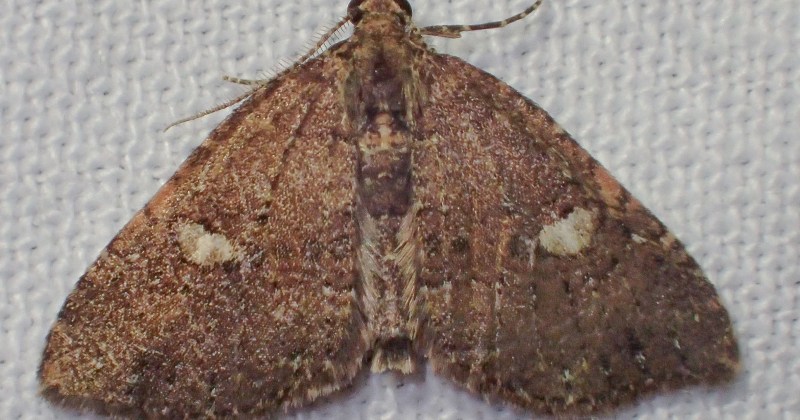
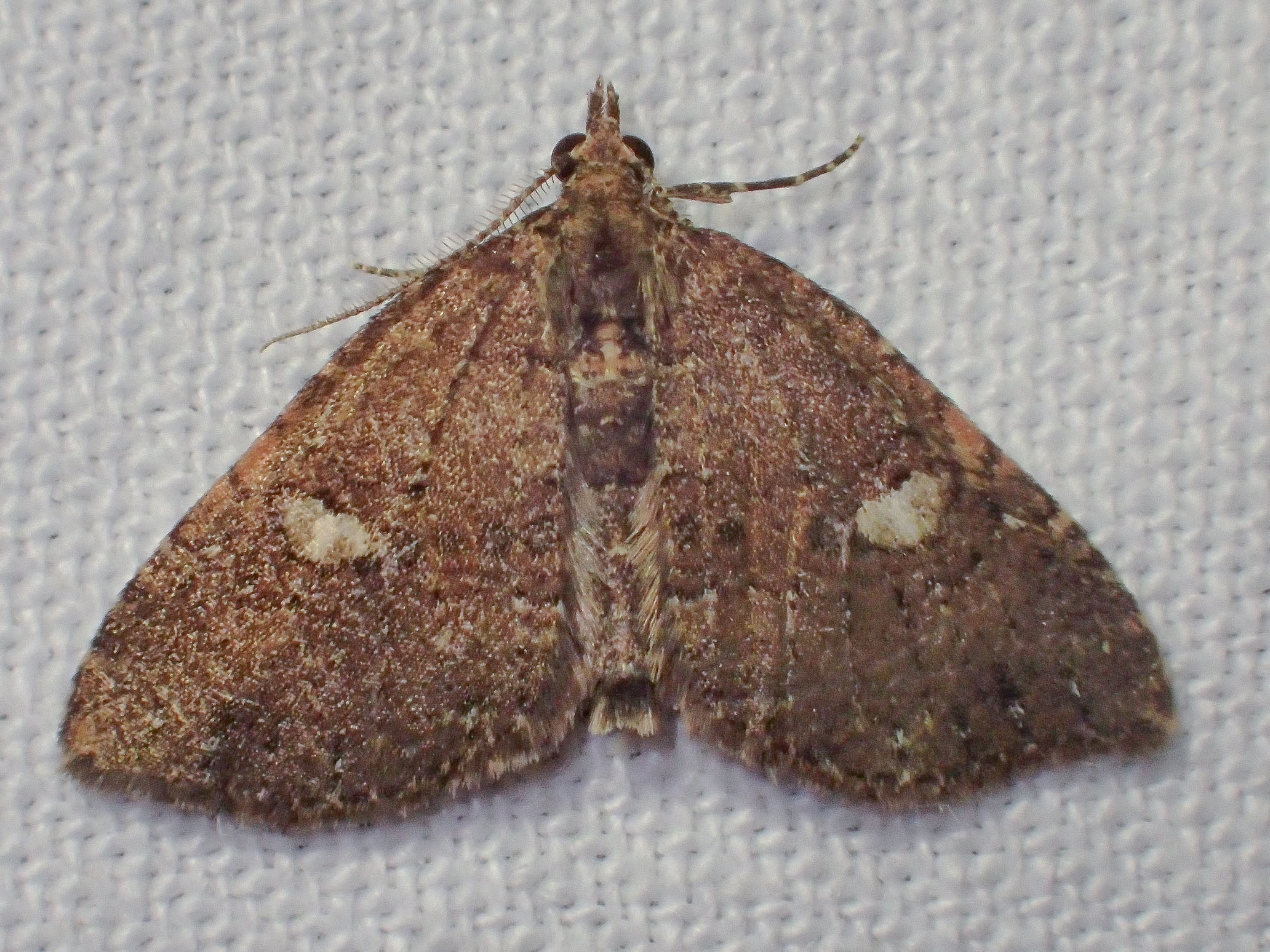
On the 8/2/2016 following one of our group meetings at Balook , outside the visitors centre just after sunset I hung out a white sheet with a UV light in the hope of finding a few interesting insects to photograph and potentially upload on to our “Friends of Tarra-Bulga National Park” project on http://www.Bowerbird.org.au. The conditions were windier than ideal but an interesting array of creatures did land on the sheet including a medium sized brownish moth with distinctive white spots on its forewings, it landed without fanfare and hung around just long enough for me to take a quick photo.

Back home the next day, I consulted Peter Marriott’s book Moths of Victoria and after much head scratching and flicking back and forward between pages I managed at last to find what I thought could be match, a species called Chrysolarentia pantoea or the “Variable Carpet Moth”.
In Moths of Victoria, photos of this moth are of preserved museum specimens captured in the Otways and Lamington National Park (on the Queensland/NSW border). Peter writes in his book that no specimens of this moth could be found in collections taken between these two sites. He did predict that other populations of this moth could be established in cool temperate rainforest or other similar natural habitats.
As I was not 100% confident with my identification and thought this sighing could be of interest, I contacted Peter who to my satisfaction agreed that I was correct and it was in fact Chrysolarentia pantoea, that I had managed to photograph. Remarkably he said that it was the first time to his knowledge that this species has been recorded in Victoria since the last museum specimen had been captured near Lorne way back on the 8/2/1907. That is exactly 109 years to the day between sightings!
Healthy Park Walks
Healthy Park Walks are back for 2016 and the first one is this Wednesday February 17th.
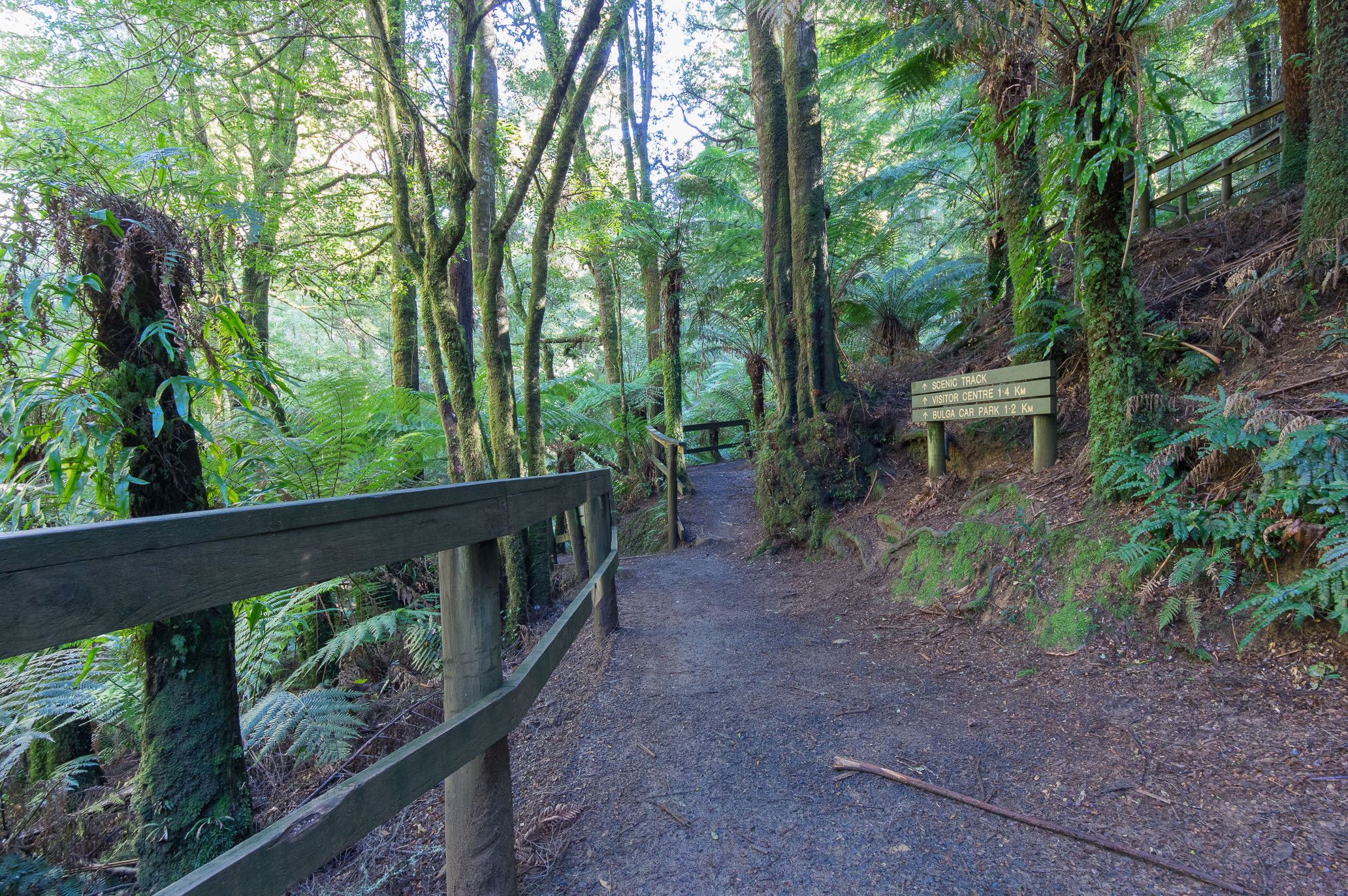
There is no better way to get active than to get out and enjoy the great outdoors in the beautiful surrounds of Tarra-Bulga National Park. Experienced guides will lead the way for a leisurely paced walk that will give you time to enjoy the wildlife and the stunning rainforest surrounds. For further details and to register visithttp://walking.heartfoundation.org.au/…/tarra-bulga-park-w…/

Tutsan under sustained attack
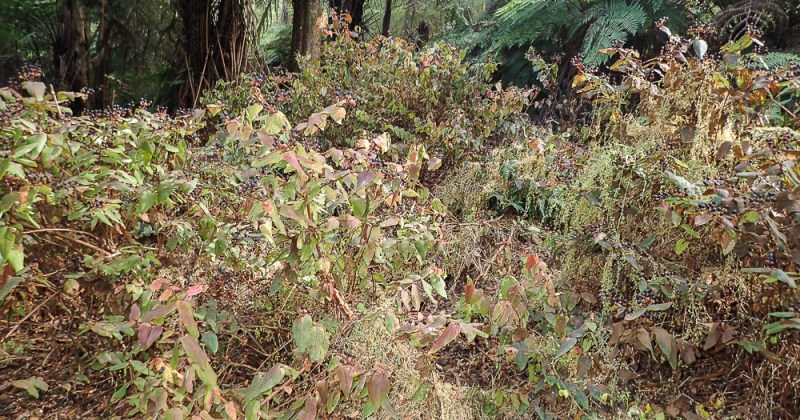
A small crew turn out for yesterdays working bee with the aim being to continue work on tutsan at a site in the Tarra Valley that had been sprayed by contractors in March. Having been several months since we had viewed the site we ventured in with nervous anticipation. The possible scenario being anything from complete success with the spray having knocking each tutsan plant stone dead or the other alternative where the spraying was ineffective and the tutsan was thicker than ever.
After the climb up to the site the initial news was good with the remains of dark brown and dead tutsan clearly visible. We set to work in a methodical fashion and soon found plenty of living plants to deal with, mostly on the outer edges of the infestation, some that had been sprayed and not completely killed and others that had been missed. We found few (if any) newly germinated plants from seed, but there is bound to be a massive seed bank present which you can guarantee will get sprouting at some stage.
As we walked further into the site, cutting and pasting living tutsan as we went, we found further evidence that tutsan that had been growing out in the open was completely dead and areas that had been thick with tutsan had now opened up. Pioneer species such as white elderberry (Sambucus gaudichaudiana) were popping up in the bare ground now exposed. The plants that were not out in the open are harder and intermingled with native species are harder to deal with and a number of large unsprayed patches further up the slope were discovered. They were too big for our small crew to tackle in one session and where mapped for us to tackle another day. One open slope area that had been sprayed had a fair proportion of plants still alive and reshooting, so a far bit of time was required to retreat them with poison. Although it was easy to lose count we treated at least 300 living tutsan plants in around 3 hours. We also worked on the odd bit of blackberry as well as approximately 20 sycamore maple which was the original weed we targeted on this site, we were originally pulling out maple seedlings by the hundreds. Overall the spraying made possible by a Communities For Nature Grant has been very successful but as anticipated we will need to do follow up work at this site over a number of years to promote the regeneration of native species and prevent the Tutsan coming back.
Wednesday Working Bee
This may be of interest to anyone who enjoys lending a hand towards a good cause. We are holding a small working bee next Wednesday (September 16th) to hopefully finish off the work on our Grand Ridge Rd planting project for this year, start time will be 9.30 am. Any helpers would be greatly appreciated, phone: 0488 035 314 or email friendsoftarrabulga@gmail.com for further details.

Healthy Park Walks at Tarra-Bulga National Park
A FREE guided walk among lush green ferns, giant mountain ash and myrtle beech. Enjoy the fresh air of this beautiful park.
Times are below:
Wednesday 26 August – Corrigan Suspension Bridge Circuit
Meet at Visitor Centre (60 min walk)
Monday 28 September – Tarra Valley Rainforest Walk
Meet at Tarra Valley carpark (30 min walk)
Thursday 22 October – Corrigan Suspension Bridge Circuit
Meet at Visitor Centre (60 min walk)
Monday 16 November – Tarra Valley Rainforest Walk
Meet at Tarra Valley carpark (30 min walk)
Wednesday 9 December – Corrigan Suspension Bridge Circuit
Meet at Visitor Centre (60 min walk)
Meet at 10am
BYO: Morning tea suitable for a picnic
To register or for program updates go to www.heartfoundation.org.au/greenwalks or call 1300 362 787.
For enquiries, please contact Nikki or Stacey, Local Coordinators Heart Foundation Walking on 1800 242 696.