Latest News

Remote Camera Monitoring – Update Summer 2013

This post is a summary of the Remote Camera Monitoring results over December and January 2012/13

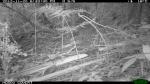
Camera  1 – Still out of action after it was attacked by an aggressive lyrebird.

Lyrebird who got overly interested in one of our Remote Cameras

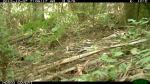
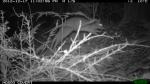
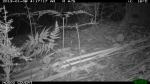
Camera 2 – Located in mature Wet Forest in the Tarra Valley was quite a prolific site, with the camera picking up lots of small birds e.g. White-browed Scrub Wrens and Bassian and Grey-Shrike Thrushes, as well as mammals such as Antechinus and Long-nosed Bandicoots, unfortunately there were plenty of Foxes and a Feral Cat present. Also plenty of Wombats, Wallabies and some Brushtails.

Superb Lyrebird – Compost Machine

This video made up from a series of still photos from one of our remote cameras along with some sound recorded by our songmeter shows a Male Superb Lyrebird systematically scratching around for food underneath the leaf litter. This scratching results in the leaf litter being turned over and is thought to improve the rate of nutrient cycling in the forest, helping to create compost that will feed the vegetation.

Blechnum Species in Tarra Bulga

There are seven different species of the fern genus Blechnum (Water Ferns)  in Tarra Bulga National Park and with a bit of background knowledge it is relatively easy to tell them apart. This post will focus on the identification of Blechnum nudum (Fishbone Water-fern) and Blechnum cartiliagineum (Gristle Fern), which unlike the other 5 species both have leaflets (pinna) being directly attached to the regular fronds by a broad base. The easiest way to tell them apart is by their fertile fronds.

Blechnum nudum (Fishbone Water-fern) is usually found in clumps in wet forest and gullies, it is reasonably common around Tarra Bulga.

Blechnum cartiliagineum (Gristle Fern) is less common in Tarra Bulga and is more commonly found in gullies or sheltered spots at lower elevations downstream from the park.

Senecios (Fireweeds) at Tarra Bulga

Despite having weed as part of their common name and belonging to the same genus as the much maligned Ragwort (Senecio jacobaea), there are several species of Senecio in Tarra Bulga National Park that are locally indigenous and very much desirable. They are most commonly found in open and disturbed areas, usually where there is a break in the canopy or on the side of  roads and tracks. Their ability to quickly colonise an area like this means they can compete against real weeds that may potentially invade these sites.

Senecio linearfolius (Fireweed Groundsel) grows to about 1.5 metres high and usually has smooth narrow lance shaped leaves with regularly spaced teeth. When in flower it can be identified by the 5 yellow ray florets (like petals) on each flower head. The flowers heads are clearly different from the other species that exist in the park (described below).

Senecio pinnatifolius (Variable Groundsel) is an amazingly variable species with huge differences in the size and form of the plant possible. What is consistent however is the attractive flower heads which are wider than the other species (up to 15 mm across) and have up to 14 yellow (petal like) ray florets, The unopened flower buds are bell shaped. The foliage is so variable that it is not useful for identification apart from the fact that the leaves are sessile (which means they are connected to the stems without a stalk) and it is usually hairless.

Senecio minimus (Shrubby Fireweed) has more consistent leaf characteristics so you can usually easily identify it without seeing its flowers. The leaves are lance shaped and have evenly spaces small raspy teeth on the margins. Where the leaf base is attached to the stem there are two lobes (auricles). The stems themselves have vertical ridges and are usually quite purple. The flowers heads are clearly different from the other two species. There are large clusters of them at the end of flower stalks but they do not have any petal like ray florets.

Senecio jacobaea (Ragwort) is a noxious weed, sometimes found in disturbed sites in Tarra Bulga, but it is far more common in in cleared farming areas nearby. It has similar looking but smaller flowers when compared with Senecio pinnatifolius, but it has distinctive deeply lobed leaves which make it clearly identifiable.

Fire Sets Back Restoration Efforts

One area of the park that the Friends of Tarra Bulga are monitoring carefully is an area that has been set back by the occurrence of the Black Saturday bush-fires.  The site is on a north-west facing slope and is an area of about 10 ha.It was added to the National Park in 1986 which was part of the process of the merging of the Bulga Park and Tarra Valley reserves. At that time it was in very poor condition, having being abandoned after being cleared for farming. It was reportedly covered in blackberries, introduced grasses and native colonisers such as Fireweed Groundsel and Bracken Fern.

Wild Cherry and Macks Creek Warm Temperate Rainforest Walk

Last Saturday the Friends of Tarra Bulga National Park held another walking activity aimed a giving interested people the opportunity to explore some of the more out of the way areas. This walk aimed to take in the Wild Cherry Track and then head down along a new section of the Grand Strzelecki Track and down through the Warm Temperate Rainforest along Macks Creek is the focus of an impressive restoration project. we were fortunate to be joined on the walk by Richard Appleton, who was a driving force behind the creation of the Grand Strzelecki Track as well as the rainforest restoration.

This slideshow requires JavaScript.

The weather conditions were kind and although the walk was mainly down hill it was still a challenge at times to negotiate some of the steep sections of track. We started off down the forest track so we could go through a section of Cool Temperate Rainforest as a contrast to what we would encounter further on. There were many highlights during the walk, they included taking in some of the array of flowering plants happening at this time of year at Tarra Bulga especially the mint bushes, Prostanthera melissifolia and Prostanthera lasianthos. The topography along the wild cherry track is impressive, as you walk down you can look down into the deep valley that contains the headwaters of Macks Creek and spot the rainforest down below. The vegetation is unusual in terms of the park, the ridge which you walk down has thinner soil and instead of wet scleropyhll forest it changes to damp forest. The dominant canopy species are Stringybarks and the weeping Cherry Ballart trees make for an attractive change of scenery.

Pretty But Noxious

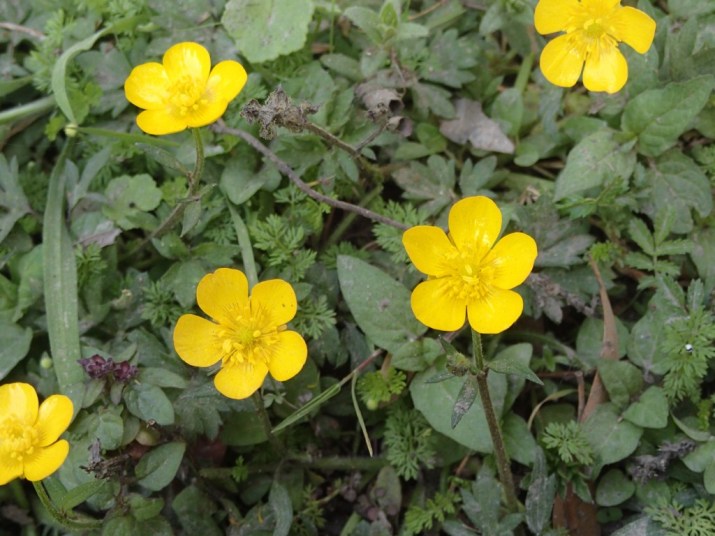
When cyclists from the Great Victorian Bike Ride “ascend” on Tarra Bulga next week they will notice along with the many native plants in flower some attractive looking flowering plants that are in fact not so desirable. One of the most obvious they will see is Creeping Buttercup – (Ranunculus repens). Although there are native Buttercup species this one comes from the Northern hemisphere. As can be seen by the sea of yellow along the roadsides at this time of the year, it has been well established for a long time and has also penetrate to some moist areas deeper in the park resulting in the displacement of native species.

Ranunculus repens - Creeping Buttercup
Ranunculus repens – Creeping Buttercup – In flower now common along the edge of roadsides.
Ranunculus repens - Creeping Buttercup
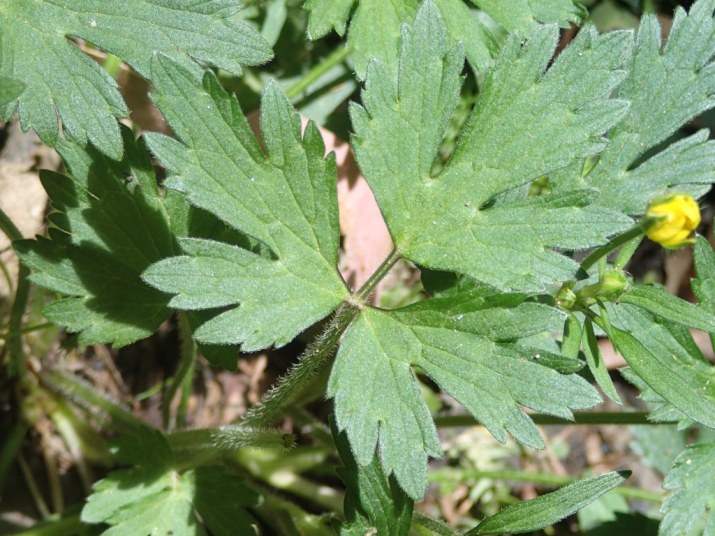
Ranunculus repens – Creeping Buttercup – close up of its leaves

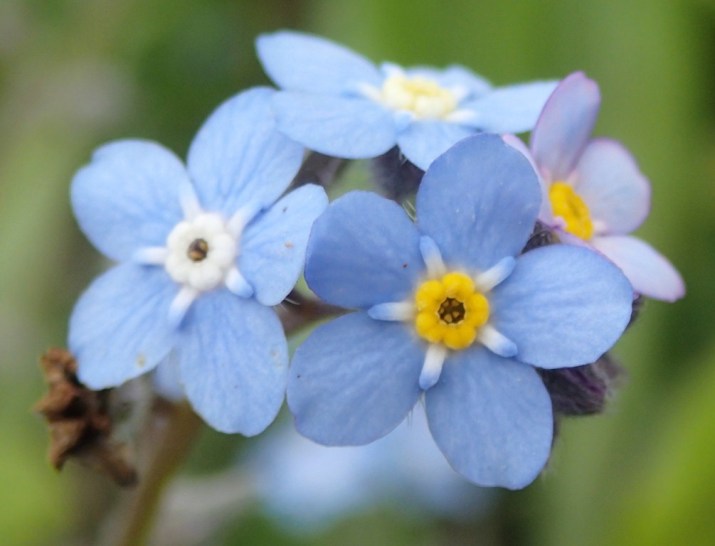
Another weed that is threatening to take over and become more of a pest is Myosotis sylvatica or  Wood forget-me-not. There are also native relatives of this plant in existence, but this species is native to Europe and has been introduced to Tarra Bulga from garden escapes. It is popping up all over the roadsides and is threatening to penetrate deeper into the park. Park staff and volunteers are vigilant in trying to remove seedlings whenever they are encountered but the task seems to be getting more difficult.

Myosotis sylvatica - Wood-forget-me-not
Myosotis sylvatica – Wood-forget-me-not – pretty flowers but a threat to the park.