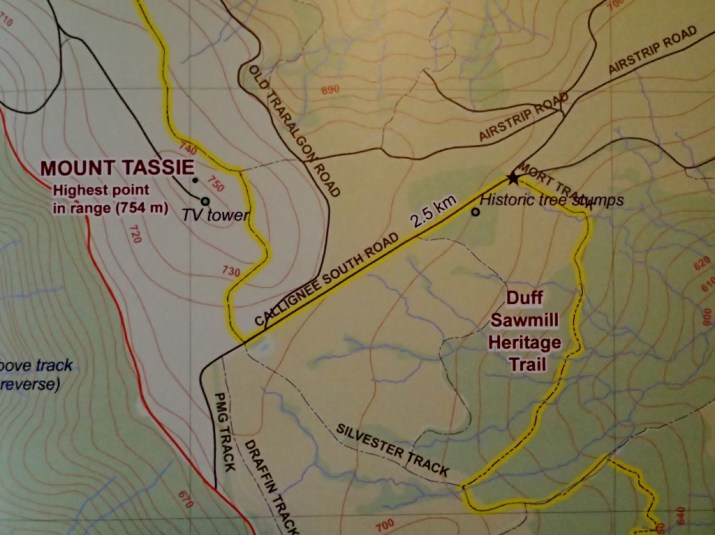
Had a small group for our most recent event on Saturday the Duff/Trail Mt Tassie Walk. The weather held off despite the bad forecast and we saw that walking this section of the Grand Strzelecki Track is another way to see some great local Landscapes not just confined to Tarra-Bulga National Park.
Friends of Tarra Bulga National Park are holding another group walk on Saturday November the 9th with the aim of exploring some of the lesser known local tracks. This time we will be heading out of the park and along the Grand Strzelecki Track up the Duff Trail to Mt Tassie. We will meet at the Visitors Centre at 9.30am, ready to walk. Please bring water, appropriate clothing, and lunch/snacks etc. All Welcome. For more information or to register you interest in participating please contact Peter Bryant on 0447 474 573.
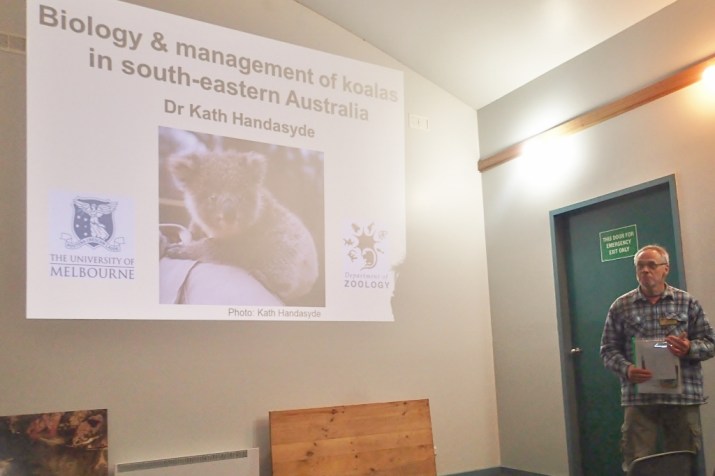
The Friends of Tarra Bulga hosted a very interesting and enjoyable day on Saturday when we welcomed a guest Dr. Kath Handasyde, who is a Senior Lecturer at Melbourne University and specialises in wildlife ecology, management and diseases. Starting with a yummy BBQ lunch we then proceeded into the visitors centre where Kath gave a fantastic insight into the management of Koala populations in South Eastern Australia.
Talk in the visitors centre
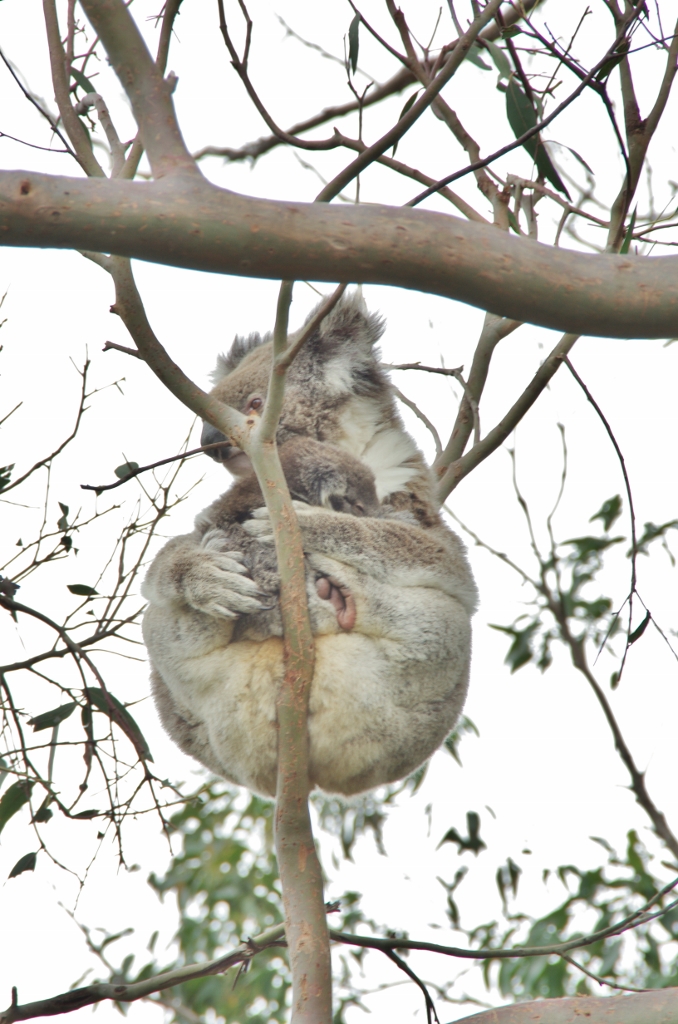
The major issues facing Victorian Koalas is overpopulation, this problem occurs mainly on island locations or in mainland areas where there were trans-locations or re-introductions into areas with isolated or fragmented habitat. In extreme cases in these locations habitat trees are being completely denuded with catastrophic consequences for not only the Koalas but for the whole ecology of these places. Kath outlined the success researchers have had in developing slow release hormonal implants that have been a successful contraceptive for females; it seems like where they have been applied to a sufficient percentage of the population that there has been some success in maintaining more sustainable Koala populations. Management of these crowded populations however is a very intensive process and while the contraceptive implants, make the process more efficient, it is a struggle to have enough management resources to keep up with the areas in crisis (e.g. Cape Otway).
Koala mother in a defoliated tree in at Cape Otway
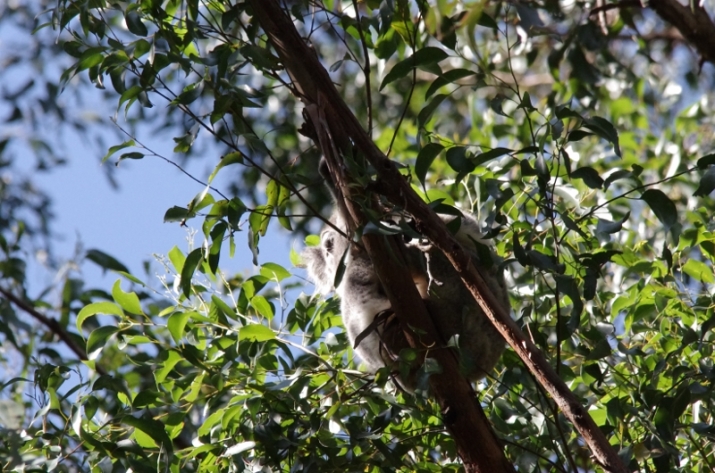
It seems locally that we are lucky that our local Koala populations are not having over-population issues. We have a relatively low density of Koalas, thought to be because of the higher altitudes and cooler temperatures making it harder for Koalas (who can’t shelter in tree hollows like many other species) to consume enough energy to meet their needs. This probably means the local ones have a shorter life-span (a limiting factor on a Koala’s life is their teeth, when they have worn out they can no longer process enough food).
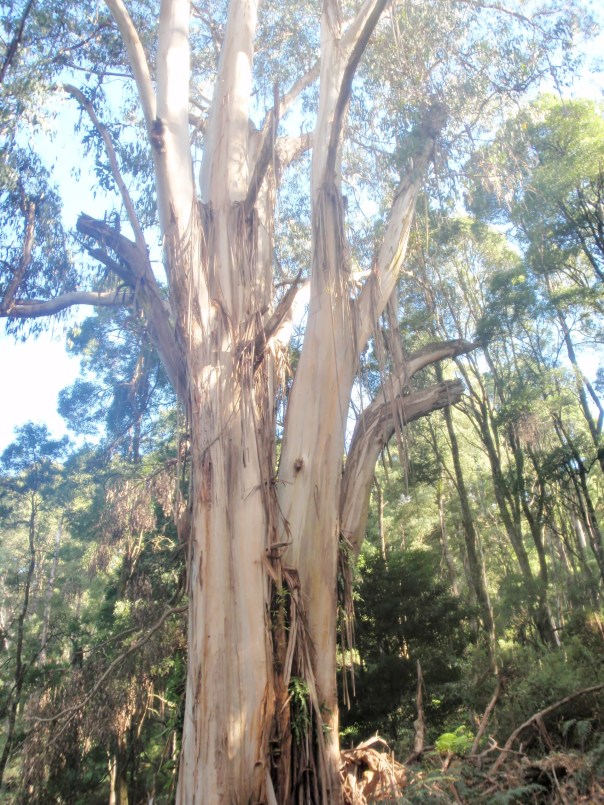
The quality of the local food is also thought to be a factor that controls the population. Manna Gums are not widespread and they rely mainly locally on species such as Mountain Grey Gum which possibly don’t have the same nutritional value. In the local region there are also fairly good linkages between habitat areas, meaning that populations can disperse successfully if crowding becomes an issue in one site. In some areas habitat linkages are mainly along roadside vegetation, meaning road deaths are common. The local population is also though to have greater genetic diversity than the rest of the state, so this should mean the population has greater resilience, although the animals in the rest of the state are still generally very hardy robust animals. Our monitoring program will also help to keep tabs on any changes in the local Koala population levels.
Local Koala Food Tree – Mountain Grey Gum
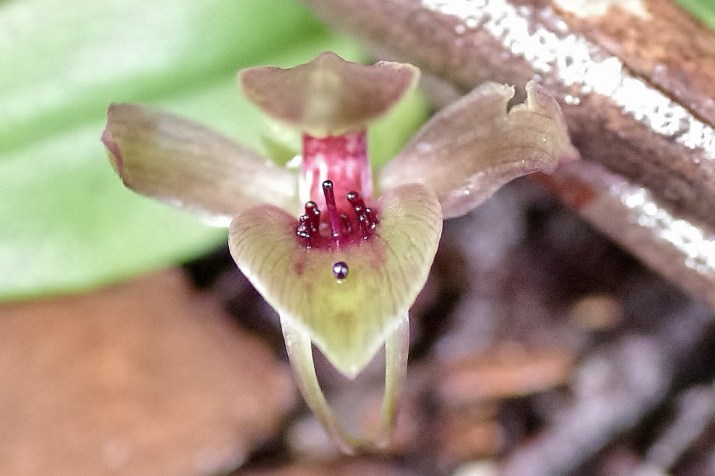
After the talks some of us headed out in convoy to the Tarra Falls car park and then did a loop walk starting by going up Diaper TK. At the start of the walk we unfortunately copped an instant onslaught of Leeches, but that was offset by the scenery and the two species of Bird Orchid in flower in the middle of the track. Kath used her all her spotting senses to discover some Koala droppings (Scats), but we did not get a live sighting today; not that surprising given that spotting is quite difficult given the tall towering trees and healthy canopy that make up the local habitat as well as the fact that we don’t have a high population density. All in all it was a great day, and a big thanks has to go out to Kath who made the big effort to come down here and share her extensive knowledge.
Dr Kath Handasyde is a senior lecturer in the Department of Zoology at the University of Melbourne and has been conducting research on koalas for over 30 years. She is coming down to Tarra Bulga National Park on Saturday October the 26th to share Koala knowledge with us. The day will begin with a free BBQ lunch at the visitors centre, then we will head down and go for a walk around a new track in the Tarra Valley, to see what we can find. Please note the walk does include some steep and slightly challenging terrain so people need to come prepared with suitable footwear, it will take about 2 hours. Everyone is welcome but please RSVP to Pam on 5196 6140 or Peter 0447 474 573 by Friday October the 18th for catering purposes.
Friends of Tarra Bulga recently held its AGM, where the diverse activities carried out by the group were highlighted. A major activity of the group is to staff the Parks Visitor’s centre, in the past year 29 Volunteers contributed to opening the centre on Weekends and School and Public Holidays (a total of 182 days).
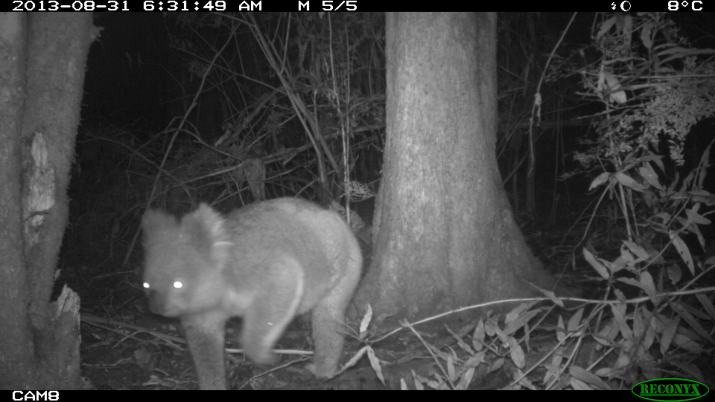
The Friends also have plenty of hands on activities throughout the year aimed at helping to learn more about the park and enhance it. This includes walks along some of the more remote tracks, Lyrebird surveys and working bees involving both weed control and tree planting. The group undertakes photo-monitoring of various sites to monitor vegetation change and has a network of remote cameras that are helping to gain a better picture of what is happening with both native and feral animals in the park. A device that can be left out in the park to record frog, bird and bat calls is a recent acquisition.
Example of what can be found on the remote cameras.
To let everyone know what is happening in Tarra Bulga and more about its plants animals and fungi they have a Blog http://www.tarrabulga.wordpress.com which is packed full of photos and information. They are also on Facebook and Twitter and are very keen for the public to share their own Tarra Bulga experience via these sites. You can also find more information about getting involved with the group by contacting the Ranger, Craig Campbell on 5172-2508.
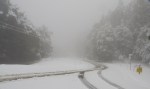
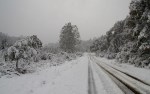
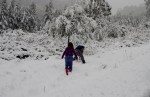
Heavy snowfalls are a relatively rare event at Tarra Bulga National Park. A large dump in August 2005 caused a lot of damage to the park’s vegetation due to the weight of the snow. Today’s snow is the biggest dump since this event and hopefully the damage will not be too severe but it certainly will have an impact.
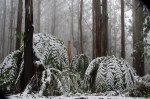
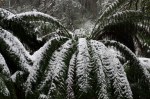
This morning there were plenty of tree branches cracking under the weight of the snow and in more open areas shrubs were taking a battering. Tree Ferns are an ideal shape to catch snow on their fronds, but thankfully they seem very good at recovering from damage. The area where our working bee was a week and a half ago was covered in snow, which is not an ideal start for our newly planted Mountain Ash seedlings.
It was interesting to see the Fauna’s reaction to the sudden icy change to their landscape with a confused Kangaroo hopping about (outside the park boundary) and Lyrebirds and other species buzzing around and looking a bit agitated. The snow would have affected mainly the higher elevations in the park, with sites along the Grand Ridge Rd catching the heaviest falls.
Welcome to Balook
Turn-off into Visitors Centre
Grand Ridge Rd next to Park Entrance
Visitors Centre Entrance
Visitors Centre
Next to the Visitors Centre
Nice day for a picnic, Not!!
Not the best day for a BBQ
Snow Scene
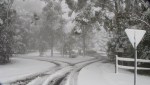
Grand Strzelecki Track Sign – Prepare for all conditions.
A row of Blackwood Trees planted in honour of Cedric Ralph
This deciduous tree near the park entrance is coping better with the snow than the indigenous species.
Shrubs struggling under the weight of the snow
Snapped branches on this Sapling due to the snow.
This Silver Wattle has snapped in half at the trunk.
Tree fern fronds bending down under the weight of the snow.
Tree fern fronds bending down under the weight of the snow.
Eastern Yellow Robin not enjoying the snow.
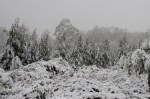
Plantation across the road from Tarra Bulga copping a battering.
Off to the right is where had our planting day a week and a half ago. Not great for the new trees.
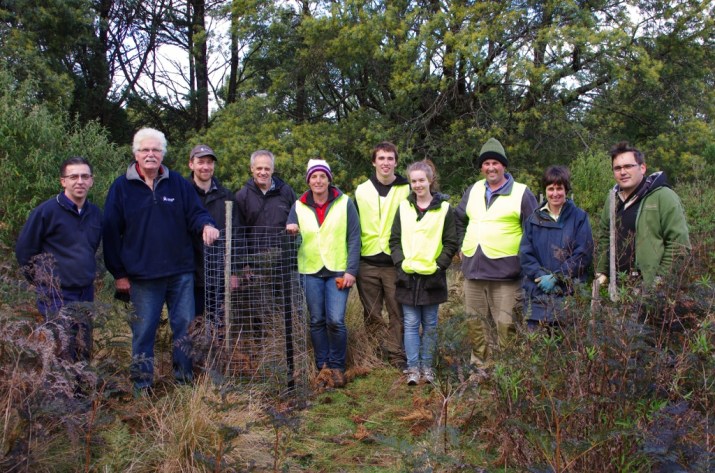
The planting activity this month saw a good turnout of members of both our group as well as some great helpers from the Conservation Volunteers. The work focused on adding overstorey species (in this case Mountain Ash) to a scrubby regrowth site located along the Grand Ridge Rd.
Several years ago we had planted Blackwood’s on this site with mixed success. Blackwood seedlings are a favourite food of Wallabies. We found that the Chicken wire guards we used back then were not 100% successful in keeping Swamp Wallabies at bay and that they were able to reach the top and nibble the new growth. An application of Sentree (Wallaby Deterrent) helped to give the plants a fighting chance, but most are still quite stunted where as the ones that have got away have reached over 3m tall. Hopefully the new improved guards we used today; which were taller, wider and made of stronger mesh; will see a better success rate. They will also be able to be reused down the track for future plantings. Some of the dead Blackwoods had reached several feet high and then died. They had no roots left, so not sure whether they had been chewed off (by rats??) or maybe caused by the tubes being root bound or just rotting away, the stems were still quite green.
All up we planted 40 new Mountain Ash trees, as well as removing old guards from previously planted trees. Although this may not be a big number, it is a reflection on the careful effort we made to do the job properly and make sure they are well protected, so hopefully, they get the chance to grow into forest giants. Thanks to Pam and David for preparing a delicious barbecue lunch for the starving workers, and also to the Conservation Volunteers for their tremendous support for this event which was an enjoyable and productive day.









 Friends of Tarra-Bulga National Park