
See What When – Remote Camera Hourly Analysis

A recent post reporting on the results of our camera trap monitoring program for 2013, identified a trend with Swamp Wallabies where numbers photographed by across the park by camera traps dropped very sharply after July.  We have no real explanation for this, but as we gather further data, it will be interested to see large annual fluctuations in the Wallaby count continues.

We had an inquiry as to whether it was more common to record Swamp Wallabies in daylight or during the night-time, which is an interesting question and one which is easy to work out from our database. So after crunching some numbers here are some answers, not just for Swamp Wallabies, but for all our commonly recorded species.

Swamp Wallabies
Swamp Wallabies

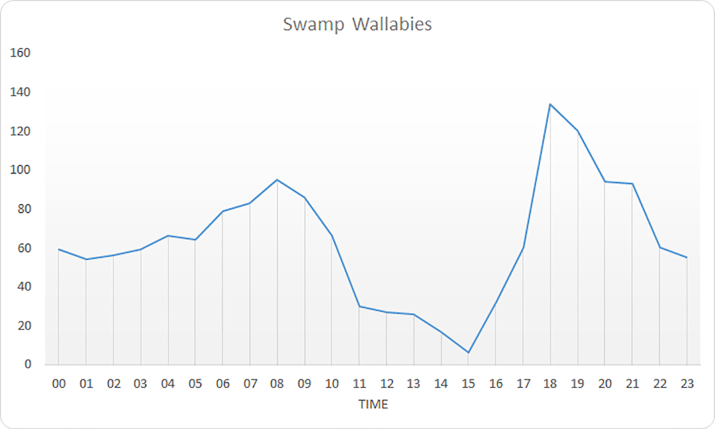
Swamp Wallaby triggers are fairly regular at any time of day or night, they do seem to slow down as you might predict in the middle of the day, but then fire up to have their peak numbers in the early evening.

Wombats
Wombats

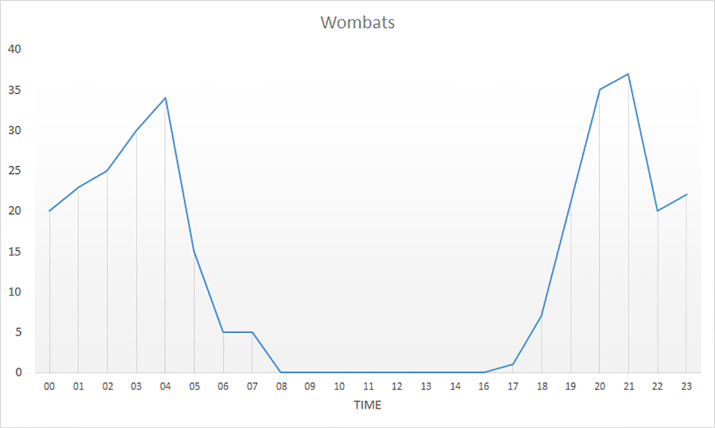
Although it is not particularly uncommon to see Wombats out during the day sometimes, perhaps surprisingly we have never had one trigger a camera between 8am to 4pm. They seem to have peak activity in the evening and another peak around 4am.

Long-nosed Bandicoots
Long-nosed Bandicoots

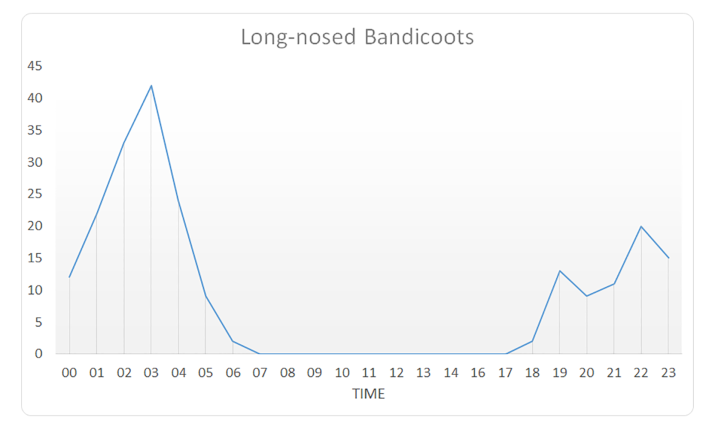
It’s no surprise that these Bandicoots are rarely seen, although we get fairly regular photos of them, they seem to have a definite peak of activity between 2am and 4am.

Foxes
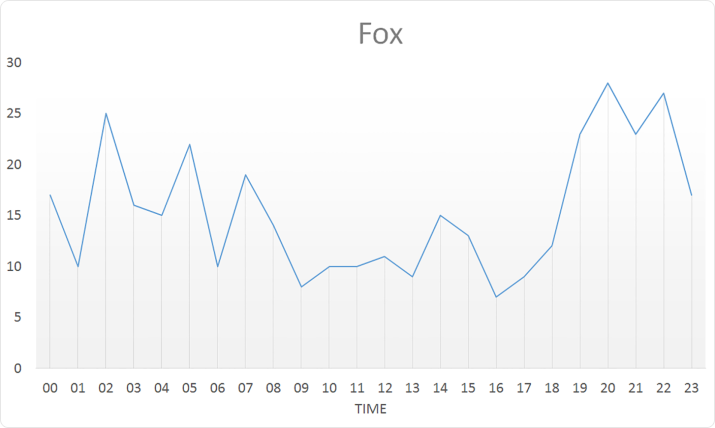
FoxesThe graph shows here that there is never any time of day for animals to be complacent. Foxes can be active at any time of day, seems like they are marginally more common at night. Also have data on Feral Cats, they too can be around at all hours, but seem less likely than a Fox to be around in daylight.

Lyrebirds
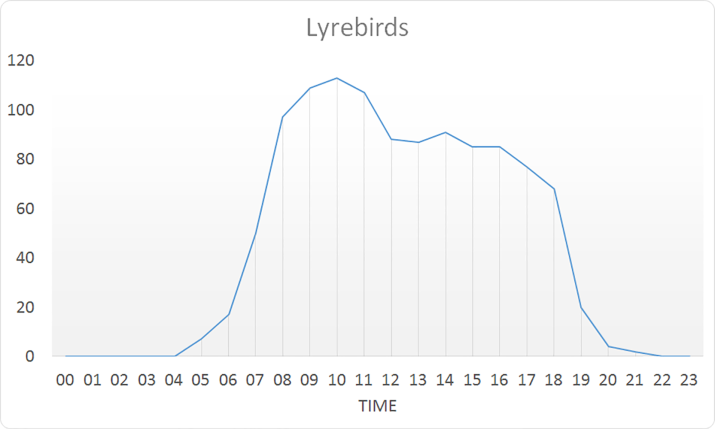
Lyrebirds

Lyrebirds in Tarra-Bulga obviously need to make the most of the daylight hours. It seems there is a slightly greater chance they will be snapped by a camera in the morning, but overall any time of the day is good for them.


 Related Posts:

2013 Remote Camera Stats

Camera Site Greatly Exceeds Expectations

2014 Lyrebird Survey

One of our most popular volunteer activities is coming up on Saturday May 31st. The survey, which monitors trends in the Lyrebird population involves an early start. The meeting place is at the Tarra Bulga National Park Visitors Centre at 6.15 am. On arrival the recording process is explained and people are allocated to various monitoring points around the Bulga Park area.

The survey begins at sunrise with the first Lyrebird calls and only takes half an hour. Following the morning chorus, a free cooked breakfast is on offer at the Tarra-Bulga Guest House. If you would like to come along you need to contact ranger Craig Campbell (by Wednesday May the 28th on 5172 2508 or email craig.campbell@parks.vic.gov.au. Wear warm clothing, a parka, bring a watch, a torch and compass (optional).

A couple of birds from our Remote Camera monitoring.

2013 Remote Camera Stats

Here’s a breakdown for you all showing the species that triggered our remote cameras last year. The lower number of detection in the later part of the year can be explained by a few issues that we had with dodgy SD cards causing the batteries to conk out prematurely. Can’t explain why the Wallaby numbers vary so much each month. Some of the other species e.g. Lyrebirds, seem much more evenly represented over the year.

Breakdown of Remote Camera
Triggers – Tarra Bulga National Park 2013

Species

Total

Jan

Feb

Mar

Apr

May

Jun

Jul

Aug

Sep

Oct

Nov

Dec

Swamp Wallaby

978

50

44

105

139

164

186

157

28

14

28

15

48

Superb Lyrebird

679

48

46

59

86

70

73

50

72

54

61

38

22

Fox

256

16

22

20

49

39

30

28

20

8

10

10

4

Brushtail Possum

190

12

8

27

33

20

13

20

9

4

11

15

18

Wombat

175

3

12

14

22

33

13

24

10

4

7

26

7

Rat

170

16

2

4

12

7

15

17

27

54

12

4

Bassian Thrush

156

8

11

22

24

4

10

12

20

5

9

4

27

Unidentified Bird

115

6

8

20

12

20

6

3

4

5

15

10

6

Long Nosed Bandicoot

95

9

6

8

13

8

9

5

10

19

4

1

3

Antechinus

84

3

9

8

16

12

5

12

6

2

5

5

1

Small Mammal – Unidentified

76

5

2

2

5

14

6

13

14

5

4

4

2

Ring-tailed Possum

61

1

2

2

2

5

6

18

18

7

White-browed Scrubwren

53

3

1

2

10

6

7

6

2

2

3

8

3

Rabbit

46

1

5

3

2

6

4

4

3

18

Pilotbird

40

4

17

5

1

2

8

1

1

1

Feral Cat

39

3

1

10

7

3

3

4

5

1

1

1

Short-beaked Echidna

19

1

2

2

7

3

1

3

Large Mammal – Unidentified

19

1

4

7

1

2

4

Brush Bronzewing

17

1

2

1

1

3

1

4

1

3

Eastern Whipbird

15

1

1

3

1

3

1

1

1

2

1

Grey Currawong

13

1

8

1

1

1

1

Common Blackbird

12

2

1

9

Koala

11

1

5

2

1

1

1

Olive Whistler

11

1

2

8

Kookaburra

7

4

1

1

1

Crimson Rosella

5

1

4

Superb Fairy-wren

4

1

1

1

1

Satin Bowerbird

4

1

1

1

1

Pied Currawong

4

1

3

Grey Shrike-Thrush

3

2

1

Eastern Yellow Robin

3

1

1

1

Sugar Glider

3

2

1

Fantail, Grey

2

1

1

Fantail, Rufous

2

2

Common Bronzewing

1

1

Raven Species

1

1

Brown Thornbill

1

1

Mystery Species

1

1

Dog

1

1


Camera Site Greatly Exceeds Expectations

In February we placed a camera in a new site along the Grand Ridge Rd, in vegetation that was not typical old growth Mountain Ash forest, but rather sad looking regrowth scrub. As a result we didn’t have high expectations as to what fauna we’d find in this habitat. Surprisingly though it’s a very popular spot, especially with ground dwelling birds (must be lots of food) and we obtained some fantastic images. All up the camera was triggered on 165 separate occasions, see the table below for more details)

This slideshow requires JavaScript.

Species Sightings  

Species

Sightings
Brush Bronzewing 36   Fox 3
Superb Lyrebird 22   Swamp Wallaby 2
White-browed Scrubwren 20   Echidna 2
Bassian Thrush 16   Koala 2
Pilotbird 13   Common Blackbird 2
Eastern Whipbird 7   Brushtail Possum 1
Superb Fairy-wren 7   Rufous Fantail 1
Wombat 4    
  • In addition there were 26 birds that triggered the camera not able to be identified from the image quality to species level.
Related Posts:


Hello Birdy – Lyrebird Study

If you have seen the episode on song birds on the ABC program “Hello Birdy” you would have probably enjoyed the segment on Lyrebirds and their ability to mimic other birds etc. Here is an interesting video from the researcher interviewed on the show. It is regarding the male Lyrebirds song and dance routine when doing a display.

No Flowers and Chocolates for Swamp Wallabies

Thought we would share this video from our YouTube Channel today. It was put together from our last lot of remote camera photos. Probably not a rare event given the abundance of the species, but our camera was well placed to capture the moment.

Related Posts

Camera Killer

The recent news involving a Sea Eagle flying off with a remote camera in the Kimberley has inspired us to put together this video of a Superb Lyrebird, that seemed to think the reflection in the front of the camera was a rival and hence went to war. This happened in September 2012 and thankfully we have not had a repeat. However we did stop putting cameras quite so close to the ground.