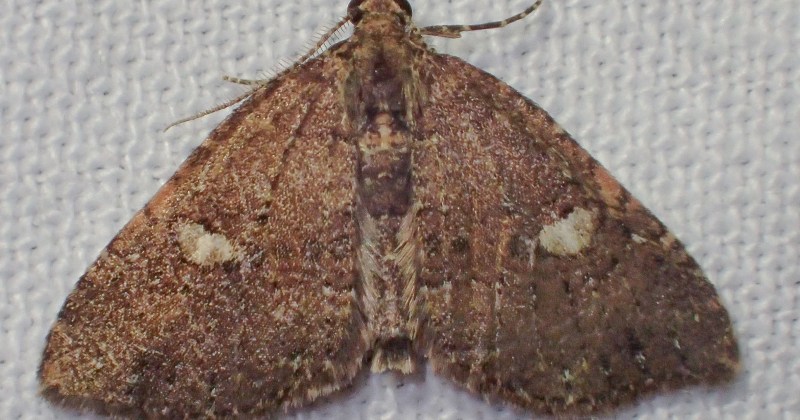
Chrysolarentia pantoea

Elusive Otways Moth Shows Up in Tarra-Bulga

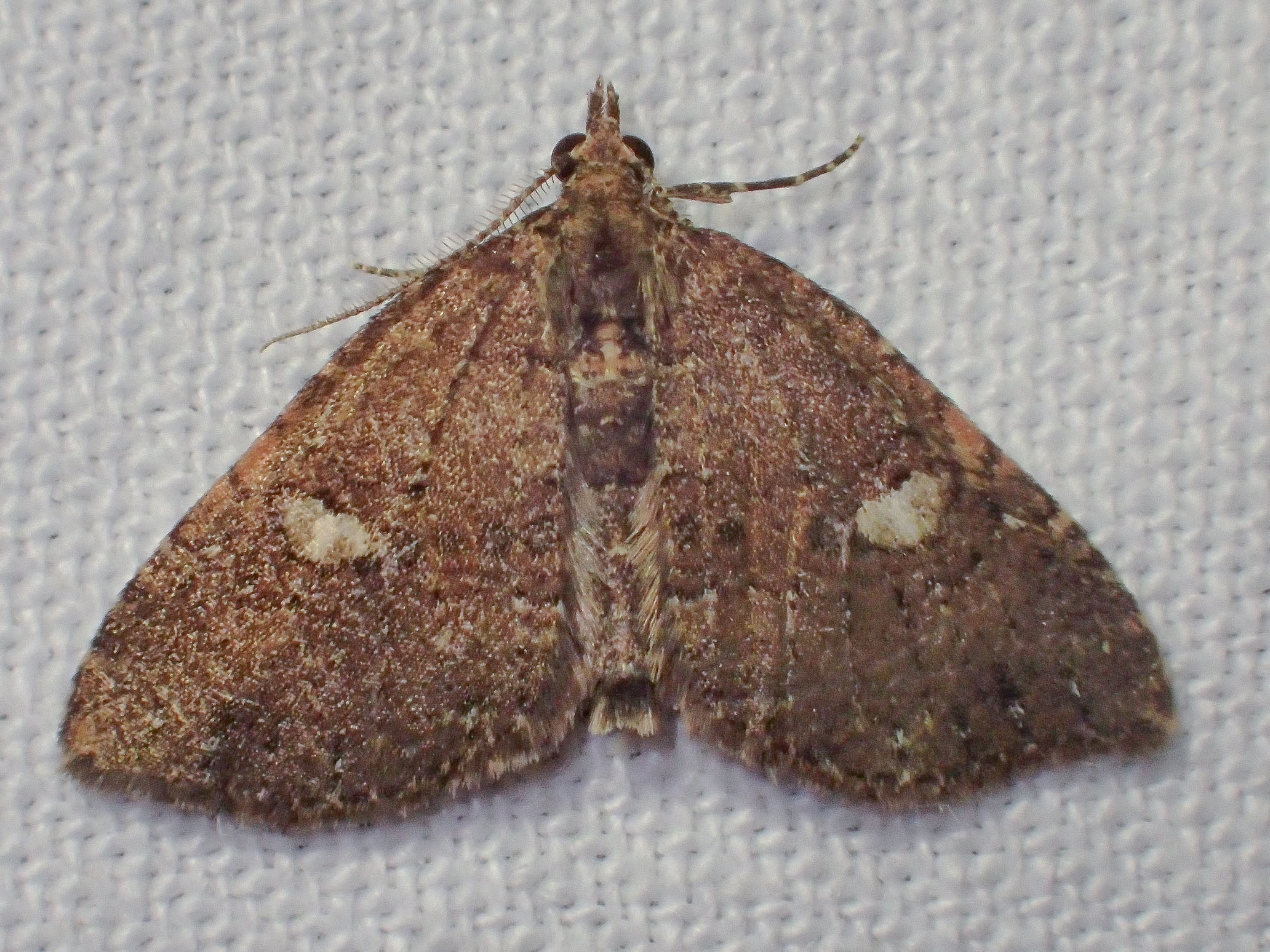
On the 8/2/2016 following one of our group meetings at Balook , outside the visitors centre just after sunset I hung out a white sheet with a UV light in the hope of  finding a few interesting insects to photograph and potentially upload on to our “Friends of Tarra-Bulga National Park” project on http://www.Bowerbird.org.au. The conditions were windier than ideal but an interesting array of creatures did land on the sheet including a medium sized brownish moth with distinctive white spots on its forewings, it landed without fanfare and hung around just long enough for me to take a quick photo.
Chrysolarentia pantoea
Chrysolarentia pantoea – Variable Carpet Moth

Back home the next day, I consulted Peter Marriott’s book Moths of Victoria and after much head scratching and flicking back and forward between pages I managed at last to find what I thought could be match, a species called Chrysolarentia pantoea  or the “Variable Carpet Moth”.

In Moths of Victoria, photos of this moth are of preserved museum specimens captured in the Otways and Lamington National Park (on the Queensland/NSW border). Peter writes in his book that no specimens of this moth could be found in collections taken between these two sites. He did predict that other populations of this moth could be established in cool temperate rainforest or other similar natural habitats.

As I was not 100% confident with my identification and thought this sighing could be of interest, I contacted Peter who to my satisfaction agreed that I was correct and it was in fact Chrysolarentia pantoea, that I had managed to photograph. Remarkably he said that it was the first time to his knowledge that this species has been recorded in Victoria since the last museum specimen had been captured near Lorne way back on the 8/2/1907. That is exactly 109 years to the day between sightings!
Tutsan under sustained attack

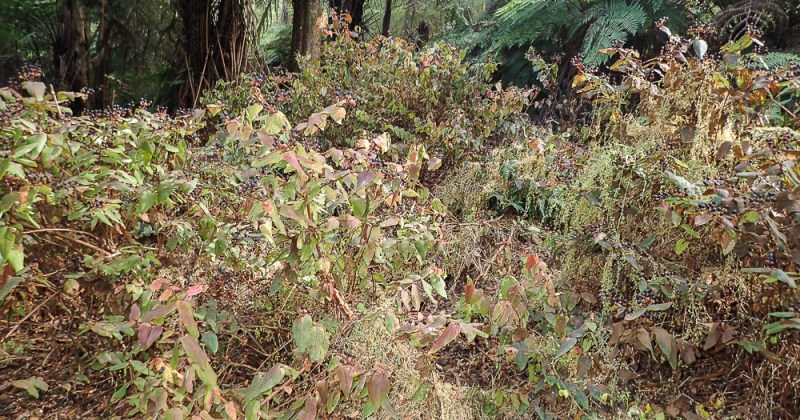
A small crew turn out for yesterdays working bee with the aim being to continue work on tutsan at a site in the Tarra Valley that had been sprayed by contractors in March. Having been several months since we had viewed the site we ventured in with nervous anticipation. The possible scenario being anything from complete success with the spray having knocking each tutsan plant stone dead or the other alternative where the spraying was ineffective and the tutsan was thicker than ever.

After the climb up to the site the initial news was good with the remains of dark brown and dead tutsan clearly visible. We set to work in a methodical fashion and soon found plenty of living plants to deal with, mostly on the outer edges of the infestation, some that had been sprayed and not completely killed and others that had been missed. We found few (if any) newly germinated plants from seed, but there is bound to be a massive seed bank present which you can guarantee will get sprouting at some stage.

This slideshow requires JavaScript.

As we walked further into the site, cutting and pasting living tutsan as we went, we found further evidence that tutsan that had been growing out in the open was completely dead and areas that had been thick with tutsan had now opened up. Pioneer species such as white elderberry (Sambucus gaudichaudiana) were popping up in the bare ground now exposed. The plants that were not out in the open are harder and intermingled with native species are harder to deal with and a number of large unsprayed patches further up the slope were discovered. They were too big for our small crew to tackle in one session and where mapped for us to tackle another day. One open slope area that had been sprayed had a fair proportion of plants still alive and reshooting, so a far bit of time was required to retreat them with poison. Although it was easy to lose count we treated at least 300 living tutsan plants in around 3 hours. We also worked on the odd bit of blackberry as well as approximately 20 sycamore maple which was the original weed we targeted on this site, we were originally pulling out maple seedlings by the hundreds. Overall the spraying made possible by a Communities For Nature Grant has been very successful but as anticipated we will need to do follow up work at this site over a number of years to promote the regeneration of native species and prevent the Tutsan coming back.

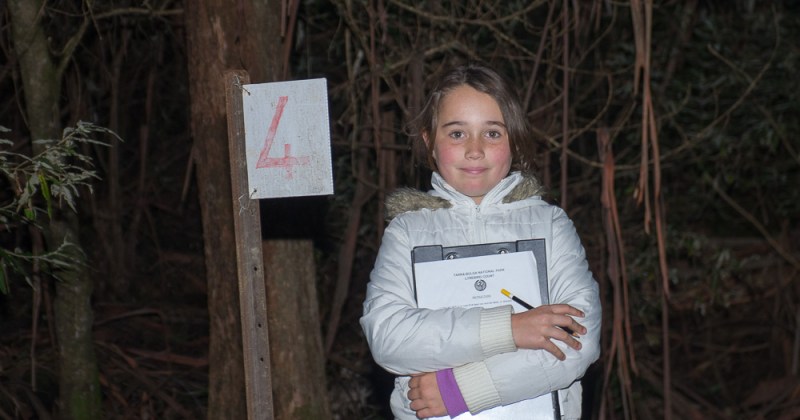
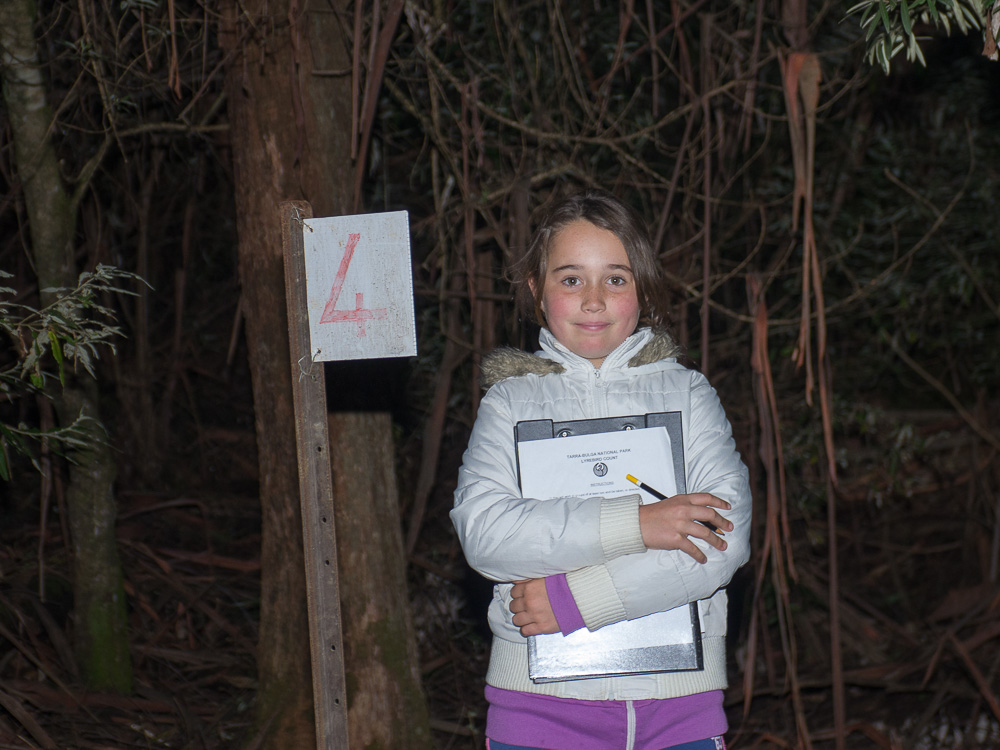
Monitoring Station #4

2015 Lyrebird Survey Report

We always cross our fingers and hope for favourable conditions on the morning of our annual Lyrebird Survey which this year was held on Saturday May 30th.  This year there was no rain but unfortunately the wind was up and noisy gusts were swirling through the canopy.

The logistics of getting a large crew of volunteers up and ready to participate at 6.15am means that we can’t afford to be flexible with our dates so it is a matter of carry on regardless. This year we had 22 volunteers turn up for the count, with most people pairing up, we were able to cover 12 out of our 16 monitoring stations, as is often the case the 4 stations in the southern section of our count area were left out.

Volunteers did a great job of arriving by 6.15 and by the time instructions were given and stations allocated it was still a rush to get into position. I found that the sun was rising and some birds had started calling a few minutes before I made it to my monitoring point at 6.55am.

Monitoring Station #4

The next ½ hour was spent listening out for birds, at our site we could hear calling from three directions and once bearings were taken and noted we just settled in and enjoyed the surrounds. I noted some noisy Yellow-tailed Black Cockatoos moving in the canopy overhead as well as the odd loud crack from randomly scattered Eastern Whipbirds may potentially cause confusion for novice counters. Once our time was up we headed back along the track and soon came across a live sighting of a female Lyrebird (or perhaps a juvenile male?) wandering along the path.

Back at the guest house we once again had a great breakfast (thanks to Torben and Pam). After all the monitoring sheets were handed in it was time to analyse the results. The number of birds detected this year was down, although hopefully this is not cause for alarm; the survey relies on hearing the calls and the background noise of the wind makes them more difficult to detect. We definitely had 4 male birds calling in the survey area with one other likely one. Instances where it was noted that birds were calling very close to monitoring stations, helped to identify some of the Lyrebird locations with certainty.

A big thank you to everyone who made the effort to drag themselves out of bed so early and travel up to Balook to help out, your efforts to help conduct our annual surveys and monitor the local Lyrebird population is very much appreciated.  Also thank you to our Ranger Craig who does a fantastic job setting up the monitoring stations and organising the troops. At the start of the count Craig pointed out that this was our 20th Annual Lyrebird Survey and that he had attended every one. Next year will be a big one (our 21st).

Clink on the link for a pdf map of the survey results.

Lyrebird Survey 2015 results

2015 Lyrebird Survey

Lyrebird Count 2015 photoOur annual Lyrebird survey is coming up on Saturday May 30th. The meeting place is at the Tarra Bulga National Park Visitors Centre at 6.15 am. On arrival the recording process is explained and people are allocated to various monitoring points around the Bulga Park area.

The survey begins at sunrise with the first Lyrebird calls and only takes around half an hour. Following the morning chorus, a free cooked breakfast is on offer at the Tarra-Bulga Guest House. If you would like to come along you need to contact us (by Wednesday May the 27th on 0488 035 314 or email friendsoftarrabulga@gmail.com. Wear warm clothing, a parka, bring a watch, a torch and compass (optional).

Lyrebird

Lyrebird Numbers Up, Brush Bronze-wing Population Explodes!

Friends of Tarra-Bulga have now been using remote cameras within the park to monitor wildlife for over three years. The table below shows results adjusted for the number of days cameras have been active in the field. We currently have eight cameras that are moved around to different sites on a regular basis. As of January 2015 the cameras had spent a combined total of over 5000 days in the field and were triggered by animal movements over 10,000 times.

Feral Cat with a Sugar Glider
Feral Cat numbers have risen

The results show a number of interesting trends. For mammals most species have not varied much in the frequency of sightings over the 3 years with a few exceptions. There was a large jump in Koala sightings in 2014 most were at one site where a Koala developed a routine of passing by every couple of days. Feral Cat numbers have risen each year and Ring-tailed Possum sightings seem to have declined. (the figures for Ring-tails have been influenced heavily by one popular site).

Lyrebird
Lyrebirds captures by our cameras doubled each year.

There has been a massive jump in the numbers of birds that the cameras are detecting. The number Lyrebirds passing cameras have doubled each year. Bassian Thrush (Zoothera lunulata) sightings increased around 600% in 2014 and Brush Bronze-wing numbers skyrocketed from only 15 sightings in 2013 up to 404. Crimson Rosellas, Eastern Whipbirds, Pilotbirds and *Common Blackbirds all had a significant rise in detection. Two smaller species the White-browed Scrubwren and the Superb Fairy Wren were also ‘captured’ more often.

Brush Bronzewing
We have had massive increase in the number of Brush Bronzewings recorded.

A reason for the jump in bird numbers may be due to camera placement. One site used in 2014 was very popular for ground dwelling bird, however this does not fully explain the rise, other camera sites were used in both years and showed a big increase ground dwelling birds from 2013. Fox control efforts in recent years may also be a factor helping the birds numbers increase. Our results have picked up a small rise in Fox numbers over the last few years. As our monitoring continues, time will tell if this greater abundance of bird sightings will be maintained.

Species201220132014
Lyrebird3196181239
Bassian Thrush136135639
White-browed Scrubwren6149181
Eastern Whipbird211498
Pilotbird143593
Satin Bowerbird1452
Crimson Rosella55195
Grey Currawong51116
Olive Whistler595
Brush Bronzewing215404
Eastern Yellow Robin238
Fantail, Rufous225
Grey Shrike-Thrush236
Magpie200
Pied Currawong247
Superb Fairy-wren2345
Wedge tailted Eagle200
Brown Gerygone001
Brown Thornbill020
Common Bronzewing014
Fantail, Grey020
Kookaburra063
Raven Species013
Tawny Frogmouth002
White Throated Tree-creeper003
Fox131220229
Rabbit1263924
Common Blackbird1910125
Feral Cat163364
Human001
Swamp Wallaby513947761
Long Nosed Bandicoot19781185
Brushtail Possum176171169
Wombat138160120
Rattus Species82146152
Antechinus547359
Echidna161643
Ring-tailed Possum55820
Koala2981
Dog011
Sugar Glider031
Unidentifiable Bird103101119
Small Mammal – Unidentifiable476744
Large Mammal – Unidentifiable331629

Working Bee (Tutsan and Sycamore Maple) – Saturday March 21st.

 Our first group activity for the year will be held at a site in the park along Tarra Valley Rd that we have been working on for nearly a decade now. Initially we started tackling a serious infestation of Sycamore Maple, which is a tree that can be very invasive, it has light papery seeds that disperse in the wind, it can grow in shade and then potentially become a large tree. Over the years we have pulled out hundreds of new seedlings that have spread into the park and cut out and killed many larger saplings.

Photo of Tutsan
Tutsan with some fruit ready to spread more seed into the park.

We have now been successful at getting the Maple fairly well controlled and we have now also started on another weed (Tutsan) that is established at the site. Tutsan (Hypericum androsaemum) is a perennial shrub that grows to about 1.5m tall, it is related to St John’s Wort and is noted as being a serious threat to damp and wet schlerophyll forests. We have received a Communities for Nature grant to assist our efforts that will be used to fund contractors to spray the larger infestations as well as to purchase some hand tools and chemical to support our efforts.

We will be holding a working bee at the site on Saturday March the 21st. The meeting point will be at the Tarra Valley Car Park at 9.30am. Like many of our working bees’ the terrain will be steep and lots of scrambling through undergrowth will be required. Tools will be available but if you have your own favourite gloves or loppers please bring them along. Following the work we will have a free BBQ lunch provided down at the Fernholme Caravan Park (at around 1pm). If you are able to come along please call or email David Akers (0488 035 314) or friendsoftarrabulga@gmail.com preferably by March the 18th so we know how much food to buy.

When Koalas are on to a good thing.

Amazing how much of a routine Koalas get into. At a camera site we had been monitoring for over 12 months, we had never come across a Koala. In fact you wouldn’t really have expected one because it is in a regrowth area of Silver Wattle, with the nearest suitable Eucalypts quite a distance away. All of a sudden our camera location has become a point on a local Koalas new favourite path. Since late May it has been crossing by our camera on average every couple of days, all up a total of 24 times (and still counting).

It is interesting to click on and check out this photo gallery to see just how regular of a routine it has.