After some very windy and cold weather at the end of winter including the snow of only a week and a half ago, the last day of winter was almost perfect. The first day of Spring tomorrow also promises to be just as good. Calm winds and blue skies made today a gem of a day to be at Tarra Bulga. Birds were all around, and spring flowers were starting to bloom. The Silver Wattles were bright yellow and sections of the walking tracks were covered in fallen Sassafras flowers. A Male Lyrebird landing on a tree just above my head was a breathtaking moment on such an ideal day to be in such a magnificent place.
Heavy snowfalls are a relatively rare event at Tarra Bulga National Park. A large dump in August 2005 caused a lot of damage to the park’s vegetation due to the weight of the snow. Today’s snow is the biggest dump since this event and hopefully the damage will not be too severe but it certainly will have an impact.
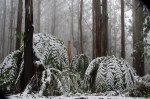
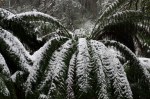
This morning there were plenty of tree branches cracking under the weight of the snow and in more open areas shrubs were taking a battering. Tree Ferns are an ideal shape to catch snow on their fronds, but thankfully they seem very good at recovering from damage. The area where our working bee was a week and a half ago was covered in snow, which is not an ideal start for our newly planted Mountain Ash seedlings.
It was interesting to see the Fauna’s reaction to the sudden icy change to their landscape with a confused Kangaroo hopping about (outside the park boundary) and Lyrebirds and other species buzzing around and looking a bit agitated. The snow would have affected mainly the higher elevations in the park, with sites along the Grand Ridge Rd catching the heaviest falls.
Welcome to Balook
Turn-off into Visitors Centre
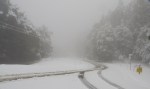
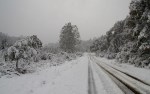
Grand Ridge Rd next to Park Entrance
Visitors Centre Entrance
Visitors Centre
Next to the Visitors Centre
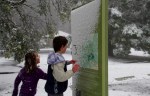
Nice day for a picnic, Not!!
Not the best day for a BBQ
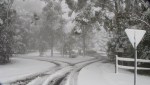
Snow Scene
Grand Strzelecki Track Sign – Prepare for all conditions.
A row of Blackwood Trees planted in honour of Cedric Ralph
This deciduous tree near the park entrance is coping better with the snow than the indigenous species.
Shrubs struggling under the weight of the snow
Snapped branches on this Sapling due to the snow.
This Silver Wattle has snapped in half at the trunk.
Tree fern fronds bending down under the weight of the snow.
Tree fern fronds bending down under the weight of the snow.
Eastern Yellow Robin not enjoying the snow.
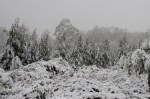
Plantation across the road from Tarra Bulga copping a battering.
Off to the right is where had our planting day a week and a half ago. Not great for the new trees.
The planting activity this month saw a good turnout of members of both our group as well as some great helpers from the Conservation Volunteers. The work focused on adding overstorey species (in this case Mountain Ash) to a scrubby regrowth site located along the Grand Ridge Rd.
Several years ago we had planted Blackwood’s on this site with mixed success. Blackwood seedlings are a favourite food of Wallabies. We found that the Chicken wire guards we used back then were not 100% successful in keeping Swamp Wallabies at bay and that they were able to reach the top and nibble the new growth. An application of Sentree (Wallaby Deterrent) helped to give the plants a fighting chance, but most are still quite stunted where as the ones that have got away have reached over 3m tall. Hopefully the new improved guards we used today; which were taller, wider and made of stronger mesh; will see a better success rate. They will also be able to be reused down the track for future plantings. Some of the dead Blackwoods had reached several feet high and then died. They had no roots left, so not sure whether they had been chewed off (by rats??) or maybe caused by the tubes being root bound or just rotting away, the stems were still quite green.
All up we planted 40 new Mountain Ash trees, as well as removing old guards from previously planted trees. Although this may not be a big number, it is a reflection on the careful effort we made to do the job properly and make sure they are well protected, so hopefully, they get the chance to grow into forest giants. Thanks to Pam and David for preparing a delicious barbecue lunch for the starving workers, and also to the Conservation Volunteers for their tremendous support for this event which was an enjoyable and productive day.
We had our Annual Dinner for the Friends of Tarra Bulga last night and these videos were shown as a summary of the results from our remote cameras for the year. They are now up on YouTube and can be seen here for anyone who was unable to attend and anybody else that is interested.
This second video is from one camera from the Tarra Valley section of the park that was in place for almost a whole year. It has some of the animals labelled to help you know what you are looking at.
Filmy Ferns are a feature of the wet gullies and rainforests in Tarra Bulga, they are usually found as epiphytes growing on the trunks of trees and other ferns, especially Soft tree-fern (Dicksonia antarctica) as well as rocks and steep embankments . There are five different species known to occur in the park and although they are small and delicate, with a bit of practice it is easy enough to learn to tell the difference between each species. Four of them belong to the same genus (Hymenophyllum). Along with the Filmy ferns there are many species of Mosses and Liverworts that flourish in similar moist sheltered locations.
Click on the Galleries for Closer Views and Photo Descriptions
Austral Filmy-fernHymenophyllum australe
This fern is dark green and not particularly shiny. It is common and easy to identify by the wing which is several millimetres wide and extends all the way along the central wiry stem from the tip of the frond to the base (stipe) where it is attached. It has lots of spore producing sori at the tips of the fronds. The sori have 2 lips and they often present in pairs.
Colony on Tree Fern
Typical Frond
Close up of fertile frond with pairs of fertile sori.
Fertile frond with pairs of indusium covering sori.
Winged stipe where it attaches to the rhizome.
Shiny Filmy-fern Hymenophyllum flabellatum
This is another very common fern found in the rainforest gullies. As indicated by its common name it is very shiny and it is a lighter green than the Austral Filmy-fern. The stem (stipe) does not have a wing and has a tuft of hairs at the base. The pinnae (ends of the fronds) often form a fan shape. The sori (spore producing bits) at the tips of the frond segments are wider than the rest of the leaf.
Frond
Frond – Not the hairy base of the stem.
Fan shaped frond segments
Shiny Frond with indusium at tip of segments.
Colony
The stems (rachis) are not winged along the whole length.
Common Filmy-fern – Hymenophyllum cupressiforme
Common Filmy-fern is easily found and identified by serrated margins of its outer fronds. It has large spore producing sori which are located close to the main stem (rachis) of the frond. Alpine Filmy-fern (Hymenophyllum pelatum) also has serrated margins of it frond segments (pinnae) but it has never been found in the Tarra Bulga.
Frond, note the serrated margins.
Indusium, close to rachis.
Large black sori located close to the central stem.
Colony
Narrow Filmy-fern – Hymenophyllum rarum
As its Latin name suggests this fern is the hardest to find of all the local species. It will often grow among Common – Filmy fern (e.g. Along the East-West track in the Tarra Valley picnic area) and superficially looks similar. As its common name suggests it is narrow, It has a narrow wing along its main stem which may cause confusion with Austral Filmy-fern, but a clear distinguishing feature is the the V shape made by the veins at the base of the indusium (tissue protecting the spores) at the tips of fertile frond segments. Click on the Gallery below for a better view.
With V shaped veins at the tip (below the indusium)
Fronds segments divide on one half only.
Close up (magnified) of tips of fertile fronds. Note V shaped veins.
Frond has a narrow wing.
Where stipe attaches to the rhizome.
Narrow Frond
With V shaped veins at the tip (below the indusium)
Veined Bristle-fern – Polyphlebium venosum
Is the only species of the 5 ferns not in the genus Hymenophyllum. It is very common in the same habitats as the other occur. It is distinguished by its very delicate pale green shiny fronds (only one cell thick). Tiny branched veins are clearly visible on the narrow fronds. The fertile fronds have a trumpet shaped spore cover (indusium).
Network of veins are easily visible.
With colony of delicate fronds.
Typical Frond
Fertile fronds with trumpet shaped indusium protecting the sori.
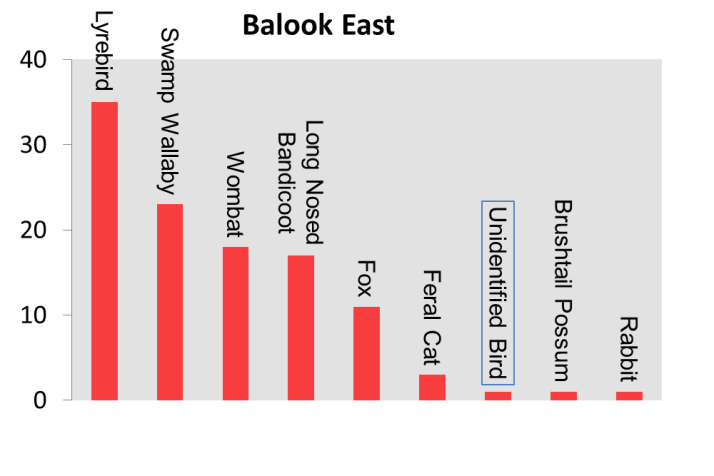
I have produced some stats to go with the latest update from our remote camera sites, hopefully it adds to the information we are getting from the monitoring sites.
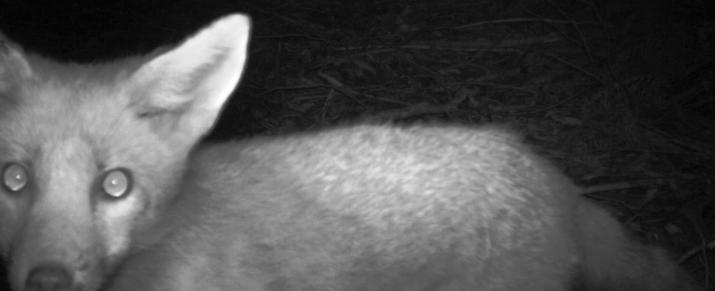
Camera 1 was but back in action after the Lyrebird attack a bit later than the others. It was placed around one of the original camera sites in a location I will call Balook Central. There was an alarming amount of Fox activity at this Camera, also no sign of Long-nosed Bandicoots which have been common at this site before (hopefully the 2 factors are not related). Note that in each graph when I am talking about Brushtail Possums it could be either the Common Brushtail or the Mountain (Bobuck) variety. I am not sure that it is possible to tell them apart from the remote camera photos.
Animal Visits – Graph
This slideshow requires JavaScript.
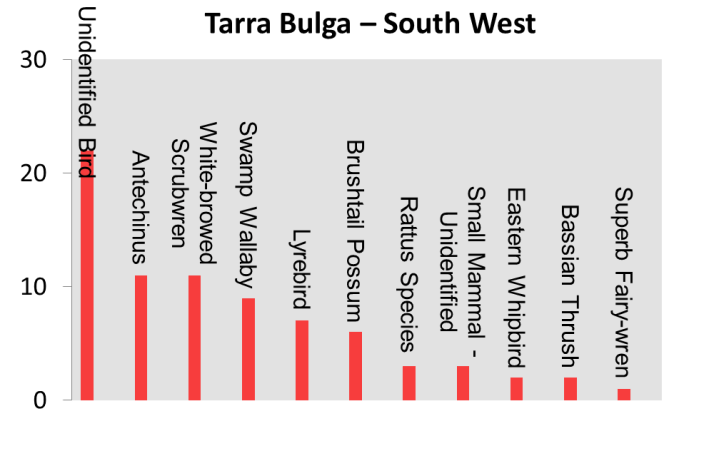
Camera 2 – Had a lot of bird activity, with lots of little brown birds that given their size, picture quality or the way they were facing, they were often hard to positively Identify. But there was certainly one or more active White-browed Scrub-wrens. The site was relatively quiet compared to past results. A tree branch falling in front of the Camera half-way through the monitoring period may have been a reason for this. No sign of any Bandicoots but plenty of Antechinus and other Rodent species (probably Rattus fuscipes – Bush Rat ) but hard to identify just with the photos. Anthechinus have pointed snouts and their ears are thin with a notch in the middle. Rats have rounded ears. Sometimes it was impossible to tell whether it was an Antechinus or a Rat from the photos so in those instances, I have just called them unidentified small mammals.
Tarra Bulga South West – Animal Visits
This slideshow requires JavaScript.
Camera 3 – Had a lot of Small Mammal activity but not so many larger ones. Possibly due to the camera positioning and location. Lots of good shots an Antechinus Species (Could either be the Dusky Antechinus or the Agile Antechinus but impossible really to tell them apart from the photos. The Rattus species are probably Bush Rats, one way to tell is by their tail length, which in native rats is usually shorter than their body length.
Monitoring Results for Tarra Bulga South Central site.
This slideshow requires JavaScript.
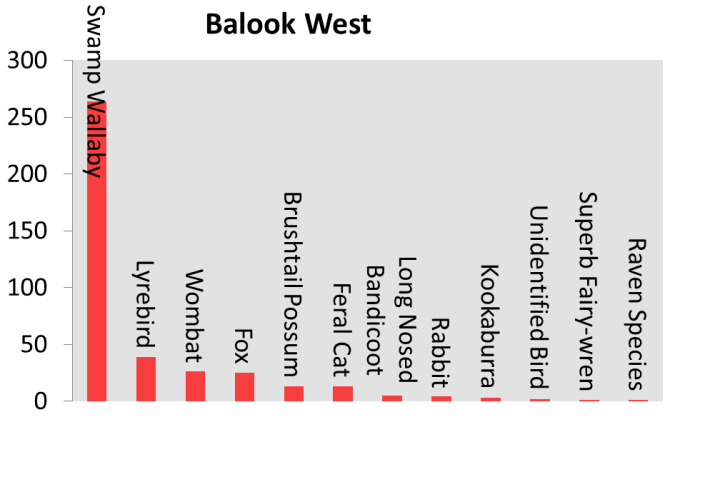
Camera 4 – I thought there must have been some sort of camera malfunction when I collected this camera from the field, there were over 9000 photos on the card. After looking through I found that the camera was working fine it was just an extremely busy site, especially for Swamp Wallabies, where as you can see by the graph they visited the site over 250 times over 2 months. Many times it was the same Joey with its family group which made for some cute photos with it bounding around. The site was in a fairly open clearing so it must have been a really favorite camping spot for them. In one situation a Swamp Wallaby was photographed while a Brushtailed Possum looked on from a tree trunk. In addition to the Wallabies, we had Long Nosed Bandicoots and Lyrebirds. Look for the photo when a Lyrebird goes past and then a minute later a Fox is seen leaping through the air in the direction it went. Also look for the photos of the Fox with some prey in its mouth, I can’t tell what it is but it is about Bandicoot Size. Also a fair bit of Feral Cat activity at this site.
Remote Camera Species Count
This slideshow requires JavaScript.
Camera 5- This camera was obviously pointing at a favourite habitat for Bassian Thrushes, as they were the most common species here. They are often hard to spot in the photos as they are well camouflaged.
Balook Gully – Remote Camera Species Count
This slideshow requires JavaScript.
Camera 6- This site is on a ridge amongst large Tree-ferns, with a thick leaf litter. It has lots of Lyrebirds scratching around and plenty of Foxes prowling around.
Tarra Bulga North West Remote Camera Species Count.Fox
Camera 7 – This site, although mainly scrubby and lacking in canopy trees, had a lot of activity as can be seen from the graph. Our best site for Long-nose Bandicoots this time and plenty of Lyrebird activity.
Remote Camera Species Count Camera 7
This slideshow requires JavaScript.
Camera 8 – This area seems to get a Ring-tailed possum every time we put a camera around there. Not as busy as some of the other sites but it had a good mix of species with not too many introduced predators visiting. Interestingly when I got to the camera out of the ground litter popped a real live Antechinus which did a couple of little circuits only a couple of metres from where I was standing before it disappeared again, just as I had my (regular) camera ready to shoot. Most likely it was a Dusky Antechinus which are said to be more likely to be active during the daytime (as opposed to the Agile Antechinus). Amazingly there was not one confirmed photo of an Antechinus on the Remote Camera that had been at that site for 2 months.
Remote Camera Species Count Camera 8
This slideshow requires JavaScript.
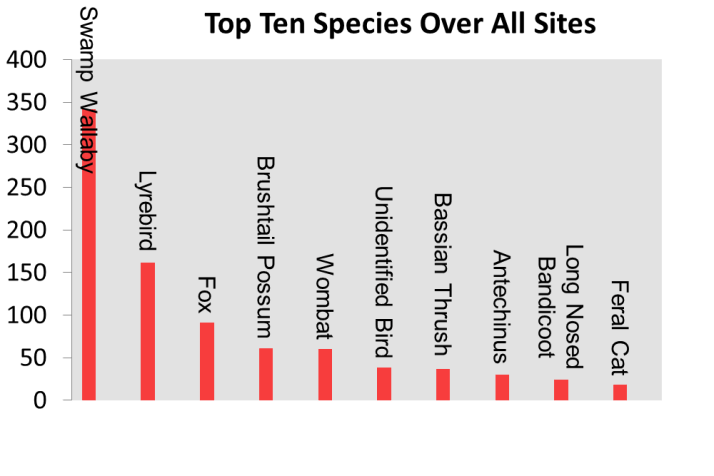
Overall Counts
This table shows the combined number of species results for all cameras over 2 months.Most Common Species – All SitesLess Common Camera Sightings – All Sites
Less than ideal conditions beckoned for this years count, indeed when I woke up at 5.15 am and heard the rain pelting down on the roof, I fired up the computer and checked the rain radar and saw that it was going to continue to bucket down, (especially at Balook) for the foreseeable future. I put the text through to Ranger Craig, who soon phoned back and told me the decision had been made given the weather to postpone. He said he would go up anyway just in case anyone turned up, and I returned to bed.
Much to my surprise, 2 days later I heard the news, that when Craig arrived at the Visitors Centre there was quite a crowd, who despite the weather were raring to go (much kudos to those hardy souls).
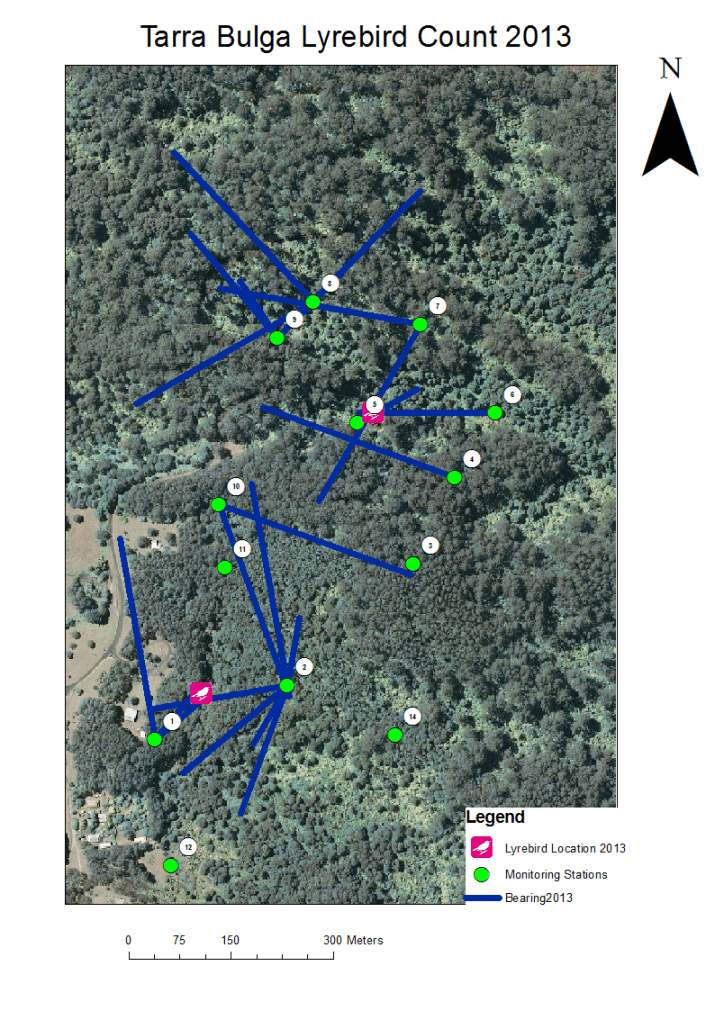
Reports suggest that the inclement weather may have influenced the survey, with several sites unusually recording no calls whatsoever. There were however Lyrebirds around with reports of a group foraging directly in front of the Visitors Centre. Possibly the much needed rain produced ideal conditions for the birds to feed, so inconveniently the boys were more focused on filling their stomachs, rather than attracting the ladies with their fancy calls. Despite the visual sightings, only two male birds within the survey area could be properly counted using our call based technique. Hopefully the drop in numbers can be attributable to the conditions, rather than more sinister reasons such as increased fox numbers. In any case I am sure we will be back next year with hopefully more favourable conditions to do it all again. I also hope that despite the conditions that the hardy survey team had a great morning and the usual scrumptious breakfast at the guest house.
PS. To any of the attendees that braved the conditions and got a good photo of any aspect of the morning, it would be great if you could forward it on, so we could add it to this report.
Lyrebird Count Results 2013, two male birds only can be considered officially counted this year.





















 Friends of Tarra-Bulga National Park