One, Two, Three, Four Lyrebirds, Let’s Count Some More.

It’s on again. The Friends of Tarra Bulga are looking for interested volunteers to participate in our Annual Lyrebird Survey on Saturday June the 1st.  The survey, which aims to help to monitor the health of the local Lyrebird population involves an early start. People need to be at the Tarra Bulga National Park Visitors Centre at 6am so we can get organised to get everyone to their monitoring positions before sunrise when the Lyrebirds will (hopefully) burst into song. The survey itself only takes about half an hour and following that as a reward for your support and the early start, a cooked breakfast is on the menu. If you would like to come along you need to contact ranger Craig Campbell (by Wednesday May the 29th on 5172 2508 or email craig.campbell@parks.vic.gov.au. Wear warm clothing, bring a watch, a torch and a compass (if you have one).

Lyrebird Count 2012
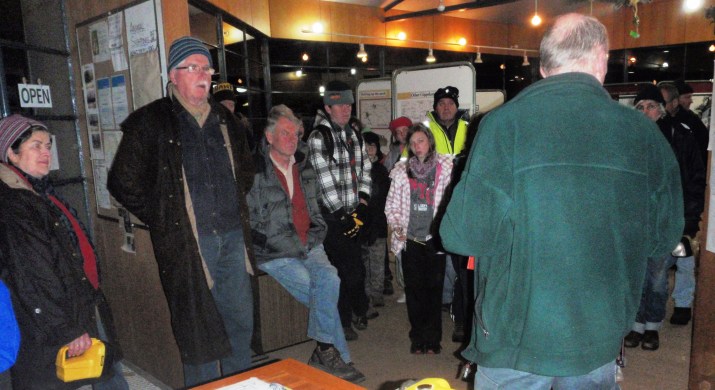
Volunteers line up to get final instructions before heading out to take their positions for last year’s survey.

Fungi Season

This time of the year (Late Autumn) is the best time for seeing the interesting array of Fungi present in Tarra Bulga National Park. A diversity of fungi species (in addition to the towering trees and lush ferns and mosses and the wildlife) make a visit well worth the effort.

Most of the photos shown in the gallery below were taken in two recent strolls around the Rainforest walks at both Bulga Park and the Tarra Valley, with the latter site having the most fungi on show. Tarra Valley has had a long history of being an interesting destination for fungi observation, Back In the 1950’s, Kara Healey (Victoria’s first female ranger) collected around 160 species of fungi from the Park area, two previously un-described species she collected were even named in her honor.

This slideshow requires JavaScript.

Fungi Map are holding their 7th Biennial iNational Conference in Gippsland later this month and the participants are spending a full day at the Park on Monday May 21st. More information can be found via this link.  https://www.fungimap.org.au/index.php/fungimap7fullproginfo Maybe you can go along and   learn a few things and then be able to assist us with identifying some of the species feature in this gallery!

Sycamore Maple Pull Site 2013 and Tutsan Rust

Last Saturday we held a working bee, weeding at a site (which we do annually) where an invasion of Sycamore Maple seedlings entered the Park from a surrounding property. Initially we were pulling out hundreds of new seedling and now the ongoing effort to remove newly detected seedlings is working well. Like last year there was not a lot of Maple to remove and a lot of the time was spent moving through the site to ensure that the area was clean of weeds, (although we did not get cross to the other side of the gully where there are some more Maples growing). The main area where Maple was found was an open disturbed area that also has a very bad Tutsan infestation.

It was interesting to discover that much of the Tustsan in the area was covered by rust with some foliage looking quite heavily impacted. We didn’t notice the rust last year but when I looked back at some photos I took then, I did see that some Tutsan leaves had tell tale rust spots present. Tutsan Rust (Melampsora hypericorum) is a fungus that was found to be very successful in the Otway Ranges in the 1990’s where it had a significant impact on reducing the cover of this shade tolerant invasive weed.

Our site (or somewhere in a close vicinity) had Tutsan Rust artificially introduced a couple of years back and after some follow up inspections It was thought that it had not taken. After a bit of research I found a document that suggested that Tutsan Rust was already present at Tarra Bulga, A report from 1999 describes rust taken from Tarra Bulga (as well as some from the Morwell River area) being used as part of research project. The Tarra Bulga rust was found to impact the plants in the trial to an intermediate level (i.e. OK but not great). Whether or not the rust is from the attempted introduction a couple of years ago (of which I assume was a more virulent strain) or whether it is the same rust that has been around for longer, can probably not be known without complex Laboratory analysis. But we will continue to monitor the site with interest given the threat that Tutsan presents to the park.

As well as the Maple and Tutsan there were new Blackberry seedlings that we carefully hand pulled as well as a few new outbreaks of English Ivy which we need to remain vigilant for. There were some larger clumps of Blackberry that will need to be sprayed.

Reference: Casonato, S, Lawrie, A. and McLaren, D. Biological control of Hypercium androsaemum with Melampsora hypercorum  In ’12th Australian Weeds Conference’. Hobart, Tasmania. (Eds AC Bishop, M Boersma, CD Barnes) pp. 339-342. (CAWSS).

2012 Sycamore Maple Planting Project Site Update

Biggest Seedling
We have a winner this is the biggest planted tree I found on the site.

Recently trekked in to monitor progress I had been putting it off until the heat wave had passed. It was four and half months since I had last seen the site so I was anxious to see how things were progressing. First impressions where that there has been a lot of regrowth of under-storey the Snowy daisy-bush (Olearia lirata) had really taken off, and it was even harder to move around the site and to spot the Mountain Ash we had planted. With careful searching the good news was that the planted trees were still there and looking healthy and mostly untouched by Wallabies although I was expecting a bit more growth over summer.

Lots of re-sprouting on this Maple stump
Sycamore Maple stump with lots of re-sprouting that will need to be treated.

The other concern I had was how much regeneration there had been of the Sycamore Maple trees that had dominated this site until they were cut down cleared several years ago. When I had visited in October there were hundreds of new seedlings that had popped up since our planting day in August. I was happy to see that in the more open areas there were few if any Maples (I think the hot summer may have killed them off) it was noticeable however that some of the large stumps had varying amounts of re-shooting from the base that needs to be dealt with.

Remote Camera Monitoring – Update Summer 2013

This post is a summary of the Remote Camera Monitoring results over December and January 2012/13

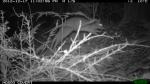
Camera  1 – Still out of action after it was attacked by an aggressive lyrebird.

Lyrebird who got overly interested in one of our Remote Cameras

Camera 2 – Located in mature Wet Forest in the Tarra Valley was quite a prolific site, with the camera picking up lots of small birds e.g. White-browed Scrub Wrens and Bassian and Grey-Shrike Thrushes, as well as mammals such as Antechinus and Long-nosed Bandicoots, unfortunately there were plenty of Foxes and a Feral Cat present. Also plenty of Wombats, Wallabies and some Brushtails.

Superb Lyrebird – Compost Machine

This video made up from a series of still photos from one of our remote cameras along with some sound recorded by our songmeter shows a Male Superb Lyrebird systematically scratching around for food underneath the leaf litter. This scratching results in the leaf litter being turned over and is thought to improve the rate of nutrient cycling in the forest, helping to create compost that will feed the vegetation.

Senecios (Fireweeds) at Tarra Bulga

Despite having weed as part of their common name and belonging to the same genus as the much maligned Ragwort (Senecio jacobaea), there are several species of Senecio in Tarra Bulga National Park that are locally indigenous and very much desirable. They are most commonly found in open and disturbed areas, usually where there is a break in the canopy or on the side of  roads and tracks. Their ability to quickly colonise an area like this means they can compete against real weeds that may potentially invade these sites.

Senecio linearfolius (Fireweed Groundsel) grows to about 1.5 metres high and usually has smooth narrow lance shaped leaves with regularly spaced teeth. When in flower it can be identified by the 5 yellow ray florets (like petals) on each flower head. The flowers heads are clearly different from the other species that exist in the park (described below).

Senecio pinnatifolius (Variable Groundsel) is an amazingly variable species with huge differences in the size and form of the plant possible. What is consistent however is the attractive flower heads which are wider than the other species (up to 15 mm across) and have up to 14 yellow (petal like) ray florets, The unopened flower buds are bell shaped. The foliage is so variable that it is not useful for identification apart from the fact that the leaves are sessile (which means they are connected to the stems without a stalk) and it is usually hairless.

Senecio minimus (Shrubby Fireweed) has more consistent leaf characteristics so you can usually easily identify it without seeing its flowers. The leaves are lance shaped and have evenly spaces small raspy teeth on the margins. Where the leaf base is attached to the stem there are two lobes (auricles). The stems themselves have vertical ridges and are usually quite purple. The flowers heads are clearly different from the other two species. There are large clusters of them at the end of flower stalks but they do not have any petal like ray florets.

Senecio jacobaea (Ragwort) is a noxious weed, sometimes found in disturbed sites in Tarra Bulga, but it is far more common in in cleared farming areas nearby. It has similar looking but smaller flowers when compared with Senecio pinnatifolius, but it has distinctive deeply lobed leaves which make it clearly identifiable.